

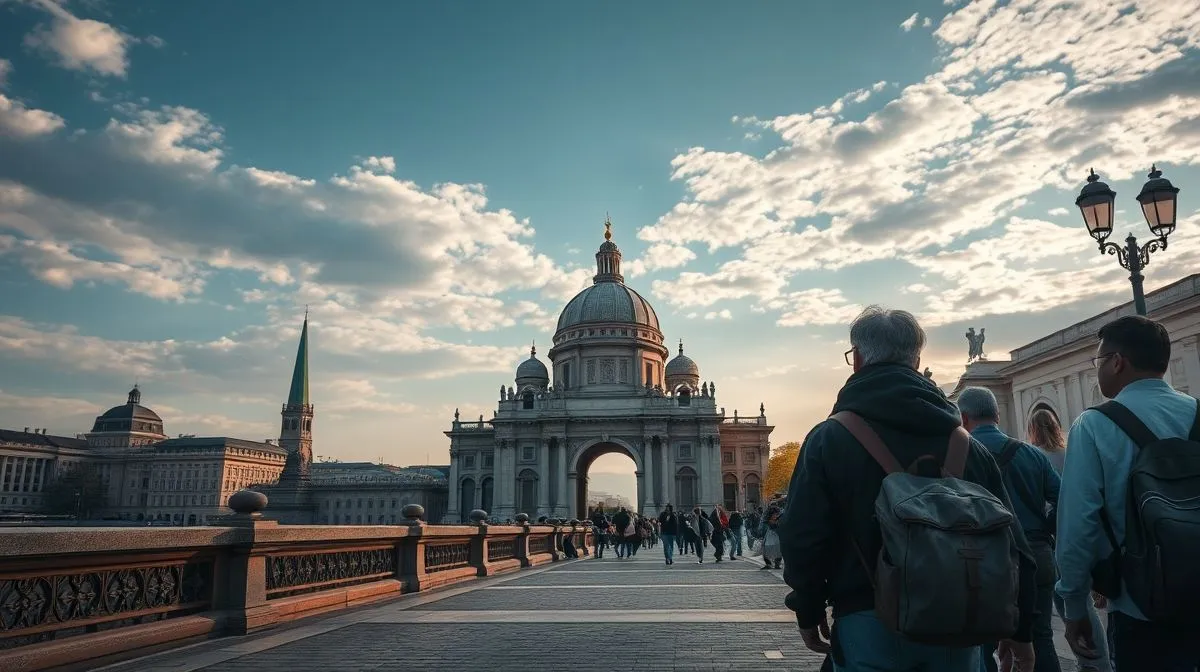
How to sustain a high-quality free walking tour on a shoestring budget?
Many aspiring tour operators falter at the premise of a 'free' walking tour, assuming its quality must inherently be compromised by its lack of upfront cost. In my fifteen years navigating the budget travel landscape, I've seen countless examples demonstrating that this assumption is fundamentally flawed. Sustaining a high-quality experience on a shoestring budget isn't about cutting corners; it's about mastering the art of **value exchange** and leveraging intrinsic motivation. The secret lies in understanding that 'free' isn't 'worthless,' but rather a different form of transaction. The most significant asset for any free walking tour, hands down, is its **human capital** – your guides. A common mistake I see is viewing guides as merely volunteers; instead, they are the very heart and soul, the 'product' itself. Recruiting individuals who possess genuine passion for their city and its stories is paramount. Think of them not just as information dispensers, but as captivating storytellers and cultural ambassadors who can transform a simple walk into an unforgettable journey. In my experience, investing time in comprehensive training, focusing on narrative structure, public speaking, and crowd engagement, pays dividends. One successful model I observed involved a peer-mentorship program where seasoned guides trained newcomers, fostering a strong, self-sustaining community. Marketing on a shoestring demands creativity and an acute understanding of your target audience. Forget expensive ad campaigns; your most potent tools are **word-of-mouth** and strategic partnerships. Here's where to focus your efforts:- Local Partnerships: Cultivate relationships with local hostels, budget hotels, and even independent coffee shops. A simple flyer exchange or a direct recommendation from a hostel front desk can funnel dozens of eager travelers your way without a single marketing dollar spent.
- Online Presence & Reviews: Your most powerful, often free, channel is online reviews and social media. Encourage guests to share their experiences on platforms like TripAdvisor or Instagram; authentic testimonials are incredibly persuasive and build organic reach.
- Community Engagement: Participate in local events or online forums where travelers seek recommendations. Position your tour as an essential, authentic local experience.
- Free Digital Tools: Leverage free online tools for scheduling, communication, and basic analytics. Google Forms for feedback, WhatsApp groups for guide coordination, and free social media platforms for announcements are all incredibly effective and cost nothing.
- Optimized Routes: Design routes that are easily accessible via public transport or walking, minimizing any need for private transportation for guides or guests. Focus on logical flow between free points of interest.
- Public Amenities: Utilize public restrooms, parks for brief breaks, and readily available water fountains to avoid any additional overheads.
"A truly exceptional free walking tour doesn't ask for a tip; it earns it through the sheer force of its quality, passion, and unforgettable storytelling."Even with zero budget for R&D, continuous improvement is vital. Implement simple, no-cost methods for gathering **feedback** from participants. A quick verbal check-in at the end, or a QR code linking to a two-question survey, can provide invaluable insights. Encourage guides to debrief regularly, sharing what worked, what didn't, and new stories they've discovered. This internal knowledge sharing is a potent, free resource for refining routes, narratives, and overall tour quality. Listen actively to what travelers are saying both directly and indirectly through online reviews. Adapt and evolve your tours based on these insights, ensuring your content remains fresh, relevant, and engaging without incurring significant costs.
Essential Tools and Resources for Budget-Friendly Tour Management
Navigating the operational side of a free walking tour on a shoestring budget demands ingenuity, not compromise on quality. After over 15 years in this space, I've learned that the secret lies in leveraging powerful, often free or freemium, digital tools that streamline management, enhance guest experience, and ultimately, sustain your operation. It's about working smarter, not harder or more expensively.
Your primary objective is to create a seamless experience for your guests, from initial discovery to post-tour follow-up, all while keeping your own overhead virtually non-existent. This requires a carefully selected toolkit that covers communication, booking, payment, navigation, marketing, and feedback.
Communication Hubs: Staying Connected
Effective communication is the bedrock of any successful tour. Before, during, and after the tour, your ability to connect with guests can make or break their experience and your reputation.
- WhatsApp Business or Telegram Groups: These are invaluable. In my experience, creating a temporary WhatsApp group for each tour departure allows you to share pre-tour details (meeting point reminders, weather updates), provide real-time information during the tour (e.g., "we'll meet back here in 10 minutes"), and send a polite thank-you or feedback request afterwards.
- Why they work: They are free, widely adopted globally, and offer features like broadcast lists (WhatsApp Business) or channels (Telegram) for one-way announcements to larger groups, preventing chat overload. A common mistake I see is relying solely on email, which often gets lost in spam or is checked too infrequently by travelers.
Booking & Scheduling: Your Virtual Front Desk
You don't need a pricey reservation system to manage tour sign-ups efficiently. The goal here is to collect necessary participant information and manage capacity without any financial outlay.
- Google Forms or Tally.so: These platforms are incredibly powerful and completely free. You can create custom forms to collect names, email addresses, expected number of participants, and even ask a fun ice-breaker question. Integrate this with a Google Sheet for an instant, organized roster.
- Practical application: Link your booking form directly from your social media profiles or website. Set up automated email confirmations using a tool like Zapier (free tier) to send a personalized message with tour details upon submission. This mimics the professionalism of paid systems at zero cost.
Digital Tip Collection: The Modern Donation Jar
While cash tips are traditional, relying solely on them in an increasingly cashless world is a missed opportunity. Offering digital payment options is crucial for maximizing your voluntary contributions.
"Think of these digital platforms as your always-accessible, infinitely scalable tip jar. They remove friction and empower guests to contribute in the way most convenient for them."
- PayPal.me, Venmo (US-centric), or Wise (formerly TransferWise): These services allow guests to send money directly to you with minimal or no fees for personal transfers. Creating a custom PayPal.me link or displaying your Venmo QR code makes the process incredibly straightforward.
- Global reach: For international travelers, Wise is often preferred due to its favorable exchange rates and lower fees for cross-border transactions. Always have a QR code ready, perhaps laminated on a small card, and mention these options clearly at the beginning and end of your tour.
Navigation & Route Planning: The Invisible Guide
A smooth, well-paced tour depends on meticulous route planning. Even if you know your city like the back of your hand, digital tools offer invaluable backup and optimization.
- Google Maps with Custom Lists: Beyond basic navigation, Google Maps allows you to create custom lists of places. Mark all your tour stops, points of interest, potential rest stops, and even alternative routes. You can share this list with co-guides or for personal reference.
- Offline Maps: Apps like Maps.me or Google Maps' offline feature are lifesavers, especially in areas with spotty reception. Pre-download your tour area to ensure you're never left without navigation, regardless of data connectivity. In my early tours, I often saw guides fumbling with paper maps; digital offline maps eliminate that entirely.
Marketing & Promotion: Amplifying Your Reach
Attracting guests without a marketing budget requires creativity and consistency. Your greatest assets here are your existing guests and free digital platforms.
- Instagram & Facebook Pages/Groups: These are your free advertising billboards. Post high-quality photos and videos from your tours, share historical tidbits, and engage with comments. Encourage guests to tag your page in their photos – user-generated content is incredibly powerful and authentic.
- Google My Business & TripAdvisor: Claim and optimize your profiles on these platforms. Encourage guests to leave reviews; positive word-of-mouth is the most effective (and free) marketing you can get. Respond to every review, positive or negative, to show you're engaged and value feedback.
- Local Partnerships: Collaborate with local hostels, cafes, or small businesses. Offer to leave your flyers (which you can design for free using tools like Canva) in exchange for them promoting your tour. It's a win-win, zero-cost marketing strategy.
Feedback & Iteration: The Continuous Improvement Loop
The best free tours evolve and improve based on what guests tell them. Actively soliciting and acting on feedback is critical for long-term sustainability.
- Simple Google Forms Surveys: A quick, anonymous survey after the tour can provide invaluable insights into what worked well and what could be improved. Keep it short – 3-5 questions max – to maximize completion rates.
- Direct Review Requests: Politely ask guests to leave a review on Google or TripAdvisor at the end of the tour. Explain how much it helps your small operation. This direct appeal significantly increases the likelihood of them taking action.
- Listen and Adapt: In my experience, the most successful tours aren't static. They continuously adapt their routes, stories, and delivery based on the feedback they receive. This iterative process, fueled by free feedback tools, is a cornerstone of sustainability.
Frequently Asked Questions (FAQ)
A common question I get asked, especially by those new to the concept, is about the financial viability of a "free" walking tour. In my 15+ years in this niche, I've seen many operators misunderstand the core mechanism. These tours are not truly free; they operate on a **tip-based model**, which is a crucial distinction.
The genius of this model lies in its alignment with traveler psychology: participants pay what they feel the tour was worth, *after* experiencing it. This incentivizes guides to deliver an exceptional, memorable experience every single time. It's a direct reflection of perceived value, fostering a high-quality offering.
I often advise tour operators to frame it as a **value-exchange experience**. Instead of a fixed fee upfront, you're placing trust in the quality of your offering and the generosity of your guests. This approach builds a unique rapport and often results in more engaged participants and, ultimately, more sustainable income.
In my experience, the "free" model is not about giving away your service; it's about shifting the payment structure to empower the guest and elevate the guide's performance. It's a testament to the quality you're confident you can deliver.
Maintaining a high-quality experience on a shoestring budget is less about spending money and more about **strategic resourcefulness** and a deep understanding of what travelers truly value. It boils down to leveraging your most valuable assets: your guides, your local knowledge, and authentic storytelling.
First, focus intensely on **guide training**. Equip your guides not just with historical facts, but with advanced storytelling techniques, crowd management skills, and the ability to adapt to diverse groups. A well-trained, passionate guide can transform even the most basic route into an unforgettable journey. Think of them as cultural interpreters, not just narrators.
- Authenticity: Prioritize local, often untold stories over generic historical recitations.
- Engagement: Encourage interaction, questions, and even small, sensory experiences (e.g., tasting a local snack, touching a historic wall).
- Personal Connection: Guides should share personal anecdotes or insights that make the destination come alive.
Secondly, implement robust, yet free, **feedback mechanisms**. Encourage participants to leave reviews on platforms like TripAdvisor or Google My Business. Actively solicit direct feedback at the end of tours. This data is invaluable for continuous improvement and costs nothing but your time and attention. It’s a perpetual quality assurance loop.
Marketing without a dedicated budget requires creativity, consistency, and a deep understanding of where your target audience spends their time online and offline. The good news is that the "free" walking tour model naturally lends itself to **organic growth** through word-of-mouth.
- Leverage Online Reviews: This is your single most powerful marketing tool. Actively encourage guests to leave detailed reviews on platforms popular with travelers. High ratings and glowing testimonials are priceless social proof.
- Strategic Local Partnerships: Forge relationships with hostels, budget hotels, local cafes, and other travel-related businesses. Offer to leave flyers, and they might reciprocate. Cross-promotion can be incredibly effective.
- Hyper-Local SEO: Ensure your tour is accurately listed on Google Maps and other local directories. Optimize your descriptions with relevant keywords travelers might search for (e.g., "free walking tour [city name]," "best budget tour [landmark]").
- Social Media Engagement: Focus on visual platforms like Instagram and TikTok. Share captivating photos and short videos of your tours, highlighting unique spots and guide personalities. Engage with relevant hashtags and local travel communities.
- Content Marketing (Budget Version): If you have a simple blog or website, write short articles about hidden gems or unique stories related to your tour. This can drive organic traffic and establish your expertise.
The core principle here is to make it incredibly easy for past guests to advocate for you, and for new guests to discover you through **trusted, authentic sources**.
Remember, in budget travel, trust is currency. When you have no marketing budget, your reputation becomes your marketing department.
Managing guide expectations and ensuring fair compensation in a tip-based model is paramount for sustainability. Your guides are the face of your business, and their motivation directly impacts the quality of the experience. A common mistake I see is a lack of **transparency and support**.
Firstly, be upfront and clear about the tip-based model from the very beginning. Explain how it works, what the typical range of tips is, and what factors influence them (e.g., group size, engagement, weather). This manages expectations and prevents misunderstandings.
- Community & Support: Foster a strong sense of community among your guides. Regular meetings, shared best practices, and a supportive environment can significantly boost morale.
- Performance Feedback: Provide constructive feedback based on tour reviews and direct observations. Help guides refine their skills, which in turn leads to better tips.
- Fair Scheduling: Implement a fair and transparent scheduling system that gives all guides equal access to popular tour slots.
- Resource Sharing: Provide guides with updated research, maps, and any other tools that can enhance their tours, showing your investment in their success.
Ultimately, a sustainable model relies on guides feeling valued and empowered. When they feel supported by the operator, they are more likely to invest their passion and energy into delivering exceptional tours, which then translates into better tips and a more robust business for everyone involved.
The unpredictable nature of free walking tours – from fluctuating group sizes to sudden weather changes – is a reality every operator must learn to navigate. It requires **flexibility, strong communication, and robust contingency planning**.
For low turnout, my advice is always to proceed with the tour, even if it's just one or two people. The value of delivering on your promise, building a reputation for reliability, and potentially earning a glowing review from a small group far outweighs the cost of cancelling. A small group often leads to a more intimate, memorable experience, which can translate to higher per-person tips.
Regarding bad weather, proactive communication is key. Send an email or message to registered participants a few hours before the tour if the forecast looks grim, offering advice on appropriate attire or suggesting an alternative, slightly modified route that incorporates more indoor stops. Having a "rainy day" version of your tour ready to go demonstrates professionalism and care. Consider having a few spare umbrellas or ponchos on hand if your budget allows; it's a small gesture that makes a big impact.
In my experience, managing variability is about embracing the dynamic nature of travel. Like a seasoned street performer, you adapt to your audience and environment, always ready to deliver a show, come rain or shine. This resilience builds loyalty and trust among your guests.
Reading Recommendations:
- The Ultimate Guide: How Much Does a Night in a Space Hotel Cost?
- The Ultimate Guide: How to Determine If a Frozen Lake is Safe?
- Railway Photography: Your 2024 Guide to Required Permits & Access
- Uncover the True Cost of Animal Welfare Volunteering Abroad: Is It Worth It?
- The Truth About Carbon Offsetting for Eco Travel: Effective or Greenwashing?




Your email address will not be published. Required fields are marked *