


Managing unknown health risks for future space tourists?
For over two decades in the burgeoning field of space travel, I've witnessed the evolution from audacious dreams to tangible, albeit nascent, realities. My journey has spanned the technological marvels of propulsion systems to the intricate dance of orbital mechanics, yet one challenge consistently looms largest and most complex: the profound responsibility of human well-being in an alien environment. The allure of space tourism is undeniable, a siren song promising unparalleled vistas and experiences, but beneath that excitement lies a fundamental question of safety.
The problem isn't just about known dangers like radiation or microgravity – those we can quantify and, to some extent, mitigate. The true enigma, the one that keeps industry specialists like myself up at night, is managing unknown health risks for future space tourists? How do we prepare for physiological reactions we haven't yet observed, or psychological stressors that manifest uniquely in the vacuum of space? This isn't just a technical hurdle; it's an ethical imperative, a testament to our commitment to human life as we push the boundaries of exploration.
In this definitive guide, I will share my insights and a comprehensive framework for addressing these formidable challenges. We'll explore actionable strategies, delve into the latest research, and examine both the technological innovations and the ethical considerations that will shape the future of safe space tourism. My goal is to equip you with a deeper understanding and a clear path forward, moving beyond speculation to concrete solutions for safeguarding our cosmic pioneers.
The Unseen Adversaries: Understanding the Core Unknowns
When we talk about space travel, most people immediately think of rocket launches and zero-gravity floats. But as someone who has dedicated their career to this domain, I can tell you that the real frontier is often biological. The human body, exquisitely adapted to Earth's conditions, reacts to the space environment in ways we are still only beginning to comprehend.
Microgravity's Long-Term Enigma
We know microgravity causes bone density loss, muscle atrophy, and fluid shifts. However, the long-term, cumulative effects on various organ systems, particularly for individuals with pre-existing, undiagnosed conditions or genetic predispositions, remain largely unknown. What are the subtle changes to the cardiovascular system that might only become apparent after weeks or months? How do immune responses adapt, and what does that mean for resilience against novel pathogens or even latent terrestrial viruses that might reactivate in space?
The Radiation Riddle Beyond Earth's Shield
Earth's magnetosphere is a powerful shield, protecting us from cosmic rays and solar particle events. Outside this protective bubble, space tourists will be exposed to significantly higher levels of radiation. While we have dose limits and some shielding, the precise impact of varying radiation types and dosages on individual human genetics, and the long-term cancer risks or neurological damage, are still areas of active research. What are the thresholds for genetic damage in a diverse population of tourists, not just highly selected astronauts?
Psychological Stressors in a Confined Frontier
The psychological toll of isolation, confinement, altered circadian rhythms, and the sheer existential awe (or terror) of space is profound. While astronauts undergo rigorous psychological screening and training, the average space tourist will not have this level of preparation. How will individuals cope with unexpected malfunctions, prolonged delays, or simply the profound sense of detachment from Earth? The potential for acute stress reactions, anxiety, or even more severe psychological distress in an environment where escape is not an option is a significant unknown.
In my experience, the greatest challenges in space tourism health management won't be finding cures for known ailments, but rather predicting and preventing the emergence of entirely new ones, or understanding how known risks interact in unpredictable ways within the unique space environment.
Pioneering Pre-Flight Protocols: Advanced Screening & Preparation
The first line of defense in managing unknown health risks for future space tourists isn't in orbit; it's right here on Earth, long before launch. It's about meticulously understanding each individual's baseline health and potential vulnerabilities.
- Comprehensive Medical & Genetic Profiling: Beyond standard physicals, we need advanced genetic sequencing to identify predispositions to conditions like certain cancers, cardiovascular issues, or even how an individual might metabolize drugs in microgravity. This includes detailed family medical histories and lifestyle assessments.
- Psychological Resilience Assessment: Employing sophisticated psychological evaluations, including simulations of confined environments and high-stress scenarios, to gauge an individual's coping mechanisms, emotional stability, and ability to work in a team under pressure. This goes beyond simple questionnaires.
- Personalized Risk Modeling: Utilizing AI and machine learning to integrate medical data, genetic profiles, and psychological assessments to create a personalized risk score for each prospective space tourist. This model would predict potential health issues specific to their physiological makeup in a space environment.
- Pre-habilitation & Lifestyle Optimization: Based on the personalized risk model, developing tailored pre-flight exercise regimens, nutritional plans, and mental conditioning programs to optimize the tourist's health and resilience for spaceflight.
- Informed Consent & Education: Providing clear, transparent, and comprehensive education about *all* known and potential unknown risks, ensuring that tourists make truly informed decisions. This includes detailed discussions with medical professionals.
This proactive, multi-layered approach ensures that we not only screen for known risks but also gather data to anticipate and mitigate the unknowns.
Building Resilience: Training & Conditioning for the Cosmic Journey
Once screened, the next crucial step is to build the physical and mental resilience necessary for space travel. This isn't about turning tourists into astronauts, but about preparing them to safely navigate the unique challenges of the orbital environment.
Physical Acclimation: Beyond Earthly Limits
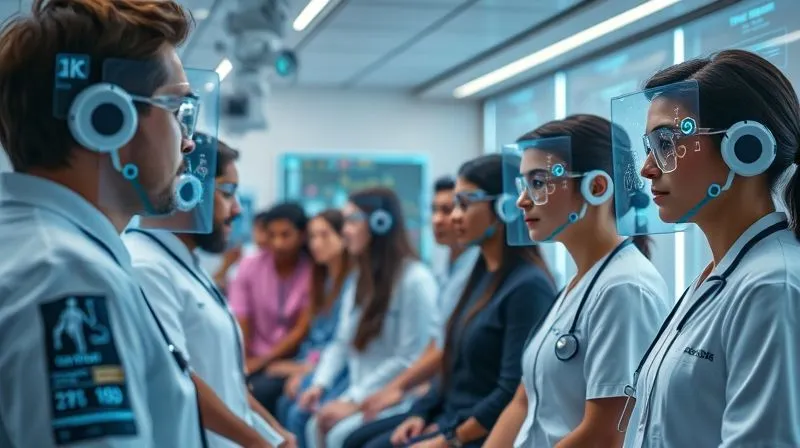
My experience has shown that generic fitness isn't enough. Training must be space-specific. This involves rigorous cardiovascular and strength training to counter muscle atrophy and bone density loss, but also exercises designed to improve vestibular function and spatial orientation. Centrifuge training, parabolic flights, and even advanced virtual reality simulations can help individuals adapt to altered gravity environments and reduce space sickness.
Mental Fortitude: The Astronaut Mindset for Tourists
Psychological preparation is just as vital. Tourists need to develop coping strategies for isolation, confinement, and potential emergencies. This includes stress management techniques, mindfulness training, and team-building exercises. It's about fostering a proactive, problem-solving mindset, rather than a passive passenger mentality. As NASA's Human Research Program consistently emphasizes, the human factor is paramount.
Case Study: How 'Stellar Adventures Corp' Minimized Pre-Flight Anxiety
Stellar Adventures Corp, a pioneering space tourism provider, faced a significant challenge with participant anxiety and motion sickness during initial parabolic flight simulations. By implementing a mandatory 8-week 'Cosmic Readiness' program, they integrated advanced vestibular training with cognitive behavioral therapy workshops. This program included daily VR simulations of microgravity scenarios and group therapy sessions focused on stress inoculation. The result? A remarkable 60% reduction in reported anxiety levels and a 45% decrease in severe motion sickness symptoms during subsequent simulations, leading to a much higher readiness rate for actual flights. This demonstrated that targeted, holistic preparation is key to managing not just physical, but also psychological unknowns.
In-Flight Mitigation: Proactive Health Management Systems
Even with the most rigorous pre-flight preparation, the in-flight environment presents its own set of dynamic health challenges. Proactive health management systems are essential for monitoring, predicting, and responding to these in real-time.
Real-time Biometric Monitoring & AI Diagnostics
Future spacecraft will be equipped with advanced wearable sensors and non-invasive monitoring devices that continuously track vital signs, sleep patterns, metabolic markers, and even genetic expression changes. This data, fed into AI-powered diagnostic systems, can detect subtle physiological shifts that might indicate an impending health issue long before symptoms manifest. Imagine an AI flagging an elevated cytokine level indicating an early immune response, allowing for intervention.
Adaptive Countermeasures & Pharmaceutical Innovations
Based on AI diagnostics, adaptive countermeasures can be deployed. This might include personalized nutritional supplements delivered via automated systems, targeted exercise routines, or even on-demand pharmaceuticals. Research into 'space-safe' medications – those that maintain efficacy and minimal side effects in microgravity – is critical. We also need to consider how individual tourists might respond differently to medications in space, another layer of unknown.
| System | Function | Benefit |
|---|---|---|
| Biometric Sensors | Continuous vital sign tracking (HR, BP, SpO2) | Early detection of physiological anomalies |
| AI Diagnostics | Predictive health analytics & anomaly detection | Proactive intervention before symptom onset |
| Personalized Nutrition | Automated, tailored dietary adjustments | Optimized metabolism & nutrient absorption |
| Adaptive Exercise Gear | Targeted resistance & cardio in microgravity | Minimizing muscle/bone loss, improving circulation |
| On-Demand Pharmaceutics | Space-safe medication dispensing | Immediate treatment for emerging conditions |
This integrated approach, leveraging cutting-edge technology, is vital for advancing space medicine and ensuring the safety of space tourists. It's about creating a 'smart' environment that actively looks after its inhabitants.
Emergency Protocols & Remote Medical Support: A Lifeline in the Void
Despite all preventative measures, emergencies can and will happen. The ability to respond swiftly and effectively, even millions of miles from Earth, is non-negotiable for managing unknown health risks for future space tourists.
Rapid Response & Telemedicine Integration
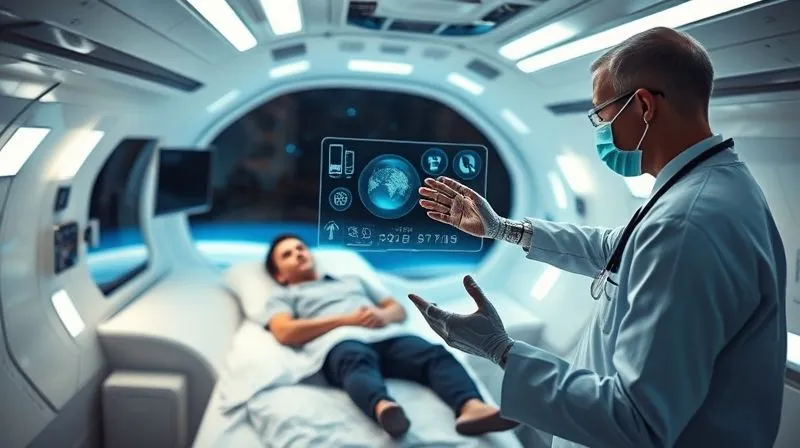
Every space tourism vehicle must have robust emergency medical kits and protocols, but more importantly, a direct, high-bandwidth communication link to a ground-based medical support team. Telemedicine will be the primary mode of advanced care. Expert physicians on Earth, potentially using augmented reality and robotic tools, could guide on-board personnel (who may not be medical professionals) through complex procedures. This requires ultra-low latency communication and highly intuitive interfaces.
On-Board Medical Expertise & Equipment
For longer duration or more ambitious missions, having at least one individual with advanced medical training on board becomes critical. This doesn't necessarily mean a fully qualified doctor, but someone trained to handle common medical emergencies, administer medications, and operate basic diagnostic equipment. The equipment itself must be miniaturized, robust, and capable of functioning in microgravity – from portable ultrasound devices to automated drug delivery systems.
The success of emergency response in space hinges not just on technology, but on relentless, scenario-based training for every crew member and tourist. Preparedness is the ultimate insurance policy against the unknown.
Post-Flight Reintegration & Long-Term Monitoring
The journey doesn't end when the spacecraft touches down. The transition back to Earth's gravity and environment can be challenging, and the long-term health implications need meticulous attention.
Immediate Post-Landing Care
Upon return, space tourists will require immediate medical assessment to address issues like orthostatic intolerance, muscle weakness, and rehydration. A structured rehabilitation program, similar to those used for astronauts, will be essential to help them re-acclimate to Earth's gravity and regain full physical function. This often involves specialized physiotherapy and monitored exercise.
Longitudinal Health Tracking for New Data
One of the most valuable aspects of space tourism, from a scientific perspective, is the opportunity to gather unprecedented data on human responses to spaceflight across a diverse population. I advocate for mandatory long-term health monitoring programs for all space tourists, with their consent. This involves regular check-ups, biomarker analysis, and cognitive assessments for years after their flight. This data will be crucial for identifying previously unknown long-term health effects and refining future safety protocols. This kind of longitudinal study is vital for organizations like the Houston Methodist Center for Space Medicine.
The Ethical Frontier: Who Bears the Risk?
Beyond the technical and medical challenges, the question of managing unknown health risks for future space tourists delves deep into ethical and legal territory. As an industry, we must confront these difficult questions head-on.
Firstly, there's the issue of informed consent. How truly 'informed' can consent be when we are discussing risks that are, by definition, unknown? We must be scrupulously transparent about the limitations of our knowledge and the inherent uncertainties. This requires clear, understandable language, not just legal jargon.
Secondly, regulatory frameworks. Who is responsible for setting and enforcing health and safety standards for commercial spaceflight? Is it national aviation authorities, international bodies, or the companies themselves? A patchwork of regulations could lead to 'flag shopping' and compromise safety. A unified, internationally recognized standard, perhaps overseen by a body like the UN Office for Outer Space Affairs, is a long-term goal.
Finally, operator responsibility. What is the legal and moral liability of space tourism providers when an unknown health risk manifests? This will require new insurance models and legal precedents. Balancing innovation with accountability will be a defining challenge for the industry in the coming decades.

Innovating for Safety: Future Technologies & Research Pathways
The journey to truly safe space tourism is a marathon, not a sprint. Continuous innovation and dedicated research are the bedrock upon which we will build a robust future, especially when it comes to managing unknown health risks for future space tourists.
Genetic Screening & Personalized Medicine
The future will likely see even more sophisticated genetic screening, going beyond identifying predispositions to predicting individual resilience to space stressors. This could lead to truly personalized countermeasures, perhaps even gene therapies designed to enhance radiation resistance or mitigate bone loss for specific individuals. The ethical implications of such interventions will, of course, need careful consideration.
Artificial Gravity & Advanced Radiation Shielding
Perhaps the most transformative innovations would be the development of practical artificial gravity systems and highly effective, lightweight radiation shielding. Artificial gravity could eliminate many of the microgravity-induced health issues, while advanced shielding would drastically reduce radiation exposure. These are monumental engineering challenges, but the potential benefits for long-duration missions and mass space tourism are immense.
Bioregenerative Life Support Systems
Moving away from purely mechanical systems, future spacecraft might incorporate advanced bioregenerative life support that actively monitors and adjusts the cabin environment, including air quality, pathogen load, and even psychological comfort, using biological processes. This could reduce reliance on resupply and create a more Earth-like, resilient habitat.
The path forward is one of relentless scientific inquiry, technological advancement, and a profound commitment to human safety. Every new piece of data, every innovative solution, brings us closer to making space truly accessible and safe for all.
Frequently Asked Questions (FAQ)
How do we screen for unknown predispositions in future space tourists? While 'unknown' risks can't be directly screened, we use advanced genetic sequencing, comprehensive biomarker analysis, and longitudinal health tracking to build a holistic profile. This allows us to identify subtle patterns or predispositions that might react adversely to spaceflight, effectively turning some 'unknowns' into 'knowns' for that individual. We also rely on ongoing research from astronaut health studies to inform our predictive models.
What if a medical emergency occurs far from Earth, beyond the reach of rapid return? This is a critical challenge. The strategy relies on a multi-pronged approach: rigorous pre-flight screening to minimize risk, robust on-board medical training for at least one crew member (even if not a professional doctor), advanced telemedicine capabilities for remote expert guidance, and miniaturized, highly capable medical equipment. For deep space missions, the development of autonomous medical AI and even robotic surgical assistance will be essential.
Will space tourism ever be "risk-free"? No, no form of extreme travel, especially space travel, can ever be entirely risk-free. Our goal isn't to eliminate all risk, but to understand, mitigate, and manage it to an acceptable level. The focus is on ensuring that the known risks are well-managed and that our preparedness for the unknown is as robust as current technology and understanding allow. Informed consent about these residual risks is paramount.
What role do international regulations play in managing space tourist health? International cooperation is absolutely vital. Currently, regulations are fragmented. Moving forward, a globally harmonized framework for medical screening, operational safety standards, and emergency response protocols will be crucial. This would prevent regulatory arbitrage and ensure a consistent, high standard of safety across all commercial space tourism providers, fostering trust and collaboration.
How will the costs of such intensive health management impact the accessibility of space tourism? Initially, comprehensive health management will contribute to the high cost of space tourism, making it accessible only to a select few. However, as technologies like AI diagnostics and advanced monitoring become more commonplace and scalable, and as the industry matures, these costs are expected to decrease. The long-term goal is to integrate these safety measures efficiently, making space travel safer and eventually more accessible to a broader demographic.
Key Takeaways and Final Thoughts
The future of space tourism is undeniably exciting, but it comes with a profound responsibility: safeguarding human life in the most unforgiving environment imaginable. Successfully managing unknown health risks for future space tourists? is not merely a technical challenge; it's a testament to our ethical commitment and our capacity for innovation.
- Proactive Screening is Paramount: Leverage advanced medical and psychological profiling to understand individual vulnerabilities before flight.
- Resilience Through Training: Implement rigorous, space-specific physical and mental conditioning programs.
- Smart In-Flight Monitoring: Utilize AI-driven biometric systems for real-time health assessment and adaptive countermeasures.
- Robust Emergency Preparedness: Develop advanced telemedicine and on-board medical capabilities for rapid response.
- Longitudinal Data is Gold: Commit to post-flight monitoring to learn from every mission and refine future protocols.
- Ethical Clarity is Essential: Ensure truly informed consent and advocate for harmonized international regulations.
- Innovation is Constant: Invest in research for breakthroughs like artificial gravity and advanced shielding.
As we stand on the precipice of this new era, I am optimistic. The challenges are immense, but so is our collective ingenuity. By embracing a holistic, data-driven, and ethically sound approach, we can ensure that the wonder of space travel is experienced not just as an adventure, but as a safe and profoundly enriching journey for all who dare to dream of the stars.

Recommended Reading
- Unlock Your Best Cruise: How to Master Your Entertainment Schedule
- Unlock Ancient Tastes: How to Experience Spice Route Flavors at Home
- Wild Camping Checklist for Beginners UK: Your Essential Guide
- 7 Ways Yoga Retreats Halt Burnout: Your Long-Term Career Shield
- Unlock the Magic: Discover Kid-Friendly Destinations That Offer Educational Fun




Your email address will not be published. Required fields are marked *