

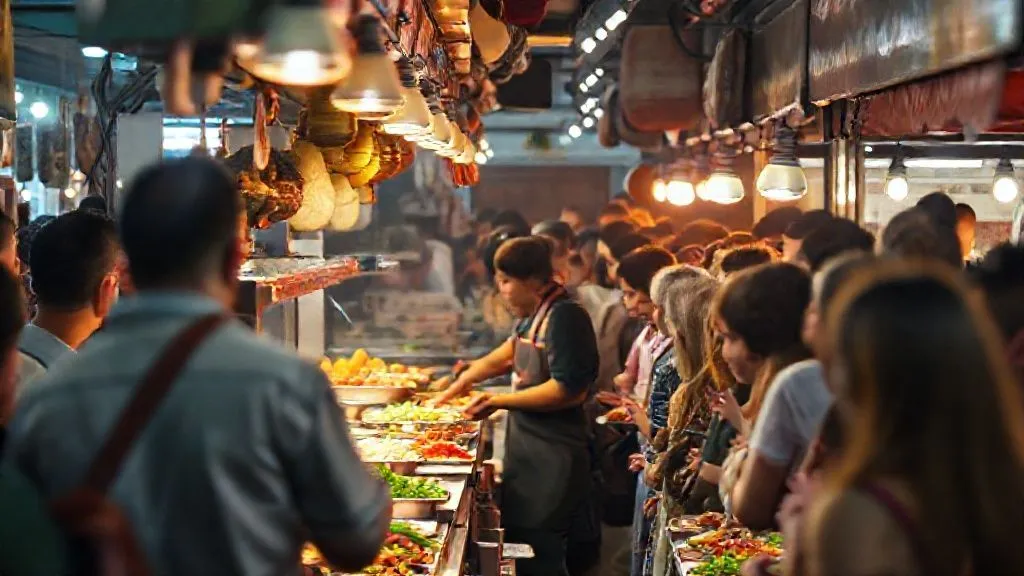
Maximizing Food Festival Sales with Limited Booth Space and Staff?
For over 15 years immersed in the vibrant, fast-paced world of festival travel and food vending, I’ve witnessed countless passionate entrepreneurs hit the same wall: the seemingly insurmountable challenge of maximizing food festival sales with limited booth space and staff. It’s a common pitfall to assume that more space or more hands are the only solutions, when in reality, it often comes down to smarter strategy.
Many vendors pour their heart and soul into their cuisine, only to be bottlenecked by inefficient operations, a sprawling menu, or a team not fully optimized for high-volume, quick-turnaround service. The frustration is palpable – seeing potential customers walk away because of long lines or a confusing setup, despite having a fantastic product.
But what if I told you that these constraints aren't limitations, but rather catalysts for innovation? In this comprehensive guide, I’ll share proven frameworks, actionable steps, and expert insights that I’ve seen transform struggling booths into bustling, profitable hubs. We’ll explore how to leverage every inch of your space and every minute of your team’s effort to not just survive, but thrive, at any food festival.
1. The Strategic Menu: Curating for Speed and Profit
Less is More: The Power of a Focused Offering
One of the biggest mistakes I see vendors make is offering an overly ambitious menu. While variety might seem appealing, it often leads to slower service, increased ingredient complexity, and higher waste. A focused menu, conversely, streamlines operations and significantly enhances your ability to manage limited booth space and staff.
Actionable Steps for Menu Curation:
- Analyze Profit Margins: Identify your top 3-5 highest-margin items. These should be your stars.
- Assess Prep Time: Prioritize items that can be prepped in advance or cooked quickly to order. Think assembly-line efficiency.
- Ingredient Commonality: Choose dishes that share common ingredients. This reduces inventory complexity and waste.
- Test for Popularity: If possible, run small trials or surveys to gauge which focused items resonate most with your target audience.
- Consider Portability: Festival-goers are often on the move. Offer items that are easy to eat standing up or walking.
According to a study published in the Harvard Business Review, simplifying choices can actually boost customer satisfaction and purchase rates, as it reduces decision fatigue.
High-Margin, Low-Prep Items
Beyond just a focused menu, the specific items you choose are critical. You need dishes that not only appeal to the masses but also offer a healthy profit margin and require minimal on-site preparation. These are your workhorses for maximizing food festival sales with limited booth space and staff.
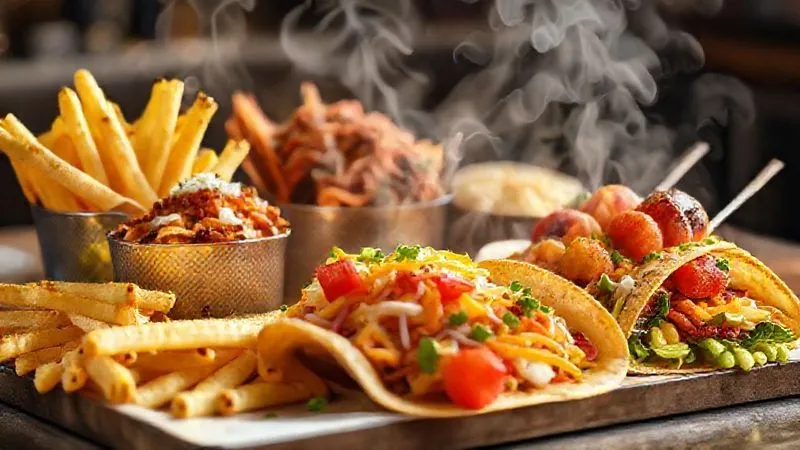
Think about gourmet loaded fries, artisanal tacos with pre-marinated meats, unique skewers, or specialty beverages. These items often have a high perceived value, allowing for premium pricing, while their components can be largely prepped off-site. Your booth becomes an assembly and finishing station, not a full-scale kitchen.
2. Booth Design & Workflow: Engineering Efficiency
The 'Golden Triangle' Layout
Just like in a professional kitchen, an efficient booth layout is crucial. I often refer to this as the 'Golden Triangle' – strategically placing your prep station, cooking area, and point-of-sale (POS) system in a triangular flow that minimizes steps and maximizes output. Every inch counts when you have limited booth space.
Designing Your Efficient Booth:
- Zone Your Space: Designate clear zones for cooking, plating/assembly, order taking/payment, and ingredient storage.
- Ergonomics First: Ensure all essential tools and ingredients are within arm's reach for each station. Minimize bending, reaching, or walking.
- Customer Flow: Plan for a clear entry and exit point for customers, minimizing bottlenecks. Can they see the menu easily? Is the ordering process intuitive?
- Vertical Storage: Utilize vertical space with shelving for non-perishable items or extra supplies.
- Power & Water Access: Map out your equipment placement based on available power outlets and water sources to avoid tangled cords or logistical nightmares.
Pre-Preparation & Batch Cooking
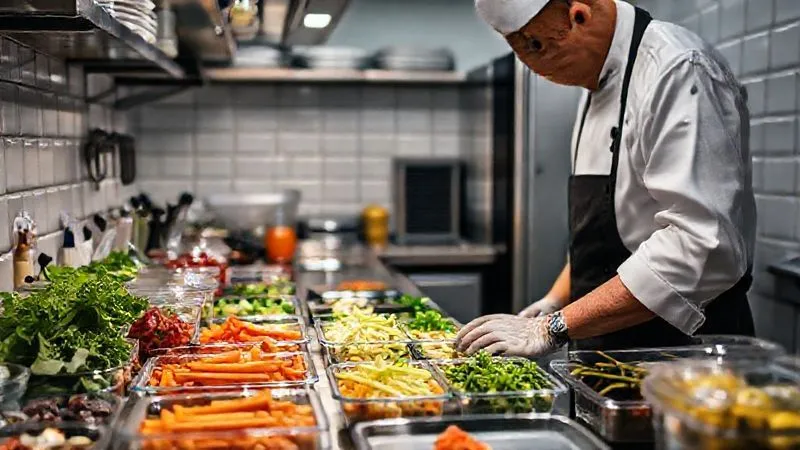
The secret to speed at a festival is doing as much as possible before the gates open. Pre-preparation and batch cooking are not just time-savers; they are game-changers for managing limited staff and ensuring consistent quality. This means chopping vegetables, marinating meats, preparing sauces, and even partially cooking certain components off-site.
Imagine arriving at the festival with 80% of your work already done. Your staff can then focus solely on assembly, heating, and serving, drastically reducing wait times and increasing customer throughput. This strategy directly impacts your ability to handle higher volumes with fewer hands, which is key to maximizing food festival sales with limited booth space and staff.
3. Empowering Your Lean Team: Training for Peak Performance
Cross-Training & Clear Roles
With limited staff, every team member needs to be a versatile asset. Cross-training is non-negotiable. Each person should ideally be able to handle multiple roles – taking orders, assembling food, and even basic cooking tasks. This flexibility allows you to adapt to peak rushes or unexpected absences without missing a beat.
However, while cross-training is vital, clear roles are equally important during busy periods. Assign a primary responsibility to each team member (e.g., 'Order Taker & POS,' 'Food Assembler,' 'Expediter/Finisher') but ensure they know how to step into other roles when needed. Regular pre-shift briefings are essential to align everyone on the day's goals and potential challenges.
Case Study: "The Swift Serve Stand"
Let me tell you about 'The Swift Serve Stand,' a small family-run booth I advised. They specialized in gourmet hot dogs but struggled with long lines due to only one person on the grill and another on toppings/POS. Their staff of three felt overwhelmed.
We implemented a rigorous cross-training program. The grill master learned to take orders during lulls, the toppings person learned basic grilling, and the third person, originally just on cash, became the expediter, ensuring orders were complete and accurate. We also standardized their hot dog assembly process into three quick steps.
The result? Wait times dropped by 40%, and their sales increased by 30% over two major festivals. Their team felt more empowered and less stressed, knowing they could support each other. This demonstrates the profound impact of strategic training on maximizing food festival sales with limited booth space and staff.
"Your team is your most valuable asset, especially when resources are scarce. Invest in their training, empower them with clear processes, and watch them deliver exceptional results."
4. Tech-Savvy Sales: Streamlining Transactions
Mobile POS Systems & Contactless Payments
In today's fast-paced environment, slow payment processing is a sales killer. Mobile Point-of-Sale (POS) systems and the ability to accept contactless payments (tap-to-pay, mobile wallets) are no longer luxuries; they are necessities for maximizing food festival sales with limited booth space and staff. These technologies dramatically reduce transaction times, minimize errors, and provide valuable sales data.
A good mobile POS allows your staff to take orders and payments quickly, even if a customer is not directly at the counter. This frees up valuable counter space and keeps lines moving. Look for systems that are intuitive, reliable, and offer robust reporting features.
| Feature | Basic POS | Mobile POS | Benefit |
|---|---|---|---|
| Transaction Speed | Moderate | Fast | Reduces queue times |
| Cost | Higher upfront, fixed | Lower upfront, subscription | Scalable for temporary events |
| Portability | Fixed terminal | Handheld | Serve customers anywhere in booth |
| Reporting | Basic sales | Detailed analytics | Better inventory and sales insights |
Digital Menus & Pre-Ordering
Leverage digital tools to enhance the customer experience and reduce strain on your staff. QR code menus that customers can scan with their smartphones not only save on printing costs but also allow for instant updates to availability or pricing. This is a subtle yet powerful way of maximizing food festival sales with limited booth space and staff.
Even better, explore pre-ordering systems. Some festivals integrate with apps that allow attendees to order and pay for food in advance, then pick it up at a designated time. This eliminates queues, guarantees sales, and allows your team to prepare orders in batches, further optimizing efficiency. Even a simple online form or WhatsApp ordering system can make a huge difference.

5. Marketing Magic: Attracting the Right Crowd
Pre-Festival Hype & Social Media
Your marketing efforts shouldn't start when the festival gates open. Building hype beforehand is crucial for drawing customers directly to your booth, especially when you have limited visibility due to space. Social media is your most potent, cost-effective tool here.
Pre-Festival Marketing Checklist:
- Festival Engagement: Follow and tag the festival's official accounts. Share their posts and use their hashtags.
- Tease Your Menu: Post mouth-watering photos and short videos of your signature dishes. Highlight what makes them unique.
- Announce Your Location: Clearly state your booth number or location on the festival map. Make it easy for people to find you.
- Limited-Time Offers: Create exclusive festival specials or bundles to create urgency and excitement.
- Engage with Followers: Respond to comments, run polls, and build a community around your brand before the event.
As marketing guru Seth Godin often says, "People don't buy goods and services. They buy relations, stories, and magic." Tell your story before they even arrive.
On-Site Engagement & Visual Appeal
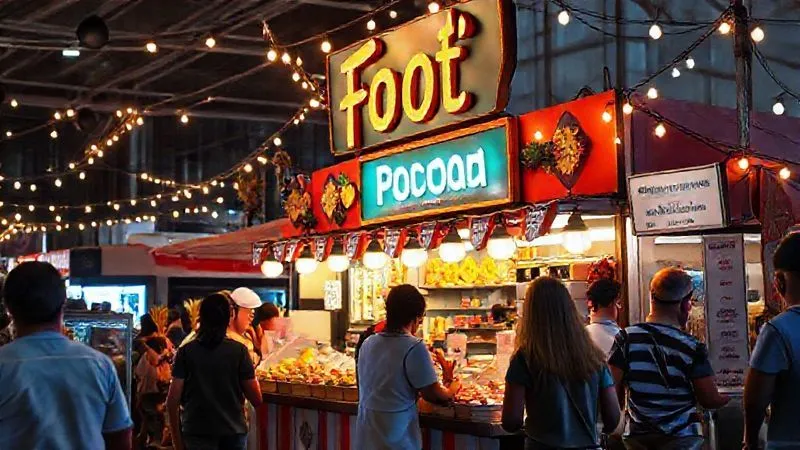
Once at the festival, your booth needs to be a magnet. With limited space, every visual element must work harder. Think about vibrant, professional signage that clearly displays your menu and pricing. High-quality food photography can make your dishes irresistible.
Engage passersby with friendly greetings and perhaps a small, free sample of a high-margin item. The aroma of your cooking is also a powerful, natural marketing tool. Ensure your booth is clean, well-lit, and reflects your brand's personality. A queue, believe it or not, can also be a marketing tool – it signals popularity and quality.
6. Inventory & Waste Management: Protecting Your Margins
Predictive Stocking & Real-time Tracking
One of the silent killers of profit at food festivals is poor inventory management. Overstocking leads to waste and lost capital, while understocking means missed sales opportunities. The key to maximizing food festival sales with limited booth space and staff is accurate predictive stocking and real-time tracking.
Before the festival, analyze past sales data (if available), consider the expected foot traffic, and factor in weather forecasts. Plan your ingredient purchases meticulously. During the event, track sales in real-time using your POS system. This allows you to identify fast-moving items that might need a quick resupply (if feasible) and slow-movers that you might need to push with specials.
| Item | Starting Stock | Sold | Waste | Reorder Point |
|---|---|---|---|---|
| Gourmet Tacos | 200 | 185 | 5 | 50 |
| Loaded Fries | 150 | 140 | 2 | 40 |
| Artisanal Lemonade | 100 | 95 | 0 | 20 |
Effective inventory management is not just about counting; it's about predicting and adapting. For more insights on efficient inventory, look into resources from the Forbes Small Business section.
7. Post-Festival Analysis: Learning for Next Time
Data-Driven Review & Feedback Loop
The festival doesn't end when the last customer leaves. The real learning begins then. A thorough post-festival analysis is critical for continuous improvement and truly mastering the art of maximizing food festival sales with limited booth space and staff. This means diving deep into your sales data, collecting team feedback, and even soliciting customer input.
Steps for Post-Festival Analysis:
- Sales Report Review: Analyze your POS data. Which items sold best? What were your peak hours? What was your average transaction value?
- Inventory Reconciliation: Compare starting inventory with sales and remaining stock. Identify areas of significant waste or unexpected shortages.
- Staff Debrief: Gather your team for an honest discussion. What went well? What were the biggest challenges? What operational tweaks could be made?
- Customer Feedback: Review any online comments, social media mentions, or direct feedback received.
- Profit & Loss Statement: Calculate your actual profit for the event. Where can costs be cut or revenues increased next time?
"Every festival is a living laboratory. Embrace the data, learn from every interaction, and refine your process for exponential growth."
This iterative process of planning, executing, and analyzing is what separates the consistently successful vendors from those who merely hope for the best. It's how you build a robust, repeatable system for maximizing food festival sales, regardless of your physical constraints.
Frequently Asked Questions (FAQ)
How do I handle unexpected rushes with limited staff? The best defense is a good offense: thorough pre-preparation, a streamlined menu, and a highly cross-trained team. During a rush, focus on the fastest, highest-margin items, maintain clear communication with your team, and consider having one staff member dedicated to expediting orders to keep the flow moving. A mobile POS also allows you to take orders efficiently from multiple points.
What's the most cost-effective way to market my small booth? Social media is your best friend. Focus on high-quality photos/videos, engage with the festival's official channels, and use relevant hashtags. Offer a unique festival-only special. Word-of-mouth is also powerful; encourage customers to share their experience. Consider a visually appealing booth setup as a silent salesperson.
How can I make my small booth stand out visually? Invest in professional, eye-catching signage that is easy to read from a distance. Use appealing lighting (like string lights) and arrange your food aesthetically. Keep your booth impeccably clean and organized. A unique uniform or a friendly, engaging staff can also significantly enhance your booth's appeal.
Is it better to focus on a few high-priced items or many low-priced items? Generally, with limited space and staff, focusing on a few high-margin, moderately-priced items is more effective. These allow for quicker production, higher profit per sale, and simplify inventory. Very low-priced items require extremely high volume to be profitable, which can overwhelm a small operation. The sweet spot is often perceived value that justifies a good price.
What's the biggest mistake vendors make with limited resources? Trying to do too much. Attempting to offer a vast menu, serve every customer instantly without optimized processes, or neglecting pre-festival planning. The biggest mistake is failing to embrace the constraints as opportunities to innovate and simplify, rather than seeing them as insurmountable obstacles.
Key Takeaways and Final Thoughts
Maximizing food festival sales with limited booth space and staff is not about working harder, but working smarter. It demands a strategic, disciplined approach that focuses on efficiency, profitability, and customer experience.
- Curate Your Menu: Less is truly more. Focus on high-margin, low-prep items.
- Optimize Your Booth: Design a workflow that minimizes steps and maximizes output.
- Empower Your Team: Cross-train and ensure clear roles for peak performance.
- Embrace Technology: Use mobile POS and digital menus to streamline transactions.
- Market Smart: Build pre-festival hype and ensure a visually appealing on-site presence.
- Manage Inventory: Use data to predict demand and minimize waste.
- Analyze and Adapt: Learn from every event to continuously refine your strategy.
I’ve seen firsthand how these principles can transform a daunting challenge into a rewarding success story. By implementing these strategies, you won't just cope with limited resources; you'll harness them to create a lean, mean, sales-generating machine. Go forth, innovate, and make your next food festival your most profitable one yet!
Recommended Reading
- 7 Scenic Train Routes to Heal Executive Burnout: Your Recovery Journey?
- 7 Proven Strategies: Guarantee Bonding on Complex Family Trips?
- 7 Critical Steps: Solving Urgent Guest Safety at Remote Glamping Sites
- 7 Proven Strategies to Land High-Paying Adventure Photo Commissions
- 7 Scenic Drive Strategies: Reclaim Calm, Reduce Executive Stress



Your email address will not be published. Required fields are marked *