

Which adventure spiritual journey combats professional burnout effectively?
For over two decades in the adventure travel space, I’ve witnessed countless individuals arrive at crossroads, their spirits dulled by the relentless grind of professional life. They come seeking an escape, a break, a momentary respite. But what many soon realize, and what I’ve learned to guide them towards, is that a mere vacation often isn't enough to mend the deep fissures left by professional burnout. It’s a pervasive issue, a silent epidemic that erodes not just careers, but also personal well-being, relationships, and our fundamental sense of purpose.
The problem with professional burnout isn't just about feeling tired; it's a profound sense of disillusionment, cynicism, and a diminished sense of accomplishment. It leaves you feeling hollowed out, disconnected, and often, without a clear path forward. Traditional remedies like a beach holiday, while pleasant, rarely address the root causes of this deep-seated exhaustion, leaving you refreshed for a short while, only to return to the same taxing patterns.
In this definitive guide, I will share my expert insights into five distinct adventure spiritual journeys, each offering a unique pathway to profound healing and lasting resilience. You'll discover not just destinations, but actionable frameworks, real-world examples, and the specific benefits of each journey in effectively combating professional burnout. My goal is to equip you with the knowledge to choose the path that will truly reignite your inner spark and restore your passion for life.
Understanding the Burnout Epidemic: Why Traditional Breaks Aren't Enough
Before we delve into solutions, it’s crucial to understand the beast we're trying to tame. Professional burnout isn't just a bad mood; it’s a recognized syndrome characterized by three dimensions: feelings of energy depletion or exhaustion; increased mental distance from one’s job, or feelings of negativism or cynicism related to one's job; and reduced professional efficacy. As a veteran in the field, I’ve seen this insidious condition creep into the lives of high-achievers and dedicated professionals alike, often unnoticed until it’s taken a significant toll.
Traditional vacations, while offering temporary relief, often fail to address these core dimensions. They might provide a physical break, but they rarely offer the mental reset or the spiritual nourishment needed to counteract prolonged stress and disillusionment. You might return feeling rested, but the underlying sense of emptiness or cynicism can quickly resurface, proving that a deeper, more intentional intervention is required.
"Burnout is a state of emotional, physical, and mental exhaustion caused by prolonged or excessive stress. It can manifest in various ways, from physical ailments to severe emotional detachment, impacting productivity and overall well-being." - Harvard Business Review
This is where the transformative power of an adventure spiritual journey comes into play. It’s not just about escaping; it’s about engaging with an experience that challenges you physically, expands you mentally, and reconnects you spiritually, offering a holistic remedy that passive relaxation simply cannot match. It's about finding the adventure spiritual journey that combats professional burnout effectively, not just temporarily masks it.

The Power of Adventure Spiritual Journeys: A Holistic Approach to Healing
What sets an adventure spiritual journey apart from a regular trip? It’s the intentional fusion of physical challenge, immersion in nature, and a profound quest for inner meaning. These journeys aren't about luxury; they're about stripping away the superfluous to reveal the essential. They demand presence, resilience, and an openness to transformation, which are precisely the qualities that professional burnout often erodes.
From my extensive experience, I've observed that the synergy of these elements creates a potent antidote to burnout. The physical exertion releases pent-up stress and re-establishes a connection to the body. The natural environment provides a powerful backdrop for introspection and perspective. The spiritual component – whether through meditation, ritual, or simply a deep sense of awe – helps to re-establish purpose and inner peace. It's a comprehensive reset, far more impactful than a mere change of scenery.
- Perspective Shift: Stepping entirely out of your daily routine forces a re-evaluation of priorities and challenges, often making past stressors seem smaller.
- Emotional Release: The combination of physical activity and emotional vulnerability in new environments can facilitate the release of suppressed emotions.
- Physical Reset: Engaging the body in new ways, often outdoors, restores energy levels, improves sleep, and boosts overall physical health.
- Spiritual Reconnection: These journeys provide space for introspection, meditation, and a renewed connection to one's inner self and the wider world.
Journey 1: The Silent Trek in the Himalayas (Mindful Immersion)
The Call of the Mountains: Disconnecting to Reconnect
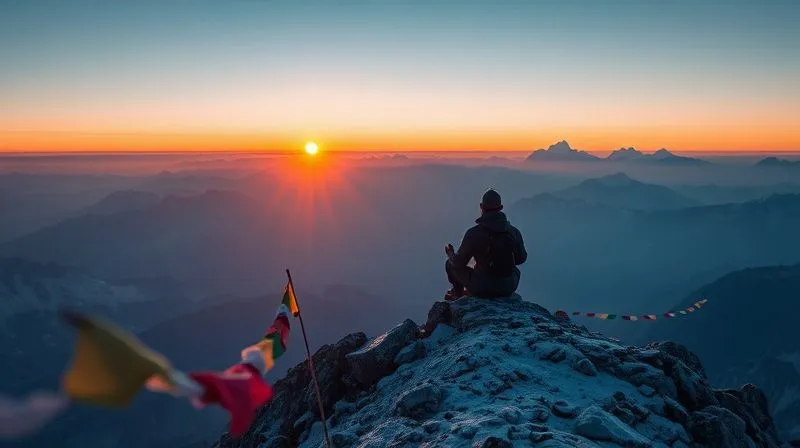
Imagine days spent walking through breathtaking landscapes, the only sounds being your own footsteps, the rustle of prayer flags, and the distant call of a mountain bird. A silent trek in the Himalayas is not merely a physical challenge; it's an immersive dive into mindfulness and self-awareness. It forces a complete disconnection from digital noise and the incessant demands of modern life, creating a profound space for introspection.
In my view, the sheer scale and majesty of the Himalayas naturally humble you, shifting your focus from self-importance to the vastness of existence. The silence, often guided by experienced meditation teachers, encourages you to observe your thoughts and emotions without judgment, a crucial step in processing and releasing the mental clutter associated with burnout. This is a prime example of an adventure spiritual journey that combats professional burnout effectively through profound stillness.
- Preparation: Choose a reputable tour operator specializing in silent retreats or mindful trekking. Ensure your physical fitness is adequate for the chosen route's elevation and duration.
- Intention Setting: Before you go, clearly articulate what you hope to gain. Is it clarity, peace, or release? This helps focus your experience.
- Embrace the Silence: Commit fully to the practice. Resist the urge to speak or engage in unnecessary distractions. Let the quiet be your guide.
- Journaling: Bring a journal to record insights and observations. This is invaluable for integrating your experiences upon return.
The consistent rhythm of walking, combined with the absence of external distractions, allows the mind to settle, often leading to profound insights and a renewed sense of clarity and purpose. It's a powerful way to recalibrate your internal compass.
Journey 2: Amazonian Ayahuasca Retreat (Deep Introspection & Healing)
Embracing Ancient Wisdom for Modern Wounds
This is arguably the most intense and potentially transformative of the journeys, not for the faint of heart, but incredibly potent for those seeking profound emotional and psychological healing. Ayahuasca, a sacred plant medicine from the Amazon, has been used for centuries by indigenous shamans for healing and spiritual insight. Under the guidance of experienced facilitators, it can offer a direct route to confronting and processing deep-seated traumas, fears, and patterns contributing to burnout.
I’ve seen individuals emerge from these retreats with a completely new perspective on their lives and careers, often describing it as years of therapy condensed into a few powerful ceremonies. It’s a journey of deep introspection, often challenging, but ultimately liberating. It requires immense respect for the medicine, the culture, and the process, and a commitment to careful integration afterward. This is a very specific adventure spiritual journey that combats professional burnout effectively by addressing its roots.
Key considerations: Ayahuasca ceremonies are not a recreational activity. They are serious healing work. It is paramount to choose a retreat center with a strong reputation for safety, experienced shamans, medical screening, and robust integration support. Research thoroughly and speak to past participants. Ethical considerations regarding indigenous practices are also vital.
"Sometimes, the most profound healing comes from confronting our deepest fears in a sacred space, guided by ancient wisdom. The journey is internal, but its ripple effects transform external reality." - Expert Insight (based on extensive field experience)
While not for everyone, for those who feel stuck in a cycle of burnout and believe there are deeper psychological or spiritual blockages, an ethically guided Ayahuasca retreat can be a catalyst for unparalleled transformation and a powerful reset.
Journey 3: Camino de Santiago Pilgrimage (Endurance & Self-Discovery)
Walking Your Way Back to Purpose
The Camino de Santiago, or "The Way of St. James," is an ancient network of pilgrim routes across Europe, converging at the cathedral of Santiago de Compostela in Spain. While rooted in Christian tradition, it has evolved into a universal path for self-discovery, offering a unique blend of physical endurance, mental fortitude, and spiritual introspection. You walk, you eat, you sleep, you repeat – stripping away the complexities of modern life.
From my perspective, the Camino is particularly effective against burnout because it simplifies existence. Each day presents a clear goal: reach the next town. The physical challenge of walking for weeks on end, combined with the social interaction with fellow pilgrims from all walks of life, helps to rebuild resilience and perspective. You learn to live with less, appreciate simple pleasures, and trust in the kindness of strangers, all potent antidotes to the isolation and cynicism often accompanying burnout.
- Choose Your Route: The Camino Francés is the most popular, but others like the Portuguese or Norte routes offer different experiences. Research distances and terrains.
- Pack Light: Every ounce counts. Embrace minimalism; it’s part of the journey’s lesson.
- Listen to Your Body: Don't push too hard. Rest days are crucial. The journey is not a race.
- Engage and Reflect: Talk to fellow pilgrims, but also dedicate time for solitary reflection and journaling.
| Aspect | Benefit | Burnout Impact |
|---|---|---|
| Physical Challenge | Endurance, stamina, physical health | Releases pent-up energy, fosters physical and mental resilience, improves sleep |
| Mental Fortitude | Focus, determination, presence | Breaks rumination cycles, builds mental toughness, cultivates gratitude for simplicity |
| Spiritual Growth | Introspection, clarity, interconnectedness | Connects to inner purpose, reduces anxiety, fosters a sense of belonging and community |
The rhythmic walking and the journey's inherent simplicity allow for a profound reset, helping individuals reconnect with their inner strength and re-evaluate what truly matters. It's an accessible adventure spiritual journey that combats professional burnout effectively for many.
Journey 4: Desert Vision Quest (Solitude & Visionary Insight)
Finding Clarity in the Vastness
A desert vision quest, often rooted in indigenous traditions, involves spending several days and nights alone in a remote wilderness area, often with minimal food and water, to seek spiritual guidance and clarity. While modern adaptations vary, the core principle remains: profound solitude in a stark, natural environment to facilitate deep self-reflection and connection to inner wisdom.
In my experience, the desert's vastness and silence create an unparalleled container for introspection. Stripped of all distractions, you are left with only yourself, your thoughts, and the raw elements. This can be challenging, even confronting, but it’s precisely this intensity that can break through the noise of burnout and reveal profound insights about your life's direction and purpose. It’s about listening deeply to your inner voice, often for the first time in years.
Case Study: Sarah's Desert Renewal
Sarah, a high-powered marketing executive, came to me utterly depleted. She felt purposeless despite her career success. She embarked on a guided four-day desert vision quest in the American Southwest. Initially, the silence and solitude were terrifying. However, by the third day, she described a profound shift. "The desert stripped away everything I thought I was," she told me. "I realized my identity was too tied to my job title. Out there, I was just Sarah, part of something bigger." She returned with a clear vision: to transition into a role that allowed her to mentor young professionals, aligning her skills with her newfound spiritual values. This resulted in a renewed sense of passion and a significant reduction in her burnout symptoms.
A vision quest is an intense, powerful experience, best undertaken with guidance from experienced facilitators who can ensure safety and provide support for integration. It’s an adventure spiritual journey that combats professional burnout effectively through radical self-encounter.
Journey 5: Voluntourism with a Spiritual Core (Service & Connection)
Giving Back to Find Yourself
For some, the path to healing from burnout lies not in solitary introspection, but in active service and genuine connection with others. Voluntourism, when approached ethically and with a spiritual intention, can be an incredibly potent remedy. It involves traveling to assist in projects that benefit local communities or the environment, offering a chance to step outside your own problems and contribute to something larger than yourself.
I've observed that the act of selfless service can profoundly shift perspective, fostering gratitude, empathy, and a renewed sense of purpose. When you're focused on building a school, protecting wildlife, or assisting in a remote clinic, your own professional anxieties often recede. The physical work, cultural immersion, and the joy of contributing create a powerful sense of fulfillment, directly counteracting the cynicism and detachment of burnout. This type of adventure spiritual journey combats professional burnout effectively by fostering altruism and connection.
- Conservation Projects: Working with endangered species or restoring natural habitats can foster a deep connection to the earth and a sense of stewardship.
- Community Development: Assisting in building infrastructure, teaching, or supporting local enterprises can create profound human connections and foster empathy.
- Cultural Exchange: Living and working alongside local communities offers invaluable insights into different ways of life, broadening perspective and challenging preconceived notions.
| Type of Voluntourism | Spiritual Aspect | Burnout Combat |
|---|---|---|
| Conservation Project | Connection to nature, stewardship, humility | Grounding, perspective shift, reduces feelings of overwhelm by focusing on tangible impact |
| Community Development | Empathy, altruism, interconnectedness, gratitude | Instills purpose, fosters human connection, reduces cynicism through shared effort |
| Teaching/Mentoring | Sharing wisdom, fostering growth, patience | Empowerment, renewed self-worth, shifts focus from personal stress to collective good |
When selecting a voluntourism program, prioritize organizations with transparent practices, genuine community partnerships, and a clear focus on sustainable impact. Avoid programs that feel exploitative or prioritize tourist experience over local benefit. For more insights on ethical voluntourism, consider resources like Responsible Travel's guide to volunteering abroad.
Choosing Your Path: Factors to Consider
Assessing Your Needs and Readiness
The question isn't just 'Which adventure spiritual journey combats professional burnout effectively?' but 'Which one is right for *you*?' As your mentor in this space, I urge you to undertake a candid self-assessment before committing. Each journey demands different levels of physical, emotional, and mental readiness.
- Physical Readiness: Are you prepared for strenuous treks, basic living conditions, or potentially long periods of travel? Be honest about your current fitness level.
- Emotional Openness: How comfortable are you with deep introspection, emotional vulnerability, or confronting challenging aspects of yourself? Some journeys are more intense than others.
- Time and Budget: These journeys vary significantly in duration and cost. Align your choice with what is realistically feasible for you.
- Spiritual Inclination: While these journeys are broadly spiritual, some lean into specific traditions more than others. Consider your comfort level and openness to different spiritual practices.
- Your Core Burnout Symptoms: If you feel overwhelmingly disconnected, a silent trek might be ideal. If you're cynical and isolated, voluntourism could be a powerful antidote. Match the journey to your specific needs.
Take your time with this decision. This isn't just a trip; it's an investment in your well-being and a pivotal step in overcoming professional burnout. It's about finding the right adventure spiritual journey that combats professional burnout effectively for your unique situation.
Preparing for Your Transformative Journey
Practical Steps for a Successful Spiritual Adventure
Once you’ve identified the adventure spiritual journey that resonates most with you, preparation is key. A well-prepared traveler is an open traveler, ready to embrace the experience fully. From my years of guiding individuals through these processes, I can tell you that intentional preparation significantly enhances the transformative potential.
- Logistical Planning: Book flights, secure necessary visas, and arrange travel insurance. Research local customs, vaccinations, and safety guidelines.
- Physical Conditioning: If your journey involves trekking or physical labor, start a fitness regimen well in advance. Consult your doctor for a check-up.
- Mental & Emotional Preparation: Read books about your chosen destination or spiritual practice. Practice mindfulness or meditation to prepare your mind for introspection. Discuss your intentions with a trusted friend or therapist.
- Set Realistic Expectations: Understand that transformation isn't always comfortable. There will be challenges. Embrace them as part of the growth process.
- Plan for Re-entry: The return home can be challenging. Plan a buffer period before jumping back into work. Consider how you'll integrate your insights and maintain newfound practices. Resources like Greater Good Magazine's advice on maintaining post-vacation well-being can be helpful.
Remember, the journey doesn't end when you return home; it's just beginning. The insights gained must be nurtured and integrated into your daily life to create lasting change and truly combat professional burnout effectively.
Frequently Asked Questions (FAQ)
Q1: How long should such a journey be to be effective in combating burnout? In my experience, a minimum of 2-3 weeks is often ideal for deep transformation. This allows enough time to fully disengage from your routine, immerse yourself in the journey, and begin the process of internal shift. Shorter trips can offer a refresh, but sustained change usually requires more time away. For journeys involving plant medicine or deep spiritual work, the integration period afterward is as crucial as the journey itself.
Q2: Are these journeys suitable for everyone, regardless of their spiritual beliefs? Absolutely. While 'spiritual' is in the name, it refers more to a quest for inner meaning and connection rather than adherence to a specific dogma. Many secular individuals find profound meaning in these experiences. The key is an openness to introspection, a willingness to challenge one's own perspectives, and a respect for the cultural or natural contexts of the journey. You don't need to be 'spiritual' to benefit, just open-minded.
Q3: What are the potential risks or challenges associated with these transformative journeys? Risks vary by journey. Physical challenges (e.g., altitude sickness in the Himalayas, injuries on the Camino), emotional intensity (e.g., Ayahuasca, vision quests can bring up difficult emotions), and logistical hurdles (e.g., remote locations, cultural differences) are common. It's crucial to choose reputable operators, prepare thoroughly, and be honest about your physical and mental health. Always consult your doctor before embarking on any intense journey, especially if you have pre-existing conditions.
Q4: How do I choose a reputable guide or organization for a spiritual adventure? This is critical. Look for organizations with extensive experience in the specific journey you're interested in. Check reviews, ask for references, and ensure they prioritize safety, ethical practices, and post-journey support. For plant medicine retreats, verify their medical screening processes and the experience of their facilitators. For voluntourism, ensure transparency about where your money goes and genuine community involvement. A good starting point for researching ethical travel is the UNWTO's resources on sustainable tourism.
Q5: What can I do to maintain the benefits and insights gained after returning home? Integration is key. Don't immediately jump back into your old routine. Create a buffer period. Continue journaling, meditate, or practice mindfulness regularly. Share your experiences with trusted individuals. Consider finding a coach or therapist to help you process and integrate your insights into daily life. Most importantly, identify one or two small, actionable changes you can make in your routine to honor the lessons learned and prevent professional burnout from creeping back.
Key Takeaways and Final Thoughts
Professional burnout is more than just feeling tired; it’s a profound disconnection from purpose and self. While traditional breaks offer fleeting relief, an adventure spiritual journey provides a holistic, transformative antidote. I've seen firsthand how these experiences can reignite spirits, clarify purpose, and build lasting resilience against the pressures of modern professional life.
- Identify the core symptoms of your burnout and choose a journey that specifically addresses them.
- Prioritize ethical, reputable guides and organizations to ensure a safe and genuinely transformative experience.
- Prepare thoroughly, both physically and mentally, and commit to the process of deep introspection and challenge.
- Remember that the journey continues long after you return; intentional integration is vital for sustained well-being.
- There is no single 'best' journey; the most effective adventure spiritual journey combats professional burnout effectively when it aligns with your unique needs and readiness.
The path to healing from burnout is a courageous one, and choosing to embark on an adventure spiritual journey is a powerful declaration of self-care. Trust your intuition, do your research, and take that bold step towards rediscovering your inner strength and purpose. The world, and your renewed self, awaits.
Recommended Reading
- Conquer Your Fears: Solo Dining Tips for Shy Travelers Revealed
- 5 Critical Steps: Safeguarding Against Zoonotic Risks in Wildlife Rescue
- The Ultimate Guide: What to Pack for an Outdoor Ice Skating Trip?
- 7 Strategic Ways Wellness Travel Prevents Career Burnout & Boosts Your Drive
- Ultimate Guide: How to Protect Delicate Local Crafts While Traveling

Your email address will not be published. Required fields are marked *