

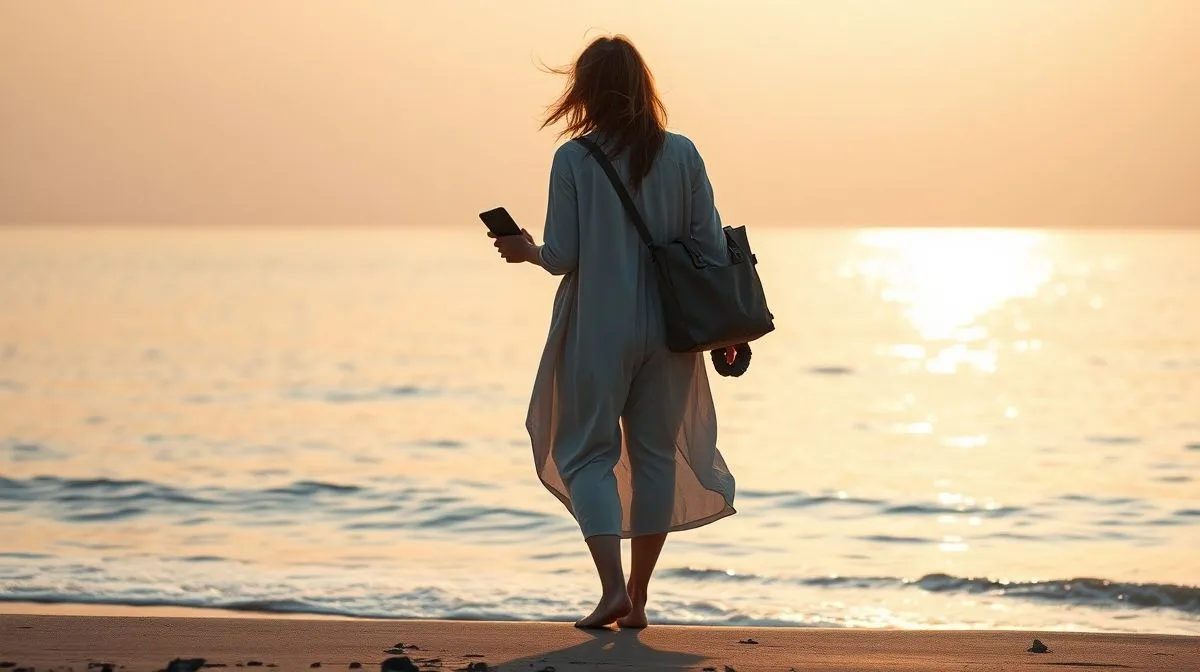
Prevent Work Stress From Ruining My Solo Relaxation Trip?
For over two decades as a solo traveler and a keen observer of the modern professional landscape, I’ve witnessed a concerning trend: the creeping insidious nature of work stress, even into our most sacred personal spaces. I’ve seen countless individuals invest time, money, and emotional energy into planning what should be a rejuvenating solo trip, only to find themselves tethered to their inboxes or haunted by project deadlines.
This isn't just about checking emails; it's about the psychological burden that prevents true disconnection. It's the persistent hum of the office in the back of your mind, turning a scenic hike into a mental to-do list session, or a quiet dinner into a worry about tomorrow's presentation. The promise of freedom and introspection that solo travel offers is tragically undermined when work stress hijacks your mental bandwidth.
But it doesn't have to be this way. Drawing from my extensive experience and the wisdom of countless journeys, I’ve developed a robust framework designed to equip you with the strategies and mindset shifts necessary to genuinely leave work behind. In this definitive guide, you’ll learn actionable steps, proven protocols, and expert insights to truly prevent work stress from ruining your solo relaxation trip, ensuring you return refreshed, revitalized, and ready to tackle life with renewed vigor.
The Pre-Trip Protocol: Setting the Stage for Serenity
The battle against work stress on your solo trip isn't won on the road; it's won in the weeks, even days, leading up to your departure. This preparatory phase is absolutely critical. Think of it as building a robust firewall between your professional obligations and your personal liberation.
The "Work-Offload" Framework
Before you even pack your first item, you must systematically offload your responsibilities. This requires deliberate planning and clear communication. It's about creating a vacuum of responsibility that allows you to step away without guilt or constant interruption.
- Delegate with Precision: Identify tasks that absolutely need to be done while you're away. For each, assign a specific person, clearly outlining expectations, deadlines, and access to necessary resources. Resist the urge to do "just one more thing" before you leave.
- Automate What You Can: Schedule out-of-office replies for emails, set up automated reports, or pre-schedule social media posts if that's part of your role. Leverage technology to work for you while you're not working.
- Create a "Return to Work" Plan: Don't just plan for your absence; plan for your return. Outline the top 3-5 priorities you'll tackle on your first day back. This reduces anxiety about the pile-up and allows you to truly disengage.
As Seth Godin, the renowned marketing expert, often emphasizes,
"The work we do is often limited by the stories we tell ourselves about what's possible."This applies directly to how we perceive our ability to disconnect. It's possible, but it requires intentionality.
Strategic Communication & Boundary Setting
Your colleagues, clients, and superiors need to know your availability (or lack thereof) well in advance. Ambiguity is the enemy of a stress-free solo trip. I've learned that clear, firm boundaries are not selfish; they are essential for your well-being and, ultimately, your long-term productivity.
- Announce Your Absence Early: Inform relevant parties weeks, not days, before your departure. This gives everyone time to adjust and plan around your absence.
- Set Realistic Expectations: Explicitly state that you will have limited or no access to email/phone. Provide an emergency contact person (not you!) and define what constitutes an actual emergency.
- Train Your Team: Empower your team members to handle situations without you. This builds their capabilities and frees you. I've seen teams flourish when given more autonomy during a leader's absence.
According to a study published in the Harvard Business Review, employees who take regular, complete breaks from work report higher job satisfaction and productivity upon their return. This isn't just anecdotal; it's backed by research.
Digital Detox: Reclaiming Your Mental Real Estate
In our hyper-connected world, the biggest culprit for work stress seeping into solo travel is often our digital devices. A solo trip is an unparalleled opportunity for introspection and connection with your surroundings, but this is impossible if your attention is constantly fragmented by pings and notifications. This is where the digital detox becomes paramount if you want to prevent work stress from ruining your solo relaxation trip.
The "Digital Disconnect" Checklist
It's not enough to simply say you won't check emails. You need a proactive strategy to sever the digital umbilical cord.
- Delete Work Apps: The simplest and most effective step. Remove email clients, communication apps (Slack, Teams), and project management tools from your personal phone. If you need them for an emergency, access them via a web browser on a separate, dedicated device that you only check at pre-determined, limited times (or not at all).
- Turn Off Notifications: For any remaining apps, disable all non-essential notifications. This includes social media, news alerts, and anything that pulls your attention away from the present moment.
- Inform Your Inner Circle: Let close friends and family know you'll be less responsive. Encourage them to call if truly urgent, rather than text, to help you limit screen time.
- Designate "No-Phone Zones": Decide on specific times or places where your phone is absolutely off-limits, e.g., during meals, while exploring a new city, or before bed.
This deliberate act of disconnection is profoundly liberating. It forces you to engage with your environment and yourself, rather than constantly reacting to external stimuli.
Beyond Airplane Mode: Deep Disengagement
Airplane mode is a good start, but true digital detox goes deeper. It's about changing your relationship with technology, not just toggling a setting. Consider leaving your work laptop at home entirely. If a true emergency requires access to work files, perhaps a trusted colleague can access them for you.
"The quieter you become, the more you are able to hear." - Rumi. This quote perfectly encapsulates the benefit of a digital detox; it creates mental space for genuine self-discovery.
I've personally found that the first 24-48 hours are the hardest. The phantom vibrations, the urge to check. But once you push past that initial discomfort, a profound sense of calm washes over you. This mental clarity is precisely what you seek from a solo relaxation trip.
Mindset Mastery: Shifting from 'Doer' to 'Be-er'
Even with all the external boundaries in place, your internal mindset can still be a source of stress. Many high-achievers are wired for productivity and problem-solving, which can make true relaxation feel alien or even unproductive. To truly prevent work stress from ruining your solo relaxation trip, you must actively cultivate a different internal state.
Cultivating Presence: The Art of Slow Travel
Solo travel offers an unparalleled opportunity to practice mindfulness. Without the distractions of companions, you're forced to engage directly with your surroundings. This is where you shift from 'doing' – planning, executing, achieving – to 'being' – observing, experiencing, feeling.
- Engage Your Senses: Actively notice the smells of a foreign market, the texture of an ancient stone wall, the nuances of a new language. Journal about these sensory experiences.
- Embrace the Unplanned: Resist the urge to over-schedule. Leave ample room for spontaneity, getting lost, or simply sitting in a cafe and watching the world go by. This unstructured time is crucial for mental decompression.
- Practice Gratitude: Take a few moments each day to acknowledge something beautiful or enriching you experienced. This shifts your focus from what's missing (work) to what's present (your journey).
The concept of 'slow travel' is not just a trend; it's a philosophy that aligns perfectly with stress reduction. It encourages you to linger, to absorb, and to truly connect with a place and yourself, rather than rushing through a checklist of sights.
The Power of Intentional Non-Productivity
For many professionals, the idea of doing 'nothing' can feel uncomfortable. We're conditioned to constantly be productive. However, your solo trip is precisely the time to challenge this conditioning. Embrace activities that have no tangible outcome other than your enjoyment.
"Rest is not idleness, and to lie sometimes on the grass under trees on a summer's day, listening to the murmur of the water, or watching the clouds float across the sky, is by no means a waste of time." - John Lubbock. This timeless wisdom resonates deeply with the need for true mental respite.
This might mean spending an entire afternoon reading a novel, sketching in a park, or simply napping by a pool. These are not wasted moments; they are investments in your mental health and creative reservoir. Recognise that true rest is productive in its own right, by recharging your capacity for future work.
Handling the Inevitable: When Work Tries to Creep In
Despite your best efforts, there might be moments when work-related thoughts or even actual contact attempts surface. The key is not to let these fleeting instances derail your entire relaxation. Having a predefined protocol for these scenarios can significantly reduce their impact. This is a critical component if you truly want to prevent work stress from ruining your solo relaxation trip.
The "Emergency Protocol" for Solo Travelers
A true emergency is rare, but it's important to have a plan for it. This plan should be communicated clearly to your team before you leave.
- Define "Emergency": What constitutes a genuine emergency? A server crash? A major client loss? A true crisis that only you can resolve? Be specific. A minor query or a forgotten file is NOT an emergency.
- Designate a Single Point of Contact: Provide one, and only one, person for your team to contact in a dire emergency. This prevents multiple people from reaching out.
- Set a Response Window: If you absolutely must respond, define a very narrow window (e.g., 15 minutes once every 48 hours for true emergencies only). Stick to it.
- Use a "Work Bag": If you must carry a work phone or laptop for emergencies, keep it physically separate from your personal items. Put it in a bag that you only open during your designated emergency check-in time, and then immediately put it away.
This structured approach minimizes the mental overhead of constantly wondering if work needs you. You'll know that if it's truly critical, you'll be alerted through a single, predefined channel.
Proactive Problem-Solving: A Mini Case Study
Case Study: How Sarah, a Marketing Manager, Maintained Her Solo Peace
Sarah, a marketing manager at a mid-sized tech firm, was notorious for checking emails on vacation. Her upcoming solo trip to Costa Rica was meant to be different. Following my advice, she spent two weeks prior meticulously delegating her tasks and setting clear boundaries with her team.
She designated her assistant manager, Alex, as the sole emergency contact. Sarah deleted all work apps from her phone, only carrying a small, cheap burner phone with Alex's number for true emergencies. She even left her work laptop at home.
Mid-trip, an unexpected issue arose with a key client's campaign. Alex messaged the burner phone, stating it was urgent. Sarah calmly checked it during her pre-defined 15-minute window. She provided Alex with a concise, actionable solution via text, trusted him to execute it, and immediately put the phone away. The entire interaction took less than 10 minutes. Sarah reported feeling a momentary flicker of stress, but because she had a plan and trusted her team, it quickly dissipated, and she returned to enjoying her waterfall hike. This resulted in a truly restorative trip, and Alex gained valuable leadership experience.
Physical and Environmental Cues: Designing Your Stress-Free Bubble
Our environment profoundly impacts our mental state. While on a solo trip, you have the unique opportunity to curate your surroundings to actively promote relaxation and minimize triggers for work-related thoughts. This isn't just about choosing a pretty destination; it's about designing a personal sanctuary to prevent work stress from ruining your solo relaxation trip.
Curating Your Sensory Experience
Think about how your chosen environment can stimulate your senses in a positive, calming way.
- Visuals: Choose destinations with natural beauty – mountains, oceans, forests. Avoid busy, bustling cities if your goal is pure relaxation. Seek out quiet cafes, peaceful parks, or accommodations with inspiring views.
- Sounds: Pack noise-canceling headphones for travel days. Seek out natural sounds: waves crashing, birds chirping, the gentle rustle of leaves. Avoid places with constant sirens or loud chatter.
- Scents: Consider bringing a small essential oil diffuser or a calming scent spray for your accommodation. Engage with local scents – fresh bread from a bakery, fragrant flowers, the salty air of the ocean.
- Touch: Choose comfortable clothing, soft blankets, or enjoy the feeling of warm sand beneath your feet. A relaxing massage or a swim in cool water can also be incredibly grounding.
By intentionally surrounding yourself with calming sensory inputs, you create a powerful buffer against external stressors and internal anxieties. Your brain will associate these new sensations with peace, making it harder for work thoughts to intrude.
The Importance of a Flexible Itinerary
While some planning is necessary, an overly rigid itinerary can quickly become another source of stress, mirroring the demands of work. Solo travel's greatest gift is its flexibility.
"The journey of a thousand miles begins with a single step." - Lao Tzu. And that single step should not be constrained by a minute-by-minute schedule.
Build in ample free time. Don't feel pressured to see every single landmark. Allow yourself the luxury of changing your mind, lingering longer in a place you love, or spontaneously exploring a hidden alleyway. This freedom from external pressure is a powerful antidote to the structured demands of your professional life. It reinforces the idea that this time is truly your own, unburdened by external expectations.
Post-Trip Integration: Sustaining the Solo Travel Zen
The success of your solo relaxation trip isn't just measured by how much you enjoyed it, but by how well you manage your re-entry into daily life. A sudden, jarring return to a full workload can quickly erase all the benefits of your time away. To truly prevent work stress from ruining your solo relaxation trip, you need a strategy for the aftermath too.
Gradual Re-entry into Work Life
I always advocate for a soft landing. Don't schedule your return flight for Sunday night if you start work Monday morning. Give yourself at least one full buffer day.
- The Buffer Day: Use this day to unpack, do laundry, grocery shop, and gently ease back into your home environment. Avoid checking work emails until the very end of the day, or better yet, wait until morning.
- Prioritize on Day One: On your first day back, resist the urge to dive into every email. Refer to your "Return to Work" plan you created before your trip. Focus only on the 3-5 most critical tasks. Delegate or defer everything else.
- Schedule Catch-Ups: Instead of feeling overwhelmed by a flood of information, schedule brief catch-up meetings with key team members. This allows for efficient information transfer without feeling like you're playing catch-up against an invisible opponent.
This gradual re-entry allows your mind to slowly re-engage with work, rather than being thrown into the deep end. It preserves your calm and prevents the immediate onset of post-vacation blues.
Carrying the Calm Forward
The goal isn't just to have a stress-free trip; it's to integrate the lessons learned into your everyday life. Solo travel often teaches us resilience, self-reliance, and the joy of presence. How can you bring that back?
- Maintain Digital Boundaries: Can you continue some aspects of your digital detox in your daily life? Perhaps no phone at the dinner table, or a dedicated 'no-screen' hour before bed.
- Schedule "Solo Time": Even at home, carve out moments for yourself – a quiet walk, a coffee alone, an hour dedicated to a hobby. These mini-solo adventures can recharge you regularly.
- Reflect and Journal: Continue to reflect on your experiences and the feelings of peace you cultivated. What rituals or habits from your trip can you adopt permanently?
As the American Psychological Association often highlights, consistent self-care practices are vital for long-term stress management. Your solo trip isn't just a break; it's a blueprint for a more balanced life.
Frequently Asked Questions (FAQ)
Is it truly possible to completely disconnect from work on a solo trip? While 100% disconnection might be challenging for some roles, especially those with critical, real-time demands, it is absolutely possible to achieve significant, meaningful disconnection. The strategies outlined – meticulous pre-trip planning, clear communication, strict digital boundaries, and a shift in mindset – are designed to minimize interruptions and ensure that any necessary work contact is brief and manageable, not trip-ruining. The goal is to shift from 'always on' to 'intentionally available only for true emergencies'.
What if my boss or clients insist on being able to reach me at all times? This is a common challenge, but it often stems from a lack of clear boundaries and trust. Start by proving your reliability and thoroughness in your pre-trip preparations. Present a detailed plan for how work will be handled in your absence, including designated contacts and emergency protocols. Frame it as a benefit to the company – a rested, revitalized employee is a more productive one. Referencing studies on the benefits of employee well-being (like those from Forbes or Harvard Business Review) can also strengthen your case. If resistance persists, it may indicate a deeper cultural issue within your workplace that needs addressing, possibly even a reevaluation of your role or employer.
I feel guilty about not checking in; how do I overcome this? Guilt often arises from a perceived obligation or fear of negative consequences. Remind yourself that you've earned this time. You've prepared diligently, delegated effectively, and set clear expectations. Your well-being is paramount, and returning refreshed ultimately benefits your work and colleagues. Practice positive self-talk: "I am taking essential time to recharge, which will make me more effective upon my return." Focus on the present moment and the unique experiences of your solo trip. Journaling about your feelings of guilt and then consciously shifting to gratitude for your freedom can also be helpful.
Should I tell people I'm traveling solo to avoid work contact? While you don't need to specify you're traveling solo to your colleagues or clients when setting your out-of-office, it can be beneficial to communicate your limited availability clearly. The focus should be on your unavailability for work, not the specifics of your travel. However, sharing your solo travel plans with trusted friends and family can be a good safety measure and allows them to support your goal of disconnecting. Your professional boundaries should be consistent, regardless of your travel companions.
What if an actual emergency happens and I feel obliged to respond? If a pre-defined, genuine emergency occurs (as per your emergency protocol), then a brief, targeted response is appropriate. The key is to keep it contained. Respond only to what's necessary, empower your designated contact to handle the rest, and immediately re-engage with your trip. Avoid getting pulled into follow-up emails or discussions. Trust the system you've put in place. The goal is not to be completely unreachable, but to control the terms of engagement so that work doesn't consume your valuable relaxation time. Remember, you can solve a problem without letting it ruin your entire experience.
Recommended Reading
- Europe on a Shoestring: Family Travel Tips That Won't Break the Bank
- The Essential Guide: How to Stay Safe and Healthy at a Music Festival
- Unlock the Secret: How to Maintain a Clean Living Routine on Vacation
- Cross Country Skiing for Beginners? Essential Tips You Need Now!
- Romantic Escape: Best Designer Hotels for Unforgettable Getaways
Key Takeaways and Final Thoughts
- Proactive Planning is Paramount: Your ability to disconnect begins weeks before you depart with meticulous delegation and clear communication.
- Digital Detox is Non-Negotiable: Sever the digital ties by deleting work apps and turning off notifications to reclaim your mental space.
- Cultivate a "Be-er" Mindset: Shift from constant productivity to embracing presence, spontaneity, and intentional non-productivity.
- Establish Emergency Protocols: Define what constitutes a true emergency and how you will handle it, minimizing its impact on your trip.
- Prioritize a Gradual Re-entry: Give yourself a buffer day and a structured return-to-work plan to sustain your post-trip zen.
Your solo relaxation trip is more than just a vacation; it's an investment in your mental health, your creativity, and your long-term well-being. It's a sacred time for introspection, growth, and pure, unadulterated enjoyment. By implementing these expert strategies, you are not just taking a break from work; you are actively choosing to protect your peace and truly prevent work stress from ruining your solo relaxation trip. Go forth, explore, and rediscover the profound joy of being completely present, completely free, and completely yourself. The world awaits, and your work can wait a little longer.





Your email address will not be published. Required fields are marked *