


Reducing Spaceport Operational Costs for Frequent Tourist Flights?
For over two decades in the nascent, yet rapidly accelerating, space tourism sector, I've witnessed firsthand the monumental challenge spaceports face: balancing groundbreaking innovation with the stark realities of economic viability. The dream of frequent, accessible space travel hinges not just on rocket technology, but crucially on the efficiency of the ground infrastructure supporting it. Many aspiring space tourism ventures stumble, not in orbit, but right here on Earth, due to unsustainable operational overheads.
The pain point is palpable. High operational costs at spaceports translate directly into exorbitant ticket prices, severely limiting market access and hindering the industry's growth. We're talking about everything from ground support equipment maintenance and energy consumption to personnel management and regulatory compliance. Without a strategic approach to cost reduction, the vision of space tourism as a regular, commercial enterprise remains a distant mirage, confined to the ultra-wealthy.
But the good news is, solutions exist. In this definitive guide, I'll share actionable frameworks, real-world analogies, and expert insights drawn from my extensive experience. You'll learn how to implement intelligent strategies that directly address the core issue of reducing spaceport operational costs for frequent tourist flights, paving the way for a more sustainable and profitable future in space tourism.
Optimizing Ground Infrastructure & Facility Management
The foundation of any efficient spaceport lies in its physical infrastructure and how it's managed. I've seen countless facilities over-engineer or under-optimize, leading to significant financial drains. The key is smart design coupled with proactive, data-driven management.
Automated Logistics and Smart Maintenance
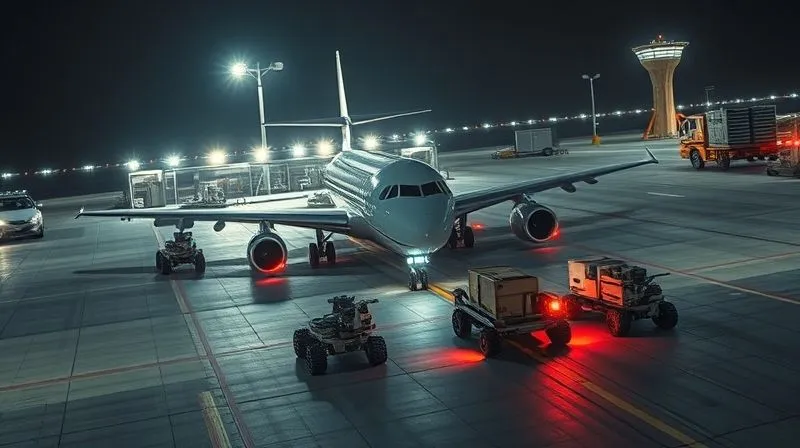
Automation is not just a buzzword; it's a critical lever for cost reduction. Manual processes are prone to error, slower, and demand higher personnel costs. Implementing automated systems for fuel transfer, cargo loading, and even routine inspections can dramatically cut expenses.
Here's how to approach it:
- Assess Current Workflows: Identify repetitive, high-labor tasks that could be automated. Think about ground vehicle movements, payload handling, and pre-flight checks.
- Invest in Autonomous Ground Support Equipment (AGSE): Modern AGSE, from robotic fuel trucks to automated baggage loaders for crew and tourist gear, can operate with minimal human oversight, increasing speed and safety.
- Implement Predictive Maintenance: Instead of reactive repairs, use IoT sensors and AI to monitor equipment health. This allows for scheduled maintenance during off-peak hours, preventing costly breakdowns and extending asset lifespans.
- Optimize Energy Usage: Integrate smart grid technologies, solar panels, and energy-efficient building designs. Large hangars and control centers consume vast amounts of power; intelligent lighting and HVAC systems can yield substantial savings.
By embracing these technologies, spaceports can achieve leaner operations, directly contributing to reducing spaceport operational costs for frequent tourist flights. Imagine the efficiency of a highly automated cargo terminal applied to spaceflight operations.
Energy Efficiency and Sustainable Practices
Beyond automation, a holistic approach to energy consumption is vital. Spaceports are energy-intensive operations. By focusing on sustainability, spaceports can achieve significant long-term savings and enhance their public image.
- Renewable Energy Integration: Solar farms and wind turbines can offset a substantial portion of electricity demand, especially in areas with abundant natural resources.
- Waste Heat Recovery: Systems that capture and reuse heat generated by launch operations or ground equipment can provide heating for facilities, further reducing energy bills.
- Water Management: Implementing closed-loop water systems for cooling and non-potable uses can reduce consumption and associated costs, particularly in arid regions where many spaceports are located.
- Green Building Materials: Utilizing sustainable and locally sourced materials for new constructions or renovations can lower initial costs and long-term maintenance.
Streamlining Pre-Flight and Post-Flight Operations
The efficiency of an airline is often measured by its turnaround time. The same principle, amplified by the complexity of spaceflight, applies to spaceports. Every minute a vehicle spends on the pad is a minute of lost revenue potential and accumulating costs.
Standardizing Check-in and Boarding Processes
Tourist experience must be paramount, but not at the expense of efficiency. I've advocated for years that space tourism can learn much from commercial aviation's best practices in passenger flow, adapted for the unique requirements of space travel.
The goal isn't just to get passengers to space, but to do so with the same predictable efficiency and comfort they expect from a premium air travel experience, while ensuring every safety protocol is meticulously observed.
Implementing standardized, digital check-in procedures, biometric identification, and clear, efficient boarding gates can significantly reduce the time passengers spend waiting and the personnel required to manage them. Pre-flight medical checks and safety briefings can be streamlined through online modules and interactive simulations, minimizing physical infrastructure and staffing needs at the spaceport itself.
Rapid Turnaround Protocols
The holy grail for frequent flights is rapid turnaround. This is where the real cost savings for operators, and thus spaceports, come into play. A vehicle stuck on the ground for days or weeks is a financial liability.
Consider these steps for optimizing turnaround:
- Modular Component Design: Space vehicles designed with easily replaceable or quickly refuelable modules significantly cut maintenance time.
- Dedicated Ground Crews & Equipment: Assigning specialized teams and pre-positioned equipment to specific pads can reduce transit times and improve familiarity with the vehicle.
- Parallel Operations: Where possible, conduct multiple post-flight and pre-flight tasks simultaneously. For instance, while one team is inspecting the propulsion system, another can be loading cargo or performing cabin checks.
- Automated Servicing Towers: Robotic arms and automated platforms can quickly access and service different parts of the vehicle, reducing the need for extensive scaffolding and manual labor.
By focusing on rapid turnaround, spaceports can increase their throughput, making frequent tourist flights a more economically viable reality and directly impacting the goal of reducing spaceport operational costs for frequent tourist flights.
Leveraging Advanced Technology for Operational Gains
Technology is not merely for the rockets; it's equally transformative for ground operations. The smart spaceport is a digitally integrated ecosystem.
AI and Predictive Analytics for Resource Allocation
One of the largest hidden costs in spaceport operations is inefficient resource allocation. This includes everything from scheduling personnel and equipment to managing fuel and supplies. AI and predictive analytics can revolutionize this.
Case Study: Elysium Spaceport's AI-Driven Savings
Elysium Spaceport, a fictional but realistic facility in the deserts of New Mexico, faced escalating operational costs due to unpredictable weather delays and fluctuating flight schedules. Their manual resource allocation system led to significant idle time for personnel and equipment, and frequent last-minute overtime payments. By implementing an AI-driven predictive analytics platform, they were able to forecast weather patterns with higher accuracy, optimize flight windows, and dynamically reallocate ground crews and equipment. The AI analyzed historical data, real-time sensor inputs, and external factors to suggest optimal staffing levels and equipment deployment. This resulted in a 15% reduction in personnel overtime, a 10% decrease in equipment idle time, and a 5% saving on energy consumption due to better scheduling of high-power operations. This directly contributed to reducing spaceport operational costs for frequent tourist flights and improved overall efficiency.
Here's a simplified comparison of resource allocation efficiency:
| Metric | Before AI | After AI |
|---|---|---|
| Personnel Overtime (Monthly) | $50,000 | $42,500 |
| Equipment Idle Time (%) | 20% | 10% |
| Energy Savings (Monthly) | N/A | $15,000 |
| Flight Schedule Adherence (%) | 80% | 95% |
Modular and Scalable Infrastructure Design
Building a spaceport for tomorrow's demand is a delicate balancing act. Overbuilding leads to immediate sunk costs and maintenance overheads. Underbuilding leads to bottlenecks and expensive retrofits. The solution lies in modularity.
- Phased Development: Design the spaceport to expand in phases, adding launch pads, hangars, or passenger terminals only as demand justifies.
- Standardized Modules: Use pre-fabricated, standardized modules for various facilities. This reduces construction time and costs, and allows for easier expansion or reconfiguration.
- Flexible Use Zones: Design areas that can adapt to different types of launch vehicles or operations. A single pad might be configurable for both vertical and horizontal launches, maximizing utility.
Collaborative Models and Multi-User Facilities
No single entity needs to bear the entire burden of spaceport costs. Collaboration and shared resources are powerful tools for efficiency.
Shared Services and Joint Ventures
Just as airports serve multiple airlines, spaceports must embrace a multi-user model. This distributes the fixed costs of infrastructure and specialized equipment across several operators.
I've long advocated for spaceports to actively pursue joint ventures and shared services agreements. This could involve:
- Shared Ground Support Equipment: A pool of specialized vehicles, cranes, and tools maintained by the spaceport and rented out to various operators as needed, rather than each operator owning their full suite.
- Centralized Air Traffic and Range Control: A single, highly efficient control center can manage multiple launch and landing operations for different clients.
- Common Training Facilities: Simulators and training grounds can be shared, reducing the individual investment for each space tourism company.
According to a recent analysis by the Aerospace Corporation, shared infrastructure models can reduce individual operator capital expenditures by up to 30%, a significant factor in reducing spaceport operational costs for frequent tourist flights. More on such models can be found in detailed reports on commercial space infrastructure.
Public-Private Partnerships (PPPs)
Government entities often have long-term strategic interests in space development but may lack the agile operational capabilities of private industry. PPPs offer a powerful synergy.
In a PPP model, governments can provide land, initial infrastructure funding, or regulatory support, while private companies bring operational expertise, capital for development, and a market-driven approach. This significantly de-risks investment for private operators and ensures that public funds are leveraged efficiently for broader economic and technological goals. Many successful spaceports globally, like Spaceport America, operate under some form of PPP, demonstrating their efficacy. You can explore further insights into the benefits of such partnerships on sites like Forbes' coverage of space tourism's future.
Human Capital Optimization and Training
Even with advanced automation, human expertise remains indispensable. The challenge is to make that expertise as efficient and impactful as possible.
Cross-Training and Multiskilling Personnel
Specialization is important, but over-specialization can lead to inefficiencies, especially during fluctuating operational demands. Cross-training personnel means a smaller core team can handle a wider range of tasks, reducing the need for a larger, more specialized workforce.
For example, a technician trained in both avionics and ground support equipment maintenance can be deployed more flexibly. This not only reduces staffing costs but also enhances team resilience and responsiveness during unforeseen circumstances.
Performance-Based Incentives
Motivated employees are more productive employees. Implementing performance-based incentive programs can align individual and team goals with the spaceport's overall efficiency objectives.
Investing in your people, through training and fair incentives, is not an expense; it's the most valuable investment you can make in the long-term operational efficiency and safety of your spaceport.
This could include bonuses for achieving rapid turnaround times, commendations for identifying cost-saving measures, or career development opportunities linked to acquiring new skills. Such programs foster a culture of efficiency and continuous improvement.
Financial Engineering and Revenue Diversification
A spaceport cannot thrive on launch fees alone, especially in the early stages of frequent tourist flights. Creative financial strategies and diverse revenue streams are crucial.
Creative Funding Mechanisms
Beyond traditional investment, spaceports should explore innovative funding models:
- Green Bonds: For environmentally conscious infrastructure projects (e.g., renewable energy integration), green bonds can attract impact investors.
- Securitization of Future Revenue: Future launch slots or long-term operational contracts can be securitized to raise capital upfront.
- Government Grants & Tax Incentives: Many governments offer incentives for high-tech infrastructure development and job creation, which spaceports certainly qualify for. Insights into funding for critical infrastructure can often be found through organizations like the World Bank's PPP resources.
Non-Flight Revenue Streams
Spaceports are unique destinations. They should leverage this appeal to generate revenue beyond launch services, thereby contributing significantly to reducing spaceport operational costs for frequent tourist flights.
- Tourism & Visitor Centers: Offer guided tours, interactive exhibits, and observation decks. A well-designed visitor center can be a major draw, generating ticket sales, merchandise revenue, and food/beverage sales.
- Event Hosting: The unique backdrop of a spaceport makes it an ideal venue for corporate events, conferences, and even film productions.
- Research & Development Facilities: Lease space to aerospace R&D firms, universities, or startups, creating an innovation hub that also generates rent.
- Ancillary Services: Offer specialized services like advanced manufacturing, vehicle testing, or astronaut training facilities to third parties.
Regulatory Harmonization and Policy Advocacy
The regulatory landscape for space tourism is still evolving. Navigating it efficiently, and advocating for sensible changes, can dramatically impact operational costs.
Simplifying Compliance Pathways
Complex, fragmented, or outdated regulations can add significant overhead in terms of compliance personnel, legal fees, and potential delays. Spaceports should proactively engage with regulatory bodies to:
- Advocate for Streamlined Licensing: Push for a more efficient and predictable licensing process for frequent commercial spaceflights.
- Harmonize International Standards: For multi-national operations, differing national regulations create significant hurdles. Advocating for international standards reduces redundancy.
- Adopt Risk-Based Regulation: Instead of prescriptive rules, a performance-based or risk-based regulatory framework allows operators more flexibility in achieving safety goals, often at a lower cost.
International Cooperation
Space tourism is inherently global. International cooperation, whether through agreements on airspace management, safety standards, or liability frameworks, is essential for a thriving industry. Spaceports can play a crucial role in fostering these discussions.
Engaging with bodies like the International Civil Aviation Organization (ICAO) and national space agencies to develop unified guidelines can prevent future regulatory headaches and foster a more predictable operating environment. This proactive engagement is a long-term strategy for reducing spaceport operational costs for frequent tourist flights by minimizing future legal and operational friction. For insights into global space policy, resources from organizations like the United Nations Office for Outer Space Affairs (UNOOSA) are invaluable.
Frequently Asked Questions (FAQ)
Question: How quickly can a spaceport expect to see cost reductions after implementing these strategies? The timeline for cost reductions varies significantly based on the strategy. Some initiatives, like optimizing energy use or streamlining check-in processes, can show tangible savings within 6-12 months. Larger investments in automation or modular infrastructure might take 2-3 years to yield substantial returns, but the long-term impact on operational efficiency and profitability is profound. It's a journey, not a sprint.
Question: What's the biggest technological hurdle in achieving rapid spaceport turnarounds? Currently, a significant hurdle is the reusability and rapid inspection/refurbishment of the space vehicles themselves. While spaceports can optimize ground operations, the vehicle's design dictates much of the turnaround potential. However, advancements in automated inspection systems, robotic repair, and modular vehicle components are rapidly addressing this, pushing the boundaries of what's possible for frequent tourist flights.
Question: Is it realistic for smaller, emerging spaceports to implement advanced AI and automation? Absolutely. While the scale might differ, the principles remain. Cloud-based AI solutions and modular automation systems are becoming increasingly accessible and scalable. A smaller spaceport might start with AI for predictive maintenance on critical equipment or a simplified automated logistics system, gradually expanding as operations grow and budgets allow. The key is to start smart and scale intelligently.
Question: How do regulatory complexities specifically impact spaceport operational costs? Regulatory complexities add costs in several ways: increased personnel dedicated to compliance, legal fees for navigating permits and licenses, potential fines for non-compliance, and operational delays while waiting for approvals. Moreover, differing regulations across jurisdictions can necessitate bespoke operational procedures for each, preventing standardization and increasing overhead. Harmonization and clear, risk-based frameworks are crucial for efficiency.
Question: What role do spaceport design and location play in cost reduction? A massive role. Location impacts everything from weather-related delays and energy costs (e.g., solar potential) to land acquisition prices and proximity to skilled labor. Design, particularly modular and flexible designs, allows for phased expansion and adaptation to changing technologies or demands, preventing costly overhauls. An optimal design integrates efficiency from the ground up, considering future growth and technological advancements.
Key Takeaways and Final Thoughts
The journey to make space tourism a frequent, accessible reality is multifaceted, and the spaceport plays an undeniable, central role. By strategically attacking operational costs, we don't just improve bottom lines; we unlock the very potential of this incredible industry. From my vantage point, the future is bright, but it demands smart, disciplined management today.
- Embrace Automation and Smart Tech: Leverage AI, predictive analytics, and autonomous systems for ground operations and maintenance.
- Prioritize Efficiency in Design and Operations: Focus on modular infrastructure, rapid turnaround protocols, and streamlined passenger processing.
- Seek Collaborative Models: Utilize shared services, joint ventures, and public-private partnerships to distribute costs and leverage expertise.
- Optimize Human Capital: Invest in cross-training and performance incentives to maximize team efficiency and motivation.
- Diversify Revenue Streams: Look beyond launch fees to visitor centers, event hosting, and R&D leases to bolster financial resilience.
- Engage in Policy Advocacy: Proactively work with regulators to foster a clear, harmonized, and efficient operating environment.
Reducing spaceport operational costs for frequent tourist flights is not merely an accounting exercise; it's a strategic imperative. By implementing these expert-driven strategies, spaceports can transform from expensive bottlenecks into efficient, profitable gateways to the stars. The sky is no longer the limit; let's ensure the ground operations don't hold us back from reaching beyond it.
Recommended Reading
- Boost Resort Child Program Profits: 7 Proven Strategies for Success
- Unlock the Secret: How to Maintain Healthy Eating on Your Wellness Trip
- Uncover 5 Bespoke Travel Escapes to Eradicate Professional Burnout
- Unlock the Magic: Discover the Best Times to Visit Art Galleries on Your City Break
- 5 Secrets: Sustain High-Quality Free Walking Tours on a Shoestring





Your email address will not be published. Required fields are marked *