

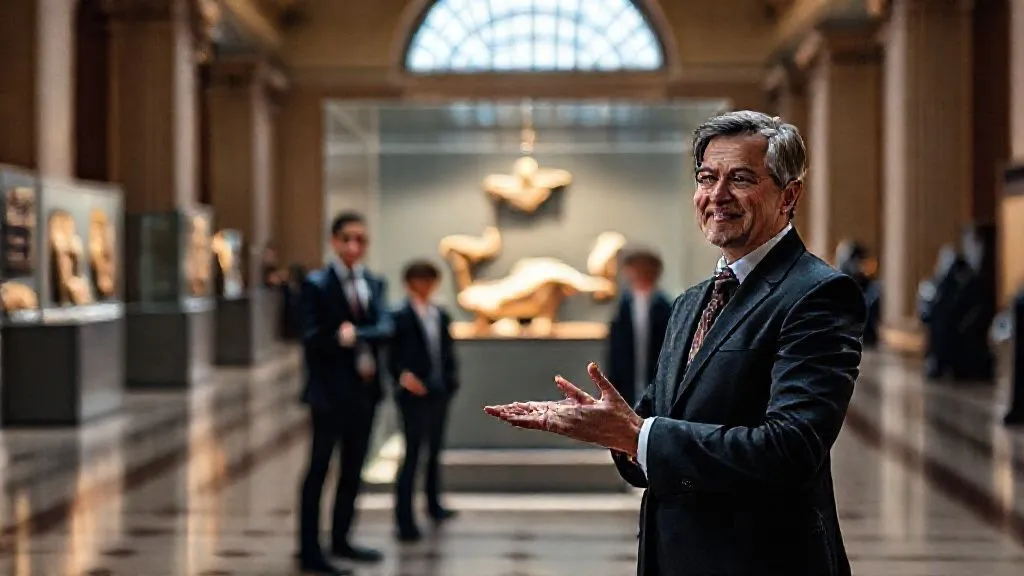
How to Keep Skeptical Executives Engaged During a Museum Tour?
For over two decades in the cultural travel sector, I've had the distinct privilege – and sometimes the challenge – of curating experiences for a vast spectrum of groups, from eager students to discerning corporate leaders. One scenario that consistently presents a unique puzzle is the corporate museum visit, especially when the attendees include skeptical executives. I've witnessed countless times how a poorly planned tour can lead to disinterest, missed opportunities, and ultimately, a wasted investment for the organization.
The problem isn't usually a lack of appreciation for culture, but rather a perception of irrelevance. Executives operate in a world driven by efficiency, ROI, and strategic advantage. When confronted with what they might perceive as a 'leisure activity' or a 'field trip,' their minds naturally drift back to pressing deadlines and quarterly reports. Their skepticism isn't personal; it's professional, rooted in a desire to maximize every moment.
But what if a museum tour could be more than just a diversion? What if it could be a powerful catalyst for innovation, team building, and strategic thinking? In this definitive guide, I'll share my proven frameworks, actionable strategies, and expert insights on how to keep skeptical executives engaged during a museum tour, transforming potential yawns into genuine 'aha!' moments. We'll explore how to bridge the gap between ancient artifacts and modern business challenges, ensuring your next corporate cultural outing is not just memorable, but genuinely impactful.
Understanding the Executive Mindset: Beyond the Boardroom
Before we can engage executives, we must first understand their operational framework. These are individuals accustomed to high-stakes decisions, data-driven insights, and direct impact. Their time is their most valuable asset, and any activity that doesn't clearly contribute to their professional growth or the company's objectives is often met with a natural, albeit polite, resistance.
The 'Time is Money' Imperative
Executives constantly evaluate the opportunity cost of their time. A two-hour museum tour isn't just two hours; it's two hours away from meetings, strategy sessions, or client calls. To justify this investment, the perceived value must be exceptionally high. This isn't about mere entertainment; it's about providing tangible benefits that resonate with their professional responsibilities and aspirations.
The Search for Tangible Value
Unlike a casual visitor who might seek aesthetic pleasure or historical knowledge, executives are often looking for applications. How does this relate to leadership? To innovation? To problem-solving? They want to connect the dots between the past and the present, between art and analytics, between culture and corporate strategy. If these connections aren't made explicit, skepticism is a natural default.
"The greatest challenge in engaging executives isn't about making the content 'simpler,' but about making it profoundly 'relevant.' It's about translating cultural insights into business intelligence."
Strategy 1: Curate for Relevance – Connecting Culture to Commerce
The first and most crucial step is to meticulously curate the tour content. This isn't a standard public tour. It needs to be bespoke, tailored to the specific group's industry, challenges, or learning objectives. I've found that generic tours are the quickest way to lose an executive audience.
- Identify Core Business Objectives: Before selecting a museum or exhibit, understand the company's current strategic goals. Are they focused on innovation, problem-solving, leadership development, or cross-cultural communication?
- Research Exhibit Parallels: Look for exhibits that offer metaphorical or direct connections to these objectives. For example, ancient engineering marvels for a tech company, historical trade routes for a logistics firm, or Renaissance art for lessons in patronage and innovation.
- Pre-Tour Briefing: Provide executives with a concise, compelling pre-tour brief. Frame the visit not as a 'museum trip' but as an 'experiential learning module' or 'strategic insight session.' Highlight the specific business-related themes that will be explored.
- Work with Museum Educators: Collaborate closely with the museum's education department or a specialized guide to develop a narrative arc that explicitly links the artifacts to the identified business themes.
Imagine a tour focusing on ancient navigation tools for a software company dealing with data mapping. The guide could draw parallels between the challenges of charting unknown waters and navigating complex data landscapes. This immediately elevates the visit from passive observation to active intellectual engagement.
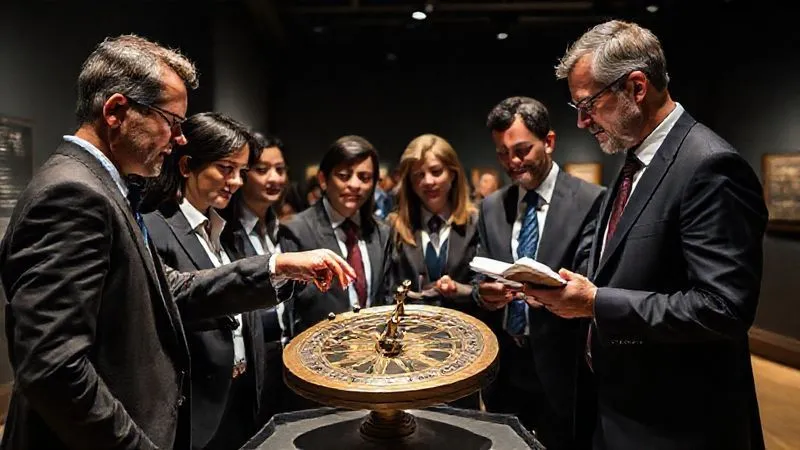
Case Study: How TechInnovate Found Inspiration in Ancient Engineering
TechInnovate, a leading software development firm, was struggling with a siloed approach to problem-solving. Their executives, highly analytical, viewed traditional museum visits as unproductive. I proposed a curated tour of a historical engineering museum, focusing on Roman aqueducts and medieval clockwork. Instead of a general history lesson, the tour highlighted the interdisciplinary collaboration required to build these structures, the iterative design process, and the long-term vision behind them. Post-tour, a facilitated discussion explicitly linked these historical principles to TechInnovate's current challenges. The result? A 15% increase in cross-departmental project proposals within three months, directly attributed by the CEO to 'seeing how the ancients solved complex problems with integrated thinking.'
Strategy 2: Embrace Experiential Learning – Hands-On, Minds-On
Passive listening is a death knell for executive engagement. These individuals are doers, not just observers. Incorporating experiential elements transforms the tour from a lecture into an interactive workshop. The key is to move beyond simply looking at objects to actively interacting with concepts.
- Interactive Stations: Can executives try to decipher an ancient code, attempt a simple historical craft, or use a replica tool?
- Problem-Solving Scenarios: Present a historical dilemma related to an exhibit and ask the group to brainstorm solutions using their modern business acumen. For example, 'Given the resources of 15th-century Florence, how would you fund Michelangelo's next masterpiece?'
- Curator Q&A Sessions: Arrange for a brief, dedicated Q&A with a curator or expert. This adds immense value and allows executives to probe deeper into areas of interest.
- Group Challenges: Divide the group into small teams and assign them a specific task related to an exhibit, like finding artifacts that represent 'innovation' or 'risk management' and presenting their findings.
This hands-on approach isn't about making the tour 'fun' in a superficial sense, but about making it intellectually stimulating and memorable through active participation. It taps into their competitive spirit and desire for practical application.
| Engagement Type | Executive Experience | Impact on Learning |
|---|---|---|
| Passive Observation | Information overload, quick disinterest, low retention | Minimal conceptual understanding, limited application |
| Active Participation | Intellectual stimulation, memorable insights, high retention | Deep conceptual understanding, clear pathways for application |
| Facilitated Dialogue | Collaborative problem-solving, diverse perspectives, shared learning | Enhanced critical thinking, immediate relevance to challenges |
Strategy 3: Leverage Expert Storytelling – The Guide as a Catalyst
The guide is not just a dispenser of facts; they are the chief storyteller, the facilitator, and the bridge between past and present. A truly exceptional guide can transform a collection of artifacts into a compelling narrative that captivates even the most jaded executive. I've often seen the right guide make all the difference in how to keep skeptical executives engaged during a museum tour.
The Art of the Narrative Arc
A good guide understands that a tour needs a beginning, a middle, and an end, with rising action and moments of revelation. They should weave facts into stories that highlight universal themes: leadership, innovation, failure, resilience, and human ingenuity. Instead of just stating 'This is a Roman vase,' an expert guide might say, 'This vase tells a story of Roman expansion, of trade routes that connected continents, and of the artistic expressions that endured empires, reflecting societal values not so different from our own.'
"Facts inform, but stories transform. For executives, a compelling narrative provides context and emotional resonance, making intellectual connections far more potent."
Crucially, the guide should be adept at reading the room, adjusting their pace and focus based on the group's energy and interest. They should be prepared to pivot from a detailed historical account to a philosophical discussion if that's where the group's curiosity leads. This requires not just knowledge, but exceptional emotional intelligence and adaptability.
Strategy 4: Foster Interactive Dialogue – From Observation to Conversation
Engagement isn't a one-way street. It's a dynamic exchange. Encouraging dialogue among executives, and between executives and the guide, is paramount. This shifts the experience from passive reception to active co-creation of meaning. I've always prioritized interactive dialogue to truly understand how to keep skeptical executives engaged during a museum tour.
- Open-Ended Questions: Guides should pose questions that don't have single right answers but invite reflection and debate. 'What leadership lessons can we draw from this historical figure?' or 'How does this ancient innovation compare to contemporary challenges in your industry?'
- Peer-to-Peer Learning: Facilitate discussions where executives can share their own interpretations, insights, and connections. Often, an executive's peer-driven insight is more impactful than a guide's direct statement.
- Challenge Assumptions: Use the exhibits to challenge preconceived notions. For instance, an exhibit on failed historical innovations can spark discussions on risk assessment and iterative development in modern business.
- Designated Discussion Points: Strategically plan pauses during the tour at specific exhibits to allow for deeper discussion and debate. These aren't just breaks; they are integral learning moments.
According to research published in the Harvard Business Review, active learning methods, which include facilitated discussions and problem-solving, significantly enhance knowledge retention and the ability to apply new concepts. This is precisely the kind of outcome we aim for with executive groups.
Strategy 5: Integrate Reflection & Application – The Post-Tour Synthesis
The learning doesn't end when the tour does. For executives, the real value often crystallizes in the reflection and application phase. Without this, even the most engaging tour can fade into a pleasant memory rather than a tangible learning experience.
- Structured Debrief Session: Immediately after the tour, convene a short (30-60 minute) debrief session. This can be over coffee or a light lunch. The goal is to explicitly connect the museum experience to the company's strategic objectives and individual roles.
- Facilitated Discussion Prompts: Provide specific prompts to guide the discussion: 'What was the most surprising insight you gained today?', 'How does [Exhibit X] relate to [Current Business Challenge Y]?', 'What's one actionable idea you're taking away from this experience?'
- Action Planning: Encourage executives to articulate how they might apply newfound perspectives or insights to their work. This could be a personal commitment or a group action plan.
- Follow-up Resources: Provide a curated list of relevant articles, books, or further museum resources that delve deeper into the themes explored.
This post-tour synthesis is critical for demonstrating the ROI of the cultural experience. It transforms abstract observations into concrete takeaways, ensuring that the time invested yields measurable benefits. It's the final, crucial step in understanding how to keep skeptical executives engaged during a museum tour, by ensuring the engagement extends beyond the museum walls.
| Post-Tour Activity | Benefit for Executives | Impact on Organization |
|---|---|---|
| Structured Debrief | Consolidates learning, clarifies relevance, fosters shared understanding | Aligns perspectives, identifies actionable insights, strengthens team cohesion |
| Action Planning Session | Translates insights into personal and professional goals, enhances accountability | Drives innovation, addresses specific challenges, promotes continuous improvement |
| Resource Sharing | Encourages further self-directed learning, deepens expertise | Builds knowledge capital, supports long-term strategic thinking |
Measuring Success: Beyond Anecdotes
For skeptical executives, anecdotal evidence of 'enjoyment' isn't enough. We need to think about how to quantify the impact, even if indirectly. While a museum tour's ROI isn't always as clear-cut as a sales campaign, there are ways to gauge its effectiveness.
Qualitative Feedback Mechanisms
- Post-Tour Surveys: Use targeted surveys with open-ended questions about insights gained, relevance to work, and suggestions for future experiences.
- Executive Interviews: Conduct brief, one-on-one interviews with a selection of participants to gather deeper qualitative data on their perceptions and takeaways.
- Observation: Pay attention to the level of interaction, questions asked, and discussions generated during the tour and debrief.
Quantitative Indicators
- Follow-up Engagement: Track if executives reference the museum visit in subsequent meetings, presentations, or strategy discussions.
- Project Inspiration: Monitor if new projects, initiatives, or approaches emerge that can be traced back to ideas sparked during the cultural experience.
- Internal Communications: Observe if the experience is shared positively within internal company communications or social channels.
Leading firms like Deloitte often highlight the importance of experiential learning in leadership development. By carefully tracking both qualitative and quantitative indicators, we can build a compelling case for the value of these unique cultural engagements.
Overcoming Common Objections & Pitfalls
Even with the best planning, you might encounter resistance. Anticipating and addressing these common objections is key to ensuring a smooth and successful experience.
- Objection: "I don't have time for this."
- Solution: Reframe the visit as a strategic learning session, not a leisure activity. Emphasize the curated relevance and direct business applications upfront in the invitation.
- Objection: "I'm not interested in art/history."
- Solution: Focus the narrative on universal themes like innovation, leadership, problem-solving, and human endeavor, rather than just historical facts or artistic styles. Highlight the 'why' behind the 'what.'
- Objection: "This feels like a forced team-building exercise."
- Solution: Position it as a unique professional development opportunity. The team-building aspect should be an organic byproduct of shared intellectual engagement, not the primary, explicit goal.
- Pitfall: Overloading with Information.
- Solution: Less is more. Focus on a few key artifacts or themes that resonate deeply, rather than trying to cover an entire museum. Quality over quantity.
- Pitfall: Lack of Follow-Up.
- Solution: Implement a structured debrief and follow-up plan to solidify learning and demonstrate the practical value of the experience.
As Forbes often emphasizes in its leadership articles, genuine engagement comes from perceived value and relevance. By proactively addressing these concerns, we can transform potential roadblocks into pathways for deeper connection and learning.
Frequently Asked Questions (FAQ)
Question: How do I choose the right museum for a corporate group? The 'right' museum is one whose collections can be directly or metaphorically linked to your company's strategic objectives or the specific learning outcomes you desire. Don't just pick the most famous one. Research their exhibits, talk to their education department, and consider how their narratives can be tailored to your industry. A natural history museum can teach about adaptation and evolution, an art museum about creativity and patronage, and a science museum about innovation and problem-solving. It's all about framing.
Question: What if executives genuinely dislike art/history? This is precisely why a curated, relevance-driven approach is essential. The goal isn't to convert them into art enthusiasts overnight, but to use the museum as a unique learning environment. Focus on the universal themes (leadership, innovation, resilience) that transcend specific subject matter. Frame it as an 'experiential learning lab' rather than a 'cultural outing.' The guide's ability to connect these themes to modern business challenges becomes even more critical here.
Question: How long should a museum tour for executives be? Brevity and impact are key. I generally recommend a focused tour lasting no more than 60-90 minutes, followed by a dedicated 30-60 minute debrief and discussion session. Anything longer risks fatigue and diminishing returns, especially for busy executives. It's better to leave them wanting more than to overwhelm them.
Question: Can virtual museum tours be as effective? While in-person tours offer an unparalleled sensory experience, virtual tours have evolved significantly and can be highly effective, especially for remote teams or when travel is restricted. The same principles of curation, expert storytelling, and interactive dialogue apply. Look for platforms that offer live, guided virtual experiences with Q&A capabilities and incorporate pre/post-tour digital discussions to maximize engagement.
Question: What's the biggest mistake organizers make when planning these tours? The biggest mistake is treating it like a standard leisure activity or a generic team-building event. Failing to connect the museum experience explicitly to the executives' professional world, or not providing a compelling 'why' for their attendance, almost guarantees disengagement. A lack of pre-tour briefing and post-tour debriefing also wastes the potential of the experience.
Key Takeaways and Final Thoughts
Engaging skeptical executives during a museum tour is not just possible; it's an incredibly powerful opportunity for unique professional development and team cohesion. It requires a thoughtful, strategic approach that respects their time and intellect.
- Curate for Relevance: Tailor content to business objectives.
- Embrace Experiential Learning: Encourage active participation.
- Leverage Expert Storytelling: A great guide is a game-changer.
- Foster Interactive Dialogue: Transform observation into conversation.
- Integrate Reflection & Application: Solidify learning with debriefs.
By implementing these strategies, you can transform what might initially be perceived as an obligation into an inspiring and impactful experience. You're not just showing them artifacts; you're offering new lenses through which to view challenges, foster innovation, and strengthen leadership. The museum, then, becomes not merely a repository of the past, but a dynamic incubator for future success.
Recommended Reading
- Deep Dive Abroad: How Busy Professionals Master Cultural Immersion
- Solo Wilderness Emergencies: 7 Steps to Survive Medical Crises?
- The Ultimate Guide: Stress-Free Travel Tips for Non-Verbal Autistic Teens
- Youth Overseas Volunteering: 5 Ways to Ensure Real Impact, Not Voluntourism
- Year-Long Volunteer Abroad: 7 Strategies to Fund Your Journey




Your email address will not be published. Required fields are marked *