


How to Secure Remote Work to Sustain Professional Budget Travel?
For over 15 years, I've navigated the intricate world of travel, from luxury expeditions to the most stringent budget backpacking adventures. What I’ve consistently observed is a prevailing misconception: that long-term, professional travel is an unattainable dream, exclusive to the independently wealthy or the perpetually unemployed. I've seen countless aspiring world-travelers return home prematurely, not due to a lack of passion, but a fundamental misunderstanding of how to integrate their professional lives with their wanderlust.
The allure of continuous travel, exploring new cultures, and waking up to different horizons each month is powerful. Yet, the practicalities of maintaining a career, building professional expertise, and managing finances often seem like insurmountable hurdles. The common pain point I encounter is the struggle to bridge the gap between earning a sustainable income and the desire for extended, budget-friendly travel, leaving many feeling trapped by traditional career paths or compromising their travel ambitions.
This guide isn't just about finding 'a job' that lets you travel; it's about crafting a sustainable, professional lifestyle that empowers you to explore the world without sacrificing your career trajectory or financial stability. I'll share my proven 7-step blueprint, packed with actionable frameworks, real-world insights, and expert strategies to genuinely secure remote work that sustains your professional budget travel dreams, allowing you to flourish both professionally and personally on the road.
Understanding the Digital Nomad Landscape: Opportunities and Realities
Before we dive into the 'how,' it's crucial to understand the terrain. The digital nomad lifestyle isn't a fad; it's a rapidly evolving work paradigm. I've witnessed its growth from a niche concept to a mainstream aspiration, fueled by technological advancements and a global shift in work culture. This landscape offers unprecedented opportunities, but it also demands a clear-eyed understanding of its realities.
The Evolution of Remote Work
Remote work isn't new, but its scale and sophistication are. What began as occasional telecommuting has blossomed into fully distributed teams, global talent pools, and companies built entirely without a physical office. This evolution means that the types of roles available remotely are far more diverse than ever before, extending beyond traditional tech roles to include marketing, finance, customer service, education, and even specialized consulting. According to a Deloitte study, organizations that embrace flexible work models are seeing significant advantages in talent attraction and retention.
Identifying High-Demand Remote Skills
The key to securing remote work isn't just looking for 'remote jobs'; it's identifying skills that are inherently valuable and easily transferable to a distributed environment. Think about roles that primarily involve digital output, communication, and project management. Data analysis, content creation, web development, digital marketing, virtual assistance, online teaching, and project management are perennial high-demand areas. Furthermore, soft skills like excellent written communication, self-discipline, adaptability, and problem-solving are paramount for success in a remote setting.
Key Insight: It's not just about finding a remote job, but the right remote job – one that leverages your core strengths, aligns with your professional growth, and offers the flexibility you need for travel. Don't chase every remote opening; target those that truly fit your unique value proposition.
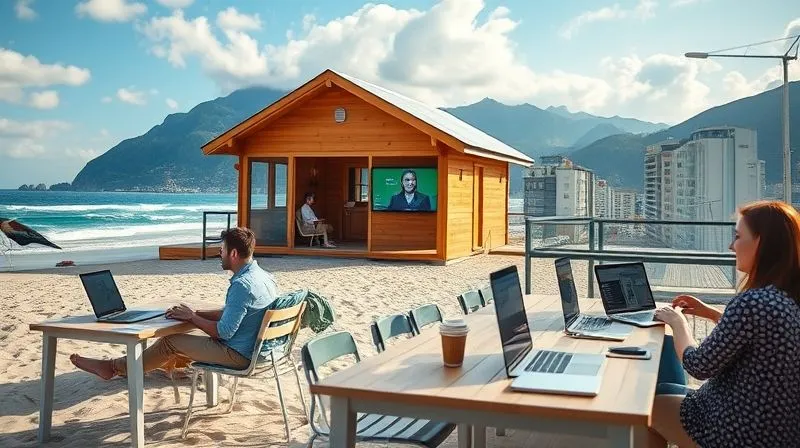
Crafting Your Irresistible Remote-Ready Profile
In the competitive remote job market, your application isn't just a document; it's your digital ambassador. I've reviewed thousands of resumes and portfolios, and I can tell you that a generic approach simply won't cut it. You need to tailor your profile specifically for remote roles, highlighting the attributes that remote employers value most.
Optimizing Your Resume and Portfolio for Remote Roles
Forget the old-school resume format. Remote employers are looking for evidence of self-sufficiency, excellent communication, and a proven ability to deliver results asynchronously. Here's how to optimize:
- Highlight Remote Experience: Even if you haven't held a fully remote job, emphasize any instances of working from home, managing projects independently, or collaborating with distributed teams.
- Quantify Achievements: Instead of just listing duties, focus on measurable outcomes. 'Increased blog traffic by 40% through SEO optimization' is far more impactful than 'Managed blog content.'
- Showcase Digital Proficiency: List relevant software (project management tools like Asana/Trello, communication platforms like Slack/Zoom, CRM systems) and demonstrate your comfort with digital tools.
- Emphasize Soft Skills: Dedicate a section or weave into your descriptions traits like proactivity, time management, adaptability, and cross-cultural communication.
- Professional Online Portfolio: For creative or technical roles, a well-curated online portfolio (e.g., Behance, GitHub, personal website) is non-negotiable. It provides tangible proof of your skills and work ethic.
Networking in the Remote World
Networking isn't about glad-handing at conferences anymore; it's about strategic digital engagement. LinkedIn is your primary tool. Connect with remote recruiters, professionals in your target industries, and individuals already living the digital nomad lifestyle. Participate in relevant online communities, Slack channels, and forums. Offer value, share insights, and build genuine connections. Often, the best remote opportunities come through referrals, not job boards.
Key Insight: Your online presence is your new handshake. Make it count. Every profile, every comment, every interaction contributes to your professional brand in the remote sphere.
Strategic Job Search: Where to Find Genuine Remote Opportunities
The internet is vast, and sifting through countless job postings can be overwhelming. As an expert, I've learned that efficiency and targeting are key. You need to know where the legitimate, high-quality remote jobs are hiding.
Leveraging Specialized Remote Job Boards
Forget general job sites for now. Focus on platforms dedicated exclusively to remote work. These sites often pre-screen companies, ensuring that the roles are genuinely remote and not just temporarily flexible. Some of the best include:
- We Work Remotely: One of the largest and most established remote job boards, covering a wide range of industries.
- Remote.co: Curated list of remote jobs, often with a focus on tech and marketing.
- FlexJobs: A subscription-based service that vets all jobs for legitimacy, offering a wide array of remote, hybrid, and flexible roles.
- Remote OK: Another popular platform, great for tech roles but expanding into other areas.
- Dynamite Jobs: Specifically caters to digital nomads and remote-first companies.
Direct Outreach and Company Research
Don't wait for companies to post. Identify companies that are known for their remote-first culture (e.g., Buffer, Zapier, GitLab). Visit their career pages directly. Even if they don't have an open position, a well-crafted speculative application or an email to a hiring manager can sometimes open doors. Show that you've researched their company and articulate how your skills align with their mission and remote values.
| Platform | Focus Areas | Vetting Level | Pros | Cons |
|---|---|---|---|---|
| We Work Remotely | Tech, Marketing, Design, Support | High | Large volume, trusted source | Can be competitive |
| FlexJobs | Diverse, all industries | Very High (paid service) | No scams, pre-vetted, varied roles | Subscription fee |
| Remote.co | Tech, Marketing, Customer Service | High | Curated listings, reputable companies | Fewer non-tech roles |
| Dynamite Jobs | Digital Nomad & Remote-First Companies | Medium-High | Community focus, relevant for travelers | Smaller pool of jobs |
Mastering the Remote Interview and Onboarding Process
Securing the interview is half the battle; acing it remotely is the other. I've coached many through this, and the key is preparation and understanding the unique demands of a virtual interaction. Your ability to demonstrate readiness for remote work is paramount.
Acing Virtual Interviews
Virtual interviews require a different kind of presence. Ensure your internet connection is stable, your background is professional and clutter-free, and your lighting is good. Dress professionally from head to toe – it boosts confidence. Practice articulating your answers clearly and concisely, looking directly into the camera to simulate eye contact. Be prepared to discuss your experience with remote collaboration, time management, and how you stay motivated independently. Show, don't just tell, that you are a self-starter.
Setting Up Your Mobile Workspace for Success
Once hired, your onboarding experience will largely depend on your preparedness. Before you even start, ensure you have a reliable laptop, a comfortable headset with a microphone, and a backup internet option (e.g., a portable hotspot). Understand the company's communication tools and protocols. During onboarding, be proactive: ask questions, schedule virtual coffees with team members, and demonstrate your initiative. The first few weeks are critical for establishing your reputation as a reliable and engaged remote employee.

Building Trust and Delivering Value as a Remote Professional
The biggest challenge for many remote workers, especially those traveling, is proving their value and maintaining trust without constant physical presence. In my experience, this comes down to two critical pillars: communication and consistent delivery.
Communication is King: Overcoming Distance Barriers
When you're not in the office, proactive and clear communication becomes your superpower. Over-communicate, especially in the beginning. Provide regular updates on your progress, ask clarifying questions, and be responsive to messages. Use collaboration tools effectively, and don't shy away from video calls to build rapport. Transparency about your schedule and availability, especially across time zones, is vital. Remember, silence can be misinterpreted as a lack of engagement or progress.
Time Zone Management and Productivity Hacks
Working across different time zones is a reality for many digital nomads. Develop a system for managing your work schedule, aligning with your team's core hours where necessary, and leveraging asynchronous communication. Tools like World Clock, time zone converters, and shared calendars are invaluable. Implement productivity techniques like the Pomodoro Technique, time blocking, and batching similar tasks to maximize your efficiency. Remember, your goal is to deliver results, not just log hours.
Case Study: How Alex Transformed His Freelance Career While Traveling
Case Study: How Alex Transformed His Freelance Career While Traveling
Alex, a talented graphic designer from Seattle, dreamt of exploring Southeast Asia for a year but feared his freelance income wouldn't be stable enough. He was constantly chasing new clients and his income fluctuated wildly. By implementing the communication and productivity strategies I outlined above, Alex made a significant shift. First, he proactively communicated his travel plans to his existing clients, setting clear expectations for response times and project delivery. He also dedicated specific blocks of his day, regardless of his location (whether a co-working space in Chiang Mai or a beach hut in Bali), to client work and outreach. He leveraged project management tools to give clients real-time visibility into his progress, building immense trust. This resulted in a 30% increase in client retention and allowed him to secure long-term contracts, stabilizing his income. He even found new clients through referrals who appreciated his transparent and reliable approach, proving that you can build a thriving professional career while embracing the digital nomad lifestyle.
Budget Travel Strategies: Making Your Remote Income Stretch
Securing remote work is only half the equation; the other half is making that income sustain your travel. My extensive experience in budget travel has taught me that smart planning and conscious choices can dramatically extend your adventures without compromising on experiences.
Smart Travel Planning and Expense Tracking
Budget travel begins long before you book a flight. Research destinations known for their affordability (e.g., Southeast Asia, Eastern Europe, Latin America). Travel during shoulder seasons to avoid peak prices. Use flight comparison sites with flexible dates. Once on the road, meticulously track every expense. Apps like Spendee or Trail Wallet can be invaluable. Categorize your spending (accommodation, food, transport, activities) to identify areas where you can cut back. A clear understanding of your burn rate is crucial for long-term sustainability.
Accommodation Hacks for Long-Term Travelers
Accommodation is often the biggest expense. Move beyond hotels. Consider hostels (private rooms offer privacy), guesthouses, and Airbnb/Booking.com for longer stays, where weekly or monthly discounts are often available. House-sitting (platforms like TrustedHousesitters) can provide free accommodation in exchange for caring for pets or homes. Co-living spaces are also emerging, offering affordable lodging with built-in community and workspace. The goal is to reduce your fixed costs as much as possible.
Key Insight: Budget travel isn't about deprivation; it's about smart resource allocation and valuing experiences over luxury. Every dollar saved on accommodation or transport is a dollar that extends your journey or funds a new adventure.

Navigating the Legalities and Logistics of Working Abroad
This is where many aspiring digital nomads get tripped up. Ignoring the legal and logistical aspects can lead to significant headaches, from visa issues to unexpected tax burdens. As an experienced traveler, I cannot stress enough the importance of doing your homework here.
Understanding Visas and Residency for Digital Nomads
The landscape of digital nomad visas is rapidly expanding. Countries like Portugal, Spain, Croatia, and Estonia now offer specific visas designed for remote workers. Research these options thoroughly, as they often provide legal residency for a year or more. For shorter stays, understand the tourist visa rules of your chosen destinations and be mindful of overstaying or violating the terms of your entry by working illegally. Always check official government websites for the most up-to-date information. Nomad Gate offers a comprehensive overview of current digital nomad visa programs.
Tax Implications for Remote Workers and Travelers
Taxation for digital nomads is complex and depends on your country of citizenship, where you earn your income, and where you reside for tax purposes. You might be liable for taxes in your home country, the country where your employer is based, and/or the countries where you spend significant time. Consult with a tax professional specializing in international taxation to ensure compliance and avoid double taxation. Ignoring this can lead to severe penalties.
Health Insurance and Emergency Preparedness
Standard travel insurance is often insufficient for long-term remote workers. Look for international health insurance plans specifically designed for expatriates or digital nomads (e.g., SafetyWing, World Nomads). These plans typically cover medical emergencies, evacuations, and sometimes even routine care across multiple countries. Always have a contingency fund for unexpected emergencies, and keep digital copies of all important documents (passport, visas, insurance policies) accessible in the cloud.
| Country | Visa Type | Duration | Requirements | Pros |
|---|---|---|---|---|
| Portugal | D8 Digital Nomad Visa | 1 year, renewable | Proof of income (4x minimum wage), NIF, bank account | EU access, beautiful country, growing DN community |
| Croatia | Digital Nomad Permit | 1 year, non-renewable for 6 months | Proof of income, no criminal record, health insurance | Stunning coast, low cost of living, EU member |
| Estonia | Digital Nomad Visa | 1 year | Proof of income (EUR 3504/month), health insurance | E-residency program, strong digital infrastructure |
| Spain | Digital Nomad Visa | 1 year, renewable up to 5 years | Proof of stable income, health insurance, no criminal record | Rich culture, good climate, EU access |
Sustaining the Lifestyle: Professional Growth and Well-being on the Road
The initial thrill of travel can sometimes overshadow the need for consistency and self-care. To truly sustain professional budget travel, you need to think long-term about your career development and personal well-being. This is where my experience as a mentor comes in – it’s about more than just the job; it’s about the journey.
Continuous Skill Development
The remote work landscape is dynamic. What's in demand today might be obsolete tomorrow. Dedicate time each week to continuous learning. Online courses (Coursera, Udemy, LinkedIn Learning), industry webinars, and professional certifications are easily accessible from anywhere in the world. Staying current not only makes you more valuable to your current employer but also opens doors to new opportunities, ensuring your professional relevance for years to come. As marketing guru Seth Godin often emphasizes, the most valuable skill is the ability to learn new skills.
Balancing Work, Travel, and Personal Life
This is perhaps the most challenging aspect of the digital nomad lifestyle. It's easy to fall into the trap of overworking or, conversely, letting travel distract you from your responsibilities. Establish clear boundaries between work and leisure. Designate specific work hours and stick to them. Prioritize your well-being: maintain a healthy diet, get regular exercise, and ensure you're getting enough sleep, even when exploring new places. Connect with other digital nomads for support and shared experiences. Remember, sustainable travel means taking care of yourself, not just your work.

Frequently Asked Questions (FAQ)
How do I convince my current employer to let me work remotely and travel? This requires a strategic proposal. Focus on demonstrating your reliability, productivity, and how remote work could benefit the company (e.g., access to global talent, reduced overhead). Present a detailed plan for communication, time zone management, and ensuring project continuity. Start with a trial period if possible. Emphasize your commitment to results, not just location.
Is it really possible to maintain a professional career trajectory while constantly traveling? Absolutely. Many digital nomads advance their careers by taking on challenging remote roles, freelancing for high-profile clients, or even starting their own remote businesses. The key is intentionality: actively seeking opportunities for growth, continuous skill development, and building a strong professional network, regardless of your physical location. Travel can even enhance certain skills, like adaptability and cross-cultural communication.
What if I'm not in a tech-related field? Can I still find remote work? Yes, the remote job market has expanded far beyond tech. Roles in digital marketing, content writing, virtual assistance, online education, customer support, project management, and even some finance and HR functions are increasingly remote. Focus on transferable skills and how your expertise can be delivered digitally. Many industries are catching up to the remote trend.
How do I handle internet reliability when traveling to remote locations? This is a valid concern. Always have a backup plan. This could include a portable Wi-Fi hotspot, a local SIM card with a generous data plan, or researching co-working spaces and reliable cafes in your destination. Before heading to truly remote areas, ensure you have completed critical tasks or have a plan for limited connectivity. Satellite internet options are also becoming more accessible for extreme cases.
What are the biggest financial pitfalls to avoid when budgeting for long-term travel with remote work? The biggest pitfalls are underestimating your expenses, not tracking your spending, and failing to build an emergency fund. Unforeseen costs like visa renewals, medical emergencies, or unexpected flight changes can quickly derail your budget. Also, avoid lifestyle creep – as your income stabilizes, resist the urge to upgrade your travel style beyond what's sustainable. Stick to your budget principles.
Key Takeaways and Final Thoughts
Embarking on professional budget travel is not merely a dream; it's a meticulously planned and executed lifestyle. I've seen firsthand how dedication, strategic thinking, and a willingness to adapt can transform aspirations into a sustainable reality. Remember these core principles:
- Build a Remote-Ready Profile: Tailor your resume and skills to what remote employers truly value.
- Target Your Job Search: Leverage specialized platforms and direct outreach to find legitimate opportunities.
- Master Remote Communication: Proactive and clear communication builds trust and ensures success.
- Budget Smartly: Make your income stretch through informed travel choices and diligent expense tracking.
- Navigate Logistics Wisely: Understand visas, taxes, and insurance to avoid costly mistakes.
- Prioritize Well-being & Growth: Continual learning and work-life balance are crucial for long-term sustainability.
The journey of professional budget travel is an incredible path of self-discovery and growth, both personally and professionally. It demands resilience, adaptability, and a proactive mindset, but the rewards are immeasurable. You have the power to redefine your career and explore the world on your terms. Start today by taking the first step in this blueprint, and I promise you, a world of opportunity awaits.
Recommended Reading
- Unlock the Secrets: Your Ultimate Guide to Respectful Participation in Religious Festivals
- Client Crisis at Altitude: 7 Steps for Acute Sickness Mid-Summit
- 5 Secrets: Sustain High-Quality Free Walking Tours on a Shoestring
- Conquer Your Fears: Solo Dining Tips for Shy Travelers Revealed
- Unearth the Past: What to Expect on Your First Archeological Dig





Your email address will not be published. Required fields are marked *