

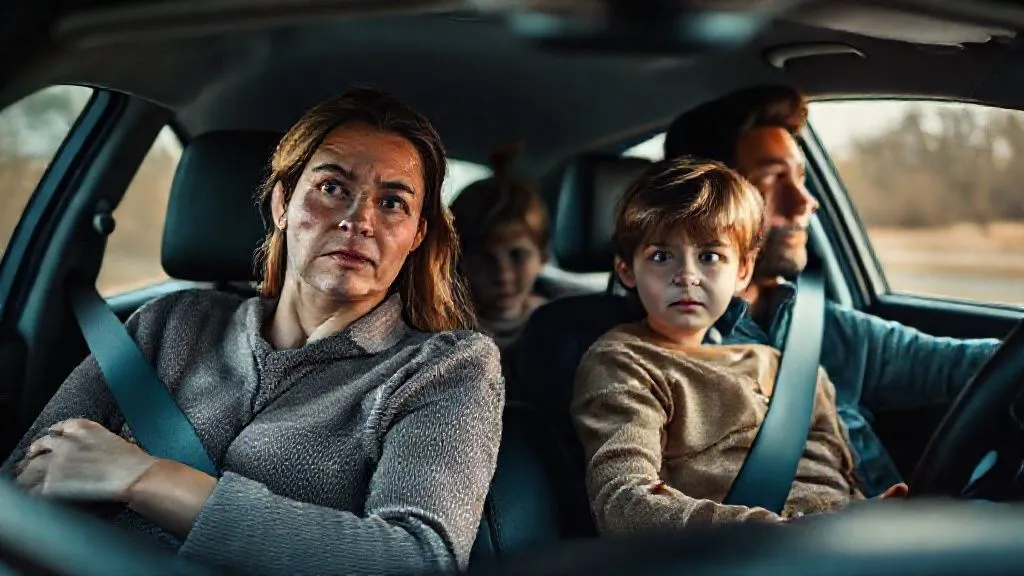
What to do when kids fight constantly on long family drives?
For over two decades in the family travel niche, I've witnessed countless families embark on what should be joyous road trips, only to have them descend into a cacophony of sibling squabbles, tears, and parental frustration. It’s a scene I know all too well, not just from my professional observations but from my own early experiences as a parent. The dream of scenic routes and singalongs often shatters against the harsh reality of confined spaces and restless children.
The problem of kids fighting constantly on long family drives isn't just an annoyance; it's a genuine stressor that can erode the joy of a vacation before it even begins. The constant bickering, the 'he touched me!' accusations, the escalating volume, and the sheer mental exhaustion for parents can turn a much-anticipated adventure into a dreaded ordeal. Many parents feel helpless, trapped, and utterly drained, wondering if peaceful family travel is even possible.
But I'm here to tell you, it absolutely is. In this definitive guide, I'll share a comprehensive framework, battle-tested strategies, and expert insights that will not only help you understand the root causes of road trip rivalry but, more importantly, equip you with actionable solutions. You'll learn how to transform your car into a haven of harmony, making your next long family drive an experience everyone genuinely enjoys.
The Root Causes of Road Trip Rivalry: Understanding the 'Why'
Before we can address the symptoms, we must understand the underlying causes. In my experience, most backseat battles stem from a predictable set of circumstances that are often amplified by the unique environment of a car.
Boredom and Lack of Stimulation
Children, especially younger ones, have an innate need for stimulation and novelty. A long stretch of highway, no matter how picturesque, quickly becomes monotonous. When minds are under-stimulated, they often turn to the nearest available 'entertainment' – usually a sibling. This isn't malicious; it's often a desperate cry for engagement.
Confined Space and Personal Space Invasion
Imagine being cooped up in a small room with your colleagues for hours, unable to move freely. That's essentially what kids experience in a car. Personal space is a precious commodity, and its constant invasion – a foot accidentally touching, an elbow crossing an invisible line – can quickly ignite conflict, particularly among siblings who are already prone to territorial disputes.
Hunger, Thirst, and Fatigue (The H.A.L.T. Principle)
This is a foundational principle I always emphasize: when children (or adults, for that matter) are Hungry, Angry, Lonely, or Tired, their capacity for self-regulation plummets. In the context of a car trip, hunger, thirst, and fatigue are the most common culprits. Missed snacks, insufficient hydration, and disrupted nap schedules are prime catalysts for meltdowns and increased irritability.
Sibling Dynamics Exacerbated by Proximity
Even the most loving siblings will have their moments of friction. The car's enclosed environment simply intensifies existing sibling dynamics. Any underlying jealousies, power struggles, or personality clashes that might be manageable in a larger home setting become magnified when there's nowhere to escape. It's like putting two highly reactive chemicals in a very small beaker.
Proactive understanding of these triggers is the first step toward preventing conflict. You can't solve a problem you don't understand, and in the car, these 'whys' are often silent until they erupt into noise.
Pre-Trip Preparation: Setting the Stage for Success
The success of a peaceful road trip isn't determined on the day of departure; it's forged in the weeks leading up to it. My most successful family travelers understand that preparation is paramount.
The Power of a Family Meeting
Before any long drive, I always recommend holding a dedicated family meeting. This isn't just about dictating rules; it's about fostering a sense of shared responsibility and anticipation. I've seen this simple step reduce conflict significantly.
- Announce the Trip & Build Excitement: Frame the trip as an exciting adventure. Show maps, talk about destinations, and get everyone invested.
- Discuss Expectations: Clearly communicate how long the drive will be, the stops you plan to make, and what activities are allowed.
- Brainstorm Rules Together: Involve the children in creating the 'Car Rules.' When kids feel ownership, they are more likely to adhere to them. Focus on positive phrasing (e.g., 'Use kind words' instead of 'No yelling').
- Address Potential Challenges: Openly discuss that long drives can be tiring or boring sometimes, and what strategies everyone can use (e.g., 'If you're bored, ask for a new game or activity').
- Outline Consequences & Rewards: Clearly state what happens if rules are broken and what rewards are in place for good behavior.
Strategic Seating Arrangements
Sometimes, the simplest solution is a physical one. If you have two children who constantly clash, can you separate them? A third row, a middle seat buffer (if available and safe), or even rotating seats every few hours can make a world of difference. Consider age and temperament; placing a calmer child next to a more boisterous one might help.
Packing Smart: Individual Activity Kits
Each child should have their own designated 'activity kit' or backpack filled with items they've chosen (within reason). This prevents fighting over shared toys and encourages independent play. Think small, quiet items.
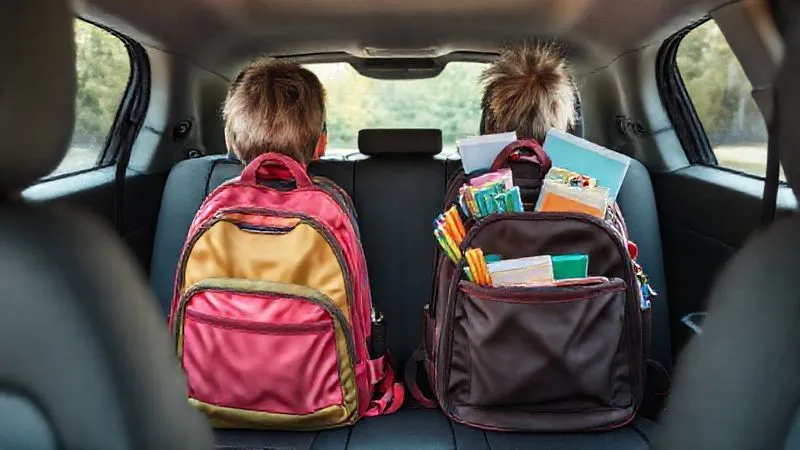
Include things like:
- Coloring books and crayons/markers (in a case)
- Small puzzle books or activity pads
- Favorite picture books or early readers
- Figurines or small LEGO sets (with a container to build on)
- Headphones for audiobooks or music
- A special 'travel-only' toy
Setting Expectations and Rules of Engagement
Beyond the family meeting, reinforce the rules just before you leave. Have a visual reminder, like a laminated 'Car Rules' chart. Focus on a few key, enforceable rules. For example:
- Hands to yourself: No touching siblings without permission.
- Inside voices: Keep volume at a comfortable level.
- Ask, don't demand: Teach kids to use polite requests for snacks, activities, or help.
- Respect personal space: Avoid leaning over or encroaching on a sibling's side.
Engaging Minds: A Toolkit of On-the-Road Entertainment
Boredom is the archenemy of peace on a long drive. Proactive entertainment is your secret weapon when you need to know what to do when kids fight constantly on long family drives.
Screen Time Strategies (It's not all bad!)
While I advocate for balanced screen time, a long road trip is a unique circumstance. Strategic use of tablets or portable DVD players can be a lifesaver. The key is 'strategic.' Don't just hand it over and hope for the best.
- Set Time Limits: Use timers for screen time, alternating with unplugged activities.
- Pre-Download Content: Ensure movies, shows, and games are downloaded beforehand to avoid connectivity issues.
- Headphones are Non-Negotiable: This is crucial for maintaining peace and preventing noise pollution for other passengers.
- Variety is Key: Don't let them watch the same show for five hours. Mix it up with educational apps or interactive stories.
Unplugged Wonders: Classic Car Games & Storytelling
Some of my fondest childhood road trip memories involve classic car games. They foster connection, critical thinking, and a sense of shared experience.
- I Spy: A timeless classic that encourages observation.
- 20 Questions: Great for developing deductive reasoning.
- Alphabet Game: Spotting letters on signs, license plates, etc.
- Storytelling Chains: One person starts a story with a sentence, the next adds another, and so on. This is fantastic for creativity.
- License Plate Game: Spotting plates from different states/provinces.
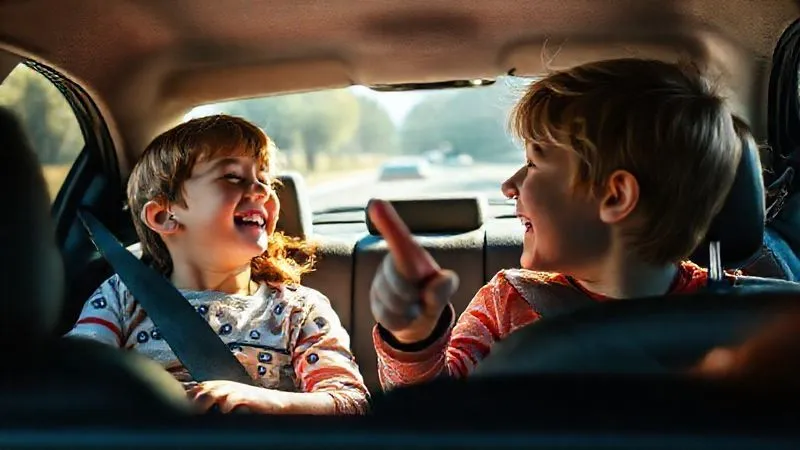
Audio Adventures: Podcasts and Audiobooks
This is an often-underestimated tool. Audiobooks and kid-friendly podcasts can captivate imaginations for hours. They offer a shared experience that can unite siblings rather than divide them. Many libraries offer free digital audiobooks, or services like Audible have vast children's selections. Look for engaging stories, educational series, or even interactive audio adventures.
The goal is balance: a mix of independent screen time, shared unplugged games, and immersive audio experiences keeps minds engaged and reduces the likelihood of conflict. Variety is the spice of a peaceful road trip.
For more ideas on engaging children without screens, I recommend exploring resources from organizations focused on child development and play, such as the National Association for the Education of Young Children (NAEYC), which offers valuable insights into the power of play.
Proactive Peacekeeping: De-escalation Techniques in Motion
Even with the best preparation, conflicts can arise. The key is to address them early and with a calm, strategic approach. This is where your expertise as a parent truly shines when trying to figure out what to do when kids fight constantly on long family drives.
The 'Check-In' Strategy: Catching Cues Early
Don't wait for the yelling to start. Periodically 'check in' with your children. A quick glance in the rearview mirror, a simple 'How are we doing back there, everyone okay?' can often diffuse tension before it escalates. Look for subtle cues: fidgeting, sighing, side-eye glances, or quiet sulking.
Designated 'Quiet Time' or 'Independent Play' Slots
Just as adults need a break from constant interaction, so do children. Institute scheduled 'quiet times' where everyone is expected to engage in a silent activity – reading, drawing, listening to music with headphones. This provides a mental reset and allows individual decompression, reducing irritation caused by constant proximity.
Strategic Stop-Overs: The Power of a Break
Do not underestimate the power of physical movement. Every 2-3 hours, plan a stop. This isn't just for bathroom breaks. It's an opportunity for children to stretch their legs, run around, and burn off pent-up energy. A 15-20 minute break can dramatically shift the mood. I've found that combining these breaks with specific activities makes them even more effective.
| Break Type | Activity Idea | Benefit |
|---|---|---|
| Energy Burner | Playground stop, run laps around the car, jumping jacks | Releases physical energy, improves mood |
| Sensory Reset | Walk in nature (even a small park), quiet snack outdoors, deep breathing exercises | Calms overstimulated senses, encourages mindfulness |
| Discovery Stop | Visit a local landmark, explore a unique roadside attraction, look for specific items at a rest stop | Adds novelty, breaks monotony, creates new memories |
The 'Mediator Parent': Guiding Conflict Resolution
When a fight erupts, resist the urge to immediately assign blame or yell. Instead, become a calm mediator. Pull over if it's safe to do so, or address the situation with a calm voice from the front seat. Your goal is to guide them toward resolving the conflict themselves, not to solve it for them.
- Acknowledge Feelings: 'I hear you're both upset. It sounds like you're angry about X.'
- State the Problem Objectively: 'The problem is that both of you want to play with the same toy right now.'
- Ask for Solutions: 'What are some ways we can solve this problem so you can both be happy?'
- Guide Towards Compromise: Help them brainstorm and agree on a fair solution (e.g., 'One person plays for 15 minutes, then the other gets a turn').
- Reinforce Positive Behavior: 'I appreciate you both working together to find a solution. That shows great teamwork.'
Learning to mediate sibling conflicts is a critical parenting skill. For deeper strategies on this, I often refer to resources from organizations like the Aha! Parenting website, which offers excellent advice on fostering sibling harmony.
The 'Consequence & Reward' Framework: Shaping Behavior
Children respond well to clear boundaries and positive reinforcement. A well-structured system of consequences and rewards can be incredibly effective in shaping behavior on the road. This is a vital component of what to do when kids fight constantly on long family drives.
Implementing a Reward System
Positive reinforcement is far more powerful than punishment alone. Focus on rewarding desired behaviors rather than just penalizing negative ones. This encourages children to strive for peace and cooperation.
- Define Desired Behaviors: Be specific (e.g., 'Using kind words,' 'Keeping hands to self,' 'Playing quietly').
- Choose Achievable Rewards: These don't have to be expensive. Extra screen time, choosing the next audiobook, a special treat at a stop, or even 'peace points' that accumulate for a larger reward at the destination.
- Make it Visual: A simple chart or sticker system can help children track their progress and stay motivated.
- Be Consistent: Reward good behavior immediately and consistently.
Fair and Consistent Consequences
Consequences should be logical, proportionate, and immediate. They are not about punishment but about teaching cause and effect.
- Loss of Privilege: If fighting over a toy, the toy gets put away for a set period. If noise levels are too high, screen time is paused.
- Time-Out (if safe and practical): A brief period of quiet separation (e.g., facing forward quietly, or a short walk outside the car if stopped) to calm down.
- Verbal Warning: Always start with a warning, reminding them of the rules and consequences.
Case Study: The Miller Family's "Peace Points" System
The Miller family, with three children aged 5, 7, and 9, used to dread their annual 10-hour drive to visit grandparents. The car was a battleground. After implementing a "Peace Points" system I suggested, their trips transformed. Each child started with 10 'peace points' at the beginning of each hour. For every instance of bickering, yelling, or physical contact, one point was deducted. For every 15 minutes of peaceful, cooperative play or quiet independent activity, they gained a bonus point. At the end of the trip, points were tallied. The child with the most points got to choose the first activity at their destination, and any child with at least 80% of their initial points received a small, pre-agreed reward (like an extra scoop of ice cream). The competitive yet collaborative nature of the system significantly reduced conflicts, and the children began actively reminding each other to 'earn peace points.'
Consistency is the bedrock of any effective behavior management system. Children thrive on predictability. If you set a consequence or promise a reward, you must follow through every single time.
Parental Mindset & Self-Care: Keeping Your Cool
It's easy to focus solely on the kids, but your own state of mind is perhaps the most critical factor in managing road trip conflicts. When you're stressed, your patience wears thin, and you're more likely to react negatively. This means knowing what to do when kids fight constantly on long family drives also involves self-management.
Managing Your Own Expectations
Accept that perfection is an illusion. There will be moments of noise, frustration, and perhaps even tears. That's part of traveling with children. Lowering your expectations can significantly reduce your stress levels. Focus on progress, not perfection.
The Importance of a Co-Pilot (If Applicable)
If you're traveling with another adult, leverage that support. Take turns being the 'on-duty' parent who addresses backseat issues, while the other focuses on driving or takes a mental break. This division of labor prevents one parent from becoming overwhelmed.
Quick Stress-Relief Techniques for Parents
When the noise level rises and your patience wears thin, employ quick de-stressing techniques:
- Deep Breathing: A few slow, deep breaths can calm your nervous system.
- Music: Listen to a calming playlist through your own headphones during quiet times (if not driving).
- Positive Affirmations: Silently repeat phrases like 'I am calm,' 'I can handle this,' 'This too shall pass.'
- Focus on the Destination: Remind yourself of the enjoyable moments awaiting you at your destination.

Advanced Strategies for Persistent Conflict
For those particularly challenging situations where standard tactics fall short, I've developed a few advanced strategies that have proven effective when addressing what to do when kids fight constantly on long family drives.
The 'Conflict-Free Zone' Rule
For older children (8+), introduce the concept of a 'conflict-free zone.' This is a designated period (e.g., 30 minutes) where absolutely no arguing, bickering, or negative interaction is allowed. If a conflict arises, the zone is immediately reset, and they lose a pre-determined privilege (e.g., 10 minutes of screen time). This puts the onus on them to actively maintain peace.
Journaling or Drawing Their Feelings
Sometimes, children fight because they can't articulate their frustration. Provide each child with a small notebook and pencil/crayons. Encourage them to write or draw about what's bothering them instead of lashing out. This provides an outlet and can offer valuable insights into the root of the conflict once you can safely review it.
Rotating Seating and Activity Partners
Beyond simply separating fighting siblings, consider a more dynamic approach. If you have multiple children, rotate seating positions and activity partners at each major stop. This breaks up established dynamics, introduces novelty, and prevents alliances or rivalries from becoming entrenched for the entire journey.
| Conflict Trigger | Advanced Solution | Implementation Tip |
|---|---|---|
| Boredom | Mystery Activity Box (new small toy/game revealed hourly), Audio Play with roles, Collaborative Storytelling Game (parent facilitates) | Prepare items beforehand, assign roles, encourage participation |
| Personal Space Invasion | Visual Boundary Markers (tape line, cushion), Designated 'No-Touch' Zones, Scheduled 'Stretch & Wiggle' Breaks | Involve kids in creating boundaries, enforce strictly, make breaks fun |
| Toy Possession Disputes | Timed Toy Swaps (visual timer), 'Travel Toy Hierarchy' (some toys are individual, some shared), 'Toy Vacation' (problematic toys stay home) | Explain system clearly, use visual aids, be consistent with 'toy vacation' |
Frequently Asked Questions (FAQ)
What if one child is always the instigator? In my experience, there's rarely a single 'instigator' in every scenario; often, it's a dynamic. However, if one child consistently initiates conflict, it's important to address their underlying needs. Are they seeking attention? Feeling unheard? Bored? Engage that child individually during a stop, acknowledge their feelings, and set clear, firm boundaries and consequences specifically for their actions. Sometimes, giving them a special 'helper' role (like navigator or snack distributor) can redirect their energy positively.
How do I handle backseat arguments when I'm driving alone? This is incredibly challenging and stressful. Your primary focus must be on safe driving. If a conflict erupts, first, state calmly but firmly, 'I cannot help you resolve this while I am driving. You need to find a solution yourselves, or I will pull over.' If the fighting continues, find the nearest safe spot to pull over. Do not resume driving until the children have calmed down and discussed a resolution. This teaches them that their behavior directly impacts the journey.
Is it okay to use screens for the entire trip to avoid fights? While screens can be a powerful tool, relying on them for the entire trip is generally not recommended. It can lead to overstimulation, motion sickness in some children, and missed opportunities for family interaction and observation of the world outside the car. I advocate for a balanced approach: strategic screen time interspersed with unplugged games, audiobooks, quiet time, and physical breaks. This ensures a healthier, more enriching travel experience.
My kids are teenagers, do these tips still apply? Absolutely! While the specific activities might change, the core principles remain the same. Teenagers still get bored, need personal space, and benefit from clear expectations, pre-trip discussions, strategic breaks, and a degree of individual autonomy. Instead of 'I Spy,' they might enjoy podcasts, their own music with headphones, or even planning parts of the itinerary. The 'Conflict-Free Zone' and 'Mediator Parent' strategies are still highly relevant, adapted for their level of maturity.
What if a fight escalates to physical contact? Physical contact is a zero-tolerance policy. Immediately pull over to a safe location. Address the situation firmly and calmly. Separate the children, even if it means one waits outside the car (within your sight) for a few minutes. Explain that physical violence is unacceptable and will result in immediate consequences, such as loss of a highly valued privilege for a significant duration, or even turning back if the behavior cannot be controlled. Ensure they understand the severity and that safety is paramount.
Key Takeaways and Final Thoughts
- Preparation is Paramount: Invest time in pre-trip family meetings, activity kits, and setting clear expectations.
- Understand the 'Why': Address boredom, lack of space, and basic needs (HALT) proactively.
- Engage & Entertain: Balance screen time with classic games, audiobooks, and creative outlets.
- Be a Proactive Peacekeeper: Use check-ins, quiet times, and strategic breaks to de-escalate tension.
- Implement a Framework: Use consistent rewards and logical consequences to shape desired behavior.
- Manage Your Own Mindset: Your calm presence is your most powerful tool.
- Adapt and Innovate: No single strategy works for every family or every trip; be flexible and try new approaches.
Navigating long family drives with children can be challenging, but it doesn't have to be a nightmare of constant fighting. By understanding the underlying causes, preparing diligently, engaging proactively, and managing both your children's behavior and your own reactions, you can transform your road trips. Embrace the journey, not just the destination, and reclaim the joy of family travel. With these strategies, you're not just surviving the drive; you're creating lasting, positive memories. Happy trails!
Recommended Reading
- Guarantee Accessible Tours: 7 Steps to Prevent Inaccessible Stops
- Unlock the Secrets: How to Plan the Perfect Après Ski Evening on a Budget
- 7 Strategic Ways Wellness Travel Prevents Career Burnout & Boosts Your Drive
- 10 Proven Ways to Get Free Accommodation & Food While Backpacking Globally
- 7 Eco-Luxury Glamping Secrets: How to Balance Cost & Planet



Your email address will not be published. Required fields are marked *