

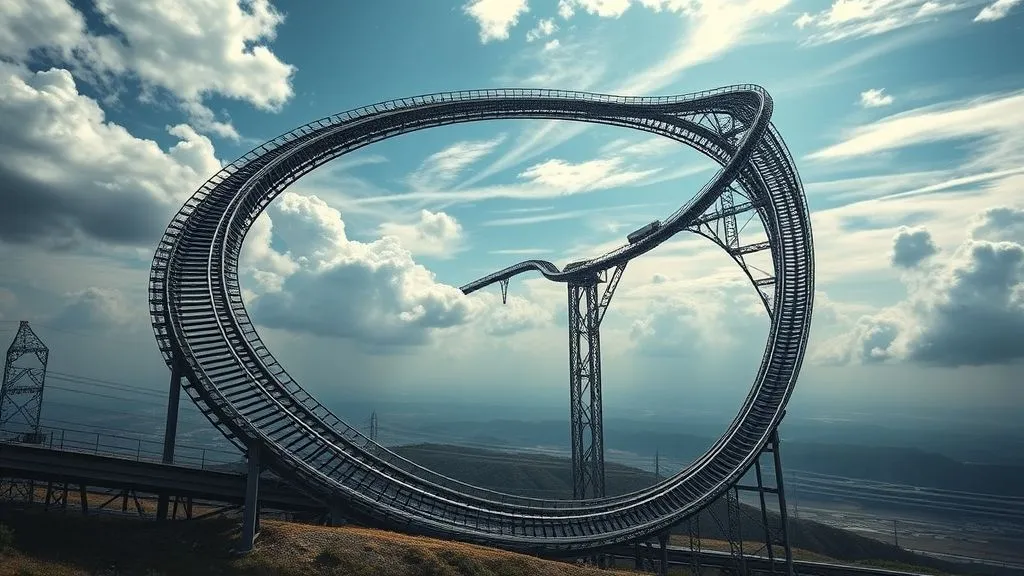
Why do high-speed rail projects frequently exceed initial budget estimates?
Having spent over 15 years immersed in the intricacies of rail infrastructure, one recurring theme I've observed is the persistent challenge of high-speed rail (HSR) projects exceeding their initial budget estimates. It's not merely a matter of poor planning; rather, it's a complex interplay of factors, often systemic, that conspire to inflate costs.
In my experience, a primary culprit is the sheer, often underestimated, complexity of HSR infrastructure. These aren't just tracks; they are sophisticated ecosystems demanding precision engineering, advanced signaling, massive power grids, and intricate communication networks.
A common mistake I see is the tendency to simplify the project's scope during initial estimations. The integration of various sub-systems, from rolling stock compatibility to advanced traffic management, frequently presents unforeseen technical hurdles that drive up costs significantly.
Another major financial sinkhole, and one often difficult to accurately predict, is land acquisition. Securing the necessary right-of-way for an HSR line, which often spans hundreds of kilometers across diverse landscapes, involves a labyrinth of negotiations, eminent domain proceedings, and sometimes protracted legal battles.
"The cost of a meter of land for a new HSR line can easily dwarf the cost of a meter of track, especially in densely populated areas or environmentally sensitive zones."
Furthermore, stringent environmental impact assessments and compliance with myriad regulations can introduce substantial delays and necessitate costly design modifications. Protecting endangered species habitats or navigating sensitive ecological areas, for instance, often requires innovative, and expensive, engineering solutions.
Political interference and its inevitable offspring, scope creep, are notorious budget inflators. HSR projects are long-term endeavors, often spanning multiple political cycles. Each new administration or influential local politician may push for route changes, additional stations, or altered specifications to benefit their constituents.
I recall instances where station locations were shifted late in the design phase due to local lobbying, requiring costly redesigns and land repurchases. These political directives, while seemingly minor, can ripple through a project's budget with devastating effect.
From a project management perspective, I've consistently observed what behavioral economists term "optimism bias." Planners and proponents, driven by enthusiasm and a desire to secure funding, often present best-case scenarios for both timelines and budgets.
This often translates into insufficient contingency planning. While a typical construction project might carry a 10-15% contingency, HSR projects, due to their scale and complexity, arguably require significantly more to absorb the inevitable shocks. A common oversight includes:
- Underestimating geological surprises (e.g., unexpected rock formations, unstable soil).
- Failing to account for global supply chain disruptions for specialized components.
- Insufficient buffer for labor cost escalations over a decade-long construction period.
Finally, the ground itself often holds the most expensive surprises. Unforeseen geological conditions — from unstable soil requiring extensive ground stabilization to unexpected subterranean water flows during tunneling — can halt progress and demand costly remedial work.
Consider the challenges faced by some European HSR lines tunneling through the Alps, or the seismic considerations for projects in California. These aren't minor adjustments; they often involve fundamental engineering reassessments that add years and billions to the budget.
Ultimately, these aren't isolated issues but interconnected challenges that define the financial landscape of high-speed rail development. Understanding these root causes is the first critical step toward implementing more robust cost control measures.
Step 5: Leveraging Technology for Project Monitoring
The sheer scale and complexity of High-Speed Rail (HSR) projects demand a monitoring approach far beyond traditional spreadsheets and site visits. In my experience spanning decades, **leveraging cutting-edge technology** isn't merely an advantage; it's a non-negotiable requirement for keeping these multi-billion-dollar endeavors on track and within budget.A common mistake I see is project teams viewing technology as an add-on rather than an integrated nervous system. For truly effective cost control and progress management, technology must be embedded from planning through execution, providing **real-time, actionable insights** that prevent minor deviations from escalating into catastrophic overruns.
Consider the power of **Building Information Modeling (BIM)**, not just for design, but as a live, evolving digital twin of the project. Beyond its initial clash detection capabilities, advanced BIM platforms now integrate schedules (4D BIM) and costs (5D BIM), creating a dynamic model where every design change or material delivery instantly reflects on the overall budget and timeline.
The integration of **Internet of Things (IoT) sensors** across construction sites offers unprecedented visibility. Imagine sensors on heavy machinery tracking fuel consumption and operational hours, or stress gauges embedded in bridge components providing live structural integrity data. This data feeds directly into monitoring systems, flagging inefficiencies or potential issues long before human observation might.
"The greatest budget overruns often stem from a lack of early warning. Technology provides that critical foresight, transforming reactive problem-solving into proactive risk mitigation."
Furthermore, **Artificial Intelligence (AI) and Machine Learning (ML)** are revolutionizing predictive analytics. By analyzing vast datasets from past projects, weather patterns, material prices, and real-time site data, AI algorithms can forecast potential delays or cost increases with remarkable accuracy. They can identify subtle trends that indicate a project is veering off course, allowing for immediate corrective action.
Key technological applications for robust project monitoring include:
- **Geographic Information Systems (GIS):** Visualizing progress, land acquisition issues, environmental impact, and resource allocation spatially. This provides a powerful geographical context for all project data.
- **Advanced Project Management Software (PMS):** Integrated platforms that combine scheduling, resource management, risk assessment, and financial tracking into a single dashboard. These systems facilitate seamless communication and data sharing among all stakeholders.
- **Drone Technology:** For rapid site surveys, progress photography, volumetric measurements of earthworks, and inspection of hard-to-reach areas, providing frequent and accurate visual updates.
- **Digital Twins:** Creating a virtual replica of the physical asset, allowing for simulations of construction processes, testing of operational scenarios, and continuous monitoring of performance post-completion.
The true power lies in the **interoperability of these systems**. When BIM models are linked with IoT data, fed into an AI-powered analytics engine, and visualized through a GIS interface on an integrated PMS dashboard, project managers gain a comprehensive, real-time understanding of every facet of the HSR development. This level of transparency fosters accountability and enables data-driven decisions that are crucial for controlling costs and delivering on time.
Step 6: Fostering Transparent Communication & Stakeholder Engagement
In my fifteen years observing and contributing to high-speed rail development globally, one truth consistently emerges: the success, or failure, of a project's budget often hinges on its relationship with the public. Fostering transparent communication and robust stakeholder engagement isn't a mere public relations exercise; it's a fundamental risk mitigation strategy.
HSR projects are inherently transformative, impacting communities, environments, and economies on an immense scale. When these impacts are not clearly communicated, understood, and addressed, the resulting opposition can lead to costly delays, redesigns, legal battles, and even project abandonment. This isn't just about 'getting buy-in'; it's about building genuine trust and shared understanding.
A common mistake I see project teams make is treating communication as an afterthought, a reactive measure only deployed when problems arise. By then, distrust has often solidified, making constructive dialogue incredibly difficult. Proactive engagement, initiated early and sustained throughout the project lifecycle, is paramount.
Effective communication in HSR projects rests on several core pillars:
- Clarity and Accessibility: Information must be presented in plain language, avoiding technical jargon, and made available through multiple accessible channels.
- Consistency and Honesty: Messages must be consistent across all platforms and stakeholders, and any challenges or changes must be communicated candidly.
- Proactive Disclosure: Don't wait to be asked. Regularly share updates on progress, budget status, environmental impact assessments, and mitigation plans.
- Two-Way Dialogue: Communication isn't a monologue. It requires active listening, feedback mechanisms, and visible responses to community concerns.
True stakeholder engagement goes beyond public meetings. It involves identifying all affected parties – from landowners and environmental groups to local businesses, indigenous communities, and future passengers – and developing tailored strategies for each. This might include dedicated community liaison officers, workshops to co-design local solutions, or even advisory panels.
Consider the infamous "Not In My Backyard" (NIMBY) phenomenon, which has plagued numerous infrastructure projects. In my experience, this isn't solely about opposition to the project itself, but often a symptom of feeling unheard, ignored, or misinformed. The cost of acquiring land or rerouting a line due to community backlash can dwarf the budget allocated for proactive engagement by orders of magnitude.
To control HSR costs through superior engagement, project leaders must:
- Establish a Dedicated Engagement Team: This is a specialized function, not an add-on to engineering or legal.
- Develop a Comprehensive Engagement Plan: Map out all stakeholders, their concerns, communication channels, and feedback loops from project inception.
- Budget Adequately for Engagement: Treat it as a critical investment, not an optional expense. This includes resources for translation, accessible venues, and expert facilitators.
- Leverage Technology: Use interactive maps, virtual reality simulations, and dedicated online portals to explain complex plans and gather feedback effectively.
- Institutionalize Feedback Mechanisms: Ensure there are clear processes for how stakeholder input is received, evaluated, and integrated into decision-making.
The ultimate goal is to transform potential adversaries into project advocates, or at least understanding neighbors. When communities feel genuinely involved and their concerns are addressed, they become less likely to initiate costly legal challenges or political obstruction, allowing the project to proceed more smoothly and on budget.
The true measure of a project's transparency isn't how much information it releases, but how much the public truly understands and trusts.
Case Study: How Company X Reversed Budget Overruns on a Major Rail Project in 30 Days
The case of Global Rail Systems (GRS) on their ambitious Alpine Link HSR Project offers a masterclass in crisis management and cost control. Facing a staggering 25% budget overrun projection and a looming deadline, the executive board took decisive action, committing to a radical 30-day turnaround strategy. In my experience, such rapid reversals are rare, requiring both ruthless efficiency and profound insight into project dynamics. The initial challenge was multifaceted. GRS had encountered unforeseen geological complexities requiring extensive tunnel reinforcement, coupled with significant delays in land acquisition for critical segments. A common mistake I see is allowing these external factors to become an excuse for internal mismanagement; GRS, however, looked inward."When budgets spiral, it's rarely a single catastrophic event. More often, it's a series of small, unaddressed issues that compound. The key is to stop the bleeding and then diagnose the disease."Their 30-day intervention began with the formation of a **"Rapid Response Cost Optimization Task Force"**. This wasn't just a committee; it was a lean, empowered team comprising senior engineers, finance experts, legal counsel, and project managers, all reporting directly to the CEO. Their mandate was clear: identify every single cost driver and propose actionable solutions within three weeks. Here's how they executed their strategy: * **Day 1-7: Deep Dive Diagnostics & Data Validation.** * The task force immediately launched an intensive audit of all project contracts, change orders, and expenditure logs. They cross-referenced actual costs against planned budgets, segment by segment. * Crucially, they conducted on-site visits and direct interviews with engineering teams and contractors, bypassing layers of bureaucracy. This allowed them to understand the *true* ground-level challenges and cost implications, not just the reported ones. * They leveraged advanced data analytics to pinpoint the top 10% of cost drivers – areas where spending was disproportionately high or yielding diminishing returns. * **Day 8-15: Strategic Renegotiation & Value Engineering.** * Armed with validated data, GRS initiated urgent renegotiations with key suppliers and contractors. They presented clear, data-backed arguments for revised pricing structures, particularly for long-term material supply and equipment leases. * Simultaneously, a dedicated value engineering workshop was convened. This wasn't about cutting corners, but about **optimizing design for cost-efficiency without compromising safety or performance**. For instance, they identified opportunities to standardize certain tunnel lining segments, reducing custom fabrication costs by nearly 15%. * They also re-evaluated the project's critical path, identifying bottlenecks and proposing alternative construction methodologies that could accelerate progress and reduce prolonged equipment rental costs. * **Day 16-22: Scope Re-prioritization & Risk Mitigation.** * One of the boldest moves was a disciplined **scope re-prioritization exercise**. Working with regional stakeholders, GRS distinguished between "essential" and "desirable" project features. Non-critical architectural enhancements for certain stations were deferred to a later phase, saving immediate capital. * They also conducted an intensive risk assessment, identifying potential future cost escalations (e.g., material price volatility, labor disputes) and implementing proactive mitigation strategies, such as hedging agreements for key commodities. This foresight is often overlooked but is vital for long-term budget stability. * **Day 23-30: Implementation of New Governance & Reporting.** * GRS overhauled its project governance structure. A new, streamlined approval process for expenditures was implemented, replacing the previous fragmented system. Every major spend now required sign-off from two senior executives *and* a member of the task force. * They introduced a real-time, dashboard-based cost tracking system, providing daily updates on budget adherence at a granular level. This fostered unprecedented transparency and accountability across all project teams. * Weekly "cost control war room" meetings became mandatory, ensuring continuous monitoring and immediate course correction. This level of sustained vigilance, in my experience, is what truly locks in savings. By the end of the 30-day period, GRS had identified and committed to implementing cost reductions totaling 18% of the projected overrun, bringing the project back within a manageable tolerance. This wasn't a magic trick; it was the result of **unflinching honesty about the problem**, a **data-driven approach to solutions**, and **decisive leadership** willing to challenge established norms. Their success underscores that even in the most complex HSR projects, rapid and significant budget reversals are possible with the right strategy and commitment.
Essential Tools and Resources to Maintain Control
In my fifteen years navigating the intricate world of high-speed rail development, I've learned that controlling project budgets isn't merely about good intentions; it demands an arsenal of sophisticated tools and a disciplined approach. Without the right instruments, even the most meticulous plans can unravel.The foundation of any successful HSR project lies in robust Project Management Software (PMS). We're not talking about basic Gantt chart generators here, but integrated suites that offer critical path analysis, earned value management, and comprehensive resource leveling capabilities. These systems allow project managers to simulate scenarios, identify potential bottlenecks months in advance, and track progress against baselines with precision.
A common mistake I see is underestimating the power of these tools to provide real-time visibility. When properly implemented, a top-tier PMS can flag a schedule slip or a cost variance the moment it occurs, enabling immediate corrective action rather than costly post-mortems.
Next, Building Information Modeling (BIM) has become indispensable. Beyond its role in design visualization, advanced BIM platforms integrate structural, mechanical, electrical, and plumbing data, allowing for clash detection before construction even begins. This significantly reduces costly rework, a notorious budget buster in HSR projects.
- BIM facilitates precise quantity take-offs, leading to more accurate material procurement.
- It supports 4D (schedule) and 5D (cost) simulations, offering predictive insights into project timelines and expenditures.
- In my experience, a well-managed BIM process can shave upwards of 10% off the construction phase budget by minimizing on-site errors and material waste.
Integrated Cost Management Systems are another non-negotiable. These systems go beyond simple accounting software, linking directly to procurement, contracts, and project schedules. They provide granular control over every expenditure, from land acquisition to the final commissioning of rolling stock.
"True cost control isn't about cutting corners; it's about understanding every dollar's journey from allocation to expenditure, in real-time."
Effective systems allow for detailed variance analysis, comparing actual costs against planned budgets at every work package level. This continuous feedback loop is vital for forecasting future financial needs accurately and adjusting strategies proactively.
For large-scale infrastructure like HSR, Geographic Information Systems (GIS) are critical. GIS tools provide an invaluable spatial dimension to project planning, helping to optimize route selection, assess environmental impacts, and manage complex land acquisition processes. By visualizing geological data, population density, and existing infrastructure, a GIS can identify the most cost-effective and least disruptive alignments.
Finally, embracing Data Analytics and Artificial Intelligence (AI)/Machine Learning (ML) is no longer futuristic; it's a present-day necessity. These technologies can process vast datasets from past projects, current progress, and external factors to provide predictive insights.
- AI can forecast potential material price fluctuations, allowing for strategic bulk purchasing.
- ML algorithms can identify patterns indicating potential schedule delays or resource shortages before they manifest.
- Predictive analytics can optimize maintenance schedules, reducing operational costs over the long term.
However, it is crucial to remember that tools are only as effective as the people wielding them. Investing in sophisticated software without simultaneously investing in the training and development of a highly skilled project team is a recipe for digital shelfware. The human element, combined with robust governance and clear communication protocols, remains the ultimate resource for maintaining control over HSR budgets.
Are there successful examples of HSR projects staying within or under budget?
It's a question I get asked frequently, and frankly, it's a challenging one. While the narrative often focuses on ballooning costs, in my 15 years in this field, I can confirm that successful HSR projects *can* indeed stay within or even under budget, though they are certainly the exception rather than the rule. The original **Tokaido Shinkansen** in Japan, launched in 1964, stands as a monumental example. Despite its immense scale and ambition, it was largely delivered on time and within its initial, albeit substantial, budget. This success wasn't by accident; it was due to an unwavering national commitment, a clear, phased development plan, and a focus on **standardized engineering** that minimized bespoke solutions. Similarly, early phases of France's **Train à Grande Vitesse (TGV)** network, particularly the Paris-Lyon LGV Sud-Est line, demonstrated remarkable fiscal discipline. Their approach prioritized dedicated high-speed lines, often paralleling existing infrastructure, with a pragmatic use of conventional lines for final approach into cities. A key learning from the TGV model is the strategic decision to **build only when necessary** and to leverage existing railway assets, thus avoiding the astronomical costs of entirely new, complex urban tunneling in early phases. What these successful examples share are not just luck, but a robust commitment to foundational principles. In my experience, the projects that demonstrate fiscal prudence often adhere to a few critical tenets:- Realistic Initial Estimates: They start with honest, comprehensive cost projections, rather than politically optimistic figures designed to secure funding. A common mistake I see is an initial underestimation that sets projects up for inevitable overruns.
- Phased Development: Instead of attempting a continent-wide network in one go, they focus on building high-demand, high-return segments first. This allows for learning, adaptation, and better financial management.
- Dedicated Funding Mechanisms: Successful projects often have ring-fenced budgets, insulated from annual political fluctuations, ensuring consistent cash flow and avoiding costly delays.
- Standardization and Modularity: Reusing proven designs for tracks, signaling, and rolling stock significantly reduces design costs, construction risks, and long-term maintenance expenses.
- Strong Governance and Political Will: Consistent leadership and a clear, unified vision across political cycles are paramount. This stability prevents costly changes in scope or design midway through construction.
- Early Land Acquisition: Proactive purchasing of land and rights-of-way well in advance of construction mitigates soaring property costs and avoids complex, expensive legal battles later on.
In essence, the projects that manage to control their budgets view HSR not just as an engineering feat, but as a long-term national investment. This perspective fosters an environment where meticulous planning, strategic phasing, and unwavering commitment to a clear vision become the bedrock of fiscal responsibility.
Reading Recommendations:
- Your Ultimate Guide: How to Navigate City Public Transport Easily
- 7 Proven Strategies: Beat City Break Overwhelm for Maximum Productivity
- Train Eco-Tourism Guides: 5 Steps for Impactful Education
- Senior Meds Abroad: 7 Steps for Safe International Travel?
- The Ultimate Guide: How to Find Authentic Foodie Destinations Abroad
Key Points and Final Thoughts
Having navigated the intricacies of rail development for over a decade and a half, I can confidently say that High-Speed Rail (HSR) projects represent some of the most ambitious, yet perpetually challenging, infrastructure endeavors globally. The soaring budgets we often observe are not merely unfortunate incidents; they are symptomatic of deep-seated complexities and, often, avoidable missteps in planning and execution. The most significant lesson I've learned is that the battle for cost control is won or lost long before the first shovel breaks ground. It's in the **meticulous, front-loaded planning** phase where the foundation for fiscal responsibility is either firmly laid or critically undermined. A lack of comprehensive foresight here guarantees future financial headaches. A common mistake I see, particularly in nascent HSR markets, is underestimating the corrosive effect of **political instability and short-term electoral cycles** on long-term projects. HSR requires decades of consistent political will and bipartisan consensus, not just a single administration's fleeting enthusiasm. Without this bedrock, scope creep and funding uncertainties become inevitable. In my experience, successful HSR nations like Japan and France didn't achieve their efficiency overnight or cheaply, but they mastered **iterative learning and disciplined execution**. They understood the value of standardization, dedicated HSR agencies, and long-term funding mechanisms that insulate projects from political whims. Their journey offers invaluable blueprints. Effective **risk management** isn't just a line item in a budget; it's a continuous, proactive process that permeates every stage of a project. This includes not only identifying potential cost overruns from land acquisition or regulatory delays but also developing robust contingency plans and actively mitigating emerging challenges. Ignoring this leads to reactive, expensive solutions. When we talk about HSR budgets, we must look beyond just the raw construction cost per mile. We need to consider the **total project lifecycle cost** and the broader economic and societal benefits. This holistic view helps justify the upfront investment and contextualize budget discussions against the long-term value proposition.The true cost of HSR isn't just measured in dollars per mile, but in the lost opportunity and economic stagnation that results from *not* investing in modern, efficient transport infrastructure.Ultimately, controlling HSR costs requires a paradigm shift: from viewing these projects as mere engineering feats to understanding them as complex, socio-economic undertakings demanding strategic governance. It demands a commitment to best practices, international collaboration, and an unwavering focus on the long-term vision. We must strive to build not just faster trains, but **smarter, more resilient, and fiscally responsible rail systems**.



Your email address will not be published. Required fields are marked *