

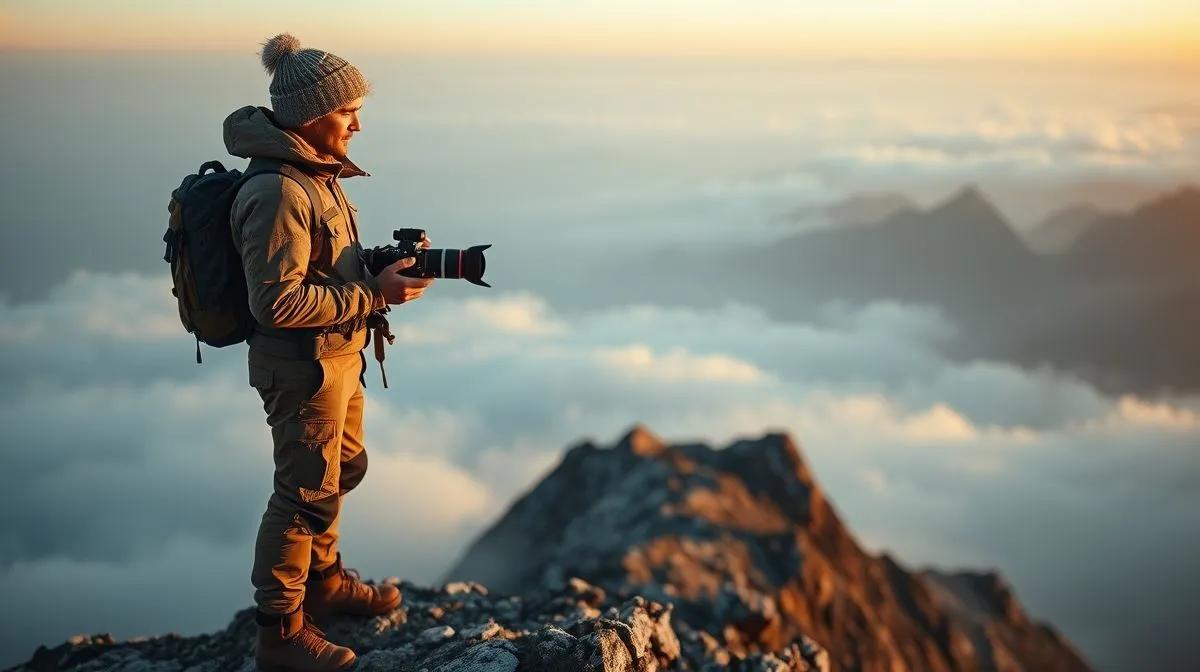
Best Lightweight Camera Setup for Remote Nature Photography Trips?
For over two decades navigating some of the planet's most untamed landscapes, I've learned one undeniable truth about nature photography: the best camera is the one you actually have with you, ready to shoot, when that fleeting moment arrives. Early in my career, I made the classic mistake of overpacking, lugging heavy DSLRs, multiple pro lenses, and a cumbersome tripod. The result? Exhaustion, missed opportunities because I was too tired to set up, and a profound realization that less truly is more in the backcountry.
The quintessential challenge for any aspiring or seasoned nature photographer venturing into remote territories isn't just about capturing stunning images; it's about the delicate dance between optical quality, rugged durability, and the sheer physical burden of your gear. How do you ensure you're equipped for breathtaking wide-angle landscapes or intimate wildlife portraits without breaking your back on a multi-day trek? This dilemma has plagued countless adventurers, often leading to compromises on image quality or, worse, physical injury.
In this definitive guide, I will share my seasoned insights and practical frameworks for assembling the best lightweight camera setup for remote nature photography trips. We'll explore the strategic choices that enable you to carry less, shoot more, and return with truly remarkable photographs, unburdened by unnecessary weight. Prepare to transform your approach to expedition photography, focusing on efficiency, resilience, and unparalleled image capture.
The Core Philosophy: Weight-to-Impact Ratio
Before we dive into specific gear, let's establish a foundational principle: the weight-to-impact ratio. Every single gram you add to your pack must justify its existence in terms of its photographic utility, durability, or ability to enable a shot you otherwise couldn't capture. This isn't about simply buying the smallest gear; it's about intelligent, purpose-driven selection.
In my experience, many photographers fall into the trap of 'just in case' packing. While preparedness is vital, 'just in case' often translates to 'just extra weight.' I advocate for a 'most likely' approach – packing what you'll most likely need for your specific objectives, with minimal redundancy. This means rigorously evaluating each item not just on its specifications, but on its practical value in the field.
Understanding Your Photographic Intent
Your first step in optimizing your kit is to deeply understand your primary photographic intent for the trip. Are you primarily focusing on grand landscapes? Intimate wildlife? Macro details? Astrophotography? While versatility is appealing, aiming to do everything perfectly often means doing nothing exceptionally. Specializing, even slightly, allows for significant weight savings.
- Landscape focus: Prioritize wide-angle lenses, sturdy but light tripods, and perhaps graduated ND filters.
- Wildlife focus: A compact telephoto zoom becomes paramount, potentially sacrificing wider lenses.
- Macro/Details: A lightweight macro lens and a small, stable support system.
“Every gram you carry for miles is a gram of energy you spend. Make sure that energy investment pays dividends in your photography.”
Mirrorless Reigns Supreme: Why Ditch the DSLR?
When it comes to the best lightweight camera setup for remote nature photography trips, the mirrorless revolution isn't just a trend; it's a game-changer. For years, DSLRs were the undisputed kings, but their optical viewfinders and mirror box mechanisms inherently add bulk and weight. Mirrorless cameras eliminate these, offering significant advantages.
Modern mirrorless bodies, even full-frame ones, are dramatically smaller and lighter than their DSLR counterparts. The electronic viewfinder (EVF) provides a real-time preview of your exposure, white balance, and depth of field, which is incredibly useful in challenging light conditions. Furthermore, their advanced autofocus systems, often with eye-tracking for wildlife, are truly remarkable.
Full-Frame, APS-C, or Micro Four Thirds?
This is a critical decision influencing both image quality and weight. Each sensor size offers a different balance:
- Full-Frame: Offers the best low-light performance, dynamic range, and shallower depth of field. Modern full-frame mirrorless bodies are surprisingly light (e.g., Sony Alpha 7C, Nikon Z5, Canon EOS R8), but the lenses can still be substantial.
- APS-C: A fantastic middle ground. Cameras like the Fujifilm X-T5 or Sony Alpha 6700 offer excellent image quality in a significantly smaller and lighter package, with smaller, lighter lenses. The crop factor also gives you more reach with telephoto lenses.
- Micro Four Thirds (M4/3): The ultimate in compact size and weight (e.g., Olympus OM-D E-M5 Mark III, Panasonic G9). While low-light performance isn't on par with full-frame, the system's incredible portability, image stabilization, and the '2x' crop factor make it ideal for wildlife and discreet travel.
Case Study: Sarah's Shift to Mirrorless
Sarah, a dedicated wildlife photographer, had always relied on her heavy DSLR and 600mm prime lens for her remote expeditions into the Amazon. Her pack often weighed over 20 kg, limiting her mobility and stamina. After a particularly grueling trip where she missed several rare bird shots due to fatigue, she consulted me. I advised her to consider a high-end APS-C mirrorless system (like a Fujifilm X-H2S) paired with a lightweight 150-600mm equivalent zoom lens. The transition was revolutionary. She halved her camera gear weight, allowing her to trek further, set up faster, and spend more time observing. Her keeper rate significantly increased, and she reported feeling far more energized at the end of each day. This resulted in her capturing her first ever photograph of a Jaguar in the wild, a shot she attributes directly to her increased agility.
Lens Selection: The Art of Strategic Minimalism
Your lens choices are arguably more impactful on your pack weight than your camera body. While a vast array of lenses might seem appealing, for remote trips, a highly curated selection is paramount. I typically advocate for a two or three-lens kit, maximum, designed to cover your most likely scenarios.
- The Versatile Zoom: A 24-70mm (full-frame equivalent) or 16-55mm (APS-C equivalent) f/2.8 lens is often the workhorse. It covers wide landscapes, environmental portraits, and general scenes. Many modern versions are surprisingly compact.
- The Telephoto Zoom: For wildlife, a 70-200mm f/2.8 or a 100-400mm (full-frame equivalent) is essential. Consider lighter f/4 versions or those with variable apertures to save weight. For M4/3, a 100-400mm equivalent lens offers incredible reach in a tiny package.
- The Lightweight Prime: A fast, wide prime (e.g., 20mm or 24mm f/1.8) can be invaluable for astrophotography or low-light landscapes, offering superior image quality and light-gathering capabilities compared to zooms, often with less weight.
Avoid duplicating focal lengths unless absolutely necessary. If your 24-70mm is good, do you really need a 35mm prime *and* a 50mm prime? Probably not for a remote trip. Every lens represents significant weight and bulk.
Powering Your Expedition: Battery Management in the Wild
In remote nature photography, power is your lifeline. Outlets are non-existent, and cold weather can rapidly drain batteries. This is where meticulous planning becomes crucial for your best lightweight camera setup for remote nature photography trips.
My strategy involves a multi-pronged approach:
- Ample Spare Batteries: I always carry at least 3-4 fully charged camera batteries. Label them (A, B, C, D) and rotate usage to ensure even wear. Store them in a warm pocket in cold weather.
- High-Capacity Power Bank: A good quality USB-C power bank (20,000mAh+) is essential for charging camera batteries (via USB-C in-camera charging or a dedicated USB charger) and other devices like headlamps or phones.
- Solar Charger (Situational): For multi-week expeditions in sunny climates, a compact, foldable solar panel can be a lifesaver. Ensure it has a built-in battery or can charge your power bank effectively. For shorter trips or cloudy regions, it's often more weight than it's worth.
According to a comprehensive review of portable power solutions on TechRadar, modern power banks offer incredible efficiency and power density, making them far more practical than carrying dozens of spare camera batteries.
“Never underestimate the power of a dead battery to ruin a perfect shot. Redundancy in power is not a luxury; it's a necessity.”
Tripods & Support: Stability Without the Strain
For landscapes, long exposures, or sharp telephoto shots, a tripod is non-negotiable. However, traditional tripods can be prohibitively heavy. The solution lies in carbon fiber and mindful selection.
- Carbon Fiber: Invest in a high-quality carbon fiber tripod. They are significantly lighter than aluminum equivalents while maintaining excellent stability. Look for models without a center column or with a very short one for maximum stability and minimum weight.
- Compact Ball Head: Pair it with a lightweight, robust ball head. Arca-Swiss compatible clamps are highly recommended for quick camera attachment.
- Tabletop/Mini Tripod: For macro work, vlogging, or simply providing a stable base on uneven surfaces, a small, sturdy tabletop tripod (like a Manfrotto Pixi or Joby GorillaPod) can be invaluable and weighs next to nothing.
- Monopod (for wildlife): If you're primarily shooting wildlife with a long lens and need support but prioritize mobility over absolute stability, a lightweight carbon fiber monopod is an excellent compromise.
The Unsung Heroes: Essential Accessories & Protection
Beyond the core camera and lenses, a few crucial accessories can make or break your trip, all while maintaining your lightweight ethos.
- Filters: A circular polarizer (CPL) is essential for reducing glare and enhancing colors. A neutral density (ND) filter (e.g., a 6-stop or 10-stop) allows for long exposures in daylight, perfect for smoothing water or clouds. Choose high-quality, thin filters to avoid vignetting.
- Cleaning Kit: A small blower, lens pen, and microfiber cloth are vital for keeping dust and smudges off your valuable glass.
- Weather Protection: Always carry a lightweight rain cover for your camera and backpack. Dry bags or waterproof stuff sacks are excellent for protecting sensitive electronics from rain, splashes, or even humidity. Look for weather-sealed camera bodies and lenses. As detailed in guides like those found on B&H Photo Explora, proactive protection is far better than reactive damage control.
- Memory Cards: Multiple high-speed (V90) SDXC or CFexpress cards are essential. Don't rely on just one. I typically carry enough capacity for the entire trip, plus a small, rugged SSD for backup if I bring a lightweight laptop or tablet.
- Headlamp: A compact, powerful headlamp with a red-light mode is critical for navigating and shooting in the dark without compromising your night vision.
Backpacks & Carrying Systems: Your Mobile Base Camp
Even the best lightweight camera setup for remote nature photography trips can feel heavy if your carrying system isn't optimized. Your backpack is not just a container; it's an integral part of your comfort and efficiency.
- Dedicated Photo Backpack vs. Inserts: Some prefer dedicated photo backpacks (e.g., F-Stop, Lowepro) for their integrated protection and organization. Others opt for a standard hiking backpack and use padded camera inserts (e.g., Shimoda, Tenba BYOB) to carry their gear securely. The latter often allows for better weight distribution and more versatility.
- Fit and Ergonomics: The most expensive backpack is useless if it doesn't fit your body. Ensure adjustable shoulder straps, a padded hip belt, and proper load lifters. A well-fitting pack distributes weight to your hips, relieving strain on your shoulders. Research from outdoor gear review sites like OutdoorGearLab emphasizes the importance of proper fit for long-term comfort.
- External Attachment Points: Look for loops and straps to attach a lightweight tripod, trekking poles, or even a water bottle.
Software & Post-Processing: Lightening the Digital Load
While not physical gear, your approach to post-processing can influence your overall 'digital' weight and efficiency in the field. This is especially true for remote trips where connectivity and power are scarce.
- RAW vs. JPEG: Always shoot RAW for maximum flexibility and quality. However, for quick previews or immediate sharing (if you manage to get a signal), having the camera record RAW+JPEG can be useful.
- Field Backup: A robust, portable SSD (Solid State Drive) is my preferred backup solution. They are small, fast, and durable. If you carry a lightweight tablet (like an iPad Pro) or a minimalist laptop (like a MacBook Air), you can use it to review images, cull, and perform initial backups. Cloud storage is ideal for long-term backup, but unreliable in remote areas. Services like PCMag's Best Cloud Storage reviews highlight top options for when you return to civilization.
- Culling on the Go: Develop a system to quickly cull your images in the field. Deleting obvious misses saves valuable card space and reduces the post-trip workload.
Frequently Asked Questions (FAQ)
Question? Should I really sacrifice full-frame for a lighter APS-C or Micro Four Thirds system for remote trips?
Answer: This is a common dilemma. In my expert opinion, for *most* remote nature photography trips where weight and portability are paramount, an APS-C or even a high-end Micro Four Thirds system is an excellent compromise. While full-frame offers superior low-light performance and dynamic range, the advancements in smaller sensors mean you can achieve incredible results, especially with modern noise reduction in post-processing. The weight savings, both in body and especially in lenses, often outweigh the marginal image quality differences, allowing you to go further and shoot more comfortably.
Question? Is it worth bringing a drone on a remote nature photography trip, considering the added weight and complexity?
Answer: Drones, like the DJI Mini series, have become incredibly compact and capable. If aerial perspectives are a significant part of your photographic vision for the trip, and you've thoroughly researched local regulations and potential restrictions (e.g., national parks, wilderness areas), then yes, a small, foldable drone can add immense value. However, it's an additional battery drain, another item to protect, and requires dedicated flight time. I'd only recommend it if it's a primary creative tool for the expedition, not just an afterthought.
Question? How do I manage memory cards and backups on extended remote trips without a laptop?
Answer: For trips without a laptop, I rely on a portable hard drive with a built-in card reader (e.g., a Gnarbox or WD My Passport Wireless SSD). These devices allow you to offload memory cards directly to the hard drive, verifying the transfer without a computer. Carry multiple small-capacity memory cards rather than one large one, so if a card fails, you don't lose all your images. This redundancy is critical when you can't immediately review files on a larger screen.
Question? Should I bring a compact point-and-shoot camera as a lightweight backup or for quick snapshots?
Answer: Absolutely. I often carry a high-quality compact camera (like a Sony RX100 series or Fujifilm X100 series) as a secondary camera. It's fantastic for casual moments, vlogging, or as a true emergency backup if your main system fails. They are unobtrusive, pocketable, and capable of surprisingly good image quality. It's a minimal weight penalty for significant peace of mind and versatility.
Question? What’s the best way to protect my lightweight camera setup from extreme cold or heat?
Answer: For cold, keep batteries warm (in an inside pocket) and use chemical hand warmers near your camera inside your bag. Avoid rapid temperature changes that cause condensation by placing your camera in a sealed bag (like a Ziploc) before entering a warm space. For heat, avoid direct sunlight exposure, especially to black camera bodies and lenses. Use light-colored covers or wraps. Always keep gear out of direct sun inside tents or vehicles, as temperatures can soar. Ventilation is key.
Recommended Reading
- Unlock the Secret: How to Maintain Healthy Eating on Your Wellness Trip
- Unlock the Secrets: Your Ultimate Guide to Responsible Indigenous Travel Guidelines
- The Ultimate Guide: How to Find Authentic Foodie Destinations Abroad
- The Ultimate Guide: How to Determine If a Frozen Lake is Safe?
- Unlock the Secret: How to Prevent Snow from Sticking to Snowshoes Permanently
Key Takeaways and Final Thoughts
- Prioritize Weight-to-Impact: Every piece of gear must earn its place in your pack.
- Embrace Mirrorless: Modern mirrorless systems offer the best balance of quality and portability.
- Curate Your Lenses: Opt for versatile zooms and strategic primes, avoiding redundancy.
- Power is Paramount: Invest in ample spare batteries and a reliable power bank.
- Stability, Not Bulk: Choose lightweight carbon fiber tripods or smart alternatives.
- Protect Your Investment: Don't skimp on weather protection and cleaning essentials.
- Optimize Your Carry: A well-fitting backpack is as crucial as the gear inside it.
Ultimately, the best lightweight camera setup for remote nature photography trips isn't about having the most expensive or feature-rich gear. It's about having the right gear – gear that empowers you to endure the journey, focus on the moment, and capture the raw beauty of the wilderness without being weighed down. My hope is that this guide empowers you to embark on your next adventure with confidence, knowing your equipment is perfectly aligned with your passion for discovery and photographic excellence. The most memorable shots are often those taken when you're truly present, unencumbered, and ready for whatever nature reveals.

Your email address will not be published. Required fields are marked *