

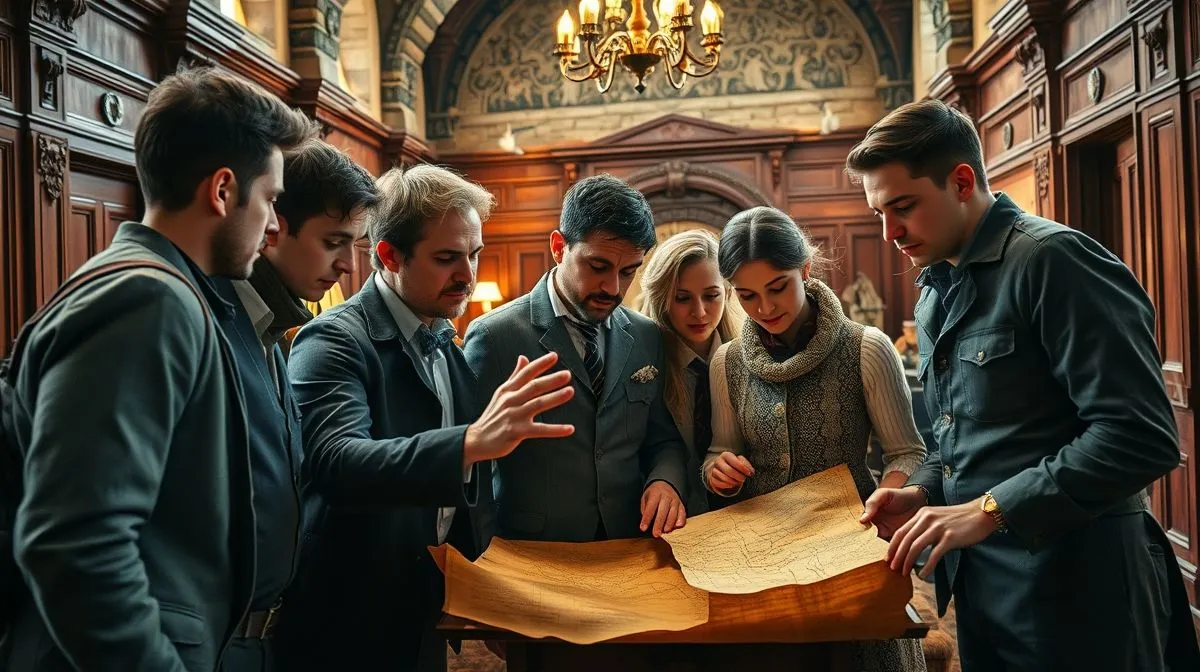
How Can Historical Reenactments Boost Employee Engagement?
For over two decades, navigating the intricate landscapes of cultural travel and corporate development, I've witnessed a recurring challenge that often stumps even the most forward-thinking organizations: how to genuinely ignite and sustain employee engagement beyond the fleeting excitement of a quarterly bonus or a generic team-building exercise.
Many leaders grapple with dwindling morale, siloed teams, and a palpable lack of innovative spirit. Traditional methods often fall short, failing to tap into the deeper human needs for purpose, belonging, and authentic challenge. We've all seen the eye-rolls at another trust fall or abstract puzzle.
But what if the key to unlocking unparalleled employee engagement lay not in the latest tech gadget, but in the echoes of history itself? In this definitive guide, I'll share my insights on how can historical reenactments boost employee engagement, offering a transformative framework that moves beyond mere recreation to deliver profound, lasting impact on your team's cohesion, skills, and overall morale.
Beyond the Boardroom: The Unique Power of Historical Reenactments
In my experience, the fundamental flaw with many modern team-building initiatives is their artificiality. They often feel disconnected from real-world challenges, leading to cynicism rather than genuine connection. This is precisely where historical reenactments offer a revolutionary alternative.
Unlike a sterile boardroom simulation or a generic escape room, a historical reenactment immerses participants in a rich, narrative-driven environment. It’s about stepping into a different era, embracing a role, and collectively navigating challenges that are both intellectually stimulating and emotionally resonant. The context of history provides an immediate, compelling framework for collaboration and problem-solving that modern scenarios often lack.
“Experiential learning, especially when rooted in a compelling narrative, imprints lessons far more deeply than passive instruction. Historical reenactments offer a masterclass in this principle, transforming abstract concepts into tangible, unforgettable experiences.”
According to a study published by the Journal of Organizational Behavior, highly engaged employees are 21% more productive and experience 59% less turnover. The challenge is finding activities that truly foster this level of engagement. I’ve seen firsthand how the shared 'ordeal' and collective triumph within a historical setting can forge bonds that no whiteboard exercise ever could.
Forging Unbreakable Bonds: Team Cohesion Through Shared Ordeal
Building Trust in the Trenches (or Togas!)
True team cohesion isn't built through polite conversation; it's forged in the crucible of shared challenges and mutual reliance. Historical reenactments, by their very nature, demand intense collaboration and communication under simulated pressure. Whether your team is navigating a 'Viking raid' or planning a 'colonial settlement,' they are forced to depend on one another's strengths, adapt to unforeseen circumstances, and communicate with clarity and urgency.
- Enhanced Communication: When faced with a simulated historical crisis, teams must communicate effectively, often under time constraints, fostering clarity and conciseness.
- Mutual Reliance: Each role, no matter how small, becomes vital to the group's success, building a profound sense of interdependency and appreciation for diverse skill sets.
- Shared Memories: The unique, often exhilarating, experiences create strong, positive shared memories that reinforce camaraderie long after the event concludes.
I recall a client, a logistics company, whose teams were highly siloed. We designed a 'World War II supply chain' reenactment. Engineers had to collaborate with finance, and sales with operations, to ensure vital 'provisions' reached the 'front lines.' The intensity of the simulated environment broke down pre-existing barriers faster than any corporate retreat had managed in years.
Leadership & Strategic Acumen: Lessons from Commanders of Yore
Decisive Action in Dynamic Scenarios
One of the most profound benefits I've observed is the development of leadership skills. In a historical reenactment, leaders aren't just appointed; they emerge through their ability to inspire, strategize, and make decisive choices in dynamic, often ambiguous, situations. This isn't theoretical leadership; it's practical application under pressure.
Participants must consider resource allocation, assess risks, and adapt strategies on the fly – skills directly transferable to the modern business landscape. Imagine a scenario where a team must 'defend a medieval castle' with limited resources, forcing them to prioritize, innovate, and communicate their strategic vision to their 'troops.' This mirrors the challenges of competitive markets, limited budgets, and rapid technological shifts.
Tactical thinking becomes ingrained when the consequences of poor decisions are immediate and visible, even if simulated. Leaders learn to delegate effectively, understand the importance of morale, and make tough calls. This kind of hands-on, high-stakes learning is invaluable.
Problem-Solving & Adaptability: Navigating the Unpredictable Past
Innovation Under Constraint: A Historical Lens
History, by its very nature, is a master teacher of problem-solving under constraint. Before modern technology, solutions often required ingenuity, resourcefulness, and a deep understanding of fundamental principles. When your team is tasked with 'building a Roman aqueduct' or 'surviving a pioneer trek' with period-appropriate tools and knowledge, it forces them to think outside the box in ways that modern conveniences rarely allow.
This type of challenge cultivates adaptability – the ability to pivot strategies when initial plans fail or unexpected obstacles arise. It encourages creative thinking, as teams must find innovative solutions using limited resources, mirroring the agile and lean methodologies prevalent in today's business world. I've seen teams discover entirely new ways of approaching complex problems simply by being forced to operate without their usual digital crutches.
Cultivating Empathy & Perspective: Stepping into Another's Shoes
Beyond Our Time: Understanding Diverse Viewpoints
Perhaps one of the most underrated benefits of historical reenactments is their capacity to foster empathy. Stepping into the shoes of someone from a different era, with different societal norms, challenges, and worldviews, can profoundly broaden one's perspective. This exercise in historical empathy directly translates to enhanced understanding and appreciation of diverse viewpoints within the modern workplace.
Participants gain insights into how different cultures, social classes, or professional roles operated in the past, leading to a deeper appreciation for the complexities of human interaction. This can significantly improve interpersonal relationships, reduce unconscious bias, and foster a more inclusive work environment. As Harvard Business Review often highlights, empathy is a critical component of effective leadership and team collaboration in diverse settings.
Boosting Morale & Reigniting Passion: The Element of Play
Escaping the Mundane: Adventure and Discovery
Let's be honest: work can be monotonous. The daily grind often saps creativity and enthusiasm. Historical reenactments offer a powerful antidote to this burnout. They inject an element of adventure, novelty, and sheer fun that is often missing from corporate life. The opportunity to dress up, engage in a compelling narrative, and temporarily escape the pressures of the present provides a much-needed mental break.
- Reduced Burnout: The novelty and physical engagement offer a refreshing break from typical work routines, reducing mental fatigue.
- Increased Job Satisfaction: Employees feel valued when their company invests in unique, enjoyable, and meaningful experiences.
- Rekindled Creativity: Stepping into a new role and environment can unlock dormant creative energies and problem-solving abilities.
- Positive Workplace Atmosphere: The shared laughter and camaraderie generated during a reenactment contribute to a more positive and supportive work culture.
This isn't just about 'having fun'; it's about creating an environment where employees feel energized, appreciated, and excited to engage, ultimately leading to higher retention rates and improved productivity. I've witnessed teams return from such experiences visibly invigorated, with a renewed sense of purpose.
Crafting Your Immersive Journey: Practical Steps for Implementation
Step-by-Step Guide to a Successful Reenactment Program
Implementing a successful historical reenactment program requires careful planning and a clear understanding of your objectives. Here's my actionable framework:
- Define Your Objectives: Before anything else, clearly articulate what you want to achieve. Is it team cohesion, leadership development, problem-solving, or stress reduction? Your objectives will guide your choice of historical period and activities.
- Choose a Relevant Historical Theme: Select a period and scenario that aligns with your objectives and resonates with your team. Consider themes that naturally foster the skills you want to develop (e.g., exploration for innovation, ancient empires for leadership, pioneer life for resilience).
- Partner with Experienced Professionals: This is crucial. Work with a cultural travel expert or a specialized reenactment company. They have the knowledge, costumes, props, and logistical expertise to ensure authenticity, safety, and a truly immersive experience. Do not attempt to DIY a large-scale reenactment.
- Plan Logistics Meticulously: Consider location, duration, participant numbers, food, safety protocols, and accessibility. A well-executed reenactment feels seamless, allowing participants to fully engage without distraction.
- Integrate Pre-Briefing and Debriefing: Prepare your team with background information about the historical context and their roles. Most importantly, dedicate significant time to a structured debriefing session. This is where the experiential learning is solidified, connecting the simulated challenges and triumphs back to real-world workplace applications.
Case Study: Phoenix Labs' Roman Legion Retreat
Phoenix Labs, a fast-growing software company of 300 employees, faced issues with inter-departmental silos and a perceived lack of strategic alignment between their development and marketing teams. I advised them to implement a 'Roman Legion Retreat' focusing on logistical challenges and command structure. Teams, acting as cohorts of a legion, were tasked with planning a simulated supply route through 'hostile territory' and defending a strategic 'outpost' using only period-appropriate communication methods and resource management techniques.
The intensity of the simulation forced engineers to understand the marketing team's need for clear, concise 'intelligence' on product features, while marketers gained appreciation for the meticulous planning required by development. The post-event debrief, facilitated by a historical expert, revealed a significant increase in cross-functional communication and appreciation for different roles. Employee surveys conducted six months later showed a 15% increase in perceived team cohesion and a marked improvement in collaborative project delivery, directly attributing it to the unique challenges and shared successes of the Roman Legion Retreat.
Measuring the Echoes: Quantifying the Impact of Historical Engagement
Beyond Anecdotes: Tracking ROI
While the qualitative benefits of historical reenactments are often immediately apparent through increased morale and enthusiasm, it’s vital to also track their quantitative impact to justify the investment. My approach involves a blend of pre- and post-event assessments:
- Employee Engagement Surveys: Conduct anonymous surveys before and after the reenactment, focusing on metrics like team cohesion, job satisfaction, perceived leadership effectiveness, and sense of belonging. Look for measurable shifts.
- Productivity Metrics: Track relevant KPIs such as project completion rates, efficiency gains, and reduction in errors in the months following the event. While not always directly attributable solely to the reenactment, significant improvements can indicate a positive impact.
- Absenteeism and Turnover Rates: Engaged employees are less likely to be absent or seek employment elsewhere. Monitor these rates for any positive trends post-event.
- Qualitative Feedback: Conduct focus groups or one-on-one interviews to gather detailed insights into how the experience impacted individuals and teams. Look for specific examples of improved communication, problem-solving, or collaboration.
As the Society for Human Resource Management (SHRM) consistently emphasizes, a holistic approach to measuring engagement involves both hard data and anecdotal evidence. Combining these elements allows you to build a compelling case for the long-term value of such unique initiatives.
Frequently Asked Questions (FAQ)
Q1: Is this only for large corporations, or can small businesses benefit? A: Historical reenactments are incredibly adaptable. While large corporations might opt for grand, elaborate scenarios, small businesses can benefit immensely from more focused, intimate experiences. The core principles of teamwork, problem-solving, and shared narrative apply regardless of scale. The key is to tailor the experience to your team size and specific objectives. I've worked with startups that found immense value in a single-day 'frontier survival' challenge, costing far less than a major corporate retreat.
Q2: How do we ensure the reenactment is inclusive and respectful of history? A: This is paramount. Always partner with experts who are deeply knowledgeable about the historical period and committed to authenticity and inclusivity. Avoid stereotypes and ensure the narrative is respectful of all cultures and backgrounds involved. A professional reenactment company will have strict guidelines and trained facilitators to ensure the experience is educational, engaging, and ethically sound for all participants. The goal is to learn from history, not to misrepresent it.
Q3: What kind of historical periods work best for engagement? A: The 'best' period depends entirely on your objectives and your team's interests. For leadership and strategy, Roman legions or medieval sieges work well. For innovation and resourcefulness, pioneer or exploration eras are excellent. For cultural empathy, consider periods of significant societal change. The most important factor is that the chosen period offers clear challenges and opportunities for the specific skills you wish to develop, and that the narrative is compelling enough to capture your team's imagination.
Q4: What's the typical budget range for such an experience? A: Budgets can vary wildly depending on the scale, duration, location, and level of authenticity desired. A simple half-day event with basic costumes and props might start from a few hundred to a few thousand dollars per person, whereas a multi-day, fully immersive experience with elaborate sets and a large cast of professional actors could run significantly higher. It's an investment, but when done right, the ROI in terms of improved engagement, productivity, and retention can far outweigh the cost. Think of it as investing in human capital in a truly unique way.
Q5: How do we debrief effectively to maximize learning? A: The debriefing phase is arguably as crucial as the experience itself. It should not be rushed. A good debrief involves a structured discussion led by a skilled facilitator. It should encourage participants to reflect on their roles, decisions, challenges, and successes during the reenactment. The facilitator should then guide the conversation to draw direct parallels between the simulated historical experience and real-world workplace scenarios. Ask questions like: 'What communication strategies worked best under pressure?' or 'How did you adapt when your initial plan failed, and how can we apply that in our next project?' This critical reflection ensures the learning is truly internalized and transferred.
Recommended Reading
- Unlock the Slopes: Your Ultimate Guide to a Budget-Friendly Winter Sports Trip
- The Ultimate Secret: How to Pack Snowboard Boots Efficiently for Travel
- Mastering Self-Rescue: Your Ultimate Guide to Multi-Pitch Ice Climbs
- Unlock Ancient Tastes: How to Experience Spice Route Flavors at Home
- Unlock the Secret: How to Create a Rustic Elegant Glamping Experience
Key Takeaways and Final Thoughts
As a seasoned veteran in cultural travel and organizational development, I can confidently say that historical reenactments offer an unparalleled, transformative approach to employee engagement. They tap into fundamental human drives for adventure, connection, and purpose in ways that conventional methods simply cannot.
- Historical reenactments provide a uniquely immersive and narrative-driven environment for team building.
- They foster critical skills such as leadership, strategic thinking, problem-solving under constraint, and adaptability.
- These experiences significantly enhance team cohesion, build trust, and cultivate empathy among colleagues.
- The element of fun and adventure helps combat burnout and reignites passion for work.
- Successful implementation requires clear objectives, expert partnership, meticulous planning, and robust debriefing.
- The impact can be measured through a combination of qualitative and quantitative metrics, demonstrating a strong return on investment.
If you're looking to move beyond the superficial and genuinely invigorate your workforce, to build teams that are not just productive but deeply connected and resilient, then it's time to look to the past for the future of your organization. Embrace the power of history to unlock unprecedented levels of employee engagement. The echoes of the past hold profound lessons for the challenges of today.





Your email address will not be published. Required fields are marked *