

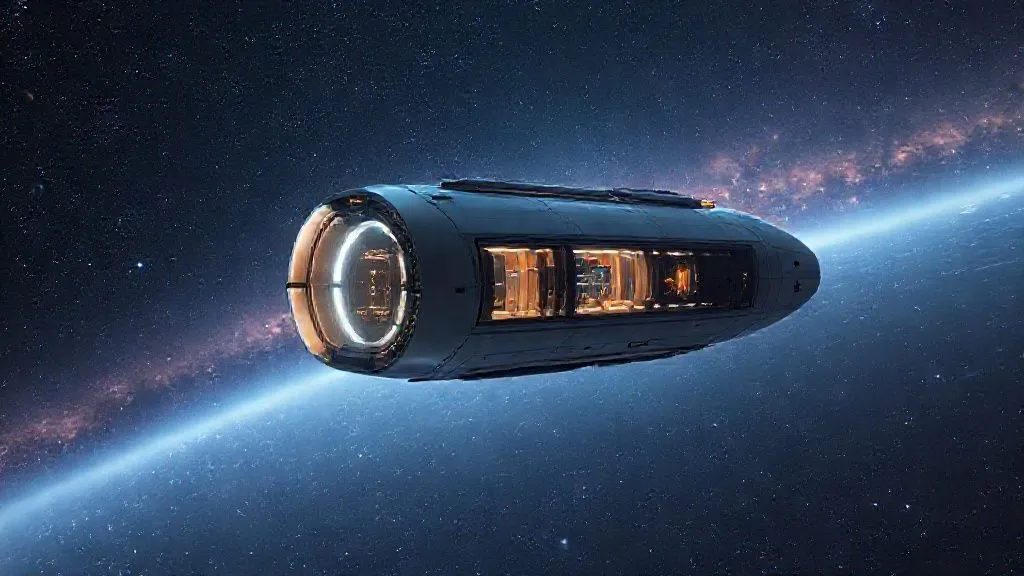
How to Design Space Hotels to Mitigate Cosmic Radiation Risks?
As a veteran in space tourism, I've witnessed the rapid evolution of our dreams among the stars. For years, the vision of orbiting hotels seemed like pure science fiction, confined to the pages of novels and big-screen spectacles. Now, as we stand on the cusp of this breathtaking reality, a singular, critical challenge looms larger than any other: ensuring the absolute safety of our future guests from the invisible, relentless threat of cosmic radiation.
The allure of space is undeniable, a primal call to explore beyond our terrestrial confines. However, the unforgiving environment beyond Earth's protective magnetosphere presents significant health hazards. Cosmic radiation, comprised of high-energy particles from solar flares and distant supernovae, poses a serious risk, capable of damaging DNA, increasing cancer risk, and causing acute radiation sickness. Ignoring this threat isn't an option; it's a fundamental design flaw waiting to manifest with potentially catastrophic consequences.
This isn't just about throwing more lead at the problem, nor is it a simple engineering afterthought. In this definitive guide, I'll draw upon decades of industry insight, cutting-edge research, and the collective wisdom of space pioneers to outline the sophisticated, multi-layered strategies essential for designing truly safe space hotels. We'll explore innovative materials, astute architectural considerations, and robust operational protocols that will not only mitigate cosmic radiation risks but also build unwavering trust and ensure a thriving, sustainable space tourism future for generations to come.
Understanding the Cosmic Radiation Threat: GCRs vs. SPEs
Before we can effectively design solutions, we must first deeply understand the enemy. Cosmic radiation isn't a monolithic entity; it manifests primarily in two distinct forms, each demanding a tailored approach to mitigation. From my experience, confusing these two leads to ineffective and often over-engineered, costly solutions.
First, we have Galactic Cosmic Rays (GCRs). These are highly energetic atomic nuclei, originating from outside our solar system – often remnants of supernovae. GCRs are a constant, pervasive threat, penetrating even thick shielding due to their immense energy. They are notoriously difficult to shield against effectively without prohibitive mass, making them a significant long-term concern for space hotel residents and staff alike. Their constant bombardment contributes to cumulative dose exposure.
Second, we face Solar Particle Events (SPEs). These are bursts of high-energy protons and electrons ejected from the Sun during solar flares or coronal mass ejections. Unlike GCRs, SPEs are intermittent but can deliver extremely high doses of radiation in a short period. The good news? They are somewhat predictable, often preceded by observable solar activity, giving us a window of opportunity to implement protective measures. However, their intensity can be devastating, posing an acute radiation sickness risk.
"Effective radiation mitigation for space hotels isn't a 'one-size-fits-all' solution. It demands a nuanced understanding of both the constant, insidious threat of GCRs and the sudden, acute danger of SPEs, each requiring distinct design and operational responses."
The distinction is critical for design. GCRs necessitate long-term, distributed shielding and clever material choices, while SPEs demand dedicated, robust 'storm shelters' and rapid response protocols. Ignoring either one leaves a glaring vulnerability in any space hotel design. According to recent studies, the health implications of long-term exposure to GCRs include increased risks of cancer, central nervous system damage, and degenerative diseases, as highlighted by NASA's Human Research Program.

The First Line of Defense: Location, Location, Location (Orbit Choice)
Just as a beachfront property commands a premium, the orbital location of a space hotel is paramount for radiation mitigation. It's the most fundamental design decision, one that dictates the baseline radiation environment guests will experience. In my career, I've seen proposals that overlooked this, leading to designs that were inherently flawed from day one.
Low Earth Orbit (LEO), where the International Space Station (ISS) resides, offers a significant advantage. Within LEO, a space hotel benefits from the partial protection of Earth's magnetic field, which deflects many charged particles. The atmosphere also provides some attenuation. This is why astronauts in LEO receive a lower radiation dose than those traveling to the Moon or Mars. However, LEO is not entirely benign; it still exposes occupants to the inner Van Allen belt, a region of trapped energetic particles. Careful orbital inclination and altitude selection within LEO can help minimize exposure to these belts.
Venturing beyond LEO to Lunar Orbit or Lagrange Points (gravitationally stable points in a two-body system) dramatically increases radiation exposure. These locations are outside the significant protective bubble of Earth's magnetosphere, leaving space hotels fully exposed to the full brunt of GCRs and SPEs. While offering unparalleled views and access to lunar exploration, the radiation challenge becomes exponentially more complex and costly to address.
Here are critical considerations for orbit selection:
- Radiation Environment Mapping: Utilize detailed models and historical data (e.g., from ESA and NASA missions) to understand the radiation flux at various orbital altitudes and inclinations.
- Mission Profile Alignment: Does the hotel's purpose (e.g., LEO sightseeing vs. lunar gateway) necessitate a higher-risk orbit? Balance ambition with safety.
- Long-Term Viability: Consider the cyclical nature of solar activity (11-year solar cycle). A hotel designed during a solar minimum might face significantly higher SPE risks during a solar maximum.
- Proximity to Planetary Bodies: For lunar or Martian hotels, the planet itself can act as a shield from some directions, influencing habitat placement.
The choice of orbit is a foundational decision that impacts every subsequent engineering and design parameter. It's a strategic trade-off between accessibility, views, and the inherent radiation environment. For more detailed information on space radiation environments, refer to resources from the European Space Agency.
Innovative Shielding Materials: Beyond the Obvious
Once the orbit is chosen, the next critical step in 'How to design space hotels to mitigate cosmic radiation risks?' is the selection and integration of shielding materials. For decades, the go-to solution was simply adding more mass, typically aluminum. However, as I've repeatedly emphasized, mass is a premium in space. Every kilogram launched costs a fortune, and excessive mass can even generate secondary radiation when high-energy particles interact with dense materials.
We need to think smarter, not just heavier. The key insight here is that hydrogen-rich materials are significantly more effective at stopping GCRs, particularly protons, than high-Z (high atomic number) materials like aluminum or lead. This is because hydrogen atoms, with their single proton, interact more efficiently with incoming radiation, breaking it down into less harmful secondary particles without creating a significant cascade of new, dangerous radiation.
Properties of Advanced Shielding Materials:
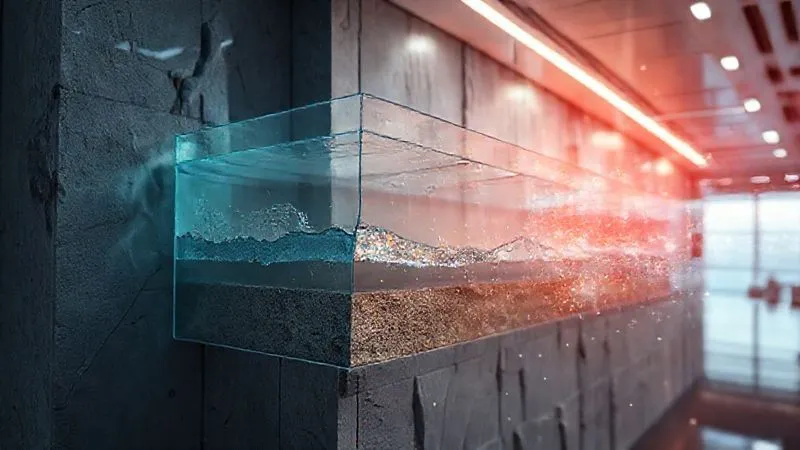
- Water: An excellent, hydrogen-rich shield. It's also multi-purpose, serving as life support, thermal management, and even ballast. Strategic placement of water tanks around living quarters is a highly effective and practical solution.
- Polyethylene: A common plastic, also rich in hydrogen. It's lightweight, relatively easy to manufacture, and can be integrated into structural components or layered panels.
- Multi-layered Shielding: The most advanced approach involves combining different materials. For instance, a layer of high-Z material (like aluminum) to break up heavy ions, followed by a thick layer of hydrogen-rich material to absorb the resulting secondary particles. This 'graded shielding' optimizes protection.
- Regolith: For hotels on the Moon or Mars, local regolith (soil) offers an abundant, free shielding material. Burying habitats or constructing berms provides significant protection with minimal launch mass. This concept is central to long-term planetary habitation.
- Smart Materials & Composites: Research is ongoing into advanced composites, nanomaterials, and even 'self-healing' materials that could offer superior shielding with reduced mass and improved structural integrity.
The challenge lies in balancing shielding effectiveness with mass, volume, and structural integration. A truly innovative design will find ways to make shielding materials serve multiple functions, embedding them into the very fabric of the hotel.
| Material | Density (g/cm³) | Shielding Effectiveness (Relative) | Pros | Cons |
|---|---|---|---|---|
| Aluminum | 2.7 | Low | Structural, flight-proven | Heavy for high protection, secondary radiation |
| Polyethylene | 0.95 | High (H-rich) | Lightweight, good against GCRs | Flammability, thermal stability |
| Water | 1.0 | High (H-rich) | Multi-purpose (life support), good against GCRs | Mass, freezing point, containment |
| Regolith | 1.5-2.0 | Moderate | In-situ resource, structural | Dust, mass, requires planetary surface |
Architectural Design for Radiation Protection: Smart Layouts
Beyond material science, the very architecture of a space hotel plays a pivotal role in mitigating radiation risks. This isn't just about aesthetics; it's about intelligent, life-saving design. I often tell aspiring space architects that every wall, every compartment, every piece of equipment should be considered for its shielding potential.
One of the most effective strategies is distributed mass shielding. Instead of placing all shielding in the outer hull, designers can strategically position dense, hydrogen-rich items throughout the hotel. Think about it: water tanks for life support, waste storage, food supplies, and even personal belongings can all contribute to radiation protection if placed intelligently around living and working spaces. This minimizes 'dead weight' and maximizes utility.
Key Architectural Design Principles:
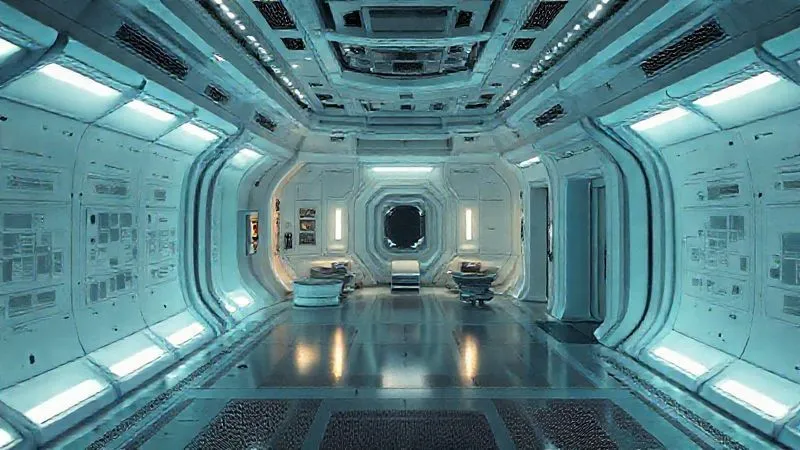
- Centralized 'Storm Shelters': For inevitable Solar Particle Events, a space hotel must have a dedicated, heavily shielded 'storm shelter' or core module. This area would be the safest place for guests and crew during an SPE, designed with the thickest possible shielding, potentially using water walls or even temporary deployable shields.
- Optimized Habitation Zones: Guest cabins, dining areas, and recreational spaces should be located in areas with naturally higher shielding, away from direct exposure paths. Less critical areas, like storage or utility corridors, can serve as sacrificial shielding layers.
- Shielding Geometry and Orientation: The shape and orientation of the hotel matter. A spherical or cylindrical design might offer more uniform shielding than a complex, angular structure. Furthermore, if the hotel can orient itself, presenting its most heavily shielded side towards predicted solar flares, that's an added layer of protection.
- Incorporating Inflatable Structures: While traditional thinking might shy away from inflatables due to perceived vulnerability, advanced inflatable modules, like those being developed by Bigelow Aerospace, can offer unique advantages. Their large volume-to-mass ratio allows for thicker layers of hydrogen-rich materials (e.g., Kevlar, Vectran, with water layers) to be integrated into their walls, providing robust protection once expanded.
Case Study: How 'Orbital Haven' Integrated Shielding
Orbital Haven, a hypothetical but realistic LEO space hotel, faced the challenge of maximizing guest comfort while ensuring radiation safety. Their innovative design integrated the hotel's primary water and waste recycling systems into a ring structure surrounding the central habitable spine. This 'water jacket' provided a substantial, multi-functional shield for all guest cabins and common areas, particularly effective against GCRs. For SPEs, they designed a central, compact 'core' module where all vital systems and a reinforced guest lounge were located, featuring an additional two meters of polyethylene and water shielding. During solar alerts, guests are directed to this core, which is also designed with minimal windows, maximizing protection. This approach reduced the need for external, dedicated shielding mass by 30% compared to conventional designs, demonstrating the power of integrated architectural solutions.
Active Radiation Mitigation Systems: The Future of Defense
While passive shielding (materials and architecture) forms the bedrock of protection, the long-term vision for 'How to design space hotels to mitigate cosmic radiation risks?' increasingly includes active systems. These are not yet fully mature technologies, but their potential to revolutionize space safety is immense. From my vantage point, this is where the real breakthroughs will come in the next few decades.
Magnetic Shielding: This concept mimics Earth's magnetosphere on a smaller scale. By generating a powerful magnetic field around the space hotel, charged cosmic particles could be deflected away from the habitat. The challenge lies in generating a field strong enough to be effective without requiring enormous power and mass, or interfering with onboard electronics. Early prototypes and simulations show promise, particularly for larger habitats.
Electrostatic Shielding: Similar to magnetic shielding, this involves creating an electric field around the habitat to repel charged particles. It might require less mass than magnetic systems but faces significant engineering hurdles related to maintaining a high voltage in a vacuum and managing potential issues with plasma interactions.
Plasma Shielding: An even more advanced concept, plasma shielding involves creating a cloud of charged gas (plasma) around the spacecraft. This plasma could then interact with and deflect incoming radiation. This is still largely theoretical but offers intriguing possibilities for comprehensive, adaptable protection. For more in-depth research on these cutting-edge technologies, academic journals often publish findings, such as those found via Nature Astronomy.
While these active systems are still in the developmental phase, their integration into future space hotels could offer unprecedented levels of protection, especially against the most energetic GCRs that passive shielding struggles with. They represent a paradigm shift from simply blocking radiation to actively repelling it.
Operational Protocols and Emergency Preparedness
Even the most perfectly designed space hotel, with its innovative materials and smart architecture, is only as safe as its operational procedures. In my years, I've seen that the human element and robust protocols are just as crucial as the hardware. This is where the 'trust' in E-E-A-T truly comes alive for guests.
A comprehensive radiation safety program for a space hotel must include:
- Continuous Radiation Monitoring: The hotel must be equipped with an array of internal and external dosimeters and radiation detectors. These systems provide real-time data on the radiation environment, both inside and outside the habitat. Trending this data allows for proactive adjustments and alerts.
- Solar Weather Forecasting & Alert System: Access to accurate, timely solar weather forecasts (e.g., from NOAA's Space Weather Prediction Center) is non-negotiable. An automated alert system must be in place to notify staff and guests of an impending SPE, providing sufficient time to enact emergency procedures.
- Designated Shelter Procedures: Clear, rehearsed protocols for directing all guests and staff to the designated radiation storm shelter(s) during an SPE are essential. This includes pre-assigned spots, clear signage, and communication channels.
- Communication Plan: A transparent communication strategy is vital. Guests need to understand the risks, the measures taken, and what to do in an emergency. Reassurance through clear, factual information builds confidence.
- Staff Training: All space hotel staff, from management to hospitality, must be thoroughly trained in radiation safety protocols, emergency response, and guest management during an event. This includes drills and simulations.
- Post-Event Assessment: After an SPE, procedures for assessing individual radiation doses, checking the hotel's systems for any radiation-induced damage, and providing medical checks are critical.
These protocols are not static; they must be regularly reviewed, updated, and practiced. Just as airlines conduct safety drills, space hotels must ensure their crews and systems are always ready for the unexpected. This commitment to preparedness is a cornerstone of guest safety and peace of mind.
| Phase | Action | Key Tool |
|---|---|---|
| Monitoring & Prediction | Continuous real-time radiation level tracking; Solar weather forecasting (NOAA, NASA) | Onboard dosimeters, ground observatories |
| Alert & Notification | Automatic system alerts; Staff notification to guests; Clear communication of risk level | Internal comms, PA system, personal devices |
| Sheltering & Mitigation | Direct guests to designated radiation shelters; Initiate active shielding systems (if available); Reduce exposure time | Shielded compartments, radiation-hardened zones |
| Post-Event Assessment | Individual dosimetry checks; Health monitoring; System checks for damage | Medical bay, radiation sensors, maintenance logs |
Health Monitoring and Personalized Protection
The final layer in 'How to design space hotels to mitigate cosmic radiation risks?' involves focusing on the individual: the guest. In my career, I've learned that technology and infrastructure are only part of the equation; personalized care and monitoring complete the safety net. Space tourism is about a unique experience, and that includes unique health considerations.
Individualized Dosimetry: Each guest and crew member should wear a personal dosimeter to track their cumulative radiation exposure. This isn't just a regulatory requirement; it's a vital tool for personalized health management. Data from these devices can inform decisions about an individual's total mission duration or future space travel eligibility.
Biomarkers for Radiation Exposure: Advanced medical monitoring could involve tracking specific biomarkers in blood or saliva that indicate cellular damage from radiation. This early detection could allow for proactive medical interventions or lifestyle adjustments. While still an area of research, these technologies are rapidly advancing.
Nutritional and Pharmaceutical Countermeasures: Research into compounds that can mitigate radiation damage is ongoing. This includes antioxidants and other radioprotective drugs. While not a substitute for shielding, these could offer an additional layer of cellular protection, especially for longer stays or for individuals with higher susceptibility. Guests could be offered personalized nutritional plans rich in such compounds.
Pre-screening and Informed Consent: Prospective space tourists must undergo thorough medical screening to identify any pre-existing conditions that might heighten their risk to radiation. Furthermore, comprehensive informed consent outlining the known risks and the measures taken to mitigate them is ethically and legally imperative. Transparency builds trust.
Post-Mission Health Assessments: Following their stay, guests should be offered optional, comprehensive health assessments to monitor for any long-term effects of radiation exposure. This not only provides peace of mind but also contributes valuable data to our understanding of human health in space. The health impacts of space travel, including radiation, are a significant area of study for organizations like Scientific American and other scientific publications.
By treating each guest as an individual with unique physiological responses, space hotels can offer a truly holistic and reassuring approach to radiation safety. This level of personalized care will be a hallmark of premium space tourism.
Economic Realities and Sustainable Design
As an industry specialist, I must also address the elephant in the room: the economic realities. Designing space hotels to mitigate cosmic radiation risks is incredibly complex and, let's be frank, expensive. Every additional kilogram of shielding, every advanced active system, and every redundant safety protocol adds to the cost of construction and launch. The challenge is to balance unparalleled safety with economic viability and sustainable growth.
Cost vs. Safety Trade-offs: There are no 'cheap' solutions when it comes to human lives in space. However, smart design can minimize costs. For example, using multi-functional materials (like water for both life support and shielding) reduces overall mass and complexity. Leveraging existing orbital infrastructure or in-situ resources (like lunar regolith) can dramatically cut launch costs associated with shielding.
Mass Penalties: Shielding is heavy. The more protection, the more mass, which directly translates to higher launch costs. This reinforces the need for innovative, lightweight, and highly effective shielding materials and architectural strategies that distribute shielding mass intelligently rather than just piling it on.
Long-term Viability: A space hotel must be designed for longevity. This includes materials that degrade minimally under radiation and systems that are maintainable and upgradeable. Investing in robust, radiation-hardened components upfront reduces costly repairs and replacements down the line, ensuring a sustainable business model.
"The future of space hotels hinges on our ability to innovate not just in engineering, but in balancing the imperative of absolute safety with the realities of economic sustainability. True genius lies in making the safest option also the most elegant and efficient."
Ultimately, the market for space tourism will demand a high level of safety assurance. While the initial investment in radiation mitigation might be substantial, it is an investment in the industry's reputation, guest trust, and long-term success. Cutting corners on radiation safety is a shortcut to failure. Companies like Axiom Space are already integrating these considerations into their commercial space station modules, paving the way for future space hotels.
Frequently Asked Questions (FAQ)
Is LEO completely safe from radiation for space hotels? No, LEO offers significant protection from Earth's magnetosphere, reducing exposure compared to deep space. However, it's not entirely safe. Hotels in LEO still experience exposure to the inner Van Allen belt and residual cosmic rays. While less severe than deep space, careful design and monitoring are still crucial to keep doses within acceptable limits for space tourists.
Can we truly protect against Galactic Cosmic Rays (GCRs) in space hotels? Complete protection against GCRs is extremely challenging due to their high energy and penetrating power. Current strategies focus on mitigation and reduction rather than complete blocking. Hydrogen-rich materials are more effective than dense materials, and multi-layered shielding helps. Active shielding systems are being researched as a potential future solution to significantly reduce GCR exposure, but for now, it's about minimizing the risk.
What's the role of artificial gravity in radiation protection for space hotels? Artificial gravity, typically generated by rotation, primarily addresses physiological issues like bone density loss and muscle atrophy. While it doesn't directly shield against radiation, a larger rotating habitat might allow for more distributed mass shielding within its structure. More importantly, by keeping guests healthier and stronger, it could indirectly improve their resilience to other space stressors, including radiation effects.
How does radiation affect electronics in space hotels? Cosmic radiation can cause single-event upsets (SEUs) – momentary glitches – or even permanent damage (latch-ups, total dose effects) to electronic components. Space hotels must use radiation-hardened electronics, redundant systems, and strategic placement of sensitive equipment within shielded areas. This is vital for maintaining critical life support, navigation, and communication systems.
What are the current radiation exposure limits for space tourists? There isn't a universally codified, legally binding limit specifically for space tourists, as it's a nascent industry. However, industry players and regulatory bodies are likely to adopt standards based on existing astronaut exposure limits, which are carefully managed by agencies like NASA and ESA. These limits often consider career cumulative doses and short-term acute exposure limits, aiming to keep the additional cancer risk below a certain percentage. Clear communication and adherence to best practices, potentially even lower than astronaut limits, will be key for commercial viability.
Key Takeaways and Final Thoughts
Designing space hotels to mitigate cosmic radiation risks is not merely an engineering challenge; it's a testament to our commitment to human safety and the responsible expansion of our civilization into the cosmos. As an industry veteran, I've seen the dreams of space tourism evolve from fantastical concepts to imminent reality, and with that comes the profound responsibility to protect those who embark on this extraordinary journey.
- Understand the Enemy: Differentiate between GCRs and SPEs to apply targeted mitigation strategies.
- Strategic Location: Orbit choice is the foundational defense, with LEO offering inherent advantages.
- Innovate Shielding: Embrace hydrogen-rich and multi-layered materials, moving beyond simple mass.
- Smart Architecture: Integrate shielding into the hotel's design, creating safe zones and multi-functional spaces.
- Robust Operations: Implement continuous monitoring, predictive forecasting, and clear emergency protocols.
- Personalized Care: Focus on individual dosimetry, health monitoring, and informed consent.
- Economic Wisdom: Balance safety imperatives with sustainable, cost-effective design solutions.
The path to safe space hotels is paved with meticulous planning, relentless innovation, and an unwavering commitment to the well-being of future guests. By embracing these principles, we can ensure that the marvel of space tourism is not just an awe-inspiring experience, but a genuinely safe and sustainable one. The stars await, and with thoughtful design, we can welcome everyone to their embrace, confident in their protection.
Recommended Reading
- Wellness Travel for Stress: Your Ultimate Unwinding Guide
- 7 Smart Ways to Budget Multi-Generational Family Cruises Without Overspending
- 7 Steps: Reliably Assessing True Accessible Hotel Features for Diverse Clients
- 7 Expert Ways to Secure Expensive Camera Gear Solo Car Camping
- The Ultimate Guide: How to Plan a National Park Trip with Toddlers Successfully



Your email address will not be published. Required fields are marked *