

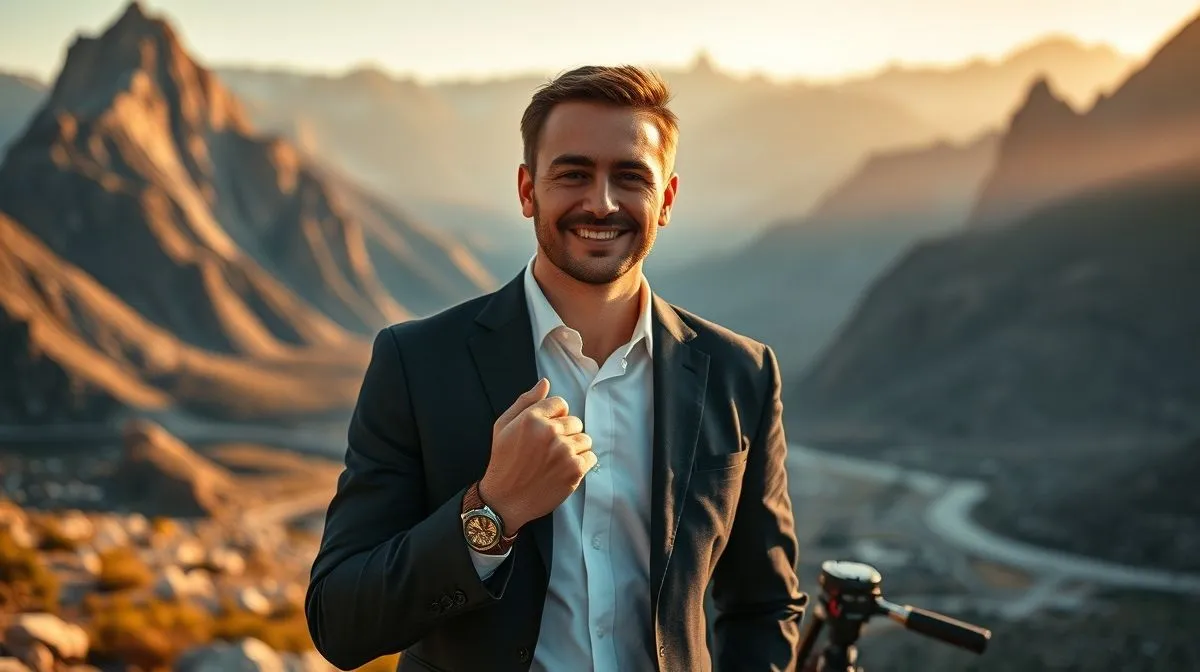
How to get professional solo travel photos as a busy executive?
For over two decades, I've crisscrossed the globe, experiencing the unparalleled freedom of solo travel. What I've consistently observed, especially among my executive clients and peers, is a shared dilemma: the desire for stunning, professional-grade travel photos that truly capture the essence of their journey, pitted against the relentless demands of their high-octane careers. It’s a challenge I understand deeply.
The problem isn't a lack of desire, but a scarcity of time, a reluctance to ask strangers for help, and often, a lack of awareness about the incredible tools and strategies available today. You want to avoid the awkward arm-length selfie, the blurred shot, or worse, returning home with no high-quality memories of your personal adventures.
This isn't just about taking pictures; it's about preserving moments, telling your unique story, and building a visual legacy of your life beyond the boardroom. In this definitive guide, I'll share my battle-tested strategies, smart gear recommendations, and expert insights that will empower you to get professional solo travel photos as a busy executive, transforming your travel album from mundane to magnificent.
The Executive's Solo Photography Mindset: Efficiency Meets Artistry
As an executive, your time is your most valuable asset. The same principles of strategic planning and efficient execution that drive your business success can, and should, be applied to your solo travel photography. It’s not about spending hours posing, but about maximizing brief, impactful moments.
Prioritizing Quality Over Quantity
Forget the notion that you need hundreds of photos from every destination. For the busy executive, the goal is a curated collection of impactful, high-quality images that truly tell a story. Focus on iconic landmarks, unique cultural moments, and capturing your personal connection to the place.
I've seen countless executives return from trips with thousands of mediocre photos, none of which truly stand out. My advice? Aim for five to ten truly exceptional shots per destination rather than hundreds of forgettable ones. This selective approach saves time in shooting and, crucially, in post-production.
Embracing the "Pre-Production" Phase
Just as you wouldn't launch a major project without thorough planning, don't embark on your photo quest without some "pre-production." Before you even pack your bags, do your research.
Identify the key photo opportunities at your destination: the golden hour at the Eiffel Tower, the bustling market in Marrakech, or the serene sunrise over Angkor Wat. Understand the best angles, lighting conditions, and even potential crowds. This foresight allows you to hit the ground running, minimizing wasted time and maximizing your chances of capturing that perfect shot.
"The most valuable asset in solo travel photography for an executive isn't expensive gear, but meticulous planning. A few minutes of research can save hours of frustration and lead to genuinely breathtaking results."
Consider the logistics: What time does that museum open? Is there a café nearby for a quick coffee and a review of your shots? Knowing these details allows you to weave photography seamlessly into your existing itinerary, rather than letting it become a separate, time-consuming task.
Smart Gear Choices for the Time-Strapped Pro
You don't need a professional studio's worth of equipment, but a few strategic investments can make all the difference. Think compact, efficient, and versatile.
The Unsung Hero: Travel Tripods
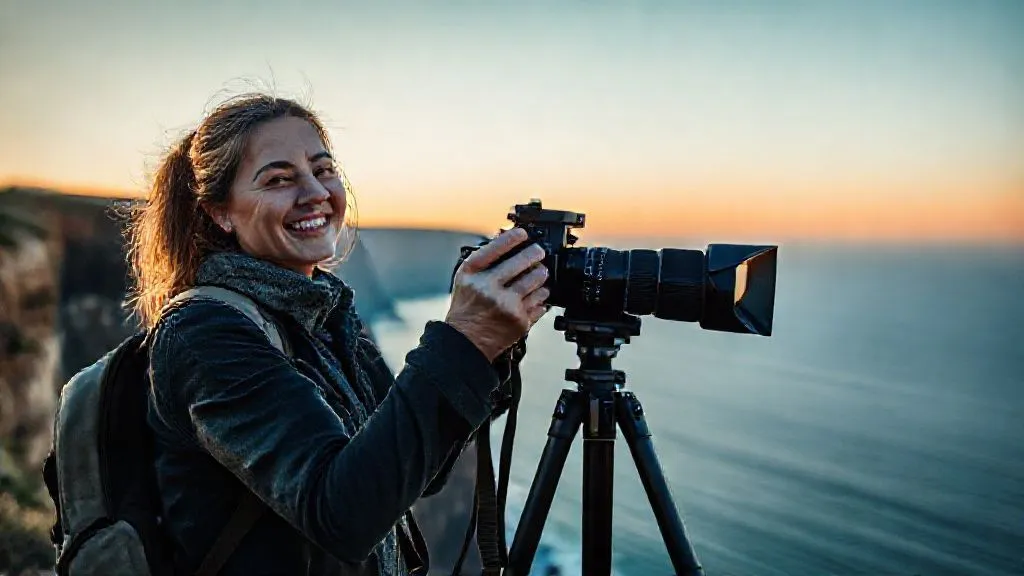
This is non-negotiable for professional solo travel photos. A good travel tripod allows you to set up your shot, use a timer or remote, and step into the frame yourself. Look for one that is lightweight, compact, and stable.
- Portability: Opt for carbon fiber if budget allows, as it's lighter than aluminum. Ensure it folds down small enough to fit in your carry-on or attach easily to your backpack.
- Stability: Despite being lightweight, it must be stable enough to hold your camera securely, even in windy conditions. Check the maximum load capacity.
- Height: Ensure it extends to a comfortable height for eye-level shots, but also consider models that can go very low for unique perspectives.
- Quick Release Plate: This feature allows for fast attachment and detachment of your camera, crucial when you have limited time.
- Leg Locks: Twist locks are generally faster to deploy than flip locks, which can be a time-saver when you're on the go.
Remote Control: Your Best Travel Buddy
Paired with a tripod, a remote shutter release is your ultimate tool. This can be a simple Bluetooth remote for your smartphone, a dedicated wireless trigger for your DSLR/mirrorless camera, or even an app on your phone that controls your camera. It eliminates camera shake and allows you to compose yourself without rushing after pressing the shutter.
Camera Selection: DSLR, Mirrorless, or High-End Smartphone?
The best camera is the one you have with you and know how to use. For executives, this often means prioritizing convenience without sacrificing quality.
- High-End Smartphone (e.g., iPhone Pro Max, Samsung Galaxy Ultra, Google Pixel): Modern smartphones, particularly the flagship models, offer incredible computational photography capabilities. They are discreet, always with you, and increasingly capable of stunning shots. For most executives, this is often the sweet spot between convenience and quality. According to a Statista report on smartphone camera market trends, these devices continue to push boundaries, making them viable for professional results.
- Mirrorless Cameras: These offer DSLR quality in a smaller, lighter package. They are excellent for those who want more control than a smartphone but prefer less bulk than a traditional DSLR. Brands like Sony, Fujifilm, and Canon offer superb mirrorless systems.
- DSLR Cameras: While still top-tier for image quality and lens versatility, DSLRs are often bulkier and heavier. Unless photography is a serious hobby, they might be overkill for the busy executive focused on efficiency.
My advice? Start with your best smartphone and a good tripod/remote. If you outgrow its capabilities, then consider a mirrorless system.
Mastering Self-Portrait Techniques for Solo Travelers
This is where the art and efficiency truly merge. It's not about narcissism; it's about capturing your presence in incredible places, making your memories tangible.
Composition & Framing: Beyond the Arm's Length Selfie
The key to a professional self-portrait is to make it look like someone else took the photo. This means paying attention to composition, just as a professional photographer would.
- Rule of Thirds: Don't put yourself dead center. Place yourself along the gridlines or at their intersections for a more dynamic and pleasing composition.
- Leading Lines: Use natural lines in the environment (roads, fences, rivers) to draw the viewer's eye towards you or the main subject.
- Negative Space: Don't be afraid of empty space. It can make your subject stand out and create a sense of scale, especially in vast landscapes.
- Foreground Interest: Add an element in the foreground to create depth and interest. This could be a flower, a rock, or even a part of a building.
Lighting Fundamentals for Solo Shots
Light is everything in photography. For solo shots, leverage natural light.
- Golden Hour: The hour after sunrise and the hour before sunset offer soft, warm, magical light that is incredibly flattering. This is often the prime time for solo photography.
- Blue Hour: The period just before sunrise or after sunset, when the sky is still illuminated but city lights begin to glow, can create stunning, moody shots.
- Avoid Midday Sun: Harsh midday sun creates strong shadows and can make you squint. If you must shoot at midday, seek shade or use a flash (if you know how) to fill in shadows.
The Power of Burst Mode and Timers
These features are your best friends for solo shots. Set your camera on a tripod, compose the shot, and then step into the frame. Use burst mode to take multiple shots in quick succession, allowing you to change poses, expressions, or movements. This significantly increases your chances of getting that "perfect" shot without countless retakes.
- Set up your Tripod: Place it securely on a stable surface.
- Compose the Shot: Frame the background and the space where you'll be standing.
- Focus: Manual focus on the spot where you'll stand, or use autofocus with a timer if your camera supports it.
- Timer/Remote: Set your camera's self-timer (e.g., 10 seconds) or use your remote shutter.
- Step into Frame: Position yourself naturally within the composition.
- Shoot & Review: Take multiple shots using burst mode, then review to select the best.
Leveraging Technology & Services for Flawless Results
The modern era offers incredible solutions for the busy executive who wants professional photos without becoming a full-time photographer.
AI-Powered Editing Apps: Your Digital Darkroom on the Go
Gone are the days of needing complex desktop software like Photoshop. Mobile apps now offer powerful, intuitive editing capabilities, often enhanced by AI.
- One-Tap Enhancements: Many apps offer intelligent auto-correct features that adjust exposure, contrast, and color balance with a single tap.
- Selective Adjustments: Tools to brighten just your face, enhance the sky, or remove minor distractions are common.
- Presets/Filters: Apply a consistent look to your photos quickly. Create your own custom preset for your "signature" travel style.
- Batch Editing: Some apps allow you to apply the same edits to multiple photos, saving immense time.
Popular choices include Adobe Lightroom Mobile, Snapseed, VSCO, and PhotoRoom. These tools allow you to transform a good shot into a great one in minutes, often while waiting for your next flight or during a brief break.
The Rise of Local Professional Photographers
This is arguably the most efficient way to get truly professional solo travel photos. Services like 'Shoot My Travel' or 'Local Lens' connect you with local photographers in your destination. You book a session (often 1-2 hours), meet them at a pre-arranged location, and they handle all the shooting, posing, and delivering high-quality, edited images.
Case Study: How Sarah, a Tech Executive, Transformed Her Travel Album
Sarah, a Senior VP at a rapidly growing tech firm, frequently traveled for business but yearned for personal, professional photos from her solo explorations. She found herself constantly frustrated by blurry selfies and the awkwardness of asking strangers. On a recent trip to Paris, she decided to try a local photography service. She booked a 90-minute session for her morning before a conference. The photographer met her at the Trocadéro, guided her to the best spots for Eiffel Tower views, and captured stunning, natural shots as she walked, laughed, and simply enjoyed the Parisian morning. She received 50 high-resolution, professionally edited photos within 48 hours. This one session provided more high-quality memories than all her previous solo trips combined, all without interrupting her busy work schedule. The efficiency and quality were a game-changer for her, providing beautiful memories without the stress. This approach is increasingly popular, as detailed in a Forbes article on the future of travel and personalized experiences, highlighting how such services cater to discerning travelers.
Drone Photography: A New Perspective
While drone photography offers breathtaking aerial perspectives, it comes with significant caveats for the busy executive. Drones require skill, knowledge of local regulations (which vary wildly by country and even city), and significant setup time. Unless you are an experienced drone pilot and have ample time to dedicate, this might be an efficiency killer. My advice: admire drone shots from afar, or consider hiring a local drone operator for specific projects, rather than trying to manage it yourself on a tight schedule.
Integrating Photography into Your Busy Travel Schedule
The key isn't to add photography to your schedule, but to integrate it seamlessly into your existing one. This requires a shift in perspective, viewing photo opportunities as moments to be seized, not burdens to be added.
The "Photo Block" Strategy
Just as you block out time for meetings or deep work, allocate specific "photo blocks" in your itinerary. These don't have to be long – 15-30 minutes during golden hour at a key landmark, or a quick 10-minute stop at a scenic viewpoint between meetings. By pre-determining these slots, you make photography a deliberate part of your day, not an afterthought.
For instance, if you have an early morning meeting, wake up 30 minutes earlier to capture the sunrise from your hotel window or a nearby park. If you have a lunch break, walk to a scenic spot with your tripod. These small, dedicated blocks add up to a significant collection of professional images.
Maximizing Layover and Downtime Opportunities
Airports, train stations, and hotel lobbies often offer unique architectural or cultural photo opportunities. Instead of scrolling on your phone during a layover, look for interesting light, reflections, or candid moments. The same goes for hotel common areas, rooftops, or even your room with a view. These are often overlooked, yet provide excellent, low-effort photo ops.
Post-Processing Efficiency: Streamlining Your Workflow
Editing doesn't have to be a multi-hour ordeal. For busy executives, efficiency is paramount. My advice: use mobile apps for quick edits on the go. Focus on basic adjustments like exposure, contrast, and color correction. Save more complex edits for a dedicated session if absolutely necessary, but prioritize speed.
As renowned productivity expert David Allen often states, the key to managing tasks is to "do it, delegate it, defer it, or delete it." Apply this to your photo workflow: do quick edits, delegate complex ones (if hiring a service), defer until you have dedicated time, or delete the shots that aren't worth the effort. Learn more about efficient workflows and time management strategies in this insightful Harvard Business Review article on managing your time effectively.
"Your camera is only half the equation. The other half is your willingness to be present, observant, and to make the most of every fleeting moment, even if it's just five minutes before your next conference call."
Beyond the Snapshot: Storytelling Through Your Solo Images
Professional solo travel photos go beyond mere documentation; they tell a story. For the executive, these images become a powerful narrative of personal growth, exploration, and the pursuit of passions outside the professional sphere.
Creating a Visual Narrative
Think about your trip as a chapter in your life. What story do you want to tell? Is it about adventure, cultural immersion, relaxation, or personal challenge? Capture a variety of shots that build this narrative: wide shots for context, close-ups for detail, and candid moments of yourself interacting with the environment.
For example, if your story is about climbing a mountain, don't just take a photo at the summit. Capture the trail, your gear, the views along the ascent, and finally, your triumphant pose at the top. This builds a richer, more engaging story.
The Importance of Context and Scale
When taking solo portraits in grand locations, ensure you include enough of the background to give context and convey the scale of your surroundings. A photo of you standing in front of the Grand Canyon should show the vastness of the canyon, not just your head and shoulders. This makes the photo more impactful and allows the viewer to truly appreciate where you are.
Curating Your Collection
Once you've returned, dedicate a short amount of time to curate your best images. Delete duplicates, blurry shots, and anything that doesn't meet your "professional" standard. Then, select a handful of your absolute favorites and consider having them professionally printed or creating a small, high-quality photo book. This final step transforms digital files into tangible memories, worthy of display.
Common Pitfalls and How to Avoid Them
Even with the right gear and mindset, solo travel photography has its unique challenges. Being aware of these common pitfalls can help you navigate them effectively.
Over-reliance on Filters
While filters and presets can be time-sasavers, over-filtering can make your photos look artificial and dated very quickly. My advice is to use filters subtly, aiming for enhancement rather than complete transformation. The goal is to make your photos look their best, not to make them look unlike what you actually saw. Focus on getting the exposure and white balance right in-camera first.
Neglecting Backgrounds
It's easy to focus solely on yourself when taking a solo shot, but a cluttered or distracting background can ruin an otherwise great photo. Before you press the shutter, quickly scan the entire frame. Are there distracting elements like trash cans, random people, or unflattering signs? A slight shift in your position or camera angle can often eliminate these distractions and elevate your photo significantly.
Underestimating Security
Leaving expensive camera gear on a tripod in a public place, even for a few seconds, can make you a target. Always be aware of your surroundings. If you're in a crowded area, consider using a camera strap that makes it difficult for someone to snatch your camera, or keep your hand near the tripod. For high-value gear, consider travel insurance that covers theft. When traveling internationally, always check local safety advisories and be mindful of your possessions. For general travel safety tips, consult official resources like the U.S. Department of State Travel Advisories before your trip.
If you feel uncomfortable leaving your camera unattended, even for a moment, use a remote shutter from a discreet distance, or opt for a local photographer service for those specific high-risk shots. Your safety and peace of mind are always paramount.
Frequently Asked Questions (FAQ)
What is the best time of day for solo travel photos? The "golden hour" – the hour after sunrise and the hour before sunset – offers the most flattering, soft, and warm light, perfect for solo portraits. The "blue hour" just before sunrise or after sunset can also provide dramatic, moody shots. Avoid midday sun if possible, as it creates harsh shadows.
How do I deal with strangers offering to help with photos? Politely decline if you prefer to use your own setup, or accept only if you feel comfortable and they seem trustworthy. If you do let someone take your photo, ensure your camera strap is securely around your neck or wrist, and give very clear instructions on how to use it. Many executives find using a tripod and remote less awkward than relying on strangers.
What if I'm not "photogenic"? Everyone can be photogenic! It's less about innate beauty and more about comfort and expression. Practice different poses and expressions in front of a mirror. Focus on capturing genuine moments of joy, curiosity, or contemplation. The key is to relax and let your personality shine. Using burst mode helps immensely, as you'll capture many candid moments.
How much gear should I bring as a busy executive? Less is more. For most busy executives, a high-end smartphone, a compact travel tripod, and a Bluetooth remote are sufficient. If you want more control, a lightweight mirrorless camera with one versatile zoom lens (e.g., 24-70mm equivalent) is ideal. Avoid bringing multiple lenses or heavy equipment unless photography is a primary focus of your trip.
Is it safe to leave my camera on a tripod in public places? It depends on the location and crowd. In very crowded or high-risk areas, it's generally not advisable to leave your camera unattended, even on a tripod. Always be aware of your surroundings. For iconic shots in busy areas, consider going very early in the morning, when crowds are minimal, or use a local photographer service. Your personal safety and the security of your gear should always be your top priority.
Recommended Reading
- Unlock the Secret: How to Prevent Snow from Sticking to Snowshoes Permanently
- The Ultimate Guide: Maximizing Comfort on Long-Haul Business Class Flights
- Stop Scams: Your Ultimate Guide to Preventing Eco Volunteer Travel Scams
- Unraveling the Truth: Are Space Tourism Safety Regulations Ready for Blast-Off?
- Unlock Cheap Train Travel: How to Journey Without a Rail Pass!
Key Takeaways and Final Thoughts
- Plan Strategically: Treat your solo travel photography like a project; research locations, times, and angles beforehand.
- Invest in Smart Gear: A lightweight travel tripod and a remote shutter are essential, whether you use a smartphone or a dedicated camera.
- Master Self-Portrait Techniques: Use timers, burst mode, and focus on composition to make your photos look professionally taken.
- Leverage Technology & Services: Utilize AI-powered editing apps for quick edits, and consider hiring local photographers for stress-free, high-quality results.
- Integrate, Don't Add: Weave photo opportunities into your existing itinerary, maximizing layovers and short blocks of downtime.
- Prioritize Quality: Aim for a few exceptional shots rather than many mediocre ones.
- Stay Vigilant: Always be mindful of your surroundings and the security of your gear.
As a busy executive, your life is about efficiency, impact, and making every moment count. Your solo travel photos should be no different. By adopting these expert strategies, you're not just taking pictures; you're crafting a visual narrative of your personal journey, capturing memories that will inspire you long after you've returned to the demands of your professional life. Go forth, explore, and capture your world, one magnificent solo shot at a time.

Your email address will not be published. Required fields are marked *