

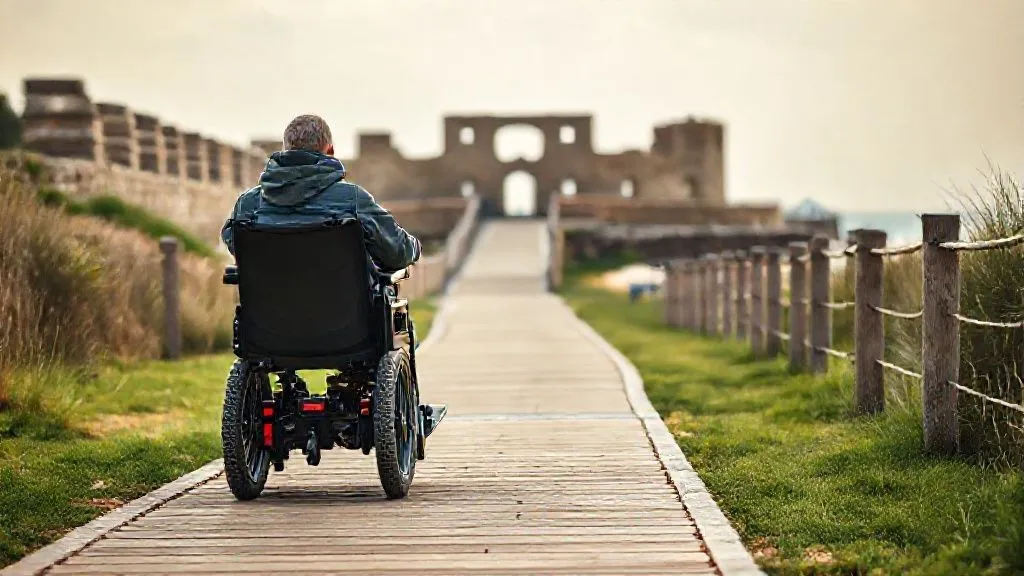
How to guarantee complex mobility needs are met at destinations?
For over 15 years in the accessible travel sector, I've witnessed the profound joy of a perfectly executed accessible trip and, tragically, the crushing disappointment when expectations fall short. The stakes are incredibly high for travelers with complex mobility needs, where an 'accessible' label can often mean something entirely different on the ground.
The fundamental problem many travelers face isn't a lack of desire to explore, but rather the gnawing uncertainty. Will the hotel room truly accommodate my power chair? Will the promised transfer vehicle actually arrive? This fear of unmet needs, of being stranded or limited, often stifles the very spirit of adventure.
This comprehensive guide is designed to empower you. We'll move beyond wishful thinking to a strategic, proactive framework that, in my experience, significantly increases your chances of a seamless, truly accessible journey. You'll learn actionable steps, expert vetting techniques, and communication strategies to transform uncertainty into guaranteed accessibility.
The Proactive Planning Paradigm: Shifting from Hope to Certainty
The foundation of any successful accessible trip lies in meticulous, proactive planning. This isn't just about booking flights and hotels; it's about building a robust framework of certainty long before you even pack your bags.
Step 1: Deep Self-Assessment of Your Specific Needs
Before you can ask the right questions, you must intimately understand your own requirements. 'Complex mobility needs' is a broad term. I always advise clients to go beyond generic labels and document every specific detail.
Consider not just your primary mobility device (manual wheelchair, power chair, scooter) but its exact dimensions, weight, turning radius, and any specialized features. Do you require a hoist for transfers? What are your bathroom needs: roll-in shower, grab bars, shower chair? Factor in fatigue levels, potential cognitive considerations, and any medical equipment that needs power or specific storage.
This detailed understanding forms the bedrock of your inquiries. Without it, you're asking others to guess your needs, which rarely ends well.
| Aspect of Mobility | Specific Requirement |
|---|---|
| Mobility Device Type | Power wheelchair, 300 lbs, 28-inch width, 40-inch length |
| Transfers | Ceiling hoist or portable hoist needed for bed/toilet transfers |
| Bathroom Access | Roll-in shower (minimum 36-inch opening), grab bars, elevated toilet, shower chair |
| Bed Height | Adjustable bed or bed height no higher than 22 inches for independent transfer |
| Doorways & Pathways | Minimum 32-inch clear doorway width for all access points |
| Medical Equipment | CPAP machine (requires bedside power outlet), oxygen concentrator (storage and charging) |
| Emergency Procedures | Assistance needed for evacuation in case of fire/emergency |
Step 2: Destination Vetting – Beyond the Brochure
Once you're clear on your needs, the next step is rigorous destination vetting. Don't rely solely on glossy tourism brochures or general 'accessible' ratings.
Start with official tourism websites, but critically, seek out user-generated content and specialized accessible travel blogs. Look for recent reviews, photos, and videos from other travelers with similar mobility challenges. Websites like AccessNow or Wheelmap can provide user-verified information on specific venues.
I've seen countless situations where a hotel's website proudly displays an 'accessible room' photo, only for the reality to be a bathroom door too narrow for a standard wheelchair. Cross-referencing information from multiple, independent sources is crucial here.

Direct Communication is Your Strongest Ally: Asking the Right Questions
This is where the rubber meets the road. Email and phone calls are not just administrative tasks; they are your most powerful tools for ensuring complex mobility needs are met at destinations.
Mastering the Art of the Pre-Booking Inquiry
Never assume. Always verify. When contacting hotels, airlines, tour operators, or transportation services, be specific, detailed, and persistent. Don't just ask, "Is your hotel accessible?" Instead, pose direct, measurable questions based on your self-assessment.
- For Hotels: "What is the clear doorway width for your accessible rooms and bathrooms? Is the shower a true roll-in with no lip, and does it have a shower chair and grab bars? What is the height of the bed from the floor to the top of the mattress? Do you have a portable hoist available, or can I bring my own? What are your emergency evacuation procedures for guests with mobility impairments?"
- For Airlines: "What is your policy for transporting a power wheelchair of [dimensions/weight]? Will it be stored upright or disassembled? What assistance is provided for transfers to and from the aircraft seat? Are accessible lavatories available on the aircraft for this route?"
- For Tour Operators/Attractions: "Are all parts of the tour route or attraction accessible to a power wheelchair? Are accessible restrooms available along the route? What are the ground conditions (cobblestones, ramps, elevators)?"
Remember, you're not being difficult; you're being responsible. You're giving them the opportunity to genuinely meet your needs, or to admit they cannot, allowing you to choose an alternative.
The 'accessible' label is a starting point, not a guarantee. Your detailed questions are the blueprints for success, ensuring what's promised aligns with what you truly need.
Documenting Commitments: The Paper Trail Principle
Once you've received satisfactory answers, ensure everything is documented. Verbal assurances, while helpful, can be forgotten or misunderstood. Always request email confirmation of specific accommodations, room numbers (if applicable), confirmed services, and any agreed-upon assistance.
This paper trail serves as your safeguard. If something goes awry upon arrival, you have tangible proof of what was promised. I've often advised travelers to print these emails and keep them with their travel documents.
Leveraging Technology and Specialized Resources
In today's interconnected world, a wealth of resources exists to assist travelers with complex mobility needs. Don't try to navigate this alone.
Accessible Travel Agencies and Consultants
For truly complex itineraries, specialized accessible travel agencies or independent consultants are invaluable. These professionals have established networks, understand the nuances of accessibility standards globally, and can advocate on your behalf.
Case Study: How Maria Found Her Dream Accessible Safari
Maria, a power wheelchair user with limited upper body strength, dreamed of an African safari. She was daunted by the logistics: accessible vehicles, adapted accommodations in remote lodges, medical support. After several frustrating attempts to plan independently, she engaged an accessible travel consultant. The consultant, leveraging their expertise, found a specialized safari operator with custom-built accessible vehicles, pre-vetted lodges with roll-in showers and hoists, and even arranged for a personal assistant. Maria's trip was a resounding success, proving that expert guidance can unlock seemingly impossible dreams.
Online Communities and Disability-Specific Review Platforms
The collective wisdom of the accessible travel community is immense. Join online forums, Facebook groups, and utilize platforms dedicated to accessible reviews. These communities offer real-world insights, personal recommendations, and warnings about potential pitfalls.
Websites like CurbFree with Cory Lee or local accessible tourism guides can offer invaluable first-hand accounts. According to a World Tourism Organization (UNWTO) report, accessible tourism is a rapidly growing segment, yet reliable information remains a key challenge, making peer reviews even more critical.
On-the-Ground Verification and Contingency Planning
Even with the most thorough pre-planning, unexpected situations can arise. Your ability to verify on arrival and have a contingency plan is paramount.
The Arrival Audit: What to Check Immediately
Upon arrival at your accommodation or when meeting your transport, perform an immediate audit. Don't hesitate to politely but firmly verify that the promised accessibility features are present and functional.
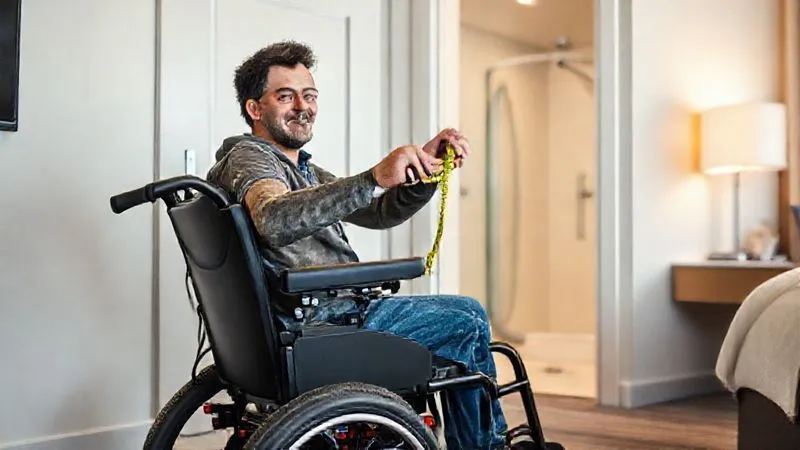
- Hotel Room: Check doorway widths with a tape measure if necessary. Test the roll-in shower, grab bars, and toilet height. Ensure there's adequate turning space. If anything is not as promised, immediately inform the front desk and refer to your documented confirmations.
- Accessible Transport: Confirm the ramp or lift is working and safe. Ensure tie-downs or securement points for your mobility device are present and correctly used.
- Attractions/Venues: Before entering, visually confirm the accessibility of the entrance, restrooms, and main areas.
If there's a significant discrepancy, don't be afraid to advocate for a solution, whether it's a different room, alternative transport, or a refund. Your safety and comfort are non-negotiable.
Building Your On-Site Support Network
Before you depart, identify local resources at your destination. This includes emergency services contact numbers, the location of the nearest accessible medical facility, and contact information for local disability organizations or support groups. These can be invaluable if you encounter an unexpected challenge or need local assistance.
Consider travel insurance that specifically covers medical emergencies and equipment damage or loss. Companies like World Nomads or specialized disability travel insurance providers often have policies tailored to complex needs.
Essential Equipment and Personal Preparedness
Your journey begins long before you reach the airport. Preparing your personal equipment and medical necessities is a critical step in guaranteeing complex mobility needs are met at destinations.
Packing Smart: Adaptive Devices and Spares
Think about what you might need to supplement existing accessibility. Portable ramps, a lightweight folding shower chair, or even a small toolkit for your mobility device can be lifesavers. Always pack essential spare parts for your wheelchair (e.g., inner tubes, charging cables, basic tools for minor repairs).
For power wheelchair users, ensure you have the correct voltage converters and adapters for your destination. It's also wise to carry a copy of your wheelchair's specifications, including battery type, in case of airline inquiries or repairs.
Medical and Communication Preparedness
Carry all necessary medications in your carry-on luggage, along with a copy of your prescriptions and a doctor's letter explaining your medical conditions and equipment. Translate this letter into the local language if possible.
Prepare a concise 'communication card' in the local language that explains your specific mobility needs and how to assist you. This can be invaluable in situations where language barriers exist, ensuring you can effectively communicate your requirements to hotel staff, taxi drivers, or emergency personnel.
Your most powerful travel tool isn't solely your mobility device; it's your informed, assertive, and prepared voice. Use it to ensure your needs are not just met, but anticipated.
Advocating for Change and Sharing Your Experience
Your journey doesn't end when you return home. Every traveler with complex mobility needs has the opportunity to contribute to a more inclusive world.
Providing Constructive Feedback
Whether your trip was flawless or fraught with challenges, share your experience. If a venue exceeded expectations, praise them publicly. If you encountered significant accessibility barriers, provide constructive feedback. Use online review platforms, direct emails to management, and social media.
Focus on specific details: "The ramp was too steep," or "The hotel staff were incredibly helpful in finding a solution when the accessible room wasn't as described." This detailed feedback is far more useful than vague complaints, as it allows businesses to identify and address specific issues. For guidance on effective advocacy, resources like the Federal Trade Commission's consumer advice can offer insights into effective complaint resolution.
Contributing to the Accessible Travel Community
By sharing your experiences, tips, and insights, you empower other travelers. Consider starting a blog, contributing to existing accessible travel forums, or simply leaving detailed reviews on Google Maps or TripAdvisor. Your unique perspective is invaluable in building a more comprehensive and reliable database of accessible information for everyone.
Understanding Legal Frameworks and Rights
While proactive planning is key, it's also empowering to understand the legal protections that exist for travelers with disabilities. Knowledge of your rights can provide an additional layer of assurance.
Many countries and regions have legislation aimed at ensuring accessibility. For instance, in the United States, the Americans with Disabilities Act (ADA) mandates accessibility standards for public accommodations and transportation. Similarly, the European Union has various directives and regulations promoting accessible travel for persons with disabilities, including passenger rights in air, rail, bus, and water transport.
While these laws provide a baseline, specific implementation can vary, and direct communication remains your most effective tool. However, knowing these frameworks exist can give you leverage in discussions with service providers if issues arise.
| Region | Key Legislation/Standard | Focus |
|---|---|---|
| United States | Americans with Disabilities Act (ADA) | Public accommodations, transportation, telecommunications |
| European Union | EU Passenger Rights Regulations (e.g., EC 1107/2006) | Air, rail, bus, and water passenger rights; accessibility standards |
| Canada | Accessible Canada Act (ACA) | Federal services, transportation, communication, built environment |
| Australia | Disability Discrimination Act 1992 | Prohibits discrimination in employment, education, access to premises, goods/services |
Frequently Asked Questions (FAQ)
What if a hotel claims to be accessible but isn't on arrival? First, politely but firmly refer to your documented confirmations (emails, specific details). Request to speak with a manager. If a suitable accessible room is unavailable, ask for alternatives, such as a different accessible room type, a room at a sister property, or assistance in finding truly accessible accommodation nearby, potentially with compensation for any difference in cost or inconvenience. Document everything.
How far in advance should I start planning an accessible trip? For complex mobility needs, I recommend starting at least 6-12 months in advance, especially for international travel or peak seasons. This allows ample time for detailed inquiries, securing specific accessible rooms, arranging specialized transport, and obtaining necessary medical documentation or equipment.
What's the best way to handle air travel with a power wheelchair? Always contact the airline directly well in advance (at least 72 hours, but preferably weeks) to register your power wheelchair, providing its exact dimensions, weight, and battery type (lithium-ion, gel, etc.). Confirm their policies for disassembly and battery handling. Arrive early at the airport. Consider traveling with a companion if you require significant transfer assistance. Always carry a repair kit and a copy of your wheelchair's specifications.
Are there specific destinations known for excellent accessibility? While accessibility can vary greatly even within a city, some destinations are widely praised for their efforts. Cities like Barcelona, Vienna, Seattle, and certain parts of Orlando (especially theme parks) often receive high marks. However, always remember that 'excellent' is subjective; your personal vetting based on your specific needs is still crucial.
How do I find reliable local accessible transport at my destination? Begin by asking your hotel, local accessible tourism offices, or specialized accessible travel agencies for recommendations. Review local disability forums or Facebook groups for user experiences. Pre-booking accessible taxis or vans with confirmed ramp/lift capabilities is always preferable to relying on last-minute options.
Key Takeaways and Final Thoughts
- Proactive Planning is Paramount: Start early, define your needs precisely, and vet destinations meticulously.
- Direct Communication is Non-Negotiable: Ask specific questions and get everything in writing to avoid miscommunication.
- Leverage Expert Resources: Utilize specialized travel agencies, online communities, and disability-specific review platforms.
- Be Prepared for the Unexpected: Conduct an arrival audit and have contingency plans and local support contacts ready.
- Advocate and Share: Your experiences, positive or negative, contribute to a more accessible world for everyone.
Traveling with complex mobility needs demands a strategic, informed approach, but it is absolutely achievable. By embracing proactive planning, assertive communication, and leveraging the wealth of available resources, you can transform the daunting task of travel into a journey of guaranteed accessibility and unparalleled discovery. Don't let fear limit your horizons; let informed preparation expand them. The world awaits your exploration.
Recommended Reading
- Master Off-Grid Trekking: Your Ultimate Guide to Safe Navigation
- Unexpected Human Remains at Digs: 7 Urgent Protocols to Follow
- Suborbital Safety: 5 Pillars to Assure Ultra-Rich Clients' Trust
- Unlock Free Adventures: Your Ultimate Guide to Discovering Local Events on a Budget
- Mastering Ancient Food Research: 7 Steps for Authentic Culinary Tours




Your email address will not be published. Required fields are marked *