

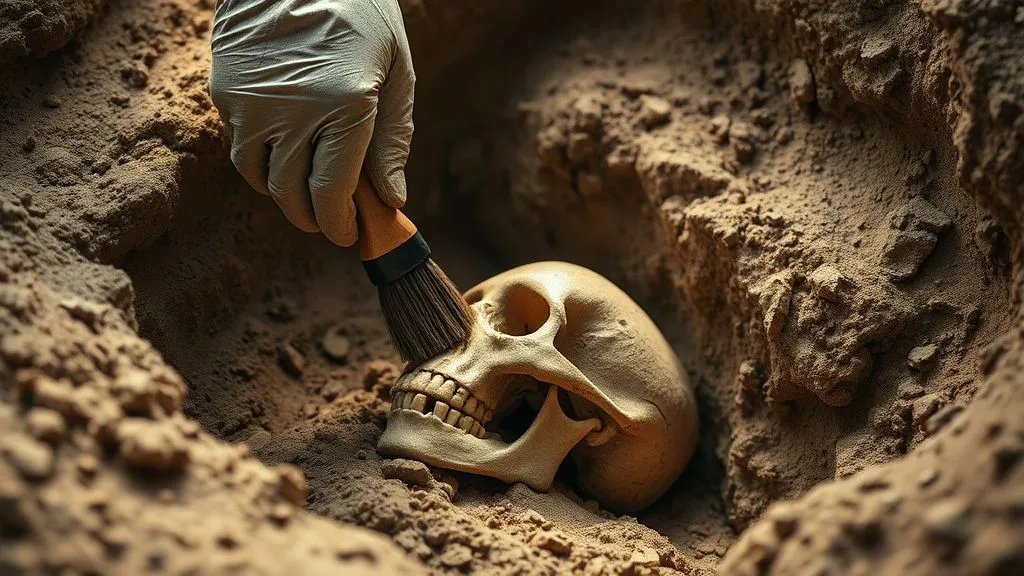
Introduction: Urgent protocols: handling unexpected human remains at dig?
For over two decades, I've had the privilege of leading archaeological expeditions across various continents, from the sun-baked plains of Mesopotamia to the misty highlands of the Andes. In this field, we often anticipate ancient structures, forgotten artifacts, and the faint echoes of past civilizations. Yet, nothing quite prepares you for the moment a trowel or brush uncovers something far more profound and delicate: unexpected human remains. I've personally witnessed the immediate shift in atmosphere, the collective gasp, and the sudden, weighty realization of the immense responsibility that falls upon the team.
This isn't merely an 'unforeseen obstacle'; it's a critical juncture demanding immediate, precise, and ethically sound action. Mishandling such a discovery can lead to irreversible damage to priceless historical data, severe legal repercussions, irreparable harm to community relations, and profound disrespect for the deceased. The initial moments after such a find are fraught with uncertainty, and without clear, established protocols, even the most experienced teams can falter, turning a moment of profound discovery into a potential crisis.
That's why I'm here to share the urgent protocols I've refined over years in the field. This guide isn't just a list of rules; it's a comprehensive framework designed to empower you and your team to navigate this incredibly sensitive situation with confidence, integrity, and respect. We'll explore everything from immediate site securing to ethical considerations, legal obligations, and the critical steps for documentation and preservation, ensuring that every unexpected human remains at dig discovery is handled with the utmost professionalism and care.
The Immediate First Response: Secure and Assess
The very first moments after discovering human remains are the most critical. Think of it like a medical emergency; the initial actions dictate the success of all subsequent interventions. My experience has taught me that hesitation or incorrect initial steps can compromise the entire investigation. These urgent protocols are non-negotiable.
1. Stop All Work Immediately
The moment any potential human remains are identified, all excavation work in the immediate vicinity must cease. This isn't just about stopping; it's about freezing the moment. This prevents further disturbance to the context, which is paramount for archaeological interpretation.
- Halt tools: Put down trowels, brushes, and any other implements.
- Step back: Ensure no one is directly standing over or touching the remains.
- Alert the supervisor: The individual who made the discovery must immediately notify the site director or field supervisor.
2. Establish a Buffer Zone
Once work has stopped, the next step is to secure the area. This buffer zone protects the find from accidental disturbance, keeps unauthorized personnel away, and allows for controlled access for assessment.
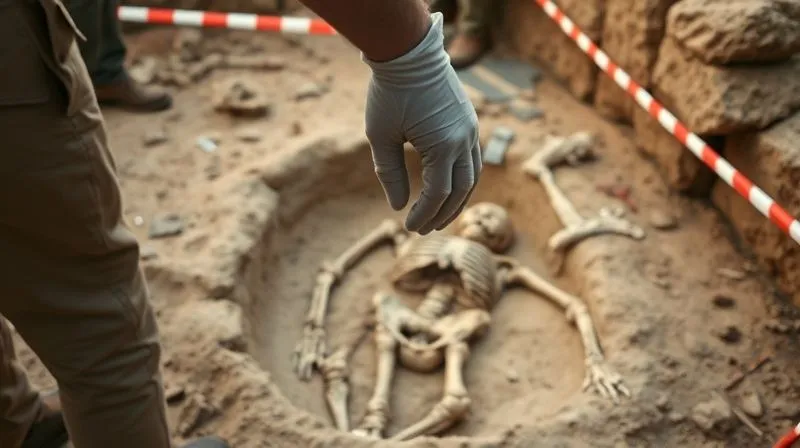
- Define the perimeter: Use barrier tape, ropes, or even temporary fencing to create a clear exclusion zone around the discovery. This zone should extend several meters beyond the visible remains.
- Assign a guard: If feasible, designate a team member to monitor the zone, ensuring no one enters without authorization.
- Control access: Only essential personnel (site director, lead archaeologist, documentation specialist) should be allowed within the buffer zone.
3. Initial Assessment and Photography
With the area secured, the site director, or a designated expert, must conduct an initial visual assessment. This is not an excavation, but a careful observation and preliminary documentation of the discovery in situ. This phase is about gathering immediate, unspoiled data.
- Observe without touching: Note the visible characteristics – apparent age (e.g., bone color, mineralization), context (e.g., associated artifacts, burial position if discernible), and any obvious trauma.
- Initial photographic record: Take a series of high-resolution photographs from various angles, including overview shots of the site, context shots showing the remains relative to other features, and close-ups. Include a scale bar and a north arrow in every relevant photo.
- Preliminary notes: Record the exact location (GPS coordinates), depth, date, time, and names of those present at the moment of discovery.
Expert Insight: "The initial moments after discovery are like capturing a fleeting shadow. Once disturbed, the original context is lost forever. Prioritize documentation over immediate recovery. It's the foundation of all subsequent ethical and scientific work."
Who to Notify: Building Your Communication Chain
Once the immediate site is secured, the next critical step in these urgent protocols for handling unexpected human remains at dig sites is establishing a robust and precise communication chain. This isn't a casual phone call; it's a structured process that ensures all relevant authorities and stakeholders are informed promptly and accurately. Failure here can lead to legal complications, public relations disasters, and even the cessation of your project.
1. Team Leaders and Site Directors
Naturally, the first notification goes up the chain within your immediate project structure. The field crew informs the immediate supervisor, who then informs the site director, principal investigator, and project manager. This ensures everyone within the project is aware and can coordinate resources and expertise.
2. Local Authorities (Police/Coroner)
This is often the most sensitive and legally mandated notification. In many jurisdictions, any discovery of human remains, regardless of apparent age, triggers a legal requirement to contact law enforcement or the coroner's office. This is to rule out recent criminal activity. Even if the remains are clearly ancient, this step is crucial for legal compliance and to avoid future complications.
I've seen projects face severe delays and legal challenges because this step was overlooked, even with seemingly ancient finds. Always err on the side of caution and make that call.
3. Cultural Heritage Authorities/Indigenous Representatives
Beyond law enforcement, national or regional cultural heritage agencies (e.g., State Historic Preservation Office, Department of Antiquities) must be informed. Their expertise is vital for assessing the archaeological significance and determining the appropriate next steps. Critically, if the site is on or near traditional lands, or if the remains could be ancestral, immediate notification of relevant Indigenous communities or tribal authorities is paramount. This respects their cultural sovereignty and rights, fostering trust and collaboration rather than conflict. As highlighted by ICOMOS (International Council on Monuments and Sites), community engagement and respect for cultural rights are fundamental to ethical archaeological practice.
| Priority | Recipient | Action |
|---|---|---|
| Immediate | Site Director/PI | Verify, Secure, Document |
| High | Local Police/Coroner | Rule out modern context, Legal compliance |
| High | Cultural Heritage Authority | Assess significance, Permit guidance |
| Critical (if applicable) | Indigenous/Tribal Representatives | Consultation, Repatriation potential |
| As required | Funding Bodies/University | Inform project stakeholders |
Ethical and Legal Obligations: Navigating the Complexities
The discovery of human remains transcends mere archaeological procedure; it plunges us into a realm of profound ethical and legal responsibility. As an experienced specialist, I've learned that understanding and adhering to these obligations is not just about compliance, but about demonstrating respect for the past and present communities. These urgent protocols demand a nuanced approach.
1. Respect and Dignity
At the core of all actions must be an unwavering commitment to treating the remains with the utmost respect and dignity. These were once living individuals, and their physical remains deserve reverence. This extends to:
- Minimizing disturbance: Only necessary actions for documentation and preservation should be taken.
- Cultural sensitivity: Be mindful of differing cultural beliefs surrounding the dead. This often means avoiding public display, refraining from casual discussion, and considering reburial traditions.
- Language: Use respectful and appropriate terminology (e.g., 'the deceased,' 'individuals,' rather than 'specimens' or 'bones').
2. Legal Frameworks: What You Need to Know
Archaeological work is governed by a patchwork of international, national, and local laws. When human remains are discovered, these laws become intensely relevant. These often include:
- Burial laws: Regulations concerning the discovery, excavation, and reinterment of human remains.
- Cultural property laws: Statutes protecting archaeological sites and their contents, including human remains.
- Repatriation laws: Legislation, such as the Native American Graves Protection and Repatriation Act (NAGPRA) in the U.S., which mandates the return of Native American human remains and cultural items to lineal descendants and culturally affiliated Indigenous tribes.
Ignorance of these laws is no defense. Always consult with legal counsel or cultural heritage experts familiar with the specific jurisdiction of your dig site. The Society for American Archaeology's Principles of Archaeological Ethics provides a solid foundation for understanding these responsibilities.
3. Repatriation and Reburial Considerations
The ultimate disposition of human remains is a complex issue, particularly for ancient or ancestral remains. Modern archaeological ethics strongly advocate for consultation with descendant communities. This may involve:
- Identification of affiliation: Working with bioarchaeologists and ethnohistorians to identify potential descendant groups.
- Meaningful consultation: Engaging in open, respectful dialogue with these communities regarding the analysis, curation, and potential reburial or repatriation of the remains.
- Collaborative decision-making: Recognizing that descendant communities have a rightful say in the future of their ancestors' remains.
Expert Insight: "Our role as archaeologists extends beyond scientific inquiry. It encompasses a profound ethical duty to the deceased and their living descendants. This means listening, respecting, and often, yielding to the wishes of those whose heritage we study. It's about building bridges, not just digging trenches."
Documentation and Preservation: The Scientific Imperative
Once the initial shock subsides and notifications are underway, the scientific imperative kicks in. Thorough documentation and immediate in-situ preservation are paramount for any unexpected human remains at dig site. This phase forms the bedrock of all future analysis and interpretation, ensuring that every piece of information is meticulously recorded before any further action is taken.
1. Detailed Field Notes and Drawings
This is where the story of the discovery begins to be written. Field notes must be exhaustive, objective, and contemporaneous. My years in the field have shown that even a small detail, seemingly insignificant at the time, can unlock profound insights later.
- Contextual description: Document the stratigraphy, soil type, associated features (e.g., grave goods, structural elements), and any disturbances.
- Spatial relationships: Precisely record the orientation, articulation, and position of all visible bones relative to each other and to site datum points.
- Conditions: Note the preservation state, any visible taphonomic processes (e.g., root disturbance, rodent gnawing), and environmental conditions (e.g., moisture, temperature).
- Scaled drawings: Create detailed plan drawings and profile drawings of the remains and their immediate context, using metric scales and standard archaeological symbols.
2. High-Resolution Photography and 3D Scanning
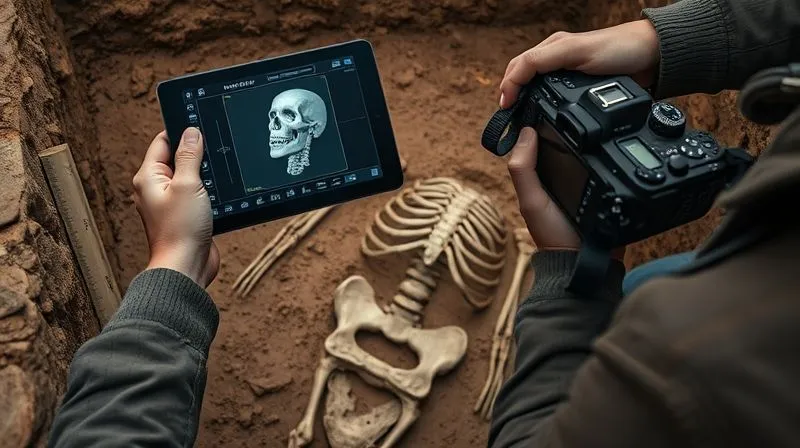
Visual documentation provides an undeniable record. Beyond the initial shots, a comprehensive photographic and, if possible, 3D scanning record is crucial.
- Systematic photography: Take overlapping photos from multiple angles, ensuring full coverage. Use both color and black-and-white photography for different analytical purposes.
- Photogrammetry/3D scanning: If equipment is available, conduct a photogrammetric survey or 3D scan of the remains in situ. This creates a precise, measurable digital model that can be analyzed non-destructively long after the remains are removed.
- Video documentation: A brief video recording can capture nuances of context and environment that still images might miss.
3. In-Situ Protection and Stabilization
While awaiting further instructions or permits, the exposed remains must be protected from environmental damage, accidental disturbance, and looting. This is an urgent protocol often overlooked in the rush to understand the find.
- Covering: Gently cover the exposed remains with geotextile fabric, plastic sheeting, or a wooden cover, weighted down to prevent wind or animal disturbance. Ensure the covering does not directly touch fragile bones.
- Shading: Provide shade to prevent desiccation from direct sunlight, which can cause cracking and deterioration.
- Moisture control: In very wet conditions, consider temporary drainage, but avoid rapid drying, which can also be damaging.
- Security: Maintain the established buffer zone and, if necessary, increase site security, especially if the site is remote or accessible to the public.
Case Study: Navigating an Unexpected Discovery in the 'Whispering Sands'
I recall a particularly challenging situation during an expedition I led in the 'Whispering Sands' region of a remote desert, a fictional yet representative scenario of the complexities involved in handling unexpected human remains at dig sites. Our team was excavating a late Neolithic settlement when a junior archaeologist, Sarah, uncovered what appeared to be a human femur. The initial excitement quickly turned to a palpable tension.
Following our established urgent protocols, Sarah immediately halted work and notified the field supervisor, Mark. Within minutes, the area was secured with a rope perimeter, and I was on site. My initial assessment confirmed the bone was indeed human, partially articulated, and clearly ancient due to its mineralization and the surrounding stratigraphy. The challenge? We were days away from the nearest town with reliable communication, and the region had a complex history with several distinct Indigenous groups, some with unresolved land claims.
Our immediate steps included:
- Enhanced Documentation: We prioritized a full photogrammetric scan of the in-situ remains using a drone, alongside detailed hand-drawn plans and extensive field notes. This ensured a complete record even before external authorities were contacted.
- Securing the Find: We constructed a temporary shelter over the exposure, using local materials for shade and sandbags to create a protective barrier against wind erosion and accidental disturbance.
- Prioritizing Communication: Despite the communication challenges, we established a satellite phone link to our project headquarters. From there, our project manager initiated contact with the national cultural heritage authority, who in turn began the process of identifying and contacting the relevant Indigenous councils.
- Community Engagement: While awaiting official directives, we prepared a culturally sensitive briefing for our team, emphasizing respect and the importance of our upcoming consultations. Once contact was made, we facilitated a virtual meeting (via satellite link) with representatives of the most likely descendant community, sharing our findings and listening to their initial concerns and traditional protocols.
This proactive and respectful approach, though challenging in a remote environment, prevented potential conflicts and earned the trust of the Indigenous community. They appreciated our adherence to their cultural protocols, even from a distance. Ultimately, following a period of consultation and further analysis, a collaborative decision was reached for the remains to be respectfully reinterred on site with a traditional ceremony, guided by the community. This experience underscored that even in the most difficult circumstances, rigorous adherence to urgent protocols for handling human remains, coupled with genuine respect and open communication, can lead to positive, ethical, and scientifically responsible outcomes.
Post-Discovery Protocols: Analysis, Curation, and Reporting
Once the immediate crisis of discovery and initial documentation is managed, the journey of the human remains at dig sites moves into phases of detailed analysis, long-term curation, and comprehensive reporting. These subsequent urgent protocols are equally crucial for extracting maximum scientific information while maintaining ethical standards.
1. Controlled Excavation and Recovery
Under the guidance of relevant authorities (police, coroner, cultural heritage agency) and, critically, in consultation with any identified descendant communities, a plan for controlled excavation and recovery will be developed. This is not a rushed process but a meticulous, systematic operation.
- Specialized personnel: Often, a bioarchaeologist or forensic anthropologist will lead this phase, bringing specialized skills in human osteology and taphonomy.
- Quadrant excavation: The area around the remains is typically gridded and excavated in small quadrants, ensuring precise contextual data for every bone and associated artifact.
- Protection and lifting: Fragile bones may require in-situ consolidation (e.g., with consolidants like Paraloid B-72) or plaster jacketing before lifting to prevent damage.
- Bagging and labeling: Each bone or bone fragment, along with associated soil samples, is carefully bagged, labeled with unique identifiers, and recorded in a logbook.
2. Laboratory Analysis and Bioarchaeological Study
Once recovered, the remains are transported to a secure, accredited laboratory for detailed bioarchaeological analysis. This is where scientific questions about the individual's life, health, and death begin to be answered.
- Osteological assessment: Determination of age at death, sex, stature, ancestry, and any pathological conditions or trauma.
- Isotopic analysis: Stable isotope analysis can provide insights into diet and geographic origin.
- DNA analysis: If preservation allows, ancient DNA (aDNA) analysis can provide genetic information, including population affinities.
- Radiocarbon dating: To establish a precise chronological context.
For more on the methodologies and ethical considerations in this field, I often refer to resources from leading institutions in bioarchaeology.
3. Curation and Long-Term Storage
The long-term fate of the remains is a critical ethical and practical consideration. This involves secure storage and proper curation.
- Secure facility: Remains must be housed in a climate-controlled, secure facility, typically a museum or university collection, with restricted access.
- Cataloging: Each element must be meticulously cataloged and cross-referenced with field documentation.
- Access for research: Policies for access by qualified researchers must be established, often requiring approval from cultural heritage authorities and descendant communities.
- Repatriation considerations: Throughout the curation process, the potential for repatriation or reburial remains a primary consideration, with ongoing consultation with descendant communities.
Expert Insight: "The data we glean from human remains is invaluable, offering direct windows into past lives. However, this scientific gain must always be balanced with profound respect for the individual and their cultural context. Data integrity and ethical integrity are inseparable."
4. Comprehensive Reporting and Publication
The findings must be disseminated, but responsibly. This involves detailed reports and, potentially, academic publications.
- Internal reports: Detailed reports for project archives, cultural heritage authorities, and funding bodies.
- Public reports: Often, a more accessible report for the general public and, crucially, for descendant communities.
- Academic publications: Peer-reviewed articles that contribute to the broader scientific understanding of human history. These must adhere to ethical guidelines regarding the sensitive nature of human remains.
Team Well-being and Mental Health Support
Discovering human remains, especially unexpectedly, can have a profound psychological impact on an archaeological team. In my experience, overlooking the human element in these urgent protocols is a significant oversight. We're not just dealing with ancient bones; we're confronting mortality, history, and often, tragedy. Ensuring team well-being is as crucial as preserving the archaeological record.
1. Acknowledging the Emotional Impact
It's vital for site directors and supervisors to acknowledge that such a discovery is not just a scientific event. Team members may experience a range of emotions, including awe, sadness, fear, or even distress. Some may find it deeply unsettling, particularly if they have personal experiences with loss.
- Open communication: Create an environment where team members feel safe to express their feelings without judgment.
- Normalize reactions: Reassure the team that emotional responses are normal and expected in such circumstances.
2. Providing Psychological First Aid
Just as we have protocols for physical first aid, it's essential to offer psychological support. This doesn't necessarily mean professional therapy on site, but rather immediate, practical support.
- Breaks and downtime: Ensure individuals involved in the discovery get adequate breaks from the immediate area.
- Reassignment: If a team member is visibly distressed, temporarily reassign them to less sensitive tasks away from the remains.
- Empathy and active listening: Supervisors should be trained in basic psychological first aid, focusing on empathy, listening, and offering practical comfort.
3. Debriefing and Peer Support
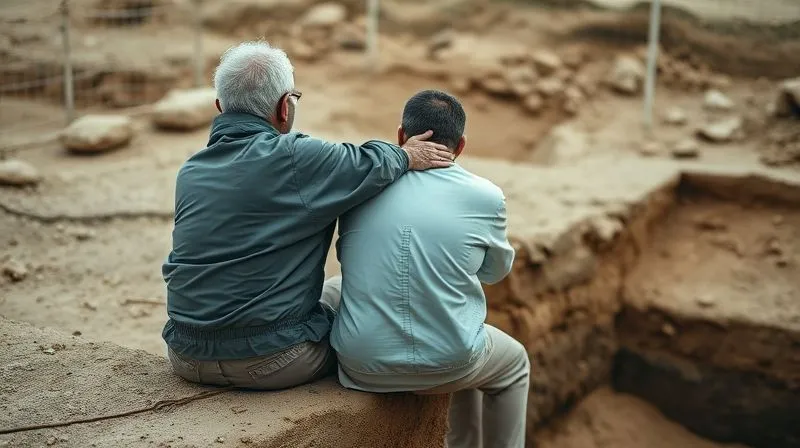
Once the immediate situation is managed, a formal debriefing session is invaluable. This allows the team to process the event collectively and individually.
- Structured discussion: Facilitate a discussion about what happened, what was done well, and what could be improved, focusing on both procedure and emotional impact.
- Peer support networks: Encourage team members to support each other. Sometimes, simply talking with someone who shares a similar experience can be incredibly therapeutic.
- Professional resources: Be prepared to provide contact information for mental health professionals or counseling services if a team member requires more specialized support.
Proactive Planning: Integrating Protocols into Your Site Management Plan
The most effective way to handle unexpected human remains at dig sites is to be prepared long before the trowel hits the bone. Proactive planning, integrating these urgent protocols directly into your site management plan, is a hallmark of truly experienced and responsible archaeological practice. It transforms a potential crisis into a manageable, albeit sensitive, procedural step.
1. Pre-Field Training and Drills
Don't wait for a discovery to teach your team these protocols. Incorporate them into your pre-field training regimen.
- Scenario-based training: Conduct mock discovery drills, where a replica of human remains is 'found.' This allows the team to practice the immediate halt, securing the area, initial documentation, and notification process in a controlled environment.
- Role-playing: Assign roles (discoverer, supervisor, documenter) to ensure everyone understands their specific responsibilities.
- Review of legal and ethical guidelines: Dedicate specific training sessions to national and local laws, as well as the ethical frameworks governing human remains.
2. Emergency Contact Lists
A well-prepared site management plan includes a clearly accessible and up-to-date emergency contact list specifically for human remains discoveries. This list goes beyond general medical emergencies.
- Key project personnel: Site director, principal investigator, project manager.
- Local authorities: Police department, sheriff's office, coroner's office (with direct contact numbers).
- Cultural heritage agencies: Relevant national, regional, and local heritage authorities.
- Indigenous/Tribal contacts: Designated representatives for all potentially affiliated communities.
- Legal counsel: Project or university legal advisors specializing in cultural heritage law.
3. Community Engagement Plans
Building relationships with local communities and Indigenous groups before a discovery significantly eases the process if human remains are found. Proactive engagement fosters trust and facilitates smoother consultation processes.
- Early outreach: Introduce your project to local communities, explain your goals, and outline your ethical commitments, including protocols for unexpected human remains.
- Partnership building: Explore opportunities for collaboration, such as community archaeology initiatives or educational programs.
- Cultural sensitivity training: Ensure your team receives training on the cultural norms and sensitivities of the local population, particularly concerning ancestral remains.
Engaging with communities early on is not just good practice; it's a fundamental aspect of ethical archaeology, as emphasized by organizations promoting community archaeology initiatives.
Expert Insight: "Preparedness is not just about having a plan; it's about embedding that plan into the very culture of your team. When urgent protocols become second nature, you empower your team to act decisively and ethically, even in the most unexpected and sensitive circumstances."
Frequently Asked Questions (FAQ)
What if we suspect the remains are modern? If there's any suspicion that the remains are recent (e.g., within the last 50-70 years, or appear 'fresh'), the protocol is to treat them as a potential crime scene immediately. This means the priority shifts even more strongly to local law enforcement (police) and the coroner. All work must cease, the area secured, and notifications made to police first, followed by cultural heritage authorities if they determine the remains are not modern and fall under their purview. Do NOT attempt to investigate or move the remains yourself.
How do we handle cultural sensitivities if no indigenous groups are identified or there's no clear affiliation? Even without a clear, identified descendant community, the principle of respectful treatment of human remains still applies. Consult with national or regional cultural heritage authorities, who often have established guidelines for such cases. They may advise on general respectful curation, non-destructive analysis, and potential reburial in a culturally appropriate manner, often in consultation with broader community representatives or archaeological ethics committees. The goal is always to treat the remains with dignity, avoiding public display or sensationalism.
Can we continue digging in other areas of the site? This depends on the specific circumstances and the directives from the authorities you've notified. Often, work in the immediate vicinity of the discovery will be halted indefinitely or until a recovery plan is approved. However, if other areas of the site are demonstrably separate and far enough away to avoid any impact or disturbance to the sensitive find, and if approved by the site director and relevant authorities, work may be allowed to continue in those areas. Always seek explicit permission and ensure a clear understanding of the boundaries.
What specific information should be in the initial report to authorities? Your initial report should be concise but comprehensive. It should include: the exact date and time of discovery; precise GPS coordinates and depth; a brief description of the remains (e.g., 'partially articulated human skeleton,' 'isolated skull fragment'); the surrounding context (e.g., 'in association with ceramic sherds,' 'in a distinct burial pit'); names of the discoverer and witnesses; initial photographic records; and the actions taken to secure the site. Emphasize that no further disturbance has occurred beyond the initial discovery and securing.
How long does the notification process typically take, and what if we don't hear back quickly? The notification process timeline can vary significantly based on jurisdiction, the responsiveness of authorities, and the complexity of the find. It could be hours or several days. If you don't hear back within a reasonable timeframe (e.g., 24-48 hours), follow up proactively. Document all attempts at contact (dates, times, names of individuals spoken to). Your responsibility is to make the notification; if authorities are slow to respond, you've fulfilled your duty, but continued attempts to contact them demonstrate due diligence. In the interim, maintain the secured status of the site.
Key Takeaways and Final Thoughts
The discovery of unexpected human remains at an archaeological dig is arguably one of the most profound and challenging moments an archaeologist will face. It's a convergence of scientific inquiry, deep ethical responsibility, and complex legal obligations. Through my years in the field, I've seen firsthand how adherence to well-defined, urgent protocols can transform a potentially chaotic situation into a meticulously managed, respectful, and scientifically fruitful endeavor.
- Act Immediately: Stop all work, secure the site, and conduct initial documentation without disturbing the remains.
- Notify Precisely: Follow a strict communication chain, informing local authorities, cultural heritage agencies, and critically, Indigenous communities.
- Prioritize Ethics and Legality: Treat remains with dignity, understand all applicable laws, and engage in meaningful consultation regarding disposition.
- Document Meticulously: Comprehensive notes, drawings, and high-resolution photography/3D scanning are non-negotiable for preserving context.
- Plan for the Aftermath: Prepare for controlled excavation, detailed laboratory analysis, ethical curation, and responsible reporting.
- Support Your Team: Acknowledge the emotional impact of such discoveries and provide necessary mental health support.
- Be Proactive: Integrate these protocols into your site management plan, conduct drills, and build community relationships before a discovery occurs.
Remember, we are not just excavating dirt and artifacts; we are uncovering stories, histories, and the very essence of human existence. When faced with the profound discovery of human remains, your adherence to these urgent protocols is a testament to your professionalism, your scientific integrity, and your unwavering respect for those who came before us. Approach each find with reverence, diligence, and the wisdom of experience, and you will honor both the past and the future of archaeology.
Recommended Reading
- How to Accurately Measure Food Festival Economic Impact: A 7-Step Guide
- The Ultimate Guide: How Much Does a Night in a Space Hotel Cost?
- Master Your First White Water Rafting Trip: Essential Prep Guide
- 48-Hour City Escape: Reclaim Your Executive Edge from Burnout
- Unearth the Secrets: What Cultural Etiquette Applies to Visiting Ancient Ruins?



Your email address will not be published. Required fields are marked *