

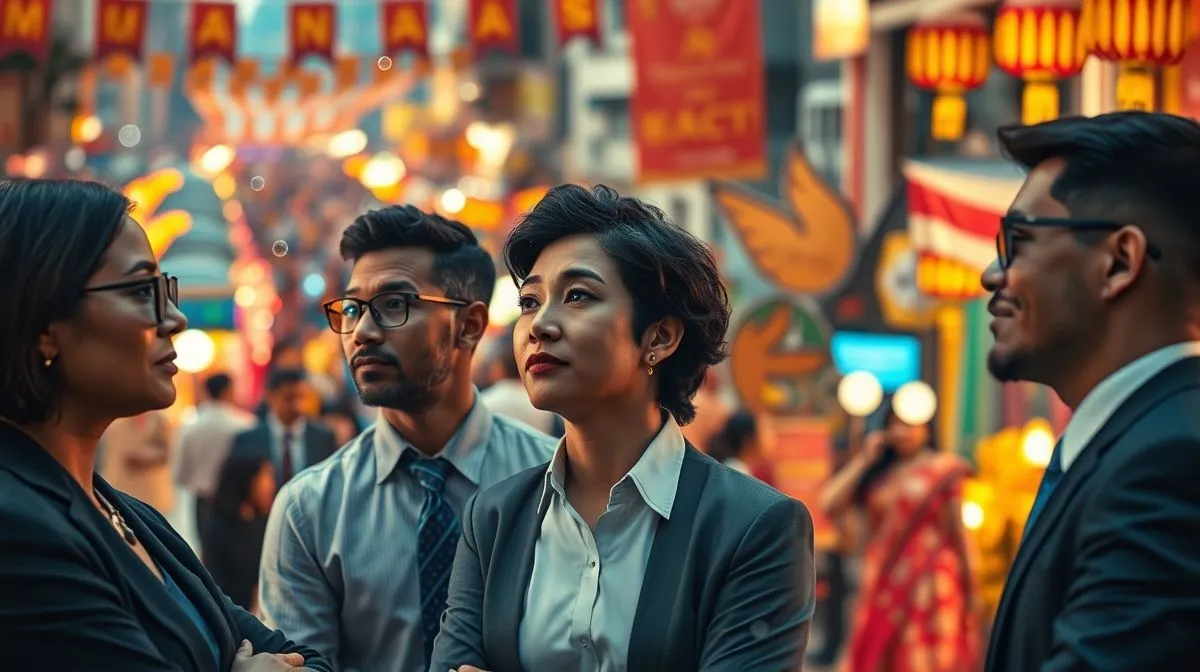
How to leverage city cultural events for business insights?
For over two decades in the 'City Breaks' sector, I've had the privilege of witnessing urban environments not just as destinations, but as living, breathing ecosystems of culture, commerce, and human interaction. I've seen countless businesses, both large and small, pour resources into traditional market research, only to miss the dynamic, unfiltered truths emerging from the very heart of their potential customer base: city cultural events.
The pain point is palpable: businesses often operate in a vacuum, relying on outdated surveys or generic demographic data that fails to capture the nuanced shifts in consumer sentiment, emerging trends, or the authentic pulse of a community. They struggle to innovate relevant products or services because they lack genuine, 'boots-on-the-ground' insights into what truly moves, excites, or challenges urban dwellers.
This article isn't just another guide; it's a framework born from years of practical observation and strategic analysis. I'll show you precisely how to leverage city cultural events for business insights, providing actionable methodologies, real-world examples, and a systematic approach to transform your understanding of the market, fostering innovation and sustainable growth.
Beyond the Booth: Why Traditional Research Misses the Mark
Traditional market research, while foundational, often operates in a controlled, artificial environment. Surveys can suffer from response bias, focus groups from groupthink, and statistical analyses from a lack of contextual depth. You ask people what they think they want, or how they think they behave, but rarely do you see them in their natural habitat, uninhibited and engaged.
This is where the unique power of cultural events comes into play. They are organic laboratories of human behavior. People attend these events – be it a food festival, a music concert, a street art exhibition, or a historical reenactment – out of genuine interest and passion. Their guard is down, their true preferences are on display, and their interactions are authentic. It's an unparalleled opportunity for businesses to gain unfiltered, qualitative data that no questionnaire can truly capture.
In my experience, the most profound business insights often emerge not from what people say, but from what they do, how they interact, and what they gravitate towards when truly immersed in an experience. This is the 'unfiltered goldmine' we aim to tap into.
The Unfiltered Goldmine: Identifying Relevant Cultural Events
The first step in learning how to leverage city cultural events for business insights is strategic selection. Not every event is equally valuable for every business. The key lies in aligning the event's nature with your business's objectives and target audience.
- Define Your Insight Goal: Are you looking for emerging fashion trends, dietary preferences, technological adoption, community cohesion, or perhaps pain points in urban mobility? Be specific.
- Research Local Calendars: Utilize city tourism boards, local news sites, event aggregation platforms (e.g., Eventbrite, local cultural institution websites), and social media groups.
- Audience Overlap Analysis: Identify events that naturally attract your target demographic. For example, a gourmet food festival for a restaurant chain, or a tech art exhibition for a software company. Don't just look at the event's stated purpose; consider its attendees' psychographics.
- Scale and Scope: Consider the size of the event. Large-scale festivals offer breadth of observation, while smaller, niche gatherings provide depth into specific subcultures.
- Logistics and Accessibility: Ensure the event is practical for your team to attend and observe effectively.
It's not about being everywhere, but being strategically present where the most relevant signals are being emitted. As renowned marketing expert Philip Kotler often emphasizes, understanding the customer is paramount, and cultural events offer a unique lens into their unstated needs and desires.
Strategic Immersion: A Framework for Observational Insights
Simply attending an event isn't enough; you need a structured approach to observation. This is where the art of strategic immersion comes into play, transforming casual attendance into targeted data collection.
The Art of Active Observation
Active observation is about more than just looking; it's about seeing with a purpose. Before you even set foot in the event, establish clear hypotheses or questions you want to answer. What specific behaviors are you looking for? What interactions are most relevant?
- Pre-Event Briefing: Equip your team with a clear mandate. What are the key areas of interest? What are the 'signals' to look for?
- Utilize a 'Digital Sketchbook': Instead of just notes, use a tablet or phone to quickly capture photos (respecting privacy), audio snippets (e.g., snippets of street music, crowd ambiance), or short video clips that capture an 'aha!' moment. This provides rich, qualitative data.
- Focus on Non-Verbal Cues: Pay attention to body language, facial expressions, and how people interact with products, services, or spaces. Are they comfortable? Frustrated? Delighted?
- Identify 'Micro-Moments': These are the small, often fleeting instances of decision-making, interaction, or emotional response that reveal deeper truths about consumer behavior. When do people pull out their wallets? When do they pause? What makes them smile?
Mapping Interactions and Emotional Responses
Beyond individual observations, map the broader ecosystem of interactions. How do attendees interact with vendors, performers, or each other? What emotional tone permeates different areas of the event?
- Journey Mapping: Trace typical attendee journeys through the event. Where do bottlenecks occur? Where are moments of delight? What products or services capture prolonged attention?
- Emotional Heat Map: Note areas of high energy, relaxation, frustration, or excitement. This can reveal insights into ideal environments for product placement or service delivery.
- Subgroup Dynamics: Observe how different demographics (age, family units, friend groups) engage with the event. Do Gen Z gravitate towards one type of experience while families prefer another?
"The richest insights are rarely found in aggregate data; they are in the nuances of individual human experience within a collective setting."
Decoding the Narrative: Extracting Consumer Behavior Insights
Once you've collected your observations, the real work begins: decoding the narrative. This involves sifting through your rich data to extract actionable insights into consumer behavior.
Identifying Trends and Preferences
Look for patterns. Are certain types of food selling out faster? Are specific styles of music generating the most engagement? Are eco-friendly products getting more attention?
- Frequency Analysis: How often do certain behaviors or preferences appear? The more frequent, the stronger the signal.
- Anomaly Detection: What stands out? What's unexpected? Sometimes the most insightful data comes from deviations from the norm.
- Cross-Referencing: Compare observations across different events or different areas within the same event. Do patterns hold true?
Understanding Niche Communities and Subcultures
Cultural events are often melting pots of various niche communities. Understanding these subcultures can reveal untapped market segments or specific needs that larger demographic surveys might miss.
- Language and Jargon: Note specific phrases or slang used by particular groups. This can inform marketing messaging.
- Shared Values and Aesthetics: What unifies these groups? Is it a passion for sustainability, a specific art form, or a lifestyle choice?
- Consumption Habits: How do these groups consume products or services within the event context? Are they early adopters of new tech, or do they prefer traditional methods?
Case Study: How ‘Bloom Bakery’ Identified a Market Gap
Bloom Bakery, a local artisan bakery, wanted to expand beyond traditional pastries. Their team attended several city-wide cultural events, from a farmers' market to an indie music festival. They diligently observed food consumption patterns, noting a significant demand for gluten-free and vegan options that were both delicious and aesthetically pleasing. They noticed that many attendees were scrutinizing ingredient lists and actively seeking out plant-based alternatives, even if it meant paying a premium. This wasn't just a trend; it was a strong, underserved preference within the city's health-conscious and ethically-minded communities. By leveraging these insights, Bloom Bakery launched a new line of gourmet vegan and gluten-free desserts, which quickly became their best-sellers, tapping into a market segment they hadn't fully appreciated before.
According to a report by Accenture, businesses that leverage ethnographic research and deep consumer insights are significantly more likely to outpace their competitors in innovation and market share. Read more about customer-centricity.
Innovation Spark: How Cultural Events Fuel Product Development
The insights gained from cultural events aren't just for understanding the present; they are powerful catalysts for future innovation. They can inspire new products, refine existing services, or even spark entirely new business models.
Spotting Unmet Needs and Market Gaps
By observing frustrations or workarounds, you can identify explicit or implicit unmet needs. Is there a long queue for a specific service? Is a product difficult to use in a crowded environment? These are signals.
- Problem-Solving Focus: Frame your observations as problems looking for solutions. For example, if people are struggling to carry multiple items, perhaps a new type of portable bag or cart is needed.
- Wishlist Generation: What do people seem to wish for, even if they don't articulate it? This might be inferred from their actions or expressions.
- Competitive Analysis in Action: Observe how competitors' products or services perform in a real-world, high-pressure environment like a festival. Where do they excel, and where do they fall short?
Inspiration for Service and Experience Design
Beyond physical products, cultural events are rich sources of inspiration for designing better services and experiences. How can the flow, energy, or community aspect of an event be translated into your business operations?
- Atmosphere and Ambiance: What elements of the event's atmosphere contribute to a positive experience? Can these be replicated in your retail space or office environment?
- Engagement Models: How do event organizers keep attendees engaged? Are there interactive elements, unique performances, or community-building activities that could inspire your customer engagement strategies?
- Seamless Transitions: Observe how people move between different zones or activities. How can you make your customer journey more seamless and enjoyable?
"Innovation isn't always about inventing something new; often, it's about seeing familiar things with new eyes and applying those insights to create novel value."
As Harvard Business Review points out, fostering an environment where employees are encouraged to seek out and interpret these qualitative insights is crucial for truly innovative companies. Explore HBR's insights on market research.
Networking Beyond the Business Card: Cultivating Authentic Connections
City cultural events offer a unique, informal setting for networking that transcends traditional business card exchanges. It's about building genuine relationships and community trust, which are invaluable for long-term business success.
Building Community Trust and Brand Affinity
Your presence at a cultural event, even purely for observation, subtly positions your business within the community. Active, respectful participation can foster goodwill.
- Engage Authentically: Be a participant, not just an observer. Enjoy the event. This allows for more natural conversations.
- Listen More Than You Speak: Your goal is to understand, not to sell. Ask open-ended questions about their experience, their city, their interests.
- Show Genuine Interest: People can sense sincerity. A genuine conversation about a shared interest at an event can be far more powerful than a cold sales pitch.
Unearthing Partnership Opportunities
Cultural events often bring together diverse groups – artists, local businesses, non-profits, community leaders. This creates fertile ground for identifying unexpected partnerships.
- Observe Collaborations: Note which entities are working together at the event. Are there synergistic relationships that mirror your business needs?
- Identify Complementary Businesses: Who is serving the same audience but with a non-competing product or service? These are ideal potential partners.
- Connect with Organizers: Event organizers are often deeply connected within the community and can be valuable sources of information or introductions.
I've personally witnessed how a casual conversation at a local jazz festival led to a collaborative 'city experience' package between a boutique hotel and a local art gallery, creating a unique offering that resonated deeply with culture-seeking tourists. This wouldn't have happened in a boardroom.
From Observation to Action: Integrating Insights into Business Strategy
Collecting data is only half the battle; the real value comes from integrating these insights into your overarching business strategy. This requires a systematic approach to analysis, validation, and implementation.
The Iterative Feedback Loop
Insights from cultural events should feed into a continuous improvement cycle. It's not a one-off project but an ongoing process.
- Synthesize and Categorize: Organize your observations into themes. What are the recurring patterns? What are the outliers?
- Validate Hypotheses: Use the insights to formulate new hypotheses. Then, test these hypotheses through smaller, targeted experiments or pilot programs.
- Cross-Functional Sharing: Ensure insights are shared across relevant departments – product development, marketing, sales, customer service. Everyone benefits from a deeper customer understanding.
- Action Planning: Based on validated insights, develop concrete action plans with measurable outcomes.
Measuring the Intangible ROI
While some benefits (like increased sales from a new product line) are tangible, many insights from cultural events contribute to intangible ROI – enhanced brand reputation, deeper customer loyalty, or improved employee engagement.
- Qualitative Metrics: Track shifts in customer sentiment, brand perception, or community feedback.
- Employee Engagement: Notice if employees are more enthusiastic about new products or initiatives that were born from these insights.
- Innovation Pipeline: Measure the number of new ideas or product concepts generated from cultural event observations.
As Forbes emphasizes, the ability to rapidly integrate market intelligence into strategic decisions is a hallmark of agile and successful businesses. Learn more about agile market intelligence.
Navigating the Ethical Landscape: Respectful Data Collection
As you delve into how to leverage city cultural events for business insights, it is paramount to operate within an ethical framework. Respect for privacy and the community is non-negotiable.
- Observe, Don't Intrude: Your role is that of a respectful observer. Avoid directly interviewing or questioning people in a way that feels intrusive or like a sales pitch.
- Anonymity and Aggregation: All observations should be anonymized. Focus on aggregate patterns and behaviors, not individual identities.
- Public Spaces: Cultural events are typically held in public spaces, making general observation acceptable. However, avoid any actions that could be perceived as surveillance or a violation of personal space.
- Be Transparent (If Engaged): If a conversation naturally arises and you disclose your professional interest, do so transparently and respectfully.
- Give Back to the Community: Consider ways your business can support the cultural events or organizations that provide these valuable insights, fostering a symbiotic relationship.
Your goal is to understand and serve the community better, not to exploit it. Trust is the foundation of any sustainable business-community relationship.
Frequently Asked Questions (FAQ)
Question: How can a small business with limited resources effectively leverage city cultural events for business insights? Even with limited resources, a small business can gain significant insights. Focus on one or two highly relevant local events. Instead of a team, assign one dedicated individual with a clear observational checklist. Leverage free social media monitoring of event hashtags and local community groups before and after the event. The key is focused, intentional observation, not massive deployment. Start small, learn, and iterate.
Question: Is it necessary for my entire team to attend cultural events, or can one person gather all insights? While one dedicated observer can gather valuable insights, a diverse team offers varied perspectives. Different team members might spot different nuances based on their roles (e.g., product development, marketing, sales). If a full team isn't feasible, consider rotating observers or debriefing extensively with the attending individual to ensure multiple viewpoints are considered. The more eyes and minds, the richer the aggregated insight.
Question: How do I avoid confirmation bias when observing, ensuring I’m seeing what’s truly there, not just what I expect? Confirmation bias is a real risk. To mitigate it, start with open-ended questions rather than rigid hypotheses. Encourage observers to note unexpected findings or contradictions. Implement a 'devil's advocate' session during debriefs, where team members challenge initial interpretations. Also, cross-reference observations with other data sources (e.g., online reviews, social media sentiment) to validate findings. Training in objective observation techniques can also be highly beneficial.
Question: What kind of cultural events are most valuable for B2B businesses, as opposed to B2C? For B2B, the focus shifts slightly. Look for events that attract professionals, industry associations, or niche communities where your target businesses operate or whose employees are present. Conferences, trade shows, specialized festivals (e.g., design festivals, tech summits), or even large public events where professionals are attending casually can offer insights into their off-duty behaviors, values, and pain points that might translate into their professional needs. Networking within these relaxed settings can also be invaluable for building rapport.
Question: How frequently should a business engage in this type of cultural event observation? The frequency depends on your industry's pace of change and your specific insight needs. For rapidly evolving industries (e.g., tech, fashion), quarterly or bi-annual engagement might be beneficial. For more stable sectors, a deeper dive once or twice a year might suffice. However, ongoing, lighter-touch monitoring of local event calendars and social media can keep you abreast of emerging trends without constant physical presence. It's about maintaining a pulse on the city's cultural rhythm.
Recommended Reading
- The Ultimate Guide: How to Plan a National Park Trip with Toddlers Successfully
- Unlock City Secrets: Best Urban Exploration Apps for City Breaks
- 7 Ways to Unlock Deep Cultural Immersion on a Tight Festival Schedule
- Unlock the Ultimate Escape: How to Plan a Glamping Wilderness Retreat Adventure
- Unlock the Magic: Discover Kid-Friendly Destinations That Offer Educational Fun
Key Takeaways and Final Thoughts
- Cultural events are living labs: They offer unfiltered, real-world insights into consumer behavior and urban trends that traditional research often misses.
- Strategic selection is crucial: Choose events that align with your business goals and target audience.
- Active observation is an art: Go beyond casual attendance; employ structured methods to capture nuanced behaviors and emotional responses.
- Insights fuel innovation: Use observations to identify unmet needs, inspire new products/services, and refine existing offerings.
- Networking is organic: Cultivate genuine relationships and discover unexpected partnership opportunities in informal settings.
- Integrate systematically: Transform observations into actionable strategies through iterative analysis and cross-functional sharing.
- Ethics are paramount: Always observe respectfully, prioritize anonymity, and consider how to give back to the community.
The ability to truly understand your market and innovate ahead of the curve hinges on tapping into authentic human experiences. By embracing the principles of how to leverage city cultural events for business insights, you're not just gathering data; you're building a deeper, more empathetic connection with your audience and the vibrant urban landscapes they inhabit. This isn't just smart business; it's a profound way to ensure your offerings resonate, remain relevant, and truly contribute to the fabric of city life. Go forth, observe, and discover the hidden currents of opportunity waiting to be uncovered.



Your email address will not be published. Required fields are marked *