

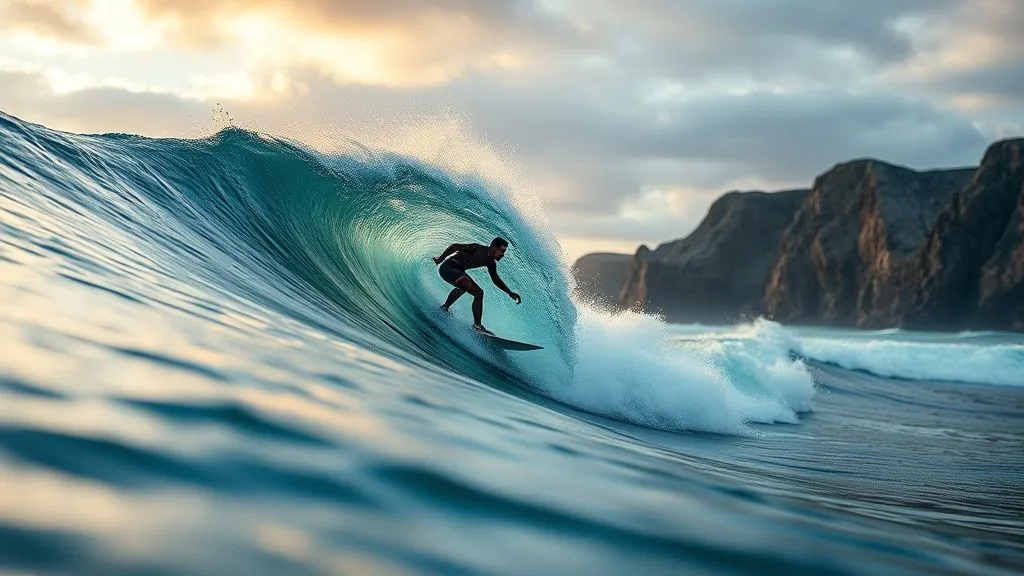
How to Locate Consistent High-Performance Surf Spots for Pro Training?
For over two decades in the competitive surfing world, I've witnessed firsthand the relentless pursuit of perfection. Many aspiring professionals, despite their raw talent, often hit a plateau, not because of a lack of skill, but due to inconsistent access to the right training grounds. They spend countless hours honing maneuvers on mediocre waves, which, in my experience, is akin to a sprinter training on a muddy track.
The fundamental problem isn't just finding a surf spot; it's about consistently locating *high-performance* surf spots. These are the waves that challenge, refine, and elevate a surfer's game, offering predictable power, shape, and length that allow for repetitive, high-level maneuver practice. Without this consistency, progression stagnates, and the gap between amateur and professional widens.
This article isn't just a guide; it's a framework built on years of ocean observation, competitive analysis, and geographical study. I'll share actionable strategies, expert insights, and the precise methodologies I've developed to help you answer the crucial question: how to locate consistent high-performance surf spots for pro training? We'll dive deep into oceanography, local knowledge, and leveraging cutting-edge technology to transform your training regimen.
Mastering the Art of Swell Reading: Beyond the Basics
Understanding swell is the bedrock of identifying a quality surf spot. As an experienced industry specialist, I can tell you that simply knowing a swell is 'coming' isn't enough for professional training. You need to dissect its origin, trajectory, and energy to predict how it will interact with specific bathymetry.
A high-performance wave isn't born by accident; it's the product of powerful, distant storms generating long-period swells. These swells carry immense energy, translating into the powerful, organized lines that professional surfers crave. Shorter period, locally generated wind swell, while fun, rarely offers the consistent canvas needed for advanced progression.
Understanding Swell Direction and Periodicity
The direction a swell travels is paramount. A spot that lights up on a northwest swell might be completely flat on a south swell. Furthermore, the swell period – the time between successive wave crests – is a critical indicator of a wave's power and potential. Long-period swells (14+ seconds) indicate deep-ocean genesis and significant energy, ideal for powerful, organized waves.
To truly master swell reading for pro training, consider these actionable steps:
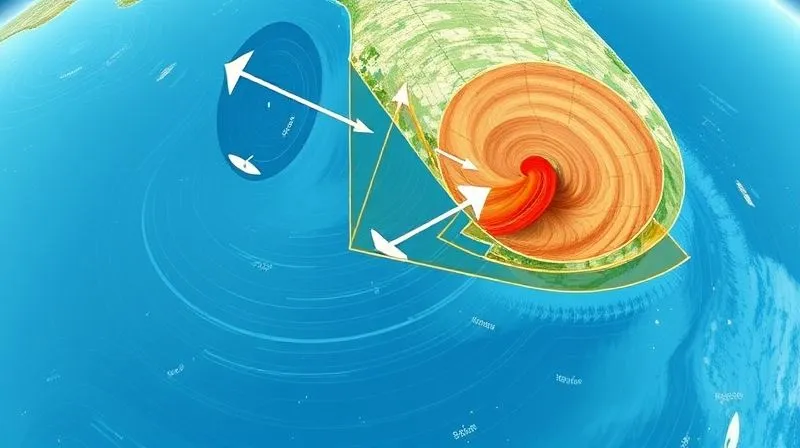
- Track Storm Systems: Monitor global weather patterns, not just local forecasts. Identify low-pressure systems forming thousands of miles away. Understand their intensity, duration, and movement, as these dictate the size and power of the generated swell.
- Analyze Swell Model Outputs: Go beyond generic surf reports. Utilize advanced swell models (e.g., NOAA's WaveWatch III, ECMWF) that provide detailed data on swell height, period, and direction for specific ocean regions. Learn to interpret these raw data points.
- Cross-Reference Multiple Sources: Never rely on a single forecast. Compare data from at least three different reputable sources. This helps identify discrepancies and provides a more robust, trustworthy prediction.
- Observe Local Buoy Data: Buoys provide real-time, ground-truth data on swell characteristics as it approaches the coast. Learn to interpret buoy readings, paying close attention to peak swell period and dominant swell direction to confirm model predictions.
- Understand Fetch and Duration: The 'fetch' (distance over which wind blows) and 'duration' (how long it blows) are crucial for swell generation. Longer fetch and duration lead to larger, more powerful swells.
"A true understanding of swell isn't just about what's coming, but *how* it was made. That insight allows you to predict a wave's character before you even see it."

For a deeper dive into ocean wave mechanics and forecasting, I highly recommend consulting resources from organizations like NOAA (National Oceanic and Atmospheric Administration). Their research forms the backbone of modern swell prediction.
Deciphering Local Geography and Bathymetry for Optimal Breaks
The ocean floor – or bathymetry – is the unsung hero in the creation of a high-performance surf wave. A perfectly formed swell can be rendered useless by an unsuitable seabed, while an average swell can be transformed into something special by the right reef or sandbar. This is where geographical expertise becomes critical for how to locate consistent high-performance surf spots for pro training.
Professional surfers need waves that break predictably, with a consistent shape and enough open face for maneuvers. This requires a specific interaction between the incoming swell and the underwater contours. Deep channels, sudden shelves, and precise reef formations are the architects of world-class waves.
Reef, Point, and Beach Breaks: A Pro's Perspective
Each type of break offers distinct characteristics that impact its suitability for pro training:
| Break Type | Characteristics | Pro Training Suitability |
|---|---|---|
| Reef Break | Consistent, powerful, hollow, sharp take-offs, often dangerous. Predictable shape due to fixed reef. | Excellent for barrel riding, critical turns, air sections. Requires precision and commitment. |
| Point Break | Long, peeling, perfectly shaped waves that break along a headland or point. Highly consistent once swell direction is right. | Ideal for high-volume maneuver practice, linking turns, flow, and endurance. Offers long rides. |
| Beach Break | Variable, sand-bottomed waves. Can be powerful and hollow, but often inconsistent in shape and peak location. | Good for developing adaptability, quick decision-making, and diverse maneuvers. Less consistent for repetitive training. |
| Rivermouth Bar | Often a hybrid of point and beach break. Can produce incredibly long, powerful, and hollow waves with specific swell/tide. Highly dynamic. | Exceptional for advanced barrel riding and power surfing when conditions align, but can be fickle. |
To identify these optimal interactions, I've always emphasized studying nautical charts and satellite imagery. Look for sudden changes in depth, submerged reefs, and the orientation of headlands relative to dominant swell directions. A deep channel leading into a shallow reef, for instance, can create a powerful, consistent A-frame peak.
Understanding coastal geomorphology is also key. Erosion patterns, sediment transport, and river outflows all play a role in shaping the seabed, especially for dynamic beach breaks and rivermouths. These are constantly changing, requiring ongoing observation and local intelligence.
For further reading on ocean floor mapping and its impact on waves, explore resources on bathymetry and oceanography. This scientific understanding truly sets apart the casual surfer from the dedicated wave hunter.
The Critical Role of Wind and Tides: Micro-Climate Analysis
Even with the perfect swell and ideal bathymetry, the wrong wind or tide can completely ruin a surf session. For professional training, where every wave counts towards progression, these micro-climatic factors are not just important; they are deal-breakers. A consistent high-performance surf spot demands precise wind and tide conditions.
Offshore winds (blowing from land to sea) are generally preferred as they groom the wave face, making it smooth and clean. Onshore winds (blowing from sea to land) create chop and crumble the wave, making it difficult to perform maneuvers. Cross-shore winds can be acceptable if light, but strong cross-winds can also degrade wave quality significantly.
Advanced Wind Forecasting Techniques
Beyond simply checking a wind app, professional training requires a deeper dive into wind dynamics:
- Local Topography: Understand how local landforms (cliffs, mountains, valleys) channel or block wind. A spot might be offshore with a specific wind direction due to a protective headland, even if the general regional wind is onshore.
- Thermal Effects: Coastal areas often experience localized thermal winds, where land heats up faster than the sea, creating an onshore breeze. Learn to predict these diurnal patterns.
- Wind Gusts vs. Average Wind: Pay attention to wind gust forecasts. Even if the average wind speed is low, strong gusts can still disrupt the wave face.
- Tidal Influence on Wind: In some regions, tidal currents can interact with wind to create localized chop or smooth conditions. This is often specific to a particular spot.
Tides also play a crucial role, influencing wave height, power, and how a wave breaks over a reef or sandbar. Some spots are perfect on a high tide, others on a low tide, and some only work on a specific mid-tide pushing in or out. This variability demands careful observation and local knowledge.
Leveraging Technology: Advanced Forecasting Models and Community Insights
In the modern era, technology has revolutionized how we locate consistent high-performance surf spots for pro training. Gone are the days of purely relying on visual observation and anecdotal reports. Today, a wealth of data is at our fingertips, allowing for highly accurate predictions and opening up new avenues for discovery.
However, simply accessing the data isn't enough; the expertise lies in interpreting and synthesizing it. I've seen countless surfers misinterpret sophisticated models, leading to wasted trips. The key is to understand the limitations and strengths of each tool and integrate them with your growing understanding of swell, bathymetry, and local conditions.
Harnessing Satellite Data and Buoy Readings
Satellite altimetry provides global swell data, tracking wave height and direction far out at sea. When combined with deep-water buoy readings, which offer real-time, ground-truth measurements as swells approach the coast, you get an incredibly accurate picture of what's heading your way. This level of precision is indispensable for a professional training schedule.
Beyond scientific data, the online surf community offers invaluable, though sometimes noisy, insights. Forums, local surf cams, and dedicated WhatsApp groups can provide real-time updates on conditions, crowd levels, and even subtle nuances of a break. Learning to filter this information and identify trustworthy sources is a skill in itself.
Case Study: How Kai's Team Optimized Training Locations
Kai, a promising young surfer, was struggling with inconsistent training conditions in his home region. His coaches observed that while he showed flashes of brilliance, his progression was hampered by the unpredictable nature of his local waves. They were spending too much time traveling to subpar spots or waiting for optimal conditions that rarely materialized.
Implementing the strategies I advocate, Kai's team began a rigorous process of data analysis. They started by cross-referencing global swell models with regional buoy data and detailed bathymetric charts. They identified several potential high-performance spots within a 500km radius that consistently received optimal swell angles and had favorable bathymetry for powerful, peeling waves.
Next, they integrated localized wind and tide forecasting, using advanced models to predict specific windows of clean conditions. They also tapped into local surf communities through dedicated online forums, establishing connections with experienced watermen who provided real-time ground reports and historical insights. By triangulating these data points, they developed a 'spot matrix' that allowed them to predict with over 80% accuracy which spot would be firing on any given day.
This systematic approach drastically reduced wasted travel and maximized Kai's time in high-performance waves. Within six months, his coaches reported significant improvements in consistency, power, and the complexity of his aerial maneuvers, directly attributable to the optimized training environment. This resulted in Kai securing a major sponsorship deal and consistently placing in the top 3 of his regional pro junior events.
This case study underscores the power of a data-driven approach to how to locate consistent high-performance surf spots for pro training.
Local Knowledge Acquisition: Beyond the Guidebooks
While technology provides an incredible foundation, there's no substitute for genuine local knowledge. Every surf spot has its quirks, its 'secrets' that aren't visible on a chart or predictable by a model alone. This is where the human element becomes paramount in your quest for consistent high-performance waves.
Local knowledge isn't just about knowing where a wave breaks; it's about understanding its personality. It's knowing how the wave reacts to subtle shifts in swell direction, what tide phase unlocks its true potential, or which specific wind anomaly paradoxically cleans up the face. These are the nuances that can transform a good session into an exceptional one.
Building Relationships with Local Watermen and Women
The best way to tap into this invaluable resource is by engaging with the local surfing community. This requires respect, patience, and a genuine interest in learning. Show up, observe, be polite, and earn trust. Don't expect to be handed secrets on a silver platter; contribute to the vibe, share waves respectfully, and over time, doors will open.
"Local knowledge is the final, indispensable layer in the pursuit of perfect waves. It's the whispered wisdom that turns data into gold."
Seek out the elders, the seasoned locals who have spent decades observing the same stretch of coastline. Their insights into historical swell patterns, unusual local phenomena, and even the best times to avoid crowds are priceless. This mentorship aspect is crucial for how to locate consistent high-performance surf spots for pro training without stepping on toes.

Seasonal Patterns and Global Wave Migration: The Pro Circuit's Calendar
For a professional surfer, training isn't confined to a single spot or even a single region. The world's best waves follow seasonal patterns, dictated by global storm tracks and oceanic phenomena. Understanding these 'wave migrations' is critical for year-round, high-performance training and for strategically planning your travel.
The Northern Hemisphere generally experiences its strongest swells during its winter months (October to April), as powerful low-pressure systems track across the North Pacific and North Atlantic. Conversely, the Southern Hemisphere comes alive during its winter (April to October), with massive storms churning in the Southern Ocean.
Tracking El Niño and La Niña for Long-Term Planning
Beyond annual cycles, larger climate patterns like El Niño and La Niña significantly impact global swell generation. El Niño typically shifts storm tracks, often leading to larger, more consistent swells in regions like California and Mexico, while potentially reducing swell in others. La Niña often brings the opposite effect. Monitoring these phenomena is essential for long-term strategic planning for how to locate consistent high-performance surf spots for pro training.
| Seasonal Pattern | Dominant Swell Direction | Prime Regions for Pro Training | Key Wave Characteristics |
|---|---|---|---|
| Northern Hemisphere Winter (Oct-Apr) | NW, N, W (Pacific); NW, N, W (Atlantic) | Hawaii (North Shore), California, Portugal, Canary Islands, Caribbean (select spots) | Powerful, large, hollow, often requiring big wave expertise. |
| Southern Hemisphere Winter (Apr-Oct) | SW, S, SE (Pacific); SW, S, SE (Atlantic/Indian) | Indonesia (Mentawais, Bali), Australia (Gold Coast, Bells), South Africa (J-Bay), Peru, Chile | Long, peeling, often warm water, high-performance barrels and carvable faces. |
A professional training program often involves following these global patterns, moving between hemispheres or specific regions to maximize exposure to optimal waves. This requires meticulous planning, understanding visa requirements, and being adaptable to changing forecasts. It’s a nomadic lifestyle, but one that directly correlates with performance improvement.
On-Site Reconnaissance: The Unbeatable Eye-Test
After all the research, data analysis, and local intelligence gathering, the final, crucial step is the 'eye-test.' You have to be there, on the ground, observing the ocean with your own eyes. This on-site reconnaissance is where all the theoretical knowledge coalesces into practical, real-time decision-making. It’s a skill that can only be honed through countless hours of observation.
I've personally spent thousands of hours simply watching waves, even when not surfing. This meticulous observation allows you to identify subtle nuances that no forecast model can predict. How does the wave break on a slightly higher tide than predicted? Does that rogue set consistently hit a particular section of the reef, creating a perfect air section? These are the micro-details that differentiate a good surf session from a truly high-performance training session.
Observing Wave Characteristics and Crowd Dynamics
When you arrive at a potential training spot, don't just paddle out immediately. Take your time to observe:
- Wave Shape and Consistency: How consistently are the waves breaking in the same spot? Are they peeling cleanly? Is there a defined peak or shoulder for maneuvers?
- Section Speed and Length: Is the wave too fast or too slow? Does it offer enough length for multiple maneuvers, or does it section out too quickly?
- Take-off Zone: Where are surfers consistently taking off? Is it a critical, challenging take-off, or a gentler paddle-in?
- Currents and Rips: Identify any strong currents or rips that could impact paddle-out efficiency or positioning in the lineup.
- Crowd Dynamics: How many surfers are out? Are they sharing waves respectfully, or is it a competitive, aggressive lineup? High-performance training requires waves, not battling for position.
- Light and Glare: Consider how the sun's position affects visibility, particularly for early morning or late afternoon sessions.

This detailed observation allows you to confirm your forecasts, adapt to unexpected conditions, and ultimately make the best decision for your training goals. It’s the final, human touch in the sophisticated process of how to locate consistent high-performance surf spots for pro training.
Frequently Asked Questions (FAQ)
How long does it typically take to become proficient in advanced swell forecasting? Becoming truly proficient can take several years of dedicated study and practical application. It's not just about understanding the data, but developing an intuitive sense of how different swell characteristics translate into actual wave conditions. Consistent practice, comparing forecasts to real-world observations, is key. Many pro surfers dedicate significant time to this, almost as much as their physical training.
Are there any specific regions known for year-round consistent high-performance waves? While few spots are truly 'year-round' for peak performance, regions like parts of Indonesia (e.g., Mentawai Islands during the dry season, shifting to other islands during the wet season), sections of the Australian coast, and specific areas in Central America can offer extended periods of high-quality waves by leveraging seasonal shifts and micro-climates. It often involves strategic movement within a broader region.
How can I effectively balance local knowledge acquisition with respecting local surfers? The best approach is humility and respect. Start by observing and being patient. Don't paddle straight to the peak. Engage in friendly conversation in the parking lot or on the beach. Contribute positively to the vibe. Over time, genuine relationships will form, and locals will often be more willing to share insights. Never disclose sensitive local information publicly, and always show gratitude.
What's the biggest mistake aspiring pros make when trying to find training spots? The most common mistake is relying solely on popular surf forecast apps or social media hype. These often generalize conditions and don't provide the granular detail needed for high-performance training. Another mistake is chasing 'the biggest wave' rather than 'the most consistent, high-quality wave' suitable for specific skill development. Quality over mere size is paramount for progression.
Can technology completely replace the need for physical on-site reconnaissance? Absolutely not. While technology provides incredible predictive power, the nuances of ocean conditions, crowd dynamics, and the subtle interaction of swell with local bathymetry can only be truly appreciated and understood through direct observation. Technology informs your search, but your eyes and experience confirm the opportunity. It's a powerful synergy, not a replacement.
Key Takeaways and Final Thoughts
Locating consistent high-performance surf spots for pro training is not a matter of luck; it's a scientific endeavor combined with astute local engagement. It demands a holistic approach, integrating deep oceanographic understanding with technological prowess and genuine human connection. Mastering this skill is as crucial to a professional surfer's career as mastering a new maneuver.
- Swell Dissection: Go beyond basic forecasts; understand swell origin, period, and direction.
- Bathymetric Blueprint: Learn how the ocean floor shapes waves, distinguishing between reef, point, and beach breaks.
- Micro-Climate Mastery: Analyze wind and tide with precision, understanding local topographical influences.
- Tech Integration: Leverage advanced forecasting models, satellite data, and community insights judiciously.
- Local Wisdom: Cultivate respectful relationships with local watermen and women for invaluable, nuanced information.
- On-Site Verification: Always perform an 'eye-test' to confirm conditions and assess the true potential of a spot for your training goals.
By diligently applying these strategies, you'll not only find the waves that propel your surfing to the next level but also deepen your connection and understanding of the ocean itself. This journey is about more than just catching waves; it's about mastering the dynamic environment that defines our sport. Embrace the challenge, stay curious, and the perfect training grounds will reveal themselves.
Recommended Reading
- Mobility Aid SOS: How to Handle Repairs While Traveling Abroad
- Market Lesser-Known Historical Cities: 5 Steps for Cultural Trip Success
- Unveiling the Truth: How to Avoid Harmful Voluntourism Experiences?
- The Ultimate Guide: How to Find Authentic Foodie Destinations Abroad
- Unveiling the Arctic & Antarctic: What to Expect on Your Polar Expedition Cruise




Your email address will not be published. Required fields are marked *