


How to manage unexpected international rail adventure delays?
For over 15 years, I've crisscrossed continents by rail, from the Trans-Siberian to the high-speed lines of Europe. In that time, I’ve seen my fair share of unexpected twists – from a blizzard-induced halt in the Rockies to an unscheduled customs check that derailed a perfect connection in Central Europe. These aren't just minor inconveniences; they're moments that can transform a dream journey into a nightmare if you're unprepared. What I’ve learned is that the true art of international rail travel isn’t just about choosing the right route, but mastering the unexpected.
The romantic allure of train travel – the landscapes gliding by, the rhythmic clickety-clack, the chance encounters – often overshadows the very real possibility of delays. A technical fault, adverse weather, a strike, or even an unforeseen track issue can throw your meticulously planned itinerary into disarray. The stress of a missed connection, the scramble for alternative accommodation, or the frustration of lost time can quickly erode the joy of your adventure. It's a common pain point for even the most seasoned travelers, leaving many feeling helpless and vulnerable far from home.
But it doesn't have to be this way. In this definitive guide, I'll share the strategies I've honed over years of navigating international rail networks. We'll move beyond mere tips, diving into actionable frameworks, a real-world case study, and expert insights designed to empower you. You’ll discover not just how to manage unexpected international rail adventure delays?, but how to anticipate them, mitigate their impact, and even turn a setback into a memorable part of your journey. Let's transform uncertainty into confidence, ensuring your next rail adventure is smooth, no matter the bumps in the tracks.
The Proactive Traveler's Blueprint: Before You Depart
The best defense against international rail delays is a strong offense. My experience has taught me that meticulous preparation isn't about rigid adherence to a plan, but about building resilience into your journey from the outset. This pre-departure phase is where you lay the groundwork for a stress-free response.
Comprehensive Trip Planning: Beyond the Ticket
Don't just book your ticket and assume the rest. A truly comprehensive plan involves understanding the nuances of your chosen route and the broader rail network.
- Research Your Route Thoroughly: Look beyond the direct A-to-B. Understand the major hubs, potential connection points, and typical journey times. Are there common bottlenecks or known areas prone to weather issues?
- Identify Alternative Routes: For critical legs of your journey, have a mental (or even written) backup plan. What's the next train? Are there alternative rail operators? Could a bus or even a short domestic flight be an option if a delay is significant?
- Understand Station Layouts: Especially for major international transfer points, knowing the layout can save precious minutes. Are platforms far apart? Are there multiple terminals? Google Maps and official station websites are invaluable resources.
- Check Visa & Entry Requirements: Ensure you have all necessary documentation for every country you pass through, even in transit. A delay could force an unexpected overnight stay or change of route requiring a visa you hadn't considered.
The Power of Travel Insurance: Not Just an Option
I've seen countless travelers regret skipping this step. Travel insurance is not an expense; it's an investment in peace of mind and financial protection. It’s absolutely crucial for understanding how to manage unexpected international rail adventure delays? without financial ruin.
- Delay Compensation: Look for policies that specifically cover train delays, missed connections due to delays, and re-routing costs.
- Accommodation & Meals: If an overnight delay strands you, good insurance will cover reasonable expenses for hotels and food.
- Medical Emergencies: While not directly related to delays, always ensure your policy covers medical emergencies abroad.
- Personal Belongings: Delays can sometimes lead to rushed transfers where luggage might be misplaced or stolen.
"According to a recent study by Allianz Travel Insurance, only 49% of Americans purchase travel insurance, yet over 70% experience travel disruptions. This gap highlights a significant vulnerability for many adventurers." Source: Allianz Travel Insurance
Always read the fine print. Understand the excess, the claim process, and what specific scenarios are covered. Don't assume; clarify with your provider.
Essential Digital Toolkit: Apps and Information at Your Fingertips
Your smartphone can be your most powerful ally when delays strike. Pre-loading it with the right apps and information is non-negotiable.
- Rail Operator Apps: Download the apps for the specific rail companies you'll be using (e.g., Deutsche Bahn, SNCF, Trenitalia). These often provide real-time updates, platform changes, and rebooking options directly.
- General Rail Planner Apps: Apps like Rail Planner (for Eurail/Interrail pass holders) or national journey planners can offer broader network insights and alternative routes.
- Translation Apps: Google Translate or DeepL can be lifesavers when communicating with non-English speaking staff. Download offline language packs before you go.
- Communication Apps: Ensure you have WhatsApp or similar apps to easily contact family, friends, or tour operators via Wi-Fi.
- Offline Maps: Download maps of your destination cities and major train stations.
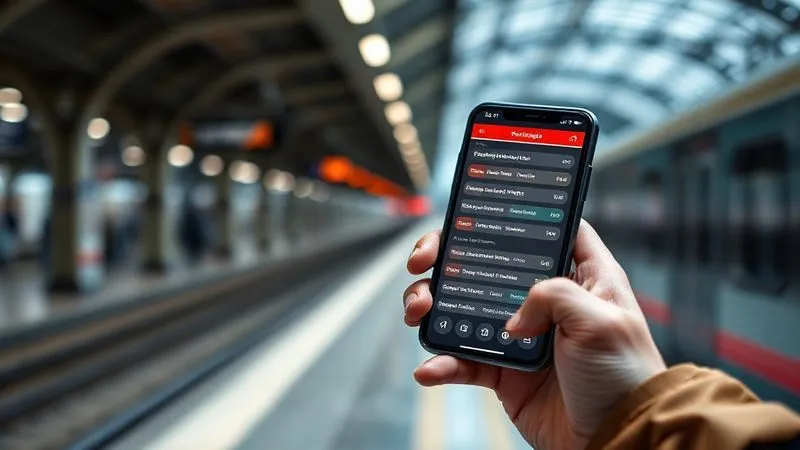
Beyond apps, save important numbers (insurance, bank, emergency contacts) and digital copies of your passport, tickets, and insurance policy in a cloud service and on your phone. Better yet, email them to yourself.
Packing Smart: Essentials for Unexpected Layovers
When I pack for an international rail adventure, I always prepare a small 'delay kit' in my carry-on. This isn't just about comfort; it's about self-sufficiency during unforeseen waits.
- Power Bank: A fully charged, high-capacity power bank is paramount for keeping your phone and other devices alive.
- Snacks & Water: Stations can be expensive, and onboard services might be limited or nonexistent during delays. Pack non-perishable snacks and a reusable water bottle.
- Entertainment: A good book, downloaded movies/shows, or podcasts can turn a frustrating wait into a peaceful interlude.
- Basic Toiletries: A toothbrush, small toothpaste, and travel-size deodorant can make a huge difference if you're stuck overnight.
- Comfort Items: A neck pillow, eye mask, and earplugs are invaluable for trying to rest in noisy station environments.
"The seasoned traveler understands that comfort in discomfort is a skill. Your carry-on isn't just for essentials; it's your personal sanctuary against the unpredictable." – An experienced rail traveler (me!)
Navigating the On-the-Ground Reality: When Delays Strike
Despite the best preparation, delays can and do happen. The moment you realize your train is significantly behind schedule, or worse, cancelled, is critical. Your response in these initial minutes will heavily influence the rest of your experience.
The First Steps: Information Gathering and Verification
Panic is a natural first reaction, but it’s counterproductive. My first action is always to gather accurate information, and crucially, to verify it.
- Check Official Departure Boards: These are often the most up-to-date source in a station. Look for 'Delay', 'Cancelled', or 'Platform Change' notices.
- Consult Rail Operator Apps: As mentioned, these can provide real-time updates, often faster than physical boards. They might also suggest alternative trains or offer rebooking options.
- Listen to Announcements: Even if in a foreign language, repeated phrases or station names can give clues. Use your translation app if necessary.
- Speak to Staff: Once you have initial information, approach a station attendant, ticket office, or on-board conductor. Be polite but firm. They are your primary resource for official guidance and rebooking.
It's important to cross-reference information. Sometimes, an app might be slightly ahead or behind the physical board, or a staff member might have more nuanced local information. Don't rely on just one source.
| Information Source | Pros | Cons |
|---|---|---|
| Station Departure Board | Official, real-time, physical location | Can be slow to update, language barrier, limited detail |
| Rail Operator App | Real-time, push notifications, rebooking options, often multi-language | Requires internet, battery dependent, sometimes system glitches |
| Rail Staff/Conductor | Direct human interaction, expert advice, rebooking authority | Can be overwhelmed, language barrier, queues |
| Other Passengers | Shared experience, potential tips | Often unreliable, based on rumors, can increase panic |
Understanding Your Rights: International Passenger Protection
Knowing your rights is paramount when you need to know how to manage unexpected international rail adventure delays?, especially in Europe. The European Union has robust passenger rights regulations (EC 1371/2007, based on CIV rules) that apply to most international rail journeys within the EU and connecting countries.
- Information: Rail companies must inform you of delays or cancellations as soon as possible.
- Assistance: For delays over 60 minutes, you are entitled to free meals and refreshments, and if necessary, accommodation (including transfer) if you're stranded overnight.
- Re-routing or Refund: For delays over 60 minutes, you can choose between:
- A full refund for the unused part of your ticket and a return journey to your starting point, or
- Re-routing to your final destination at the earliest opportunity, under comparable transport conditions.
- Compensation: For delays of 60-119 minutes, you're entitled to 25% of the ticket price. For delays of 120 minutes or more, it's 50% of the ticket price. This is in addition to the refund if you choose not to travel.
These rights are enshrined in law. Familiarize yourself with them. A good resource for understanding these in detail is the European Commission's Passenger Rights page. While these apply primarily in Europe, other regions may have similar (though less comprehensive) protections.
Communication is Key: Informing Connections and Accommodations
A delay doesn't just affect your train journey; it creates a domino effect. Proactive communication is essential to minimize further disruption.
- Onward Travel: If you have connecting flights, buses, or other train journeys, inform the respective operators as soon as possible. Some may offer flexibility or rebooking options.
- Accommodation Providers: Contact your hotel, Airbnb host, or guesthouse to inform them of your late arrival. Many have flexible check-in policies, but it's always best to give them a heads-up.
- Tour Operators/Activities: If you have pre-booked tours, concerts, or other time-sensitive activities, reach out to see if you can rebook or get a refund.
- Family & Friends: Let your loved ones know your situation to avoid unnecessary worry.
Always keep records of who you spoke to, when, and what was agreed. This documentation can be vital for any subsequent claims or disputes.
Case Study: Sarah's Swiss Alps Setback
Case Study: How Sarah Conquered a Swiss Alps Delay
Sarah, an avid hiker, had planned a meticulously timed rail journey through the Swiss Alps, culminating in a specific mountain ascent. Her itinerary included a high-speed train from Zurich to Interlaken, followed by a regional connection, and finally, a cable car. Two hours into her Zurich-Interlaken leg, an unexpected landslide caused a track closure, delaying her train indefinitely.
Instead of panicking, Sarah calmly pulled out her pre-downloaded SBB (Swiss Federal Railways) app. It confirmed the delay and, crucially, suggested an alternative route involving a bus transfer to a different rail line, adding an estimated 3 hours to her journey. She immediately approached the on-board conductor, who, after verifying the app's information, re-issued her ticket for the alternative route at no extra cost, leveraging her passenger rights.
While waiting for the bus, Sarah used WhatsApp to inform her mountain guide and her hotel in Lauterbrunnen of the new estimated arrival time. Both were understanding and confirmed they would accommodate her late arrival. She also checked her travel insurance policy via her offline documents, noting the coverage for delayed arrival. Despite the setback, Sarah arrived safely, albeit later than planned, and was able to proceed with her mountain adventure the next day, her peace of mind intact thanks to her proactive planning and informed response. This experience perfectly illustrates how to manage unexpected international rail adventure delays? effectively.
Strategic Re-routing and Rebooking: Getting Back on Track
Once you've assessed the situation, the next step is actively working towards your destination. This often involves creative problem-solving and leveraging available resources to find an alternative path.
Working with Rail Staff: Your Best Ally
The station staff and on-board conductors are your primary resource for official information and rebooking. How you approach them can make a significant difference.
- Be Patient and Polite: They are likely dealing with many frustrated passengers. A calm, respectful demeanor will get you further than aggression.
- Be Clear and Concise: State your problem (e.g., "My train to X is delayed, and I need to get to Y by Z time for a connection.") and your desired outcome.
- Have Your Documents Ready: Tickets, passports, and any relevant booking confirmations should be easily accessible.
- Ask Specific Questions: Don't just ask "What now?". Ask "What are my options for reaching [destination]?", "Is there an alternative train/bus?", "Can you rebook me?"
- Confirm Everything: Before leaving the counter, ensure you understand the new itinerary, platform numbers, and whether your original ticket is valid or if you need a new one. Get any rebooking confirmations in writing if possible.
Exploring Alternative Routes: Thinking Outside the Box
Sometimes, the rail company's proposed alternative might not be the best or fastest. This is where your pre-trip research on alternative routes comes in handy.
- Consider Different Operators: In some countries, multiple rail companies operate on similar routes. Check if a competitor has a train leaving sooner.
- Bus Connections: For shorter or medium distances, intercity buses can be surprisingly efficient and often less affected by rail-specific issues. Websites like FlixBus or local bus operators are worth checking.
- Rideshares/Taxis: For very short distances or if traveling with a group, a taxi or ride-share service (e.g., Uber, Bolt) might be a viable, albeit more expensive, option.
- Short-Haul Flights: If your delay is extremely long (e.g., 6+ hours) and you have a critical connection, a short domestic or regional flight might be the fastest way to salvage your itinerary. Factor in airport transfer times and costs.
"Flexibility is the currency of successful travel. When one path closes, a truly prepared traveler sees not a dead end, but an invitation to explore a different route." – Travel expert Mark Smith, The Man in Seat 61
Leveraging Technology for New Bookings
In a world of real-time information, technology is your co-pilot for rebooking.
- Online Booking Platforms: Use websites like Trainline, Rail Europe, or specific national rail operator sites to quickly search for alternative tickets.
- Comparison Sites: Rome2Rio can be excellent for comparing different transport modes (train, bus, flight) between two points, giving you a holistic view of your options.
- Booking Flexibility: When booking your initial tickets, consider options with some flexibility, even if slightly more expensive. Refundable or exchangeable tickets can be a godsend during delays.
Always check the terms and conditions of any new booking, especially regarding refunds or changes, as your travel insurance might cover some of these costs if you have to purchase new tickets due to a covered delay. This is a crucial element of how to manage unexpected international rail adventure delays? efficiently.
Managing Your Well-being: Staying Calm Under Pressure
A significant delay can be incredibly stressful. Beyond the logistics, managing your emotional and physical state is vital to making sound decisions and maintaining your enjoyment of the journey.
The Mental Game: Stress Reduction Techniques
I've learned that a calm mind is your most valuable asset during a delay. Panicking only clouds judgment.
- Accept the Situation: Some things are beyond your control. Fretting over what you can't change only amplifies stress. Accept the delay as part of the adventure.
- Deep Breathing: Simple, controlled breathing exercises can significantly reduce anxiety. Inhale slowly for four counts, hold for four, exhale slowly for six. Repeat.
- Focus on Solutions: Once you've accepted the delay, shift your mental energy to finding solutions. What are your options? What's the next logical step?
- Distraction: Engage with your pre-packed entertainment. Read your book, listen to music, or watch a downloaded show. Give your mind a break from the problem.
"Stress during travel is inevitable, but distress is optional. Cultivating a mindset of adaptability and resilience transforms challenges into mere detours." – Harvard Health Publishing
Practical Comforts: Food, Drink, and Rest
Neglecting your basic needs will only exacerbate the stress and make decision-making harder.
- Stay Hydrated: Drink plenty of water. Dehydration can lead to fatigue and headaches.
- Eat Regularly: Use your packed snacks or seek out healthy options in the station. Avoid excessive caffeine or sugary drinks, which can lead to energy crashes.
- Find a Quiet Spot: If possible, find a less crowded area in the station to rest, read, or simply observe. Even a few minutes of quiet can recharge you.
- Stretch and Move: Long periods of sitting can be uncomfortable. Take short walks, stretch your legs, and get some fresh air if feasible.
Remember, taking care of yourself physically will empower you to handle the logistical challenges more effectively. It’s a vital, often overlooked, aspect of how to manage unexpected international rail adventure delays?.
Post-Delay Actions: Claims and Future Preparedness
Your journey might be over, but your task isn't necessarily finished. There are crucial steps to take after a significant delay, both for potential compensation and for refining your future travel strategies.
Document Everything: Your Evidence for Claims
If you intend to claim compensation from the rail operator or your travel insurance, thorough documentation is non-negotiable. I've seen claims rejected due to lack of proof.
- Keep Your Tickets: Original tickets (or digital copies) are essential proof of purchase and travel.
- Delay Certificates: Ask rail staff for an official 'delay certificate' or a written statement confirming the delay and its duration. Many operators have these readily available.
- Receipts for Expenses: Keep all receipts for any meals, refreshments, accommodation, or alternative transport you paid for due to the delay.
- Communication Records: Screenshots of app notifications, emails with rail operators, or notes from phone calls (including date, time, and who you spoke to) can be valuable.
- Photos/Videos: While not always necessary, photos of crowded stations, departure boards showing delays, or any other relevant situation can sometimes support your claim.
Filing Compensation Claims: Knowing Your Entitlements
Once you have your documentation, it's time to pursue any compensation you're entitled to. The process can vary slightly by operator, but the general steps are similar.
- Identify the Responsible Operator: For international journeys, this might be the operator of the delayed segment, or the primary operator of your ticket.
- Locate the Claims Form: Most rail companies have a dedicated online claims form or a downloadable PDF. Look for 'Passenger Rights', 'Compensation', or 'Claims' sections on their website.
- Submit Your Claim Promptly: There's usually a time limit for submitting claims (e.g., 3 months). Don't delay.
- Provide All Documentation: Attach copies of your tickets, delay certificate, and receipts for expenses. Clearly state the reason for your claim and the compensation you are seeking.
- Follow Up: If you don't hear back within the stated timeframe (e.g., 30 days), follow up politely. If your claim is denied unfairly, you can escalate it to national enforcement bodies or European consumer rights organizations.
Remember, this compensation is your right, not a favor. Don't be deterred by bureaucracy. This is the final step in truly understanding how to manage unexpected international rail adventure delays? from start to finish. For more detailed guidance on your rights and how to file a claim, you can also consult independent travel resources like The Man in Seat 61.
Learning from Experience: Refining Your Travel Strategy
Every delay, every disruption, is a learning opportunity. I always take time after a challenging journey to reflect on what went well and what could be improved.
- Review Your Preparedness: Did you have the right apps? Was your power bank charged? Did your insurance cover what you needed?
- Analyze Your Response: How did you react? Could you have gathered information faster? Were you assertive enough with staff, or too aggressive?
- Update Your Toolkit: Add new apps, refine your 'delay kit', or adjust your packing strategy based on what you experienced.
- Share Your Knowledge: Help other travelers by sharing your experiences and lessons learned.
This continuous improvement mindset ensures that each adventure, even with its bumps, makes you a more resilient and prepared traveler for the next.
Frequently Asked Questions (FAQ)
Q: What if my delay means I miss a non-refundable flight? A: This is where comprehensive travel insurance is crucial. If your policy includes 'missed connection' or 'travel delay' coverage, it may cover the cost of rebooking your flight or provide compensation. You'll need official documentation of the train delay (e.g., a delay certificate) for your claim. Without insurance, you might be out of luck, as airlines are generally not responsible for missed flights due to external transport delays.
Q: Can I get free food/accommodation during a long delay? A: In many regions, particularly the EU, yes. Under EC 1371/2007, for delays over 60 minutes, rail operators must provide free meals and refreshments. If the delay necessitates an overnight stay, they must also provide accommodation and transfers. However, this is usually at the operator's discretion for 'reasonable' expenses, and they may provide vouchers or arrange hotels directly. Always ask rail staff for assistance.
Q: Is it better to rebook myself or wait for the rail company? A: Generally, it's best to wait for the rail company to rebook you. This ensures your passenger rights are upheld, and the cost is covered. If you rebook yourself without explicit instruction or agreement from the rail company, you risk not being reimbursed. However, if the delay is critical and the rail company is slow to act, and you have travel insurance covering self-rebooking, you might choose to act independently, but always document everything.
Q: How do I prove I was on a delayed train for a claim? A: The most definitive proof is an official 'delay certificate' from the rail operator. These are usually available from station staff, ticket offices, or sometimes downloadable from the operator's website. Keep your original ticket (physical or digital) as well, as it proves you were scheduled to travel on that specific service. Screenshots of live departure boards showing the delay can also be supplementary evidence.
Q: What if I don't speak the local language during a delay? A: This is where your digital toolkit becomes invaluable. Use a translation app (like Google Translate or DeepL with offline packs) to communicate with staff. Have key phrases pre-translated (e.g., "My train is delayed," "What are my options?", "I need to get to X"). Pointing to your destination on a map or writing it down can also help. Many major European stations will have English-speaking staff, but it's not guaranteed.
Key Takeaways and Final Thoughts
International rail adventures offer unparalleled freedom and unique perspectives, but they also come with a unique set of challenges. Learning how to manage unexpected international rail adventure delays? isn't about eliminating them entirely, but about empowering yourself to navigate them with confidence and grace.
- Prepare Proactively: Comprehensive research, robust travel insurance, and a well-equipped digital toolkit are your first lines of defense.
- Stay Informed & Assertive: Gather information from official sources, understand your passenger rights, and communicate effectively with rail staff and onward connections.
- Be Flexible & Resourceful: Explore alternative routes, leverage technology for rebooking, and be open to adapting your plans.
- Prioritize Well-being: Manage stress, stay hydrated, and ensure basic comforts to maintain a clear head.
- Document & Learn: Keep meticulous records for potential claims and use every experience to refine your future travel strategies.
Remember, every seasoned traveler has a story of a journey gone awry, and it's often these unplanned detours that become the most memorable parts of the adventure. By embracing these expert strategies, you're not just preparing for delays; you're cultivating the resilience and resourcefulness that define a true international rail adventurer. So, pack your bags, prepare your mind, and embark on your next railway odyssey with the confidence that you're ready for anything the tracks may bring.
Recommended Reading
- 5 Pro Strategies: Exclusive Gourmet Dining on Short Business Trips
- Rail Pass or Not? Europe Backpacking: Are Rail Passes Worth It?
- 48-Hour City Break for Pros: Maximize Your Vibrant Escape & Recharge
- Justify Northern Lights Executive Incentives: 7 ROI Strategies
- 7 Strategic Solutions for Remote Luxury Glamping Logistics



Your email address will not be published. Required fields are marked *