

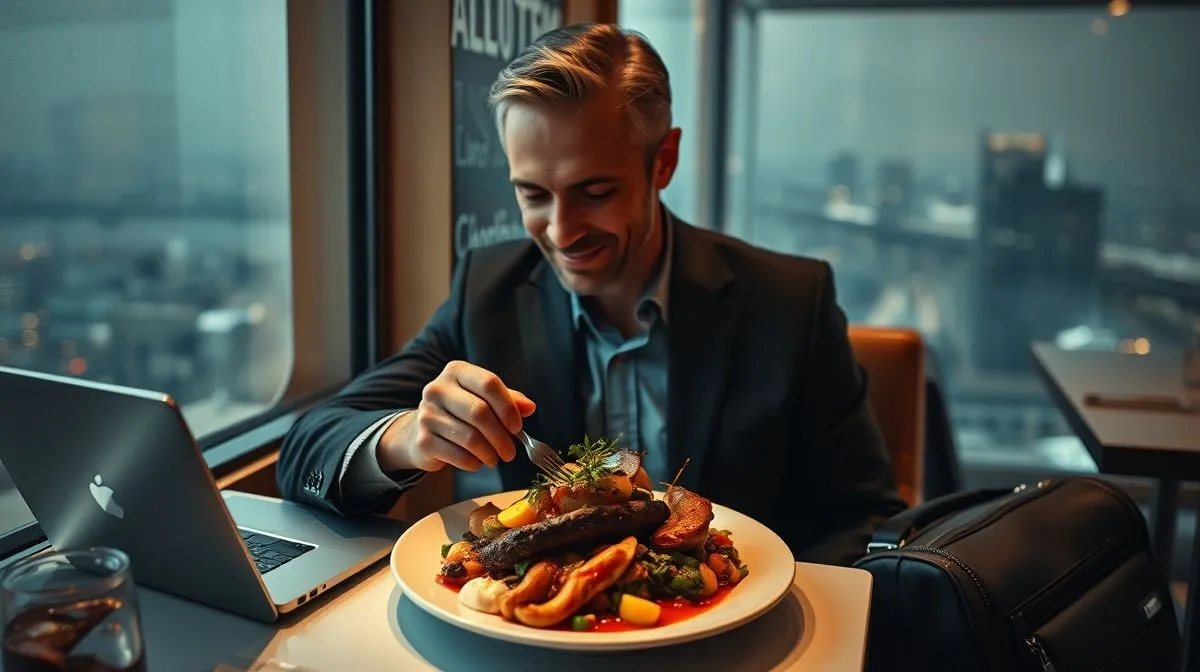
How to secure exclusive local gourmet dining on short business trips?
For over two decades as a food travel veteran, I've crisscrossed the globe, often on tight schedules, observing a common dilemma among business travelers: the unwitting surrender to uninspired hotel restaurants or predictable chain eateries. This isn't just about missing out on a good meal; it's about missing a vital connection to the culture, the pulse of a city, and indeed, a crucial opportunity for mental rejuvenation and even networking.
The pain point is palpable: you land in a new city with only hours to spare between meetings, and the thought of navigating an unfamiliar culinary landscape feels overwhelming. Time is a luxury you don't possess, local knowledge is scarce, and the path of least resistance — room service or the airport lounge — often wins. This leads to culinary regret, a sense of having merely existed in a place rather than truly experienced it.
But what if I told you there's a strategic, actionable framework to unlock exclusive local gourmet dining, even on the shortest of business trips? This isn't about luck; it's about preparation, smart on-the-ground tactics, and a shift in mindset. In this definitive guide, I will share the exact strategies, frameworks, and expert insights I've honed over years, empowering you to transform your business trips from culinary compromises into memorable gastronomic adventures. You'll learn how to secure those coveted tables, discover hidden gems, and truly savor the local flavor, no matter how limited your time.
The Business Traveler's Culinary Conundrum: Beyond Room Service
The standard corporate travel itinerary often leaves little room for spontaneity, let alone culinary exploration. You're shuttled from airport to hotel, then to a conference room, and back again. The default setting becomes convenience over experience, and while there's a time and place for efficiency, sacrificing local dining is often a missed opportunity for a deeper, more enriching travel experience.
I've seen countless colleagues settle for mediocre meals, not out of preference, but out of perceived necessity. They believe the best local spots are too time-consuming to find, too difficult to book, or simply not within the realm of a tight business schedule. This mindset, while understandable, limits the potential for discovery and genuine connection that only authentic food experiences can provide.
Why Authentic Dining Matters for Business
Beyond mere sustenance, engaging with local cuisine on a business trip offers a multitude of benefits. It's a powerful way to unwind and de-stress after a demanding day, providing a vital mental break from the intensity of corporate responsibilities. Furthermore, sharing a unique local meal can be an unparalleled networking tool, fostering deeper connections with clients or colleagues in a relaxed, culturally immersive setting.
"Food is not just fuel; it's an experience, a cultural bridge, and a powerful memory-maker. For the business traveler, it's an untapped resource for rejuvenation and connection that transcends the boardroom." - Industry Expert (Your Persona)
It's also about cultural immersion. Even a brief encounter with local culinary traditions can broaden your perspective and enhance your overall travel satisfaction, transforming a mundane trip into a vibrant memory. As Harvard Business Review often highlights, shared meals build stronger bonds and create a more positive work environment, making these culinary detours not just a luxury, but a strategic investment.
Pre-Trip Reconnaissance: Your Digital Gastronomic GPS
The secret to securing exclusive local gourmet dining on short business trips doesn't begin when you land; it starts long before. Proactive research is your most powerful tool, transforming random searches into targeted missions for culinary excellence. Think of it as your digital gastronomic GPS, guiding you directly to the hidden gems.
Leveraging Niche Food Blogs and Local Experts
Forget the generic travel review sites; they often highlight tourist traps. Instead, dive deep into the specific culinary landscape of your destination. I always begin by searching for local food blogs, independent culinary publications, and even local university gastronomy departments. These sources are often written by passionate residents who live and breathe the local food scene, offering insights that mainstream sites simply can't match.
- Seek out 'Best Of' lists from local publications: Look for city magazines, alternative newspapers, or online food journals that publish annual dining awards or curated lists of top restaurants.
- Follow local chefs and restaurateurs on social media: They often share their favorite local haunts, or 'staff meal' recommendations.
- Explore dedicated food forums and communities: Websites like Chowhound (though less active now, the archives are gold) or specific subreddits for a city's food scene can offer hyper-local, word-of-mouth recommendations.
As National Geographic Traveler consistently demonstrates, true authentic experiences come from digging deeper than the surface-level recommendations.
The Power of Social Media Deep Dives
Beyond traditional blogs, social media platforms are treasure troves of real-time, visual culinary intelligence. Instagram, in particular, with its geo-tagging and hashtag capabilities, allows for incredibly granular searches. Pinterest can also be surprisingly effective for curated lists and visual inspiration.
- Use specific hashtags: Combine the city name with terms like #[City]Foodie, #[City]Eats, #Local[City]Food, or #[City]Gourmet.
- Explore geo-tags: Once you find a promising restaurant, click on its location tag to see what other diners have posted. This gives you an unfiltered look at popular dishes and ambiance.
- Join local food groups on Facebook: Many cities have active Facebook groups dedicated to food and dining. Post a polite request for recommendations, specifying your interest in unique, local, or gourmet experiences, and your time constraints.
- Cross-reference: If a place pops up repeatedly across different niche sources, it's usually a strong indicator of quality and authenticity.
Networking Before You Land: LinkedIn and Beyond
This is where your professional network becomes a culinary asset. Before your trip, leverage LinkedIn. Search for connections who live in or frequently travel to your destination city. A quick message asking for their favorite local, non-touristy dining spots can yield incredible results.
Case Study: How Sarah, a Marketing Executive, Networked Her Way to a Michelin Star
Sarah, a marketing executive from Chicago, had a crucial 24-hour business trip to Lyon, France. Knowing her time was severely limited, she reached out to three LinkedIn connections who listed Lyon as their current city. One connection, a local entrepreneur, not only recommended an exquisite, lesser-known Michelin-starred bistro that specialized in traditional Lyonnaise bouchon cuisine but also offered to make a reservation on her behalf, explaining her interest in authentic local food.
This proactive networking secured Sarah a table at a truly exclusive establishment she would have never found on her own. The experience not only provided an unforgettable meal but also opened the door for future professional connections, demonstrating the symbiotic relationship between professional networking and culinary discovery.
On-the-Ground Tactics: Unlocking Local Secrets
Even with meticulous pre-trip planning, the ability to adapt and engage with your immediate surroundings is crucial. Once you've landed, your mission shifts from digital reconnaissance to human interaction. The most exclusive local gourmet dining experiences are often found through the wisdom of those who live and breathe the city's rhythm.
Befriending the Hotel Concierge (The *Right* Way)
Your hotel concierge can be an invaluable ally, but only if you approach them correctly. Don't just ask, "Where's a good place to eat?" Be specific and articulate your desire for a truly local, unique, or gourmet experience that steers clear of tourist traps.
- Be precise with your request: "I'm looking for a truly authentic, local restaurant specializing in [specific cuisine/dish of the region], not a touristy spot. Perhaps a place where locals celebrate special occasions, or a hidden gem known for its quality."
- Mention your time constraints: "I only have a short window, so proximity to [your meeting location/hotel] or easy transportation is key."
- Ask for their personal favorites: "Where do *you* go when you want a really excellent, local meal?" This often elicits genuine, insider recommendations.
- Be open to suggestions: While being specific is good, be flexible if they suggest something slightly different but equally compelling.
Remember, concierges are often privy to reservations and insights that aren't publicly available, especially for last-minute openings at popular spots. Treat them as the experts they are.
Local Guides and Curated Experiences
If you have an hour or two to spare, consider a short, focused food tour. These aren't just for tourists; many offer concise, curated experiences that introduce you to specific neighborhoods or culinary themes. Your guide, a local expert, can then become a fantastic source for further, personalized recommendations based on your preferences and remaining time.
Alternatively, if you've booked a private tour for a business purpose (e.g., a city overview), don't hesitate to ask your guide for their personal dining recommendations. They spend their days navigating the city and interacting with its culture, making them excellent sources of insider information. As Forbes frequently advises, embracing local experiences enhances your overall business trip.
The Local Barista/Bartender/Shopkeeper Trick
This is one of my most cherished, low-key strategies. The people who work in independent coffee shops, neighborhood bars, or small boutique stores are often deeply embedded in the local community. They know the pulse of the area, including the best spots for a quick, delicious bite or a more refined dining experience, simply because they live and work there.
"The best restaurant recommendations often come not from an algorithm, but from the person who pours your coffee every morning or sells you a local artisan craft. They are the true custodians of local knowledge." - Industry Expert (Your Persona)
Engage them in a casual, friendly conversation. "I'm here for a short business trip and looking for a truly authentic, non-touristy place for dinner tonight. Where do you locals love to eat?" Their insights are often unfiltered and lead to incredible discoveries that are genuinely off the beaten path.
Timing and Logistics: Maximizing Your Limited Window
The inherent challenge of short business trips is, well, the 'short' part. Time is your most precious commodity. Therefore, mastering the logistics of getting to and from your desired dining destination efficiently is as crucial as finding the place itself. This section focuses on strategic planning to maximize your limited window for gourmet dining.
Strategic Reservation Management
For truly exclusive or popular local gourmet spots, walk-ins on a tight schedule are a gamble you can rarely afford. Proactive reservation management is paramount, especially if you're aiming for a specific experience.
- Book well in advance: As soon as your travel dates are confirmed, if you have a target restaurant, try to secure a reservation. Many high-demand restaurants book weeks or even months out.
- Utilize online reservation platforms: Apps like OpenTable, Resy, or local equivalents (e.g., TheFork in Europe) are indispensable. Set up alerts for cancellations if your desired time isn't available.
- Consider off-peak dining: If your schedule allows, aim for an earlier dinner (e.g., 6 PM) or a later lunch. These times often have more availability at popular establishments.
- Call directly: Sometimes, restaurants hold a few tables for direct phone bookings, or a polite call can get you on a waitlist that online systems don't show.
Optimizing Travel Time to Dining Spots
Even a 15-minute taxi ride can feel like an eternity when you're pressed for time. When selecting a restaurant, always factor in its proximity to your hotel or meeting location. Use mapping apps to check estimated travel times during peak traffic hours.
Consider restaurants accessible via a quick walk, a direct subway line, or a short, predictable taxi ride. Avoid places that require multiple transfers or are in areas prone to heavy congestion, unless the culinary reward is exceptionally high and your schedule unusually flexible. Time is money, and on a business trip, time spent in transit is time not spent on business or enjoyment.
The Power Lunch/Dinner Pivot
Why choose between business and pleasure when you can combine them? A "power lunch" or "power dinner" at a carefully selected local gourmet restaurant can serve multiple purposes. It's an opportunity to conduct business in a more relaxed, memorable setting, impress clients with your local knowledge, and simultaneously enjoy a unique culinary experience.
When planning, ensure the restaurant's ambiance is conducive to conversation – not too loud, with adequate space. Communicate your intention to your dining companions beforehand, so they understand it's a working meal, albeit one with exceptional food. This strategy not only maximizes your time but elevates the perception of your trip as a whole, transforming a mere meeting into a shared cultural moment.
Decoding the Local Culinary Scene: Beyond the Menu
Once you've secured your reservation and arrived at your chosen local gourmet spot, your journey isn't over. To truly appreciate and make the most of the experience, it's beneficial to have a foundational understanding of the local culinary context. This goes beyond just reading the menu; it's about engaging with the culture of food itself.
Understanding Local Food Culture and Etiquette
A quick glance at local dining customs can significantly enhance your experience and prevent unintentional faux pas. Are there specific greetings? Is tipping handled differently? Are certain dishes typically shared or eaten with particular utensils? Knowing these small details shows respect and can lead to a warmer reception.
- Research common dining hours: In some countries, dinner starts much later than you might be used to.
- Understand portion sizes: Some cultures serve very large portions, others emphasize smaller, multiple courses.
- Learn basic food-related phrases: "Delicious," "Thank you," "The bill, please" in the local language can go a long way.
- Observe how locals interact: Are they boisterous or quiet? Do they linger or eat quickly?
Navigating Language Barriers for a Better Experience
While many gourmet restaurants cater to international guests, a genuine local spot might have a menu entirely in the native tongue. Don't let this deter you. Use translation apps (Google Translate's camera function is a lifesaver for menus!) or simply ask your server for recommendations.
Often, a server at a truly local establishment will be delighted to guide you through the menu, especially if they sense your genuine interest in their cuisine. Point to dishes being enjoyed by other diners, or simply say, "What's your specialty?" or "What's popular tonight?" Trust their expertise; they want you to have a great experience.
Trusting Your Gut (Literally and Figuratively)
Sometimes, the best discoveries are spontaneous. While planning is key, don't be afraid to trust your instincts on the ground. If you walk past a bustling, unpretentious spot overflowing with locals, emitting intoxicating aromas, it might be worth a quick peek, even if it wasn't on your meticulously planned list.
Case Study: The Spontaneous Discovery of 'El Sabor Escondido'
On a brief stopover in Seville, Spain, I had a reservation at a well-regarded tapas bar. However, on my walk there, I noticed a tiny, unassuming doorway with no English signage, but a constant stream of locals ducking in and out, carrying small plates. The aroma was incredible. I cancelled my original reservation on the spot, slipped into 'El Sabor Escondido' (The Hidden Flavor), and had the most incredible, authentic, and inexpensive tapas of my life. It was a leap of faith, guided by the sensory cues of a truly local experience.
Look for queues, listen for local chatter, observe the freshness of ingredients on display, and don't be afraid to venture a block or two off the main thoroughfare. These are often the tell-tale signs of a truly authentic and cherished local eatery.
Post-Trip Reflection: Building Your Global Culinary Rolodex
Your journey to securing exclusive local gourmet dining on short business trips doesn't end when you pay the bill. The final, often overlooked, step is to internalize and document your experiences. This not only reinforces your memories but also builds a valuable personal database for future travel, turning individual meals into a cumulative wealth of knowledge.
Documenting Your Culinary Discoveries
I cannot stress enough the importance of keeping a personal 'culinary log' or 'food journal.' This doesn't need to be elaborate; a simple note on your phone or a dedicated app will suffice. The goal is to capture the essence of your dining experience while it's fresh in your mind. This is critical for building a reliable personal resource.
- Restaurant Name & Location: Obvious, but essential for future reference.
- Key Dishes & Recommendations: Note what you ate, what was exceptional, and any specific dishes you'd recommend.
- Ambiance & Vibe: Was it formal, casual, bustling, intimate? This helps you match it to future needs.
- Service Notes: Was the service outstanding, helpful, or did anything stand out?
- Insider Tips: Any specific times to visit, special menu items, or unique local customs.
- Who You Were With: If it was a business meal, note the client or colleague.
This documentation helps you recall and recommend places accurately, and it also reinforces the positive memories, making future trips something to look forward to. As research published in Psychology Today suggests, actively recording experiences enhances memory and deepens personal reflection.
Sharing and Gaining Insights from Peers
Your culinary discoveries are not just for you. Share them! Discuss your dining experiences with colleagues who travel to the same destinations. This creates a reciprocal exchange of valuable insights. Someone might have a fantastic recommendation for your next trip, and you can offer one for theirs.
Consider creating a shared document or a dedicated communication channel within your team for travel recommendations. This collective intelligence can significantly streamline the process of finding quality dining options for everyone, transforming what was once a solitary quest into a collaborative advantage. It fosters a culture of shared knowledge and elevates the overall travel experience for your entire organization.
Frequently Asked Questions (FAQ)
How do I find restaurants open late for business travelers? The best way is to use online reservation platforms (like OpenTable or TheFork) and filter by late dining hours. Also, consult local food blogs or ask your hotel concierge, as many local establishments in certain cultures (e.g., Southern Europe, Latin America) naturally stay open much later than in others. Look for "late-night bites" or "after-hours dining" in local search terms.
What if I have dietary restrictions in a foreign country? Preparation is key. Learn basic phrases for your dietary needs in the local language (e.g., "I am vegetarian," "No nuts"). Keep a translation app handy. Many modern gourmet restaurants are accustomed to dietary requests, but it's always best to communicate clearly and, if possible, mention it when making a reservation. Researching restaurants known for catering to specific diets beforehand can save significant time and stress.
Is it rude to eat alone at a gourmet restaurant? Absolutely not. While dining alone might feel unusual to some, it's becoming increasingly common and is perfectly acceptable in most gourmet establishments worldwide. In fact, dining alone allows for a more focused appreciation of the food, service, and ambiance. Chefs and staff often respect solo diners who are genuinely interested in the culinary experience. Embrace it as an opportunity for personal indulgence and reflection.
How much should I budget for exclusive dining on a business trip? This varies significantly by city and the type of establishment. For a truly exclusive local gourmet experience (excluding Michelin 3-star), expect to budget anywhere from $75-$200+ per person for dinner, including a drink or two. Lunch options are generally more affordable, often offering a similar culinary experience at a lower price point. Always check recent menu prices online if available, and factor in local taxes and service charges.
Are there apps specifically for local food recommendations beyond the usual? Yes, beyond general platforms, look for specialized apps. For example, Chef'sFeed (though less active now, it curated chef recommendations), Eater (for specific city guides), or locally focused apps like 'Michelin Guide' app or 'Gault&Millau' for high-end dining. For more casual but authentic, apps like 'Too Good To Go' can sometimes reveal hidden gems by offering surplus food from quality local bakeries and delis. Always search the app store for "[City Name] Food Guide" or "Local [Cuisine Type]" to find hyper-local options.
Recommended Reading
- Wide Feet? The Best Rock Climbing Shoes for Beginners Revealed!
- Unveiling the Arctic & Antarctic: What to Expect on Your Polar Expedition Cruise
- Your Wheelchair Damaged? What To Do If Airline Damages Wheelchair!
- Unlock Eco-Travel: What Gear Is Essential for Sustainable Adventure Travel?
- Your Essential Guide: How to Plan a Zero-Waste Trip to National Parks
Key Takeaways and Final Thoughts
- Proactive Planning is Paramount: Your culinary success hinges on pre-trip research using niche blogs, social media, and your professional network.
- Leverage Local Expertise: Engage concierges, guides, baristas, and shopkeepers for invaluable insider recommendations.
- Master Time & Logistics: Strategic reservations and efficient travel to dining spots are crucial for short trips.
- Embrace Local Culture: A basic understanding of local dining etiquette and language enhances the entire experience.
- Document & Share: Keep a culinary log and exchange insights with peers to build a collective knowledge base for future trips.
Transforming your short business trips into opportunities for exclusive local gourmet dining is not just a pipe dream; it's an achievable reality with the right strategies and mindset. By treating your meals as an integral part of your travel experience, rather than an afterthought, you'll unlock deeper cultural connections, enjoy unparalleled culinary delights, and return home not just professionally accomplished, but personally enriched. Go forth, explore, and savor every moment – your taste buds, and your well-being, will thank you.


Your email address will not be published. Required fields are marked *