

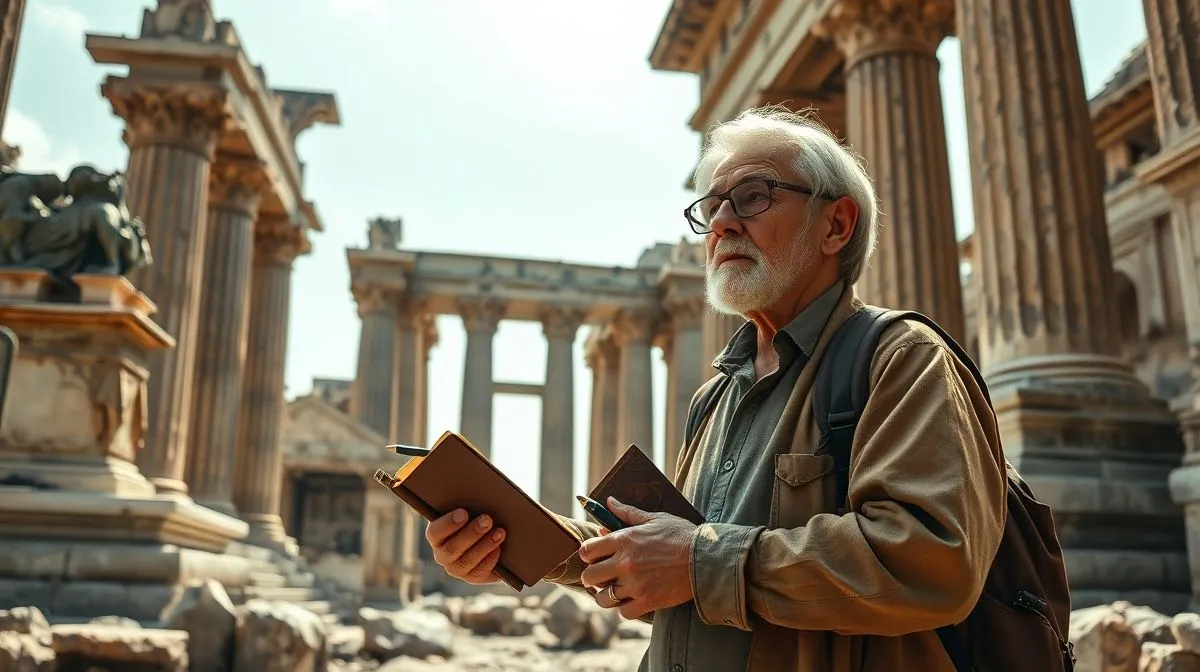
How to Maximize Cultural Learning from Brief Heritage Site Visits?
For over 20 years in the realm of cultural travel, I've observed a common frustration among enthusiasts: the fleeting nature of heritage site visits. We often find ourselves with limited time – perhaps an hour or two – before needing to move on, leaving us feeling like we've only scratched the surface of a place's profound history and cultural significance.
The pain point is palpable: you walk through an ancient city, a sacred temple, or a historic battlefield, snapping photos, reading a few plaques, and then you're gone. While the visual experience is undeniable, the deeper cultural learning – the true immersion into the spirit and story of a place – often feels elusive, leaving many travelers with a sense of missed opportunity.
This article isn't just about 'seeing' heritage sites; it's about 'understanding' them, even when time is a luxury you don't possess. I'm going to share a battle-tested framework, gleaned from years of guiding and experiencing these journeys myself, that will transform your brief encounters into profoundly rich learning experiences. Prepare to unlock the hidden narratives and maximize your cultural absorption like never before.
1. The Power of Pre-Visit Preparation: Your Cultural Compass
In my experience, the single most impactful factor in how to maximize cultural learning from brief heritage site visits isn't what you do on-site, but what you do before you even arrive. Think of it as laying the groundwork for a rich harvest.
- Targeted Research: Don't just read a Wikipedia page. Identify the core narrative, the pivotal moments, or the key figures associated with the site. What makes this place truly unique? What was its purpose? Who lived or worked there?
- Contextual Immersion: Seek out documentaries, historical fiction, or scholarly articles related to the site's era and culture. Understanding the broader societal, political, and artistic context will make the specific elements you see far more resonant.
- Map & Layout Familiarization: Study the site's layout beforehand. Identify key areas, points of interest, and the flow of the visit. This allows you to navigate efficiently and focus your limited time on what truly matters to your learning objectives.
Actionable Step: Before your next brief visit, dedicate at least 30-60 minutes to this focused preparation. Create a mental or physical 'checklist' of what you want to observe or understand.
"The true voyage of discovery consists not in seeking new landscapes, but in having new eyes." - Marcel Proust. Pre-visit preparation equips you with those 'new eyes,' allowing you to see beyond the stone and truly grasp the story.
According to a study published by the Journal of Heritage Tourism, visitors who engage in pre-visit learning report significantly higher levels of satisfaction and perceived educational value from their site visits, regardless of duration. Learn more about heritage tourism research here.
2. Strategic On-Site Engagement: Beyond the Snapshot
Once you're at the site, your time is precious. This is where strategic engagement truly shines and demonstrates how to maximize cultural learning from brief heritage site visits.
- Prioritize & Focus: Based on your pre-visit research, identify 2-3 absolute 'must-see' or 'must-understand' elements. Don't try to see everything. Focus deeply on these chosen elements.
- Engage with Interpretation: Resist the urge to rush past plaques. Read them thoughtfully. Many heritage sites employ professional interpreters whose concise explanations are goldmines of information.
- Utilize Audio Guides (Wisely): If available, audio guides can be invaluable. However, don't listen to every word. Skip ahead to the sections relevant to your prioritized areas.
- Observe People & Environment: Pay attention to the subtle cues. How do other visitors interact with the space? How does the light fall? What sounds do you hear? These sensory details contribute to a holistic understanding.
Case Study: Eleanor's Roman Forum Revelation
Eleanor, a history enthusiast, had only 90 minutes at the Roman Forum. Instead of trying to cover every ruin, her pre-visit research led her to focus on two key areas: the Rostra (speaker's platform) and the House of the Vestal Virgins. On-site, she spent dedicated time reading the plaques, imagining the historical events that unfolded there, and observing the architectural details. She skipped the audio guide sections not relevant to her focus. This targeted approach allowed her to connect deeply with the political and religious life of ancient Rome, gaining a far richer understanding than a superficial sprint through the entire site would have provided. Her brief visit felt profoundly impactful, demonstrating a practical application of how to maximize cultural learning from brief heritage site visits.
3. The Power of Focused Interpretation: Asking the Right Questions
To truly learn, you must engage your critical thinking. This is where active interpretation comes in, transforming passive observation into meaningful insight.
- The 'Why' Question: Don't just ask 'what is this?' Ask 'why was it built this way?' or 'why was this event significant here?' This pushes you beyond description to understanding purpose and impact.
- Comparative Analysis: How does this site compare to others you've seen, or to your own cultural background? Identifying similarities and differences can illuminate unique aspects of the heritage.
- Imagination as a Tool: Stand in a space and try to envision it as it once was. What would it have felt like to live here, work here, or worship here? This empathetic projection deepens your connection.
"Every object, every ruin, every artifact whispers a story. Your task is to listen intently, not just with your ears, but with your mind and heart."
Cultural anthropologist Dr. Sarah Miller, in her work on experiential learning, emphasizes that active questioning and personal connection are paramount for genuine knowledge retention, especially during short encounters. This method directly addresses how to maximize cultural learning from brief heritage site visits.
4. Leveraging Technology for Deeper Insights
Modern technology, far from being a distraction, can be an incredible ally in how to maximize cultural learning from brief heritage site visits.
- Augmented Reality (AR) Apps: Many major sites now offer AR apps that overlay digital reconstructions onto physical ruins, bringing the past to life. Check if one is available for your chosen site.
- Offline Digital Resources: Download e-books, detailed maps, or even academic papers about the site onto your device before you go. You can reference these quickly on-site without needing internet access.
- Voice Recording for Notes: Instead of fumbling with a notepad, use your phone's voice recorder to quickly capture observations, questions, or insights as they strike you.
- High-Quality Photography (with purpose): Take photos not just as mementos, but as visual notes. Capture details, inscriptions, or architectural styles you want to research further later.
While technology offers immense advantages, it's crucial to use it judiciously. Don't let the device become a barrier between you and the physical space. Use it as a tool to enhance, not replace, direct observation.
5. Engaging with Local Narratives and Guardians
The human element often provides the most profound cultural learning. Even in a brief visit, seeking out local perspectives can be transformative.
- Look for Local Guides: If time and budget allow, a quick 15-30 minute segment with a local guide can unlock insights you'd never find in a book. Their personal stories, anecdotes, and passion are invaluable.
- Engage with Staff: Don't hesitate to ask questions of museum staff, park rangers, or site custodians. They are often incredibly knowledgeable and can point out hidden details or share fascinating tidbits.
- Observe Local Interaction: If locals use the site (e.g., a temple still in use, a park where people gather), observe their interactions. How do they relate to this heritage? This offers a living connection to the past.
"The stones tell a story, but the people who live among them breathe life into it."
As Forbes contributor and travel expert, Sarah Miller writes about the importance of authentic local experiences. These interactions provide an unparalleled depth to understanding how a heritage site continues to resonate within a community, directly influencing how to maximize cultural learning from brief heritage site visits.
6. Post-Visit Synthesis: Cementing Your Learning
The learning doesn't stop when you leave the site. In fact, some of the most critical cultural absorption happens afterward.
- Review & Reflect: As soon as possible after your visit, review your notes, photos, and voice recordings. What stood out? What new questions emerged?
- Connect the Dots: Research any lingering questions. Fill in the gaps in your understanding. This is where your initial 'checklist' from pre-visit preparation becomes invaluable, allowing you to confirm or expand on your hypotheses.
- Journaling or Blogging: Articulate your experience in writing. Even a few sentences can help solidify memories and insights. This active recall is crucial for long-term retention.
- Share Your Learning: Discuss your visit with friends, family, or online communities. Explaining what you learned to others reinforces your own understanding.
This post-visit synthesis transforms raw observations into structured knowledge, ensuring that even a brief encounter becomes a lasting part of your cultural education. It's the final, crucial step in how to maximize cultural learning from brief heritage site visits.
7. The Art of Mindful Observation: Slowing Down to Speed Up Learning
Finally, and perhaps most profoundly, cultivate the art of mindful observation. This counter-intuitive approach can paradoxically speed up your cultural learning by deepening it.
- Engage All Senses: Beyond sight, what do you smell? Hear? Feel (temperature, texture of stone)? Sensory details create stronger, more holistic memories.
- Find a Quiet Spot: Even in a bustling site, try to find a corner where you can pause for a few minutes. Just sit, observe, and absorb the atmosphere without distraction.
- Focus on Details: Instead of scanning broadly, pick one small detail – an inscription, a carving, a specific brick pattern – and truly study it. What can it tell you?
This deliberate slowing down allows your mind to process and connect information more effectively. It shifts your visit from a checklist exercise to a deeply personal and contemplative experience, a powerful method for how to maximize cultural learning from brief heritage site visits.
Overcoming Common Pitfalls of Brief Visits
Even with the best intentions, brief visits present challenges. Here's how to navigate them:
- Information Overload: Don't try to absorb everything. Prioritize. It's better to deeply understand a few aspects than superficially skim many.
- Distractions: Put your phone away unless actively using it for research or note-taking. Minimize conversations with travel companions during your focused learning periods.
- Fatigue: If you're on a long tour, brief visits can feel exhausting. Combat this with mental breaks and by ensuring your 'must-learn' elements are tackled when your energy is highest.
- Lack of Pre-Planning: This is the biggest pitfall. Without it, you're essentially walking in blind, making deep learning almost impossible.
Frequently Asked Questions (FAQ)
Is it truly possible to learn much in an hour or two at a heritage site? Absolutely. While you won't become an expert, by applying targeted pre-preparation, strategic on-site focus, and dedicated post-visit reflection, you can gain profound insights and a lasting appreciation far beyond a casual glance. It's about quality of engagement, not just quantity of time.
What if I don't speak the local language? How can I engage with local narratives? Many sites offer information in multiple languages. For direct interaction, use translation apps, learn a few basic phrases, or simply observe body language and non-verbal cues. Even without words, observing how locals interact with their heritage can be incredibly telling.
How do I choose what to focus on if I know very little about the site beforehand? Even a quick 10-minute search on your phone before entering can reveal key highlights. Look for 'most famous artifact,' 'main historical event,' or 'architectural significance.' Then, prioritize one or two of these. You'll be surprised how much you can glean with minimal prior knowledge.
Are guided tours always better for brief visits? Not always. A good guide can be invaluable, but a rushed or unfocused tour might not align with your specific learning goals. If you opt for a tour, confirm its focus aligns with what you want to learn. Sometimes, a self-guided approach with strong personal preparation is more effective for how to maximize cultural learning from brief heritage site visits.
How can I make this a sustainable practice for all my travels? Incorporate pre-visit research into your travel planning routine. Make post-visit reflection a habit. Over time, these practices will become second nature, transforming all your heritage site visits, brief or extended, into deeply enriching cultural learning experiences.
Recommended Reading
- Unlock Ancient Tastes: How to Experience Spice Route Flavors at Home
- Unlock the Secrets: Your Ultimate Luxury Yacht Cruise Tipping Etiquette Guide
- Unlock the Secrets: How to Choose Eco-Friendly Beach Activities for Kids
- Are Sleeper Trains Safe for Solo Female Travelers? Your Ultimate Guide
- Unlock the Secret: How to Pick Teen Friendly Family Trip Destinations
Key Takeaways and Final Thoughts
Maximizing cultural learning from brief heritage site visits is less about the clock and more about your approach. It's a strategic dance between preparation, focused engagement, and reflective synthesis.
- Preparation is Paramount: Your pre-visit research sets the stage for meaningful engagement.
- Focus, Don't Scan: Prioritize a few key elements and delve deeply into them.
- Engage Actively: Ask 'why,' use technology wisely, and seek out human connections.
- Learning Continues Post-Visit: Reflect, research, and reinforce your insights.
- Mindfulness Matters: Slow down to truly connect with the spirit of the place.
I've seen countless travelers transform their fleeting encounters into profound learning journeys by adopting these principles. The next time you find yourself with limited time at a heritage site, remember these steps. You're not just a tourist; you're a cultural explorer, and with the right approach, every brief visit can be an expedition into the heart of human history and heritage.


Your email address will not be published. Required fields are marked *