


How to Maximize Snow Tubing Hill Throughput During Peak Season?
For over 15 years in the winter sports industry, I've had the privilege of witnessing the magic and the mayhem of snow tubing hills. I've seen the sheer joy of a child's first slide, and I've also felt the palpable frustration of guests stuck in a seemingly endless line during peak season. It's a delicate balance, isn't it? The desire to create unforgettable experiences clashing with the operational realities of high demand and limited resources.
The problem, as I've observed countless times, isn't a lack of enthusiasm for snow tubing; it's the operational bottlenecks that transform a fun family outing into a test of patience. Long queues not only dampen the guest experience but also represent significant lost revenue opportunities. Every minute a tube sits idle or a guest waits unnecessarily is a minute that could have been spent enjoying the hill, buying concessions, or planning a return visit.
But what if I told you there are tangible, actionable strategies that can transform your peak season operations from chaotic to remarkably efficient? In this definitive guide, I'll share expert insights, proven frameworks, and real-world analogies to help you not just cope with, but truly thrive during your busiest periods. We'll delve into everything from smart hill design to cutting-edge technology, ensuring your snow tubing operation maximizes throughput, enhances guest satisfaction, and boosts your bottom line.
1. Strategic Lane Design & Optimized Flow Dynamics
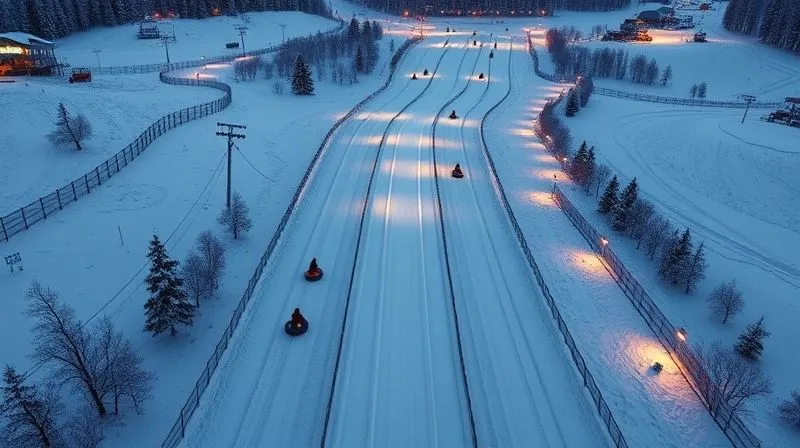
When I consult with resorts about their snow tubing operations, the first place I always look is the physical layout of the hill itself. It's astonishing how often fundamental design flaws create persistent bottlenecks. Think of your tubing hill as a high-speed highway; if the on-ramps and off-ramps aren't designed for maximum flow, you'll have traffic jams regardless of how many lanes you have.
Optimizing Lane Layout for Continuous Flow
The number of lanes isn't the only factor; their width, length, and particularly their run-out zones are critical. I've found that wider lanes, especially at the bottom, can accommodate multiple tubes simultaneously, reducing the pile-up effect. Furthermore, ensuring a generous, gently sloped run-out area allows guests to safely exit their tubes and clear the landing zone quickly. This seemingly minor detail is a major throughput enhancer.
Consider staggering your launch points slightly. Instead of a single, straight line of launch gates, a slight 'V' or 'W' shape can allow for more tubes to be prepped and launched in rapid succession without staff tripping over each other. This small adjustment can shave precious seconds off each launch cycle.
Efficient Entry and Exit Point Management
The transition from the bottom of the hill back to the top is where many operations falter. A dedicated, clearly marked pathway for guests returning to the lift, separate from the run-out zone, is non-negotiable. I've seen operations where tubers have to cross active run-out zones to get back to the lift, creating dangerous slowdowns and potential collisions. Separate paths ensure safety and maintain continuous flow.
Similarly, the entrance to your lift system needs to be intuitive and bottleneck-free. If guests are fumbling with tubes or struggling to get onto a magic carpet, the entire system slows down. Clear signage, well-trained staff directing traffic, and even simple stanchions can guide guests smoothly from the bottom of the hill to the top, ready for their next ride.
2. Advanced Lift System Integration & Maintenance
The lift system is the heart of your snow tubing operation. It dictates the pace at which tubes and guests can return to the top, directly impacting your throughput. Investing in the right lift technology and maintaining it impeccably is paramount to maximizing snow tubing hill throughput during peak season.
The Power of Magic Carpets (Conveyor Lifts)
While rope tows have their place, for high-volume snow tubing, nothing beats a magic carpet lift. In my experience, the ease of loading and unloading on a conveyor belt system dramatically reduces cycle times. Guests simply step on with their tube, ride up, and step off. This eliminates the fumbling and potential falls associated with rope tows, which can cause significant delays, especially with younger or less agile guests.
When considering a magic carpet, I advise looking for features like variable speed controls, robust weather protection, and ample width to accommodate multiple guests and tubes side-by-side. A well-designed magic carpet can process hundreds of guests per hour, becoming the ultimate throughput accelerator.
Proactive Maintenance Schedules & Redundancy
A lift breakdown during peak season is catastrophic. I've seen entire operations grind to a halt, leading to massive guest dissatisfaction and lost revenue. This is why a rigorous, proactive maintenance schedule is not just good practice; it's essential. Daily pre-opening checks, weekly deep dives, and seasonal overhauls must be standard operating procedure.
Furthermore, consider redundancy where possible. For instance, having spare parts on hand for common wear-and-tear components can mean the difference between an hour-long delay and a day-long shutdown. Training your staff on basic troubleshooting and emergency procedures also empowers them to react swiftly, minimizing downtime. Remember, every minute your lift is down, your throughput is zero.
"A well-maintained, efficient lift system is not just an amenity; it's the fundamental engine driving your snow tubing business during peak season. Prioritize its health above all else."
| Lift Type | Pros | Cons | Ideal Use |
|---|---|---|---|
| Magic Carpet | High throughput, easy to use, safe for all ages, less staff interaction needed | Higher initial cost, more complex maintenance | High-volume tubing hills, family-friendly resorts |
| Rope Tow | Lower initial cost, simpler mechanics | Lower throughput, difficult for some guests, potential for falls/delays | Smaller hills, budget-conscious operations, specific age groups |
| Handle Tow | Mid-range cost, relatively easy to use | Moderate throughput, can be slower than magic carpet, still requires some guest effort | Medium-sized hills, mixed-ability groups |
3. Dynamic Staffing & Training Protocols
Even the most technologically advanced hill will falter without a well-trained, dynamically deployed staff. Your team is the human element that ensures smooth operation, guest safety, and a positive experience. During peak season, their efficiency directly correlates with your throughput.
Cross-Training for Maximum Flexibility
I cannot stress enough the importance of cross-training. A staff member who can competently operate the lift, manage the queue, assist at the launch point, and clear the run-out zone is invaluable. This flexibility allows you to dynamically reallocate staff to emerging bottlenecks. If the launch point is getting backed up, you can pull someone from a less critical role to assist without disrupting the entire operation. This agility is crucial for adapting to the unpredictable nature of peak demand.
Regular drills and simulations for various scenarios – from a sudden rush of guests to a minor equipment snag – can prepare your team to react swiftly and effectively. A well-oiled team that understands each other's roles and can seamlessly step in where needed is your greatest asset.
Peak-Hour Staffing Models & Communication
Understanding your peak demand patterns is essential for optimizing staffing. I advise resorts to use historical data to predict peak hours and days, then schedule accordingly. This might mean having a core team augmented by part-time staff or shift differentials during these critical windows. Over-staffing slightly during genuine peak times is often a wise investment, as the increased throughput and guest satisfaction far outweigh the marginal additional labor cost.
Clear, concise communication protocols are also vital. Equip your staff with two-way radios or similar communication devices. The ability for the lift operator to instantly communicate with the launch staff about throughput, or for the run-out crew to alert the queue manager about a slowdown, prevents minor issues from escalating into major operational halts. As marketing guru Seth Godin often says, "Communication is the most important skill." This holds true for operational efficiency as well.

4. Technology-Driven Ticketing & Access Control
The queue for tickets can be just as frustrating as the queue for the lift. In today's digital age, relying solely on walk-up sales is an antiquated approach that cripples throughput before guests even reach the hill. Leveraging technology for ticketing and access control is a game-changer for maximizing snow tubing hill throughput during peak season.
Pre-Booked Time Slots & Online Reservations
Implementing an online reservation system with pre-booked time slots is, in my professional opinion, the single most impactful technological upgrade for throughput. This allows guests to purchase tickets for specific time windows (e.g., 10:00 AM - 12:00 PM), spreading demand more evenly throughout the day and eliminating massive surges at opening or midday.
Not only does this reduce ticket window lines, but it also gives you invaluable data on anticipated guest volume, enabling you to adjust staffing and tube inventory proactively. According to a Deloitte study on customer experience, convenience is a top driver of satisfaction, and pre-booking offers ultimate convenience.
RFID Wristbands for Seamless Entry
Once tickets are purchased, whether online or at a streamlined kiosk, the next step is efficient access. RFID wristbands or cards, common in ski resorts, are perfectly suited for snow tubing. These allow guests to simply scan their wristband at the hill entrance, eliminating the need for staff to manually check tickets or for guests to fumble with paper passes.
This "tap-and-go" system significantly speeds up entry, reduces queue times at the gate, and provides real-time data on who is on the hill. It's a small investment that yields massive returns in terms of efficiency and guest experience.
Case Study: How Alpine Fun Park Boosted Throughput by 40%
Alpine Fun Park, a popular snow tubing destination in the Northeast, faced chronic overcrowding during weekends and holidays. Guests were waiting up to 90 minutes just to get their tickets, let alone ride. I recommended they implement a robust online reservation system with 2-hour time slots and integrate RFID wristband access. They also added self-service kiosks for last-minute bookings.
Within their first season, Alpine Fun Park saw a 40% increase in average hourly throughput during peak times. Ticket lines virtually disappeared, and guest satisfaction scores, as measured by post-visit surveys, jumped by 25%. The predictable guest flow allowed them to optimize staffing and tube rotation, turning what was once a bottleneck into a smooth, enjoyable experience. This resulted in a significant boost in concession sales and repeat visits.
5. Intelligent Queue Management & Guest Experience Enhancements
Even with optimal design and technology, some queuing is inevitable during peak times. The goal isn't just to reduce queue length, but to make the waiting experience as pleasant and efficient as possible. A well-managed queue can significantly improve perceived wait times and overall guest satisfaction, indirectly contributing to throughput.
Psychology of Waiting: Keeping Guests Engaged
As I've learned over the years, perceived wait time is often more important than actual wait time. If guests feel like they are constantly moving or have something to occupy them, their patience lasts longer. This means eliminating "dead zones" where the line doesn't move for extended periods.
Consider strategically placed entertainment: large screens playing winter sports highlights, engaging music, or even interactive games. Some resorts have experimented with "queue-tainment" through live performers or themed decor. Even simple things like offering hot chocolate samples or having staff interact with guests in line can make a huge difference.
Clear Signage and Communication
Uncertainty breeds frustration. Guests want to know where the line starts, approximately how long the wait is, and what rules they need to follow. Clear, highly visible signage is critical. Digital displays showing estimated wait times (updated in real-time) can manage expectations effectively. "From this point, your wait is approximately 30 minutes." This transparency builds trust.
Have staff members dedicated to queue management, not just for directing traffic, but for answering questions and proactively communicating any delays or changes. A friendly face and clear information can diffuse potential frustration before it escalates.
6. Tubing Equipment Logistics & Management
The tubes themselves are your primary operational assets. How quickly you can get a used tube back to the top and ready for the next rider directly impacts your throughput. This often overlooked aspect is a goldmine for efficiency gains.
Efficient Tube Return Systems
After a guest slides down, the tube needs to get back up. Relying solely on guests to carry their tubes up a long hill is a throughput killer, especially for families or less athletic individuals. This is where a dedicated tube return system, often integrated with the lift, becomes essential. Many magic carpet systems are wide enough to accommodate both guests and tubes, or a separate, narrower conveyor belt can run parallel to the main lift specifically for tubes.
If a dedicated system isn't feasible, consider a "tube shuttle" – a small utility vehicle or even a snowmobile pulling a trailer of tubes up a service road. The key is to minimize the effort and time it takes for tubes to return to the launch point.
Tube Inventory Optimization
Having the right number of tubes is crucial. Too few, and you'll have guests waiting for an available tube at the top. Too many, and you're incurring unnecessary storage and maintenance costs. I recommend calculating your ideal tube inventory based on your hill's capacity (number of lanes, lift speed) and anticipated peak demand.
It's always wise to have a buffer of 10-15% extra tubes for contingencies like damage or temporary removal for cleaning. Regular inspection and repair of tubes also ensure that your entire inventory is always ready for use, preventing a reduction in available tubes during your busiest times.
7. Data Analytics for Operational Insights
You can't manage what you don't measure. In my experience, many snow tubing operations rely on gut feelings rather than hard data. Implementing a robust data collection and analysis strategy is critical for continuous improvement and maximizing snow tubing hill throughput during peak season.
Tracking Key Throughput Metrics
What should you measure? Start with the basics:
- Hourly Tube Launches: How many tubes go down the hill per hour?
- Lift Cycle Time: How long does it take for a tube/guest to go from bottom to top?
- Queue Length/Wait Times: Average and peak wait times at various points (ticket, lift, launch).
- Staff Deployment Efficiency: How effectively are staff members utilized across different stations?
Tools like RFID gate counters, simple manual clickers, or even security camera footage combined with analytics software can provide this data. Regular review of these metrics will highlight bottlenecks and areas for improvement.
Predictive Staffing Based on Trends
Once you have historical data, you can start to predict future trends. If you know that Saturdays between 1 PM and 3 PM consistently see the highest traffic, you can proactively schedule additional staff, pre-position extra tubes, and ensure all systems are running at peak efficiency. This moves you from reactive problem-solving to proactive operational excellence.
Analyzing weather patterns in conjunction with visitor numbers can also reveal fascinating correlations. For instance, a clear, cold Saturday after a fresh snowfall might predict your absolute busiest day, allowing you to prepare accordingly. This data-driven approach is what separates good operations from truly exceptional ones.

| KPI | Definition | Target | Measurement Tool |
|---|---|---|---|
| Average Hourly Throughput | Number of tubes launched per hour | Increase by 15% | RFID counters / Manual clickers |
| Peak Wait Time (Lift) | Longest recorded wait in lift queue | Reduce to <20 minutes | Queue cameras / Staff observation |
| Tube Return Cycle Time | Time from tube landing to being ready at launch | Reduce to <2 minutes | Stopwatch / Staff logging |
| Staff Utilization Rate | Percentage of time staff are actively engaged in critical tasks | Maintain >85% | Task logging / Supervisor observation |
Frequently Asked Questions (FAQ)
What is the most cost-effective way to immediately improve throughput? In my experience, optimizing staff deployment and communication, coupled with clear signage and queue management, offers the quickest and most cost-effective gains. These are operational tweaks that don't require significant capital investment but can yield immediate results by reducing bottlenecks and improving guest flow. Training your staff to be agile and communicative is paramount.
How much does a magic carpet system typically cost, and is it worth the investment for a smaller hill? Magic carpet systems can range from $150,000 to over $500,000 depending on length, width, and features. For a smaller hill, the initial cost can seem prohibitive. However, if your peak season demand consistently exceeds your current lift capacity and you're losing revenue due to long lines, the ROI can be surprisingly fast. I'd recommend a detailed financial projection considering increased ticket sales, concession revenue, and improved guest retention before making the investment. Explore industry leaders like Doppelmayr for options.
How do we manage varied group sizes (singles, doubles, large families) effectively at the launch point without slowing down? This is a common challenge. Implement a flexible launch system where staff can quickly pair singles or doubles to maximize tube occupancy. For larger families, consider dedicated "family lanes" or allow them to go in quick succession. Clear instructions on how to load and launch, perhaps via overhead monitors or staff demonstrations, can also speed up the process. The key is preventing hesitation at the point of launch.
What are some common pitfalls to avoid when trying to increase throughput? One major pitfall is focusing solely on the "sexy" solutions (like a new lift) without addressing fundamental operational inefficiencies. Another is failing to empower and cross-train staff, leaving them unprepared for peak demands. Lastly, neglecting guest communication and queue experience can negate any throughput gains by frustrating visitors, leading to negative reviews and reduced repeat business. Always take a holistic view of the operation. You can learn more about operational efficiency from sources like the Harvard Business Review.
Is it possible to increase throughput while still ensuring safety? Absolutely. In fact, many throughput-enhancing strategies also improve safety. For example, clear lane separation, efficient run-out zones, and well-trained staff monitoring launch and landing areas all contribute to both speed and safety. Automated lift systems like magic carpets inherently reduce manual handling risks. Safety should never be compromised for speed; rather, smart operational design integrates both seamlessly. The National Ski Areas Association (NSAA) provides excellent safety guidelines.
Key Takeaways and Final Thoughts
- Optimize Your Physical Layout: Design lanes, run-outs, and pathways for seamless, continuous flow.
- Invest in Efficient Lifts: Magic carpets are throughput powerhouses; maintain them rigorously.
- Empower Your Staff: Cross-train, communicate, and staff dynamically for peak demand.
- Leverage Technology: Online booking and RFID access control are non-negotiable for modern operations.
- Manage the Guest Experience: Make waiting pleasant with engagement and clear communication.
- Streamline Tube Logistics: Ensure tubes return to the top as quickly and effortlessly as possible.
- Embrace Data Analytics: Measure, analyze, and predict to make informed operational decisions.
Maximizing snow tubing hill throughput during peak season isn't about working harder; it's about working smarter. It's a strategic blend of intelligent design, appropriate technology, rigorous maintenance, and, most critically, a well-trained and empowered team. By implementing these expert-level strategies, you won't just alleviate those dreaded long lines; you'll transform your snow tubing operation into a highly efficient, guest-centric revenue generator. The joy on your guests' faces, combined with a healthier bottom line, will be your ultimate reward. Go forth and optimize!
Recommended Reading
- Unlock Your City Break: Maximize Sightseeing & See More!
- 7 Proven Strategies to Attract High-Paying Clients for Luxury Meditation Getaways
- Safeguard Your Beachfront Villa: 7 Climate Risk Protection Strategies
- Unlock the Secrets: How to Stay Safe During River Crossings on Adventure Treks
- Unlocking Unique Family Adventures: How to Find Child-Friendly Gems Abroad





Your email address will not be published. Required fields are marked *