


How to mitigate budget airline flight delays for critical business trips?
For over two decades in the travel industry, particularly within the budget travel niche, I've witnessed firsthand the double-edged sword that low-cost carriers present. I've seen promising business deals fall apart and crucial presentations missed, not because of a lack of preparation or skill, but due to a seemingly minor flight delay that cascaded into a catastrophic travel disruption.
The allure of budget airlines for cost-conscious businesses is undeniable. However, this cost-saving often comes with an inherent risk: a higher propensity for delays and cancellations, which can be devastating when a critical business trip is on the line. The stakes are simply too high to leave your professional commitments to chance.
This isn't just about avoiding a minor inconvenience; it's about safeguarding your professional reputation, securing vital deals, and ensuring your team's productivity. In this comprehensive guide, I'll share my battle-tested strategies and expert insights on how to mitigate budget airline flight delays for critical business trips, transforming potential chaos into manageable challenges with actionable frameworks and real-world wisdom.
Understanding the Budget Airline Delay Landscape
Before we dive into solutions, it's crucial to understand why budget airlines often face more delays than their full-service counterparts. It's not always about negligence; it's often a consequence of their operating model.
Budget carriers operate on razor-thin margins and extremely tight schedules. Their fleets are designed for maximum utilization, meaning an aircraft will often fly multiple legs in a single day. If the first flight in a sequence is delayed, it creates a domino effect across all subsequent flights for that aircraft, leading to widespread disruptions.
Furthermore, budget airlines typically have smaller fleets and fewer spare aircraft available at hubs. This means that if a plane experiences a mechanical issue, they may not have an immediate replacement, exacerbating delays. Their focus on point-to-point travel also means less flexibility in rerouting passengers compared to airlines with extensive hub-and-spoke networks.
For the business traveler, this translates into a higher risk profile. A delay that might be a minor annoyance for a leisure trip can become a significant financial and reputational liability for a critical business meeting or conference. My experience tells me that understanding these systemic vulnerabilities is the first step toward effective mitigation.
The Proactive Planner: Master Pre-Trip Risk Assessment
The best defense against budget airline delays is a robust offense, starting long before you even pack your bag. Proactive planning is paramount when the stakes are high.
Airline Reliability Research
Never assume all budget airlines are created equal regarding punctuality. Before booking, invest a little time in research. Several independent platforms track airline on-time performance.
- Consult Industry Data: Websites like FlightStats, OAG, or Cirium regularly publish reports on airline punctuality. Look for historical data specific to your chosen airline and even the route.
- Read Recent Reviews: While anecdotal, recent traveler reviews on sites like Skytrax or Google Flights can offer insights into current operational issues or consistent problems.
According to a report by OAG, even within the budget sector, there can be significant variations in on-time performance. Choosing an airline with a historically better track record, even if slightly more expensive, can be a worthy investment.
Route and Airport Analysis
The specific route and airport you choose can also significantly impact your delay risk. Some airports are notorious for congestion, weather delays, or air traffic control limitations.
- Consider Alternative Airports: If your destination has multiple airports, research their historical on-time performance. A slightly further airport might offer greater reliability.
- Peak Travel Times: Avoid booking flights during known peak travel periods or seasons prone to adverse weather conditions relevant to your route.
Strategic Booking Timing
Timing your flight can make a surprising difference. Early morning flights generally have the best on-time performance because the aircraft and crew are typically starting their day, minimizing the ripple effect of earlier delays.
- First Flights of the Day: Aim for the earliest possible flight. This strategy significantly reduces the chance of your flight being impacted by delays from previous legs flown by the same aircraft.
- Mid-Week Travel: If possible, travel on Tuesdays, Wednesdays, or Thursdays. These days often see fewer travelers and less congestion compared to peak weekend or Monday/Friday travel.
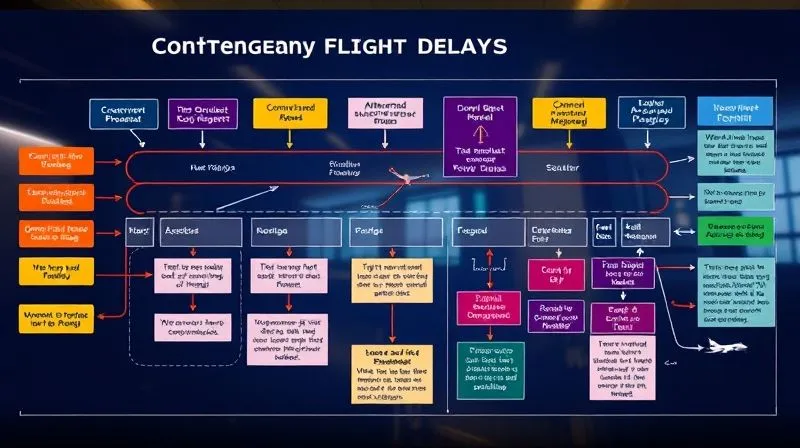
Building a Robust Contingency Plan (Your "Plan B" & "C")
Even with the best proactive measures, delays can happen. This is where your contingency plan becomes your most valuable asset. As an experienced traveler, I always operate with at least a Plan B, and often a Plan C.
Alternative Flight Options
Before you even depart, identify backup flight options. This isn't about booking them, but knowing they exist and what they'd cost.
- Research Full-Service Carriers: Identify direct flights on full-service airlines for your route. Note their flight times and approximate costs.
- Consider Connecting Flights: If direct alternatives are limited, look for connecting flights that could get you to your destination, even if it adds travel time.
- Check Nearby Airports: Again, if your primary destination airport is prone to issues, know which alternative airports are within reasonable travel distance.
Expert Insight: The cost of a last-minute full-service flight might seem high, but it pales in comparison to the financial and reputational damage of missing a critical business engagement. View it as an insurance policy for your career.
Ground Transportation Backup
Sometimes, a flight delay can be circumvented entirely by switching to ground transport. This is particularly relevant for shorter distances or when connecting flights are unreliable.
- Train Travel: For many European and Asian routes, high-speed rail can be a reliable and often faster alternative. Research train schedules and booking options.
- Rental Cars: Have a rental car agency's number or app ready. This can be a lifesaver for distances up to a few hundred miles, especially if traveling with colleagues.
- Bus Services: Identify reputable intercity bus services, particularly for routes where train options are limited.
Communication Protocol
A delay doesn't have to be a disaster if you manage expectations. Establish a clear communication protocol with your clients or colleagues.
- Pre-emptive Notification: Inform relevant parties that you are traveling on a budget airline and will keep them updated on your status.
- Immediate Update: As soon as you receive a delay notification, communicate the new estimated arrival time and your contingency plans.
- Provide Solutions: If a physical meeting is no longer feasible, suggest a virtual meeting or a revised agenda.
Leveraging Technology and Smart Tools for Real-time Monitoring
In today's connected world, technology is your co-pilot. Staying informed in real-time can give you a significant advantage in mitigating delays.
Flight Tracking Apps
These apps are indispensable for the modern business traveler. They often provide information even before the airline officially announces it.
- FlightAware & FlightStats: These are my go-to apps. They track flights globally, providing real-time status updates, gate changes, and even the inbound aircraft's progress.
- App Alerts: Enable push notifications for your specific flight. This ensures you're among the first to know about any changes.
Airline-Specific Notifications
Most airlines offer their own notification services via SMS or their mobile app. While sometimes slower than third-party trackers, they are the official source of information.
- Sign Up: Always sign up for these notifications during the booking process or via the airline's app.
- Check Multiple Sources: Cross-reference airline notifications with your third-party tracking app for the most comprehensive picture.
I always advise my clients to download the airline's app for their flight. It's often the quickest way to rebook or access customer service in a crisis, especially with budget carriers.
| App Name | Key Features | Pros | Cons | Cost |
|---|---|---|---|---|
| FlightAware | Real-time tracking, historical data, push notifications | Comprehensive, global coverage | Free tier has ads | Free / Premium tiers |
| FlightStats | On-time performance, airport conditions, delay forecasts | Predictive analytics, detailed info | Interface can be busy | Free / Premium tiers |
| App in the Air | Flight tracking, airport navigation, trip planning | All-in-one travel assistant | Some features paywalled | Free / Premium tiers |
Strategic Travel Insurance: Not All Policies Are Equal
Many business travelers view travel insurance as an unnecessary expense, especially when booking budget flights. This is a critical error. For critical business trips, the right insurance can be your financial safety net.
Business Travel-Specific Policies
Standard leisure travel insurance often has lower coverage limits or exclusions that make it unsuitable for business travel. Look for policies explicitly designed for corporate travelers.
- Higher Limits: Business policies typically offer higher coverage for lost luggage (containing expensive equipment) and trip interruption.
- Specific Benefits: Some policies include coverage for missed connections due to delays, emergency business equipment replacement, or even concierge services to assist with rebooking.
Understanding Coverage for Delays
Carefully read the fine print regarding flight delays. Not all policies cover all scenarios.
- Trip Interruption vs. Delay: Understand the difference. Trip interruption usually covers non-refundable expenses if you have to cut your trip short. Delay benefits often kick in after a certain number of hours (e.g., 6 or 12 hours) and cover reasonable expenses like meals and accommodation.
- Reasonable Expenses: Know what constitutes a "reasonable expense" for your policy. Keep all receipts!
"Cancel for Any Reason" (CFAR) - Worth the Premium?
CFAR insurance is an optional add-on that allows you to cancel your trip for *any* reason and receive a partial refund (usually 50-75%) of your non-refundable costs. While more expensive, it offers unparalleled flexibility.
- High-Stakes Trips: For truly critical, once-in-a-lifetime business opportunities, the peace of mind offered by CFAR can outweigh the additional cost.
- Budget Airline Volatility: Given the higher delay risk with budget carriers, CFAR provides an extra layer of protection if you decide the risk is too high to proceed.
I often direct my clients to reputable sources like Forbes Advisor's guide to travel insurance to compare policies and understand their specific needs. It's an investment, not an expense, for critical business travel.
The Art of Airport Navigation and In-Terminal Preparedness
Once you're at the airport, your actions can still significantly influence how you weather a delay. Preparedness and strategic navigation are key.
Arrive Early, Always
This might seem obvious, but it's especially critical with budget airlines. Their check-in and boarding processes can be less forgiving, and any last-minute rush adds unnecessary stress.
- Buffer Time: Aim to arrive at least 2-3 hours before a domestic flight and 3-4 hours before an international flight. This gives you time to react to unexpected queues or gate changes.
- Early Check-in: If possible, check in online and have your boarding pass ready on your phone or printed.
Airport Lounge Access
This is a game-changer during delays. Airport lounges offer a sanctuary from the often-chaotic main terminal, providing a quiet space to work, comfortable seating, and complimentary food and drinks.
- Credit Card Benefits: Many premium credit cards offer complimentary lounge access or Priority Pass memberships.
- Day Passes: If you don't have a membership, consider purchasing a day pass if a significant delay is announced. The cost can be well worth the productivity and comfort gained.
As Seth Godin often says, "The market doesn't care about your stories, it cares about your actions." A quiet lounge allows you to take action, whether it's rescheduling, communicating, or simply focusing on work.
Essential Carry-On Kit
Your carry-on should be a mobile office and survival kit, especially if your checked luggage is delayed or lost.
- Power Bank & Chargers: Always carry a fully charged power bank and all necessary charging cables for your devices.
- Work Essentials: Laptop, relevant documents (digital and physical), headphones, and any critical presentation materials.
- Comfort Items: A neck pillow, eye mask, earplugs, and a light snack can make a significant difference during long waits.

Negotiation and Compensation: Knowing Your Rights
When a delay occurs, knowing your passenger rights and how to assert them can help mitigate the impact, both logistically and financially.
EU261 and Other Passenger Rights
If you're flying within, to, or from the European Union, or on an EU-based airline, EU Regulation 261/2004 provides significant protections for passengers in case of delays, cancellations, or denied boarding.
- Compensation: Depending on the delay length and flight distance, you could be entitled to monetary compensation (€250-€600).
- Right to Care: For delays exceeding a certain threshold (e.g., 2 hours for short flights), the airline must provide meals, refreshments, and accommodation if an overnight stay is required.
Similar regulations exist in other regions, such as the U.S. Department of Transportation's Fly Rights or the Canadian Air Passenger Protection Regulations. Familiarize yourself with the regulations relevant to your travel.
Documenting Everything
When seeking compensation or reimbursement, meticulous documentation is your best friend.
- Keep Records: Save all boarding passes, booking confirmations, and any communication from the airline regarding the delay.
- Receipts: Keep receipts for any expenses incurred due to the delay (meals, accommodation, alternative transport).
- Take Notes: Jot down the names of airline staff you speak with, the time of conversations, and what was discussed.
Engaging with Airline Staff
Approach airline staff calmly and professionally. They are often dealing with many frustrated passengers, and a respectful demeanor can go a long way.
- Be Prepared: Have your flight details and a clear understanding of your rights ready.
- Be Persistent, Not Aggressive: Politely follow up on promises and requests.
- Seek Supervisors: If you're not getting a satisfactory resolution, politely ask to speak with a supervisor.
Case Study: How Apex Solutions Saved a Crucial Deal
Apex Solutions, a mid-sized consulting firm, had a critical pitch scheduled in Frankfurt. Their team booked a budget flight from London, aiming to save on travel costs. Two hours before departure, a 'technical issue' caused an indefinite delay. Instead of panicking, the lead consultant, Sarah, immediately activated her pre-planned strategy. She had researched alternative full-service flights and train options, and had premium lounge access. Within 30 minutes of the delay announcement, she was in the lounge, using the Wi-Fi to book a last-minute train ticket and inform her client of the revised arrival time. She even managed to conduct a preliminary virtual meeting from the train, ensuring the client felt valued and informed. This proactive approach not only saved the pitch but strengthened client trust, demonstrating Apex's commitment and adaptability.
| Region | Delay Threshold for Care | Compensation Range | Key Provision |
|---|---|---|---|
| European Union (EU261) | 2+ hours (short flights) | €250-€600 | Right to re-routing or refund, care, and compensation for controllable delays |
| United States (DOT) | No federal mandate for care/compensation | Varies by airline policy | Airlines must provide full refund for significant delays/cancellations if passenger chooses not to travel |
| Canada (APPR) | 3+ hours (large airlines) | CA$125-CA$1000 | Care (food, accommodation) for 3+ hour delays, compensation for controllable delays |
The Mindset of the Resilient Business Traveler
Beyond all the practical strategies, the most powerful tool you possess is your mindset. How you react to and manage a delay can define the outcome of your critical business trip.
Flexibility and Adaptability
Things will go wrong in travel. It's almost a certainty. The key is not to let it derail your entire mission. Be prepared to pivot, adjust, and find alternative solutions on the fly.
- Embrace the Unexpected: View delays as problem-solving challenges, not insurmountable obstacles.
- Prioritize: If you can't make the main meeting, can you still achieve a secondary objective, like sending an email update or making a phone call?
Prioritizing Key Objectives
Before you even leave, clarify the absolute non-negotiable objectives of your trip. If everything else falls apart, what is the one thing you absolutely must achieve?
- Identify the Core Goal: Is it a signature on a contract? A face-to-face introduction? Delivering a specific presentation?
- Digital Alternatives: Can this core goal be achieved virtually if necessary? Have a high-quality webcam and reliable internet access ready.
Maintaining Professionalism
Even under immense stress, maintaining a professional demeanor is crucial. Your clients and colleagues will remember how you handled adversity.
- Stay Calm: Panicking or becoming aggressive with airline staff is counterproductive.
- Communicate Clearly: Provide calm, factual updates to those awaiting your arrival.
- Focus on Solutions: Always present solutions or alternatives, rather than just stating problems.
In my years, I've seen professionals turn potential disasters into showcases of their resilience and resourcefulness. It's a testament to the power of a prepared and positive mindset. The ability to adapt and overcome challenges is a hallmark of true business acumen.

Frequently Asked Questions (FAQ)
Is it ever worth booking a budget airline for a critical business trip? In my expert opinion, it depends entirely on your risk tolerance and the criticality of the trip. For truly non-negotiable, high-stakes meetings, the slight cost savings might not justify the increased risk of disruption. However, for less time-sensitive business travel, or if you have an extremely robust contingency plan and travel insurance, a budget airline can be viable. Always weigh the potential financial loss from a missed opportunity against the savings.
What's the first thing I should do if my budget airline flight is delayed? The absolute first step is to confirm the delay and estimated new departure time through multiple sources: the airline's app, airport screens, and a third-party flight tracker like FlightAware. Simultaneously, immediately inform your clients or colleagues of the delay and your revised estimated arrival time. This proactive communication is crucial for managing expectations.
How much buffer time should I factor in for a critical meeting? For critical business meetings, I advise adding a significant buffer. If your meeting is at 10 AM, aim to arrive in the city the evening before. If same-day travel is unavoidable, plan to arrive at least 4-6 hours before your meeting, especially when flying budget airlines. This extra time allows for minor delays, unexpected ground transport issues, and gives you time to freshen up and prepare mentally.
Can I claim lost income due to a flight delay? Generally, standard travel insurance policies do not cover lost income. Some specialized business travel policies might offer limited coverage for specific, verifiable losses, but this is rare and comes with a higher premium. Your primary recourse for financial compensation for delays typically falls under passenger rights regulations (like EU261) or the airline's goodwill, which usually covers direct expenses like accommodation and meals, not consequential losses like missed business opportunities.
Are there specific credit cards that offer better delay protection? Yes, many premium travel credit cards offer robust trip delay insurance as a benefit. These often kick in after a certain delay duration (e.g., 6 hours) and cover reasonable expenses like hotel stays and meals. Always check your specific card's benefits guide, as coverage details, limits, and eligibility requirements vary significantly. Leveraging these benefits can be a crucial part of your mitigation strategy.
Key Takeaways and Final Thoughts
Navigating the world of budget airlines for critical business trips doesn't have to be a gamble. By adopting a strategic, proactive, and resilient approach, you can significantly mitigate the risks of flight delays and ensure your professional commitments are met.
- Research Extensively: Understand airline punctuality and route reliability before booking.
- Plan for the Worst: Develop robust Plan B and C options for alternative travel.
- Leverage Technology: Use flight tracking apps and airline notifications for real-time updates.
- Insure Wisely: Invest in comprehensive business travel insurance.
- Be Prepared: Arrive early and pack a strategic carry-on kit.
- Know Your Rights: Understand passenger compensation regulations.
- Cultivate Resilience: Maintain a flexible and professional mindset.
Remember, the true cost of a budget airline isn't just the ticket price; it's the potential cost of a missed opportunity or a damaged reputation. By implementing these expert strategies, you're not just booking a flight; you're investing in the success and reliability of your business travels. Fly smart, stay prepared, and conquer those critical business trips with confidence.
Recommended Reading
- 5 Steps: Executive Retreats for Coral Reef Conservation Impact
- Unlock Your Inner Power: The Ultimate Guide to Solo Travel for Confidence
- 5 Steps to Authentic Cultural Retreats: Ditching Ceremony Tourist Traps
- The Ultimate Guide: Maximizing Comfort on Long-Haul Business Class Flights
- Unveiling the Truth: Are Glamping Eco Pods Truly Green?





Your email address will not be published. Required fields are marked *