

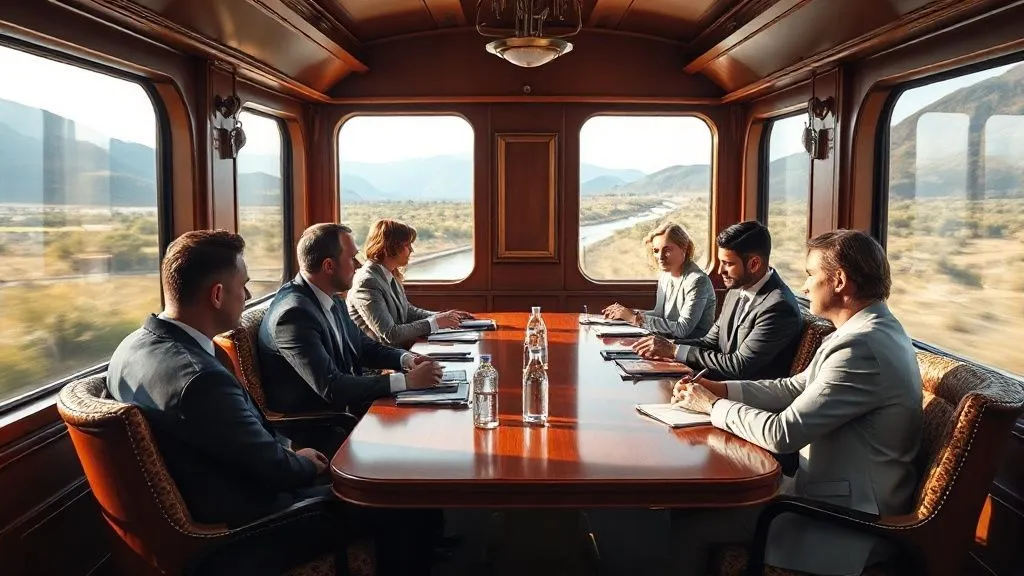
How to Plan Productive Executive Meetings on a Luxury Train Tour?
For over two decades in the luxury travel sector, particularly within the bespoke train tour niche, I've observed a common misconception among many corporate leaders. They often view a luxury train journey solely as an indulgent escape, a well-deserved break from the relentless pace of business.
While the allure of opulent carriages, gourmet dining, and breathtaking scenery is undeniable, this perspective overlooks an immense, untapped potential: the unique environment a luxury train offers for deeply focused, distraction-free, and profoundly productive executive meetings. The typical boardroom, even the most modern one, struggles to replicate the sense of shared journey and concentrated thought that the rhythmic sway of a train provides.
This guide will share my proven framework, born from countless successful high-stakes corporate journeys I've helped orchestrate. You'll discover actionable strategies, from meticulous planning to leveraging the unique ambiance, to transform your luxury train tour into an unparalleled engine for executive productivity, strategic alignment, and breakthrough innovation.
1. The Strategic Imperative: Why Luxury Trains for Executive Meetings?
Beyond the Boardroom: The Unique Advantages
When considering venues for high-level executive meetings, the conventional choices—hotels, conference centers, or company boardrooms—come with inherent distractions. Emails ping, urgent calls interrupt, and the daily grind of the office is never truly left behind. A luxury train, however, offers a deliberate break from this monotony.
- Unrivaled Isolation: Once on board, the outside world fades. Executives are physically removed from daily office demands, fostering a singular focus on the meeting's objectives.
- Inspirational Scenery: The ever-changing landscape outside the window provides a constant source of inspiration, stimulating creative thought and offering natural, refreshing breaks.
- Forced Digital Detox: While some trains offer Wi-Fi, its intermittent nature can be a blessing in disguise, encouraging deeper, in-person engagement and reducing digital distractions.
- Shared Experience: The journey itself becomes a powerful team-building exercise, fostering camaraderie and a sense of shared purpose that transcends typical corporate interactions.
“The most innovative solutions often emerge not from more data, but from a different perspective. A change of scenery can be the catalyst for a change of mind.” – As I often advise my clients. Indeed, research from institutions like Harvard Business Review often highlights the benefits of unique environments for fostering creativity and problem-solving. HBR on the power of changing environments for meetings.
Setting Clear Objectives Before Boarding
A luxury train tour is an investment, both in time and resources. To maximize its return, the meeting's objectives must be crystal clear before you even step onto the platform. Without a precise destination for your discussions, even the most luxurious journey can wander aimlessly.
- Define the "Why": What critical decisions need to be made? What strategic challenges must be addressed? What specific outcomes are you striving for?
- Identify Key Stakeholders: Who absolutely needs to be on this journey to contribute to these objectives? Ensure their presence and active participation.
- Set SMART Goals: Ensure your objectives are Specific, Measurable, Achievable, Relevant, and Time-bound. This provides a tangible benchmark for success.
- Pre-circulate Materials: Distribute all necessary background information, reports, and discussion points well in advance. Attendees should arrive prepared to engage, not just to learn.
By establishing a clear strategic imperative and meticulously defining your objectives, you transform a beautiful journey into a powerful vehicle for corporate progress.
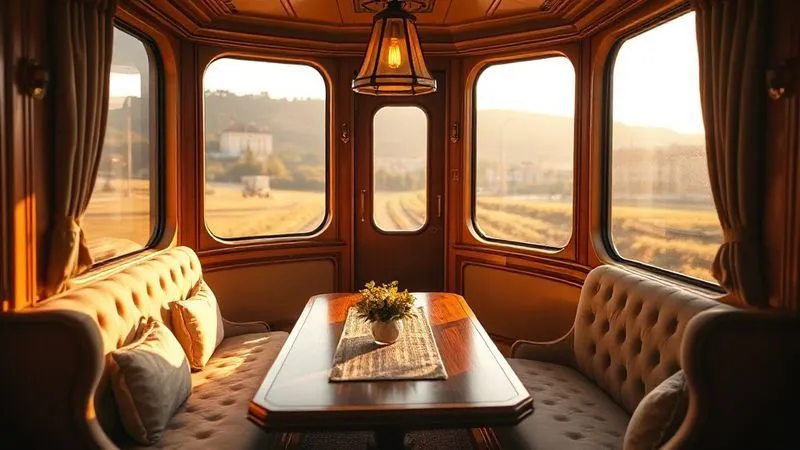
2. Curating the Perfect Rolling Venue: Choosing Your Luxury Train and Route
Not all luxury trains are created equal, especially when it comes to supporting executive-level productivity. Your choice of train and route is paramount, as it dictates the available amenities, the level of privacy, and the inspirational backdrop for your discussions.
Assessing Train Amenities for Productivity
Before booking, engage directly with the train operator to understand their corporate offerings. My experience has shown that what’s advertised for leisure may not fully support intensive work sessions.
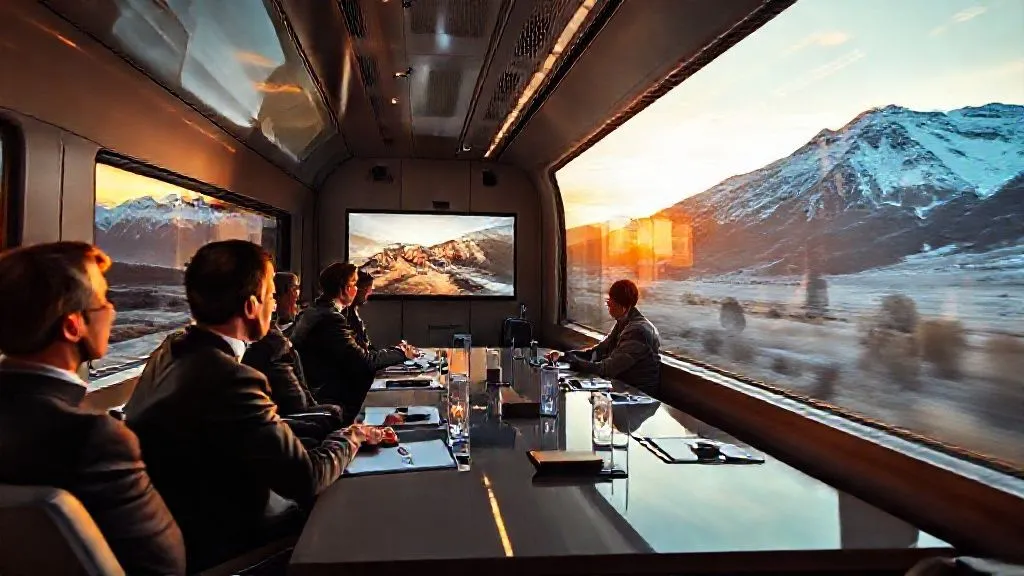
- Meeting Room Configurations: Does the train offer a dedicated private lounge or dining car that can be temporarily converted into a meeting space? Consider seating arrangements, natural light, and soundproofing.
- Wi-Fi Reliability: While I advocate for strategic digital detox, some level of connectivity might be necessary for urgent communications or quick data lookups. Inquire about the consistency and speed of onboard Wi-Fi, acknowledging that it can be spotty in remote areas.
- Audio-Visual Equipment: Do they provide screens, projectors, whiteboards, or flip charts? Ensure compatibility with your team's devices.
- Private Dining Options: Can meals be served in your meeting space or a dedicated private dining area to maintain momentum and privacy?
- Power Outlets: A seemingly small detail, but crucial for keeping laptops and devices charged throughout long sessions.
Route Selection: Scenery as a Catalyst for Thought
The journey itself should be an integral part of the meeting experience. A carefully chosen route can enhance the atmosphere and even inspire specific types of thinking.
- For Innovation & Creativity: Consider routes through dramatic landscapes like the Swiss Alps or the Canadian Rockies. The grandeur and change of scenery can stimulate new perspectives.
- For Focused Strategy: A less visually intense, but still beautiful, route might be better suited for deep, uninterrupted strategic planning, allowing the landscape to be a gentle backdrop rather than a dominant feature.
- Duration and Stops: Factor in the length of the journey and any planned stops. Will these stops be disruptive or can they be leveraged for unique team-building activities or local insights?
For example, services like the Belmond Venice Simplon-Orient-Express offer unparalleled luxury and privacy, often with options for private car charters, ideal for discreet, high-level discussions. Alternatively, the Rocky Mountaineer is renowned for its breathtaking views, perfect for inspiring creative problem-solving.
| Train Line | Meeting Capacity | Connectivity | Key Feature |
|---|---|---|---|
| The Venice Simplon-Orient-Express | Up to 10 (private carriage) | Limited Wi-Fi, excellent for digital detox | Unparalleled luxury, historic ambiance, bespoke service |
| Rocky Mountaineer | Small groups (private coach section) | Wi-Fi available in some coaches (GoldLeaf) | Stunning scenic routes, glass-domed coaches, gourmet dining |
| Blue Train (South Africa) | Up to 20 (lounge car or dedicated conference car) | Onboard Wi-Fi (subject to signal) | Ultimate African luxury, dedicated conference facilities, butler service |
| The Ghan (Australia) | Small groups (lounge car) | Limited Wi-Fi | Iconic outback journey, unique cultural experiences |
3. Crafting the Agenda: Balancing Strategy with Serenity
The unique environment of a luxury train demands a departure from the conventional meeting agenda. You're not just scheduling discussions; you're orchestrating an experience designed for peak executive performance.
The "Flow State" Agenda Design
Long, uninterrupted blocks of meetings can lead to fatigue, even in the most inspiring settings. My approach is to design an agenda that respects the natural rhythm of focus and relaxation, aiming for a "flow state" where productivity feels effortless.
- Short, Focused Sessions: Limit core meeting blocks to 90-120 minutes. Our attention spans are finite, and the train's gentle motion can be soothing but also conducive to drifting if sessions are too long.
- Integrate "Thinking Breaks": Schedule deliberate breaks for reflection, individual work, or simply enjoying the scenery. These aren't coffee breaks; they're opportunities for subconscious processing.
- Strategic Placement of Key Discussions: Tackle the most complex or critical topics when energy levels are highest, typically in the morning.
- Evening for Synthesis and Socializing: Reserve evenings for informal debriefs, team dinners, and networking. The social aspect of a luxury train journey is excellent for building rapport and cementing relationships.
“The brain needs downtime to consolidate information and make connections. Productive meetings aren't about cramming; they're about strategic pacing.” – This principle, often echoed by productivity experts, is particularly vital on a train where the environment encourages both deep work and reflective pauses.
Beyond Presentations: Interactive Formats
A luxury train is a dynamic setting; your meeting format should be too. Ditch the endless PowerPoint presentations in favor of more engaging, interactive approaches.
- Facilitated Workshops: Break into smaller groups to tackle specific problems, encouraging active participation from all executives.
- Brainstorming Sessions: Utilize whiteboards (if available) or large flip charts. The confined, yet inspiring, space can foster intense collaborative thought.
- "Walking Meetings" (when stationary): If the train makes a planned stop, consider a brief walk around the station or a nearby area to discuss a specific point, leveraging physical movement to stimulate mental agility.
- Roundtable Discussions: Encourage open dialogue rather than one-way information dissemination. The intimate setting of a train carriage is perfect for this.
- Scenario Planning: Engage executives in hypothetical situations relevant to your business, leveraging the removed environment for creative problem-solving without real-world pressures.
4. Leveraging the Environment: Distraction-Free Deep Work and Inspiration
The true genius of a luxury train meeting lies in its ability to create a "bubble" of focus. Mastering this environment means strategically managing connectivity and harnessing the power of the passing landscape.
Embracing the Digital Detox (or Strategic Connectivity)
For most executive teams, the constant barrage of digital notifications is a major impediment to deep work. A luxury train offers a rare opportunity to intentionally disconnect.
- Designated "No-Screen Zones": Implement strict rules for core meeting sessions. Encourage executives to put away phones and laptops.
- Scheduled "Check-in" Times: Allow specific, limited windows for checking emails or making urgent calls. This manages expectations and prevents constant digital anxiety.
- Offline Collaboration Tools: Utilize physical whiteboards, notebooks, and pre-printed materials. Embrace the simplicity of analog tools for brainstorming and note-taking.
- Emergency Protocols: Ensure there’s a clear plan for urgent external communication, perhaps through a designated point person with limited connectivity.
The Power of the View: Integrating Scenery into Discussions
The ever-changing landscape isn't just for passive enjoyment; it's a powerful tool for stimulating thought and providing mental breaks.
- "Viewpoint" Discussions: Schedule specific topics to coincide with particularly scenic stretches of the journey. For example, discussing long-term vision while traversing a majestic mountain range.
- Reflection Prompts: Encourage executives to use moments of beautiful scenery for individual reflection on a problem or opportunity.
- Metaphorical Connections: Use the journey itself as a metaphor for business challenges—navigating obstacles, charting a new course, enjoying the progress.
Case Study: Zenith Innovations' European Express Retreat
Zenith Innovations, a fast-paced tech startup, struggled with decision fatigue and a lack of creative synergy in their conventional boardrooms. Their CEO, Jane Doe, opted for a 3-day luxury train tour through the Swiss Alps for a critical strategic planning retreat. By scheduling brainstorming sessions around peak scenic views and enforcing digital-free zones during critical discussions, they leveraged the environment for deep, uninterrupted thought. The team was encouraged to use the stunning landscapes as backdrops for their "thinking breaks," allowing ideas to germinate subconsciously. This led to the rapid development of their next-generation product roadmap, avoiding typical boardroom stalemates and fostering a renewed sense of purpose. The change of scenery fostered an open mindset, leading to breakthrough solutions and a 25% faster decision-making cycle compared to their previous offsite meetings, ultimately accelerating their market entry by two months. The executives reported feeling more refreshed, connected, and creatively charged than ever before.
5. Facilitation Excellence: Guiding Discussions to Destination
Even with the perfect venue and agenda, productive executive meetings hinge on expert facilitation. On a luxury train, the facilitator becomes the conductor, ensuring the conversation stays on track and reaches its intended destination.
The Role of the Expert Facilitator
An effective facilitator does more than just keep time; they guide, challenge, and synthesize, ensuring every voice is heard and every discussion moves towards actionable outcomes.
- Neutral Ground: An external facilitator can provide a neutral perspective, ensuring fair and balanced discussions, especially on sensitive topics.
- Process Management: They manage the flow of conversation, ensuring adherence to the agenda, time limits, and decision-making frameworks.
- Conflict Resolution: Skilled facilitators can navigate disagreements constructively, turning potential conflicts into opportunities for deeper understanding and consensus.
- Synthesis and Documentation: They help synthesize complex discussions into clear takeaways and ensure decisions are accurately recorded for follow-up.
In my experience, investing in a professional facilitator, especially for high-stakes strategic retreats, pays dividends. They can unlock insights and accelerate decision-making in ways internal teams often struggle to. For more on this, consider insights from sources like Forbes on the power of good facilitation.
Tools and Techniques for Consensus Building
On a train, where space might be cozier and dynamics more intense, specific facilitation techniques can be incredibly effective.
- Decision Matrices: For complex choices, use a simple matrix to evaluate options against agreed-upon criteria. This provides a clear, objective path to consensus.
- Silent Brainstorming (Brainwriting): Everyone writes down ideas individually before sharing. This ensures all voices are heard, not just the loudest.
- Dot Voting: A quick and effective way to prioritize ideas or options. Each participant gets a few "dots" (or sticky notes) to place next to their preferred choices.
- Parking Lot: A designated space (a flip chart or whiteboard) for ideas or issues that are important but outside the current agenda. This acknowledges contributions without derailing the main discussion.
- Round Robin: Go around the table, giving each person a chance to speak on a topic without interruption. This ensures equitable participation.
6. Post-Meeting Momentum: Ensuring Actions Translate to Impact
The most brilliant ideas conceived on a luxury train will remain mere aspirations if not translated into concrete actions. The journey doesn't end when you disembark; it's just beginning for the initiatives you've launched.
Immediate Synthesis and Action Planning
Before the magic of the train journey fades, it’s critical to formalize decisions and assign responsibilities. I always recommend dedicating the final hours onboard to this crucial step.
- Summarize Key Decisions: Reiterate all major decisions made during the retreat. Ensure everyone agrees on the exact wording and implications.
- Assign Owners and Deadlines: For every action item, clearly assign a responsible individual and a realistic deadline. Ambiguity is the enemy of execution.
- Outline Next Steps: What are the immediate actions required upon returning to the office? Who needs to be informed? What resources are needed?
- Distribute Meeting Minutes: Send out a concise summary of decisions, action items, owners, and deadlines within 24 hours of disembarking.
- Schedule Follow-up: Book a follow-up meeting (or a series of check-ins) to review progress and maintain accountability.
Sustaining the "Train Tour Effect"
The camaraderie, focus, and innovative spirit fostered on a luxury train tour shouldn't dissipate the moment you step off the platform. Strategic efforts are needed to carry this momentum back into the daily operations.
- Share the Story: Encourage executives to share their experience and the breakthroughs achieved with their teams. This creates buy-in and excitement.
- Implement New Rituals: Perhaps the "thinking breaks" or interactive discussion formats can be adapted for regular office meetings.
- Maintain Communication: Leverage the strengthened relationships to foster more open and frequent communication channels post-retreat.
- Visual Reminders: A group photo from the journey or a shared artifact can serve as a powerful reminder of the shared experience and agreed-upon goals.
7. Anticipating Challenges: Mitigating Disruptions on the Rails
Even on the most meticulously planned luxury train tour, unforeseen circumstances can arise. As an experienced specialist, I always emphasize proactive contingency planning to ensure minor bumps don't derail your executive meeting's productivity.
Connectivity Contingencies
While I advocate for digital detox, complete isolation might not always be feasible or desirable. Prepare for potential connectivity issues.
- Offline Access to Critical Documents: Ensure all presentations, spreadsheets, and reference materials are downloaded and accessible offline on multiple devices.
- Satellite Phone (Optional): For truly remote routes or critical industries, consider a satellite phone for emergency communication.
- Designated "Hotspot" Device: If intermittent Wi-Fi is available, a single, powerful mobile hotspot device might be more reliable than individual phone connections.
- Pre-Communicate Expectations: Inform attendees about potential connectivity limitations upfront so they can manage their external commitments accordingly.
Unexpected Delays and Schedule Adjustments
Train travel, while generally reliable, can encounter delays due to weather, track issues, or operational necessities. Flexibility is key.
- Build Buffer Time: Don't pack your agenda too tightly. Allow for buffer time between sessions and before disembarking.
- Portable Work: Have individual tasks or reflection exercises that can be done if a meeting session is unexpectedly extended or delayed.
- Communication Plan: Establish a clear communication protocol for informing attendees and external stakeholders about schedule changes.
Dietary and Accessibility Needs
Luxury train operators are usually adept at handling diverse needs, but meticulous pre-planning is essential for seamless execution.
- Detailed Dietary Requirements: Collect all dietary restrictions and allergies from attendees well in advance and communicate them clearly to the train's culinary team.
- Accessibility Concerns: Confirm accessibility for any attendees with mobility challenges, from boarding to movement within the train and access to meeting spaces.
- Medical Considerations: Be aware of any medical needs (e.g., specific medications requiring refrigeration) and confirm the train can accommodate them.
By anticipating these potential challenges and planning accordingly, you can ensure that your executive team enjoys a smooth, productive, and truly luxurious experience on the rails.

Frequently Asked Questions (FAQ)
Q: How do I ensure confidentiality for sensitive discussions on a train? A: Luxury trains often offer private carriages or dedicated meeting rooms that can be secured for your group. Discuss your specific confidentiality needs with the train operator in advance; some can even provide temporary soundproofing solutions or dedicated security personnel for high-stakes meetings. It's crucial to select a train line known for its discretion and ability to cater to bespoke corporate needs. Furthermore, ensuring all digital devices are in airplane mode or using offline tools during sensitive discussions can add an extra layer of security.
Q: What's the ideal duration for a productive executive meeting on a luxury train? A: From my experience, 2-3 days strikes the perfect balance. This allows for dedicated travel time, several focused work sessions, and ample opportunity for team building and reflection without feeling rushed or over-extended. Shorter trips might feel too constrained for deep work, while longer ones can lead to meeting fatigue, undermining the unique benefits of the environment and the executive's time away from the office.
Q: Is Wi-Fi generally reliable on luxury trains, or should we plan for a digital detox? A: Wi-Fi reliability varies significantly by train line, route, and the remoteness of the regions traversed. While many modern luxury trains offer connectivity, it can be intermittent, especially in remote areas or tunnels. I strongly recommend planning for a strategic digital detox for core meeting sessions. This approach forces deeper engagement and reduces digital distractions. Have offline collaboration tools and pre-downloaded materials ready as your primary strategy, with Wi-Fi as a secondary, optional resource for specific check-in times.
Q: How can I justify the cost of a luxury train tour for executive meetings to my board? A: Frame it as a strategic investment in high-impact decision-making, executive cohesion, and innovative problem-solving. Highlight the unparalleled focus, reduced external distractions, unique team-building opportunities, and the potential for breakthrough insights that a conventional boardroom cannot offer. Quantify the potential ROI through faster decision cycles, improved strategic alignment, enhanced executive morale, and the opportunity cost of unproductive traditional meetings. Emphasize the long-term benefits of a unified, inspired leadership team.
Q: What kind of pre-trip preparation is essential for attendees? A: Beyond the usual agenda distribution, encourage attendees to mentally prepare for a unique, immersive experience. Advise them on the expected dress code (often smart casual to formal, depending on the train and itinerary), connectivity expectations, and the intentional blend of focused work and curated leisure. Providing pre-reading materials and clearly defined objectives well in advance ensures everyone arrives ready to engage deeply and make the most of the focused, inspiring environment.
Key Takeaways and Final Thoughts
Planning productive executive meetings on a luxury train tour is an art, blending meticulous logistics with a deep understanding of human psychology and the unique power of environment. It's about creating an intentional space where leaders can truly disconnect to reconnect, think deeply without interruption, and forge a path forward with renewed clarity and cohesion.
- Strategic Intent: Clearly define your objectives before embarking; the journey should have a purpose.
- Venue Selection: Choose a train and route that align with your meeting's goals and amenity requirements.
- Agenda Crafting: Design a dynamic agenda that balances intense work sessions with reflective breaks, leveraging the train's rhythm.
- Environment Leverage: Embrace the digital detox and use the inspiring scenery as a catalyst for creative thought.
- Expert Facilitation: Invest in skilled facilitation to guide discussions and ensure actionable outcomes.
- Post-Meeting Action: Solidify decisions and assign responsibilities before disembarking to maintain momentum.
- Contingency Planning: Anticipate challenges like connectivity or delays with proactive solutions.
A luxury train tour isn't just a journey; it's a moving canvas for innovation, a sanctuary for strategic thought, and an unparalleled opportunity for executive teams to reconnect and redefine their future. By following these expert strategies, you can transform a remarkable travel experience into your most productive and memorable executive retreat yet. Embrace the rails, and watch your leadership team achieve extraordinary results.
Recommended Reading
- 7 Essential Steps: How to Ensure Ethical Volunteer Projects Abroad
- Unlocking Authentic Cultural Festival Volunteer Roles: Your Ultimate Guide
- Ethical Impact in Volunteer Projects: 7 Pillars for True Community Benefit
- Solo Abroad & Sick? 7 Steps to Navigate a Medical Emergency.
- Unlock the Secret: What Makes an Animal Encounter Truly Ethical?



Your email address will not be published. Required fields are marked *