

How to Prevent Child Abduction on International Family Trips?
For over two decades, I've had the privilege of guiding countless families through the intricacies of global adventures. I've witnessed the sheer joy of cultural immersion, the wonder in a child's eyes seeing a new landmark, and the indelible bonds forged through shared experiences. Yet, woven into this tapestry of wonder is a thread of concern – a silent worry that often keeps parents awake at night: the safety of their children, especially when far from home.
The fear of child abduction, while statistically rare, is deeply primal and amplified when venturing into unfamiliar international territories. Navigating different legal systems, cultural norms, and communication barriers can make the prospect of ensuring your child's safety feel overwhelming. It's a complex problem that demands more than just casual attention; it requires informed, proactive, and strategic planning.
This article isn't about fear-mongering; it's about empowerment. Drawing from my extensive experience in family travel safety, I'll provide you with a definitive, actionable framework – a robust set of strategies, expert insights, and practical steps – designed to significantly reduce risks and equip you with the knowledge to travel with confidence, ensuring your family's most precious members are protected on every international journey.
Before You Go: Proactive Planning & Preparation
Researching Your Destination's Safety Profile
The foundation of any safe international trip begins long before you pack your bags: thorough research. I've seen countless families make the mistake of assuming all destinations are equally safe, or relying solely on anecdotal evidence. This oversight can leave you vulnerable. Every country, every city, has its unique safety landscape, and understanding it is paramount.
- Consult Official Travel Advisories: Always start with your government's official travel advisories. For U.S. citizens, the U.S. Department of State website provides comprehensive, up-to-date information on crime rates, local laws, health risks, and specific safety concerns for every country. Similar resources exist for other nations (e.g., the UK's Foreign, Commonwealth & Development Office).
- Understand Local Laws and Customs: What's acceptable in your home country might be illegal or culturally offensive elsewhere. This includes interactions with children. Some cultures are very open with children, while others are more reserved. Be aware of local laws regarding photography, public displays of affection, or even dress codes, as misunderstandings can draw unwanted attention.
- Identify High-Risk Areas: Most travel advisories will highlight specific regions or neighborhoods to avoid due to higher crime rates or political instability. Plan your itinerary to steer clear of these zones.
- Read Reputable News Sources: Supplement official advisories with current news from respected international media outlets to get a real-time sense of the local environment.
Creating a Family Safety Plan & Communication Protocol
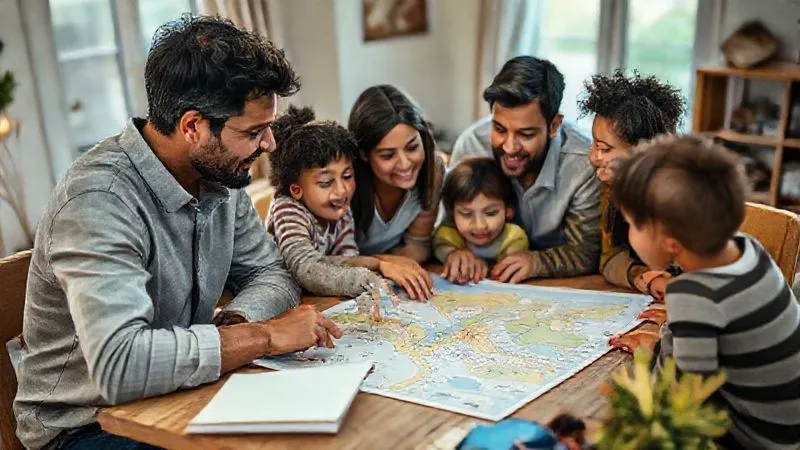
Once you understand the general safety landscape, the next step is to internalize it with your family. I always emphasize that safety isn't a solo parent's job; it's a team effort. A clear, well-rehearsed family safety plan is your first line of defense, transforming potential panic into structured action.
Before you leave, sit down with your children – even young ones can grasp basic concepts – and discuss various 'what if' scenarios. This isn't about instilling fear, but about building resilience and confidence. Assign roles and responsibilities. For instance, who is responsible for holding passports? Who knows the emergency contact numbers?
- Designate a 'Buddy System': For younger children, establish a strict buddy system. They always stay with a parent or a designated older sibling. For older children, ensure they know to check in regularly and never wander off alone.
- Memorize Key Information: Ensure every family member, old enough to understand, knows the full names of parents, your international phone number, and the name of your hotel. Write it down on a card they can carry.
- Establish a 'Secret Word' or Phrase: This is a critical tool for verifying identity. If someone claims to be sent by you to pick up your child, the child should ask for the secret word. If the person doesn't know it, the child knows not to go with them.
- Practice Separation Drills: In a safe, controlled environment (even at home), discuss what to do if separated in a crowd. Where is the designated meeting point? Who do they approach for help (e.g., a mother with children, a uniformed official)?
Essential Documentation & Identification Strategies
Securing Passports, Visas, and Copies
Your family's travel documents are their keys to the world, and their loss or theft can derail a trip and create significant safety concerns. I've witnessed the distress of families stranded without identification, and it's a situation you absolutely want to avoid.
Always carry your original passports and visas on your person, preferably in a secure, hidden pouch or money belt. Avoid keeping them in easily accessible backpacks or outer pockets. When in your hotel, lock them in the safe. But physical security is only half the battle; redundancy is key.
- Physical Copies: Make several photocopies of all passports, visas, and flight itineraries. Keep one set in a separate bag from the originals, and leave another set with a trusted contact back home.
- Digital Backups: Scan all important documents and save them to a secure cloud service (e.g., Google Drive, Dropbox) or email them to yourself. Ensure these are password-protected. This allows you to access them from anywhere with internet access, which is invaluable if physical documents are lost or stolen.
- Emergency Contact Info: On a separate card, list emergency contacts both at home and abroad (e.g., local embassy/consulate, hotel, travel insurance provider).
Child Identification: Low-Tech & High-Tech Solutions
In the event of separation, rapid identification of your child is critical. While you hope it never happens, being prepared can drastically reduce the time and stress involved in a reunion. I advocate for a multi-layered approach to child identification.
"In an emergency, every second counts. Clear, immediate identification of a child can be the single most important factor in a swift and safe reunion." - Travel Safety Expert's Insight
Consider both traditional and modern methods, tailored to your child's age and the travel environment.
| Method | Description | Pros | Cons |
|---|---|---|---|
| ID Bracelet | Waterproof bracelet with child's name, parent's name, international phone number, and hotel name. | Always on, visible, simple, no battery. Inexpensive. | Can be removed, limited info. |
| Temporary Tattoo | Customizable, non-toxic tattoo applied to arm with emergency contact info. | Harder to remove by child, less intrusive than a bracelet. | Can fade, limited info. |
| GPS Tracker (Wearable) | Small, discreet device (watch, pendant) with real-time location tracking. | Real-time location, geofencing alerts, some have SOS buttons. | Requires battery, potential for signal issues, subscription cost, privacy concerns. |
| Photo of Clothing | Take a current photo of your child in their outfit each day. | Extremely simple, free, provides exact description for authorities. | Not a direct ID, relies on memory/access to phone. |
| Passport Photo Card | Laminated card with child's photo and key contact details, kept in their pocket. | Official photo, comprehensive data, easy to present. | Can be lost from pocket, child needs to know to present it. |
On the Ground: Vigilance & Situational Awareness
Maintaining Constant Supervision in Public Spaces
Once you're at your destination, the emphasis shifts from planning to active vigilance. Public spaces, especially those bustling with tourists, are prime environments where a momentary lapse in attention can have serious consequences. I've seen how easily children can get separated in crowds, even for the most attentive parents.
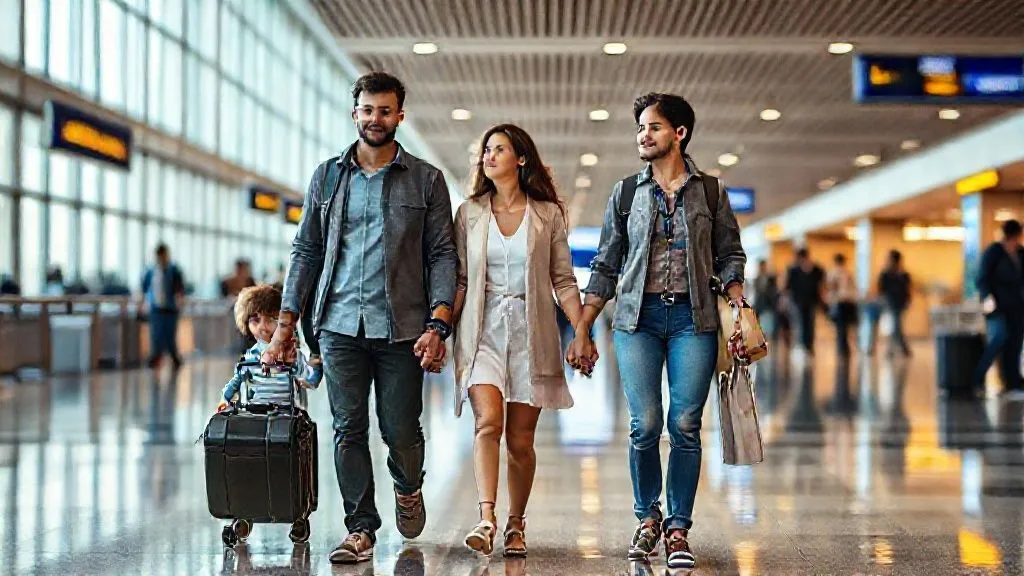
My golden rule is 'eyes on, hands on.' In crowded areas, keep children physically close – holding hands, using a child harness for very young ones, or even wearing them in a carrier. Avoid distractions like your phone or extensive conversations that pull your focus away from your children. This isn't just about preventing abduction; it's about preventing accidental separation, which can quickly escalate into a more serious situation.
"The most effective deterrent against child abduction is unwavering parental presence. A child who is visibly and actively supervised is a far less appealing target." - Security Analyst Perspective
Be particularly alert in high-traffic zones such as airports, train stations, busy markets, theme parks, and major tourist attractions. These are places where people are often distracted, and opportunistic individuals may look for vulnerabilities.
Teaching Children Personal Safety Rules
Empowering your children with knowledge is an invaluable layer of protection. While you are their primary protector, teaching them simple, memorable safety rules can give them tools to react appropriately if a situation arises. This isn't about scaring them, but about equipping them to make smart choices.
The classic 'stranger danger' concept needs to be adapted for international travel. Not all strangers are dangerous, and some (like uniformed police or a mother with children) can be sources of help. The key is teaching discernment.
- The 'No Go' Rule: Teach them never to go anywhere with anyone without your explicit permission and the use of your 'secret word.' This applies even if the person claims to know you or says you sent them.
- The 'Loud Voice' Rule: If someone tries to take them, teach them to yell loudly, "This isn't my parent!" or "Help!" and make a scene. Drawing attention is a powerful deterrent.
- The 'Safe Adult' Rule: If separated, teach them to look for a safe adult: a uniformed police officer, a security guard, a shopkeeper, or a mother with children. Instruct them to stay put where they last saw you, if safe to do so, or go to a pre-designated meeting spot.
- The 'Personal Space' Rule: Teach them about appropriate personal space and to report any uncomfortable touching or interactions immediately.

Navigating Public Interactions & Potential Risks
Discretion with Personal Information & Social Media
In our hyper-connected world, the line between sharing and over-sharing can become dangerously blurred, especially when traveling internationally. I've observed a worrying trend of families inadvertently revealing too much information online, creating potential risks.
Be extremely cautious about what you post on social media during your trip. Avoid real-time updates that reveal your exact location. Geo-tagging photos of your children at specific attractions can make them identifiable and trackable. It's best to post updates and photos after you've left a location or even after you've returned home.
- Limit Personal Details: Refrain from discussing your travel plans, hotel name, or children's names with strangers, no matter how friendly they seem. A polite but firm, "Thank you, but we prefer to keep our plans private," is perfectly acceptable.
- Be Wary of Unsolicited Attention: While many people are genuinely friendly, be cautious of individuals who show excessive or unusual interest in your children, ask overly personal questions, or attempt to engage them without your consent.
- Protect Your Hotel Room: Never leave your room number visible on key cards. Instruct children never to open the door to strangers, even if they claim to be hotel staff, without first verifying with a parent.
Trusting Your Instincts & Avoiding Risky Situations
One of the most powerful safety tools you possess is your intuition. I often tell families that if a situation feels off, it probably is. Your gut feeling is a cumulative assessment of subtle cues your conscious mind might miss. Trust it, and act on it.
If you feel uncomfortable in a particular area, a crowded street, or even with a specific individual, remove yourself and your family from the situation immediately. It's always better to be overly cautious than to regret ignoring a red flag. This might mean changing your route, leaving a restaurant, or politely declining an offer that feels suspicious.
Case Study: The Milan Market Incident
During a family trip to Italy, a client, Sarah, was browsing a bustling market in Milan with her 7-year-old daughter, Emily. Emily was wearing a bright red dress. An elderly woman, seemingly friendly, approached Emily, stroking her hair and offering her a small, colorful trinket. While this might seem innocuous in some cultures, Sarah felt an immediate unease. The woman's gaze lingered a little too long, and her questions to Emily felt overly inquisitive, bypassing Sarah. Trusting her instinct, Sarah gently but firmly thanked the woman, took Emily's hand, and moved swiftly into a different section of the market, putting physical distance between them. Later, she reflected that while the interaction might have been harmless, her gut feeling was a clear signal to disengage. This simple act of trusting her intuition prevented a potentially uncomfortable or even risky prolonged interaction. It's a reminder that not every threat is overt; sometimes, it's a subtle discomfort that warrants immediate action.
For more insights on situational awareness, consider resources from seasoned travelers and security experts like those found on Rick Steves' travel safety guides, which often emphasize practical vigilance.
Emergency Protocols & What If Scenarios
Pre-defining Rendezvous Points & Emergency Contacts
Despite all precautions, separations can happen. Crowds, sudden movements, or a child's momentary distraction can lead to a terrifying few minutes or hours. Having clear emergency protocols in place acts as a critical safety net, transforming panic into a structured search.
Before entering any large, busy area (e.g., a museum, a theme park, a city square), identify a clear, easily recognizable rendezvous point. This should be a landmark that even a child can remember: "Meet at the big fountain," or "Go to the information desk."
- Establish a Primary and Secondary Meeting Point: Sometimes the primary point might be too crowded or inaccessible. Have a backup.
- Assign a 'Home Base' Contact: Designate a trusted family member or friend back home who is aware of your itinerary and can be contacted by either parent or older children in an emergency.
- Local Emergency Numbers: Know the local emergency services number (police, ambulance). This varies by country (e.g., 911 in USA/Canada, 112 in most of Europe, 999 in UK). Have it written down and programmed into your phone.
- Consular Assistance: Know the location and contact information for your country's embassy or consulate in your destination. They are your primary resource for assistance abroad.
Understanding Local Law Enforcement & Consular Assistance
In the unthinkable event that your child goes missing, your immediate actions are paramount. The first step is to contact local law enforcement. Do not delay. In my experience, the initial hours are the most critical in missing persons cases.
When reporting to local police, be prepared to provide: detailed descriptions of your child (including what they were wearing), recent photos, copies of their passport, and any information about potential suspects or unusual interactions. Be calm, clear, and persistent.
Simultaneously, contact your country's embassy or consulate. They can provide invaluable assistance, including:
- Liaison with Local Authorities: Helping to navigate language barriers and local legal procedures.
- Issuing an Emergency Passport: If documents are lost or stolen.
- Providing a List of Local Resources: Such as English-speaking doctors or lawyers.
- Contacting Family Back Home: If you are unable to do so.
Remember, consular officers cannot intervene in local legal processes or perform police functions, but they are there to protect your interests and provide guidance. For U.S. citizens, the Department of State's emergency services page is an excellent resource.
Empowering Your Family with Knowledge
The Power of Preparation Over Panic
The overarching theme of preventing child abduction on international family trips is proactive preparation. I've seen firsthand how a well-prepared family handles unexpected situations with calm and efficiency, while an unprepared one can quickly descend into chaos. Fear is a natural human response, but knowledge and a plan can transform that fear into focused action.
This isn't about eliminating all risk – that's an impossible feat in life, let alone travel. It's about intelligently mitigating the most significant risks, understanding the landscape, and equipping every member of your family with the tools and knowledge to contribute to their own safety and the safety of others. Preparation empowers you to enjoy your travels fully, knowing you've done everything within your power to protect your loved ones.
Continuous Education & Adapting to New Environments
The world is constantly changing, and so are travel safety dynamics. What was true for one destination last year might not be true today. Therefore, continuous education and adaptability are vital. Before each new trip, revisit your safety plan, research current conditions, and update your family on any new rules or considerations.
Encourage an open dialogue with your children about safety. As they grow, their understanding and capabilities evolve. Involve them in the planning process, allowing them to take ownership of their safety. This builds confidence and makes them more likely to adhere to safety protocols.
| Category | Action Item | Status |
|---|---|---|
| Pre-Trip Planning | Review government travel advisories for destination. | Complete |
| Pre-Trip Planning | Create/update family safety plan & secret word. | Complete |
| Documentation | Make physical & digital copies of all passports/visas. | Complete |
| Documentation | Prepare child ID solutions (bracelets, photo card, tracker). | Complete |
| On-Site Vigilance | Discuss daily rendezvous points for crowded areas. | Complete |
| On-Site Vigilance | Reinforce 'No Go' & 'Loud Voice' rules with children. | Complete |
| Emergency Preparedness | Program local emergency numbers & embassy contacts. | Complete |
| Emergency Preparedness | Brief children on who to approach if separated (safe adults). | Complete |
Frequently Asked Questions (FAQ)
Q: What if a local asks to photograph my child? A: This is common in some cultures where children are seen as symbols of good fortune. While most intentions are harmless, it's always your right to politely decline. A simple, "No, thank you," or a head shake with a smile is usually sufficient. If you do agree, stay close to your child and ensure the interaction is brief and respectful. Never let your child go off with someone for a photo.
Q: Are child tracking devices reliable internationally? A: GPS tracking devices can be very useful, but their reliability depends on several factors: network coverage in your destination, battery life, and whether the child will actually wear it. Research devices that work globally and consider a backup method like an ID bracelet. They are a tool, not a foolproof solution.
Q: How do I handle cultural differences in child supervision? A: It's important to be respectful of local customs while prioritizing your child's safety. In some cultures, children might roam more freely, or strangers might interact with them more directly. Maintain your own standards of supervision, even if they differ from local norms. Politely assert your role as the parent if interactions feel intrusive or make you uncomfortable.
Q: What's the first thing to do if my child goes missing? A: Immediately conduct a rapid, systematic search of the immediate area. Yell their name loudly. If they are not found within a minute or two, notify the nearest staff (e.g., security, store manager) and contact local police without delay. The quicker you act, the higher the chances of a swift resolution. Simultaneously, contact your embassy or consulate.
Q: Should I involve my children in safety planning, and at what age? A: Absolutely, yes! Even very young children (3-4 years old) can understand simple rules like 'hold my hand' or 'stay close.' As they get older, involve them more in discussions about secret words, safe adults, and meeting points. Empowerment through knowledge is a powerful deterrent and builds their confidence and awareness.
Key Takeaways and Final Thoughts
- Proactive Planning is Non-Negotiable: Research your destination thoroughly and create a comprehensive family safety plan before you depart.
- Documentation is Your Lifeline: Secure originals, carry physical copies, and maintain digital backups of all essential travel documents.
- Vigilance is Your Best Defense: Maintain constant supervision in public, teach children age-appropriate safety rules, and trust your instincts.
- Empowerment Through Education: Equip your family with knowledge about potential risks and what to do in emergency scenarios.
- Know Your Resources: Understand how to contact local law enforcement and your country's consular services in an emergency.
International family travel should be a source of joy, discovery, and unforgettable memories, not undue anxiety. While the thought of child abduction is deeply unsettling, a well-informed, proactive approach can significantly mitigate risks and provide you with genuine peace of mind. By implementing these strategies, you're not just preparing for the worst; you're actively creating a safer, more secure environment for your family to thrive and explore the wonders of the world together. Travel boldly, but always travel wisely.
Recommended Reading
- How Can Historical Reenactments Boost Employee Engagement? 7 Proven Paths
- The Ultimate Guide: Stress-Free Travel Tips for Non-Verbal Autistic Teens
- 7 Strategies: How Skilled Volunteers Avoid Creating Local Dependency?
- Unlock the Secrets: How to Plan the Perfect Après Ski Evening on a Budget
- Top 5 Luxury Cruise Lines for Corporate Retreats with Stellar Wi-Fi?


Your email address will not be published. Required fields are marked *