


How to quickly find urgent gate for critical train connection?
For over two decades navigating the intricate world of train travel across continents, I've witnessed firsthand the sheer panic and frustration that grips travelers facing a critical train connection. There's a unique knot in your stomach when the clock is ticking, your next train is crucial, and the platform number for your urgent gate seems to be playing hide-and-seek amidst a bustling station. I've been there, heart pounding, scanning departure boards with a growing sense of dread.
The problem isn't just about speed; it's about information overload, unfamiliar environments, and the pressure of a tight schedule. Large stations can feel like labyrinths, digital displays flash bewildering data, and every second counts. Missing a critical connection can mean anything from a minor inconvenience to a complete disruption of travel plans, missed meetings, or even ruined vacations. It's a high-stakes scenario that most travelers dread.
But what if you could approach these moments with a calm, strategic mindset, armed with proven tactics to quickly find your urgent gate for critical train connection? In this definitive guide, I'll share my expert frameworks, actionable steps, and insights gleaned from countless journeys. You'll learn how to anticipate challenges, leverage technology, communicate effectively, and maintain composure, transforming potential chaos into confident navigation.
Mastering Pre-Departure Intelligence: Your First Line of Defense
The battle for a seamless connection is often won long before you even step off your first train. In my experience, the most successful travelers are those who treat their journey like a well-researched mission. This means diving into your travel details and the station specifics well in advance, not just glancing at your ticket.
Before you depart for your first leg, gather these crucial pieces of intelligence:
- Connection Time: How much time do you realistically have? Factor in potential delays. Anything less than 20 minutes in a large, unfamiliar station is a high-risk scenario.
- Station Size and Layout: Is it a small regional stop or a sprawling international hub like London St. Pancras or Paris Gare du Nord? A quick search for the station's official website or a look at Google Maps can reveal its complexity.
- Platform/Track Information: While exact gate numbers for your connecting train might not be available days in advance, knowing if platforms are grouped (e.g., 'Tracks 1-10 on Level 1') or if there are separate terminals for different services (e.g., high-speed vs. regional) is invaluable.
- Arrival/Departure Platforms: Sometimes, your arrival platform for the first train can give you clues about proximity to your next departure. Some stations are designed for easy same-platform transfers.
- Accessibility: Are there elevators, escalators, or long walks involved? If you have heavy luggage or mobility issues, this adds significant time.
Pro-Tip: Always check for official station maps online. Many major train stations publish detailed, interactive maps that can be a lifesaver. Familiarize yourself with key points like information desks, restrooms, and main exits relative to potential platform locations. This foresight drastically reduces decision-making time when you're under pressure.
According to a study published by the American Public Transportation Association, traveler anxiety significantly decreases when passengers feel well-informed about their journey. This proactive approach isn't just about efficiency; it's about mental preparedness.

Decoding Station Layouts: The Art of Anticipation
Once you’ve done your homework, the next step is to understand how train stations communicate information. This is where your 'art of anticipation' comes into play. Every station, while unique, adheres to certain universal principles of signage and information dissemination. Learning to 'read' a station quickly is a skill that saves precious minutes.
Key elements to focus on:
- Departure Boards: These are your primary source of real-time information. Look for large, clear digital displays. They typically list train number, destination, scheduled departure time, and crucially, the platform number.
- Color-Coding and Symbols: Many stations use color-coded signs for different areas (e.g., red for departures, green for arrivals) or symbols for facilities. Learn to recognize these quickly.
- Directional Signage: Follow signs that clearly indicate 'Platforms', 'Tracks', or specific train service names (e.g., 'Eurostar', 'ICE'). Don't be afraid to trust the arrows.
- Platform Numbering Logic: Observe how platforms are numbered. Are they sequential (1, 2, 3...) or grouped (e.g., 'A', 'B', 'C' or 'Upper Level', 'Lower Level')? Some stations have odd-numbered platforms on one side and even on the other.
- Overhead Announcements: Pay attention to these, especially in smaller stations or during disruptions. They often provide updates faster than digital boards.
"In the high-stakes game of critical train connections, your ability to quickly interpret and trust station signage is your most powerful asset. Hesitation is the enemy of efficiency." - Veteran Train Traveler's Axiom
Case Study: Navigating Grand Central's Labyrinth
Consider the fictional case of Amelia, a business traveler with a 15-minute connection at a bustling station akin to New York's Grand Central Terminal – a multi-level marvel. Her first train arrived on track 34, and her next train was departing from track 102, a different section entirely. Instead of panicking, Amelia had pre-consulted the station map. She knew that tracks 1-42 were on the upper level, while tracks 101-115 were on the lower level, requiring a specific escalator bank. By anticipating this vertical transfer and knowing the general direction, she immediately headed for the correct escalator bank upon disembarking, saving herself precious minutes of wandering and quickly found her urgent gate, making her connection with a minute to spare. This resulted in her arriving at her crucial business meeting on time, avoiding a costly delay.
Leveraging Technology On-The-Go: Your Digital Compass
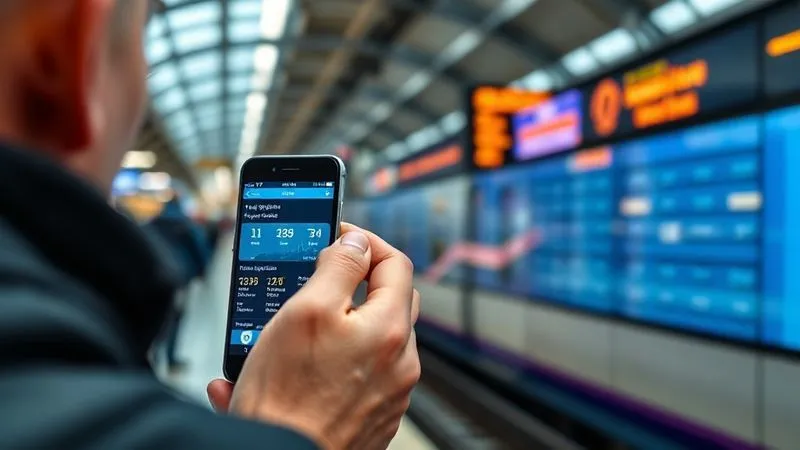
In our modern age, your smartphone is arguably your most powerful tool for navigating critical train connections. While pre-departure research is vital, real-time updates are where technology truly shines. I always recommend having a few key apps at your fingertips.
Essential Digital Tools:
- Official Rail Operator Apps: Apps like National Rail Enquiries (UK), Deutsche Bahn Navigator (Germany), or SNCF Connect (France) provide the most accurate, up-to-the-minute platform information, delay notifications, and even seat availability.
- Third-Party Travel Planners: Apps like Citymapper or Google Maps can be useful for overall station navigation and even show platform numbers in some major hubs, though they might not always be as real-time as official apps.
- Station Wi-Fi: Immediately connect to free station Wi-Fi upon arrival if available. This ensures you can access real-time information without draining your data or incurring roaming charges.
- Digital Departure Boards (App Version): Many official rail apps mirror the physical departure boards, allowing you to check information while still on your arriving train or from a different part of the station.
Remember, while physical departure boards are authoritative, having the information on your phone allows for quick cross-referencing and reduces the need to fight through crowds. As technology expert Elon Musk often emphasizes, efficiency comes from leveraging all available information streams.
| App Feature | Official Rail App | Third-Party Planner | Station Board |
|---|---|---|---|
| Real-Time Platform Updates | Excellent | Good (location dependent) | Excellent |
| Delay Notifications | Excellent | Fair | Good |
| Ticket Booking/Management | Excellent | Limited | N/A |
| Offline Maps | Limited | Good | N/A |
The Human Element: When to Ask for Help
Despite all the technology and pre-planning, sometimes the most effective solution is to simply ask for help. Don't underestimate the power of human assistance, especially when facing a critical train connection. Station staff are there precisely for these situations, and their local knowledge can be invaluable.
When and how to engage:
- Identify Staff: Look for uniformed staff members, information desks, or customer service points. They are usually clearly marked.
- Be Clear and Concise: When you approach them, state your problem immediately. "Excuse me, I have a very tight connection to [Destination] on train [Train Number] departing at [Time]. Do you know the platform number?"
- Show Your Ticket: Having your ticket or booking confirmation ready will speed up the process.
- Ask for Directions: Don't just ask for the platform; ask for the fastest route to it. "Which is the quickest way to get to Platform 7 from here?"
- Consider Fellow Travelers: If staff aren't immediately available, a fellow traveler who looks like a regular commuter might be able to offer quick guidance, especially if they are also transferring or waiting for a similar service.
I've seen countless instances where a quick question to a station attendant saved a traveler from missing their train. They often have access to internal systems that update faster than public boards or can even point you to a shortcut you wouldn't otherwise know. Remember, they are on your side.
The "Sprint" Strategy: Efficient Movement & Mindset
Once you have your platform information, the next challenge is getting there efficiently. This isn't about reckless running, which can lead to accidents or getting lost, but about a focused, intelligent sprint. Your mindset during this phase is as important as your physical movement.
Strategic Movement Principles:
- Stay Calm and Focused: Panic clouds judgment. Take a deep breath, visualize your route, and move with purpose.
- Lighten Your Load: If possible, ensure your luggage is manageable. A single carry-on is far easier to navigate through crowds and up escalators than multiple heavy bags.
- Observe the Flow: Don't fight the crowd; try to move with it or find gaps. Look ahead for obstacles.
- Use All Available Routes: Don't assume the most obvious path is the fastest. If you know there's an alternative escalator or a less crowded walkway, take it.
- Prioritize: Your priority is getting to the platform. Don't stop for coffee, souvenirs, or even a quick restroom break unless you have ample time.
"The most effective sprint through a train station is less about raw speed and more about calculated movement, clear decision-making, and an unwavering focus on your objective." - Practical Travel Wisdom
As behavioral psychologist Daniel Kahneman's work on 'System 1' and 'System 2' thinking suggests, under pressure, our instinctive 'System 1' can lead to rash decisions. By pre-planning and maintaining calm, you engage 'System 2' – your more analytical thought process – which is crucial for quickly finding your urgent gate for critical train connection.

Contingency Planning: What If All Else Fails?
Even with the best preparation and execution, sometimes things go wrong. Delays can cascade, platform changes can happen at the last minute, or you simply might get lost. Having a contingency plan isn't about pessimism; it's about resilience and ensuring you're never truly stranded. This is a critical aspect of being a seasoned traveler.
Your contingency checklist:
- Know Your Ticket Flexibility: Understand if your ticket allows for rebooking on a later train if you miss a connection. Some tickets (especially full-fare or flexible ones) offer this, while others (discounted or specific time-slot tickets) might not without an additional fee. Check the terms and conditions of your specific ticket or carrier, like those outlined by The Man in Seat 61 for European rail travel.
- Identify Alternative Trains: While waiting for your first train, quickly check if there are subsequent trains to your destination that day. Knowing the next few options can alleviate panic if you realize you're going to miss your original connection.
- Locate Customer Service: If you miss your train, head directly to the customer service or ticket office. Explain your situation calmly. They are often empowered to assist with rebooking or providing advice on next steps.
- Have Emergency Contacts: If you're traveling for a critical meeting or event, have the contact details of your host or colleagues readily available to inform them of any potential delay.
- Stay Informed During Delays: If your *first* train is delayed, immediately check if your connecting train is also affected or if the station staff are making arrangements for delayed passengers. Sometimes, the connecting train will be held, or an alternative route will be suggested.
As a seasoned traveler, I've learned that flexibility and a cool head are invaluable. Missing a train isn't the end of the world; it's an opportunity to practice problem-solving under pressure. By having a backup plan, you maintain control over your journey, even when circumstances are beyond your control.
Essential Tools and Habits for Seamless Connections
Beyond the strategies, certain tools and habits can significantly enhance your ability to quickly find your urgent gate for critical train connection. These are the small details that, when combined, create a remarkably smooth travel experience.
- Power Bank: Your phone is your lifeline for real-time updates and maps. A fully charged power bank is non-negotiable.
- Comfortable Shoes: You might need to walk or even sprint considerable distances. Leave the high heels or restrictive dress shoes for later.
- Light Luggage: As mentioned, less luggage means more agility. Consider a backpack or a small, wheeled carry-on.
- Noise-Canceling Headphones: While you need to be aware of announcements, these can help you focus and reduce sensory overload in a noisy station, allowing for clearer thinking when you need it most.
- Train Number Memorization: While your ticket has it, mentally noting your train number and destination for both legs of your journey makes scanning departure boards much faster.
- Digital Wallet/Payment Ready: In case you need to quickly buy a new ticket or a snack, having your payment method easily accessible saves fumbling time.
- Hydration and Snacks: A quick connection often means no time for food. Being well-hydrated and having a small snack can keep your energy and focus levels high.
Adopting these habits transforms you from a reactive traveler into a proactive one, ready for any challenge a critical connection might throw your way. It’s about creating a personal system that supports efficiency and reduces stress.
| Item | Purpose | Urgency Level |
|---|---|---|
| Power Bank | Keep phone charged for apps/maps | High |
| Comfortable Shoes | Efficient movement through station | High |
| Light Luggage | Agility and speed | High |
| Train Number Memorization | Quick board scanning | Medium |
| Digital Wallet | Fast payment for emergencies | Medium |
| Water/Snack | Maintain energy/focus | Low |

Frequently Asked Questions (FAQ)
Q: What if my first train is significantly delayed, and I know I'll miss my connection? A: If you're still on the delayed train, immediately check your official rail app for updates on your connecting train. Sometimes, connections are held for delayed services, or alternative routes are automatically suggested. If not, inform the conductor on your current train, or upon arrival, head straight to customer service. Most rail operators have policies for missed connections due to their own delays, often allowing free rebooking.
Q: How do I know if my ticket allows for rebooking or if I'll have to buy a new one? A: This depends entirely on the type of ticket you purchased. Flexible or full-fare tickets generally offer more leeway for changes, sometimes even allowing you to take the next available train. Discounted or advance-purchase tickets are often non-flexible and may require purchasing a new ticket if you miss your specific service. Always check the 'conditions of carriage' or 'ticket terms' when booking, or consult the rail operator's website.
Q: Are all train stations the same in terms of signage and layout? A: No, absolutely not. While there are common elements like departure boards and platform numbers, the layout, size, and complexity vary wildly. Major international hubs are often multi-level and sprawling, while smaller regional stations might have just a few platforms. This is why pre-departure research on the specific station is so crucial.
Q: Should I always trust third-party apps over the physical station departure boards? A: For real-time critical information like platform numbers, always prioritize the official station departure boards (physical or the official rail operator's app that mirrors them). Third-party apps are excellent for planning and general information but might have a slight delay in updating critical, last-minute changes compared to the direct source. Use them as a helpful secondary check.
Q: What's the fastest way to get between platforms with heavy luggage? A: If you have heavy luggage, prioritize elevators and escalators over stairs. Look for signs indicating 'Lifts' or 'Ascenseurs'. If these are far, consider asking station staff for assistance or if there's an alternative, less crowded route. Sometimes, there are specific ramps or wider corridors designed for easier movement. Planning for lighter luggage is always the best preventative measure.
Key Takeaways and Final Thoughts
- Preparation is Paramount: Your journey to quickly find your urgent gate for critical train connection begins with thorough pre-departure research on your connection time, station layout, and ticket flexibility.
- Leverage Technology Smartly: Utilize official rail apps for real-time updates, and don't hesitate to connect to station Wi-Fi.
- Read the Station: Master the art of interpreting departure boards, directional signage, and understanding platform numbering logic.
- Don't Be Afraid to Ask: Station staff are your allies; approach them calmly and clearly with your needs.
- Move with Purpose: Maintain a calm, focused mindset, and move efficiently, not frantically, prioritizing your objective.
- Always Have a Backup: Understand your ticket's rebooking options and know alternative train schedules.
Navigating critical train connections doesn't have to be a source of immense stress. By adopting these expert strategies and cultivating a proactive mindset, you'll transform challenging transfers into manageable successes. Remember, every journey is an opportunity to refine your travel skills. Embrace the challenge, stay informed, and enjoy the seamless flow of your train adventures. Safe travels!
Recommended Reading
- How Do Ski Resorts Adapt to Declining Snowfall? 7 Innovative Strategies
- 7 Pro Tips: Prevent Ice Surface Degradation in High-Traffic Rinks
- Uncover the Best Cooking Classes Abroad for Foodies
- Unlock Hotel Accessibility: Best Ways to Confirm Features Before You Go
- 7 Expert Strategies: Find Premium Family Vacation Rentals Efficiently



Your email address will not be published. Required fields are marked *