


How to Resolve Multi-Generational Travel Conflicts Over Activities?
For over two decades in the travel industry, specializing in family and group adventures, I've witnessed the profound joy that multi-generational travel can bring. However, I've also seen the subtle, and sometimes not-so-subtle, friction that arises when diverse interests, energy levels, and expectations collide. It's a common scenario: one generation dreams of serene museum visits, another craves adrenaline-pumping excursions, and the youngest just wants a pool day.
The core problem isn't a lack of love, but often a lack of a structured approach to activity planning that genuinely accommodates everyone. Without proactive strategies, these differing desires can morph into palpable tension, turning what should be a bonding experience into a source of stress and disappointment for some, or even all, family members. It's a delicate balance, requiring more than just good intentions.
In this definitive guide, I'll share the proven frameworks and expert insights I've gathered over years of helping families navigate these very waters. We'll move beyond wishful thinking and dive into actionable steps, real-world analogies, and a mini-case study to equip you with the tools to transform potential conflicts into opportunities for shared joy and unforgettable memories. My goal is to empower you to create a travel experience where every family member feels seen, heard, and genuinely excited about the journey ahead.
The Foundation: Early Communication & Expectation Setting
The single most crucial step in preventing multi-generational travel conflicts is establishing open, honest, and early communication. I've seen countless trips derailed simply because assumptions were made, or crucial conversations were postponed until it was too late.
Pre-Trip Dialogue: The Non-Negotiable First Step
Before any bookings are made or even destinations are finalized, gather everyone involved for a dedicated discussion. This isn't just a casual chat; it's a strategic meeting of the minds. Here’s how to structure it:
- Set the Tone: Emphasize that the goal is to create a trip everyone will enjoy, not to dictate or compromise one person's entire experience. Frame it as a collaborative effort.
- Define the 'Why': Ask each family member what they hope to gain from this trip. Is it relaxation, adventure, cultural immersion, family bonding, or a mix? Understanding these underlying motivations is key.
- Discuss Practicalities: Openly address potential constraints like budget, travel dates, health considerations, and mobility issues. Transparency here prevents surprises later.
- Brainstorm Broadly: Encourage everyone to throw out destination ideas and types of activities without judgment. The wider the initial net, the more options you'll have to work with.
- Establish a Primary Decision-Maker (or Process): While collaborative, sometimes a designated lead or a clear voting/vetting process helps avoid endless stalemates.
“Communication works for those who work at it.” – John Powell. In multi-generational travel, this means proactive, empathetic dialogue from the outset, not just when problems arise.
This initial dialogue ensures that everyone has a voice and understands the parameters. It sets the stage for mutual respect and a shared understanding of what the trip entails.

Mapping Interests: The 'Wish List' & 'Must-Do' Matrix
Once you've had your initial discussion, the next step is to get specific about activities. This is where the 'Wish List' and 'Must-Do' matrix comes into play, a tool I've found incredibly effective for visualizing diverse preferences.
Gathering Individual Preferences
Instead of a free-for-all, provide a structured way for everyone to contribute their desired activities:
- Individual Input: Ask each family member (or each sub-family unit, like parents and their young children) to list 3-5 'Must-Do' activities (non-negotiable) and 5-10 'Wish List' activities (things they'd enjoy if time/budget allows).
- Categorize and Prioritize: Group similar activities (e.g., beach time, cultural tours, adventure sports, relaxation). Then, for the 'Must-Dos', assign a priority level (1-3, with 1 being highest).
- Consider Energy Levels & Mobility: Explicitly ask about preferred pace and any physical limitations. A challenging hike might be a 'Must-Do' for one, but a 'Cannot-Do' for another.
- Acknowledge Age Gaps: Accept that a 5-year-old's 'Must-Do' is likely different from an 80-year-old's. The goal isn't identical interests, but complementary ones.
This systematic approach helps you see overlaps and conflicts clearly. According to travel psychology expert Dr. Sarah Miller, involving individuals in the planning process significantly increases their psychological buy-in and overall satisfaction with the trip, even if not all their specific requests are met. Psychology Today often emphasizes the importance of perceived control in reducing travel stress.
Here’s an example of how a simplified 'Interest Matrix' might look:
| Family Member | Must-Do | Wish List | Energy Level |
|---|---|---|---|
| Grandparents | Relaxing cruise, Historical tours | Nice dinners, Gentle walks | Low-Medium |
| Parents | Wine tasting, Scenic drives | Museums, Local markets | Medium |
| Teenagers | Beach volleyball, Shopping | Water sports, Theme park | High |
| Young Children | Pool time, Ice cream | Playground, Aquarium | High |
Strategic Scheduling: Blending & Balancing Activities
Once you have a clear picture of everyone's desires, the real art of multi-generational travel planning begins: creating an itinerary that blends these diverse interests. The key is balance, not forced togetherness for every single activity.
The 'Anchor Activity' & 'Free Time' Approach
I've found that a successful itinerary often revolves around a few 'anchor activities' where everyone participates, interspersed with ample 'free time' or 'split activities' where sub-groups can pursue their specific interests.
- Identify Shared Anchor Activities: Look for overlaps in the 'Must-Do' lists that appeal broadly. This could be a family dinner, a short, accessible scenic boat ride, a gentle walking tour, or a specific cultural show. These are your non-negotiables for togetherness.
- Schedule 'Me Time' & 'Split Activities': Deliberately block out time for individuals or smaller groups to do their own thing. Grandparents might prefer a quiet afternoon reading, while teenagers hit the beach, and parents explore a local gallery. This prevents burnout and resentment.
- Alternate High-Energy with Low-Energy Days: Avoid packing too many demanding activities back-to-back. Follow a busy theme park day with a relaxed beach day or a quiet museum visit.
- Factor in Travel Time & Downtime: Don't underestimate the time it takes to get from place to place, especially with a large group. Also, allow for spontaneous relaxation, naps, or simply unwinding.
- Be Flexible with Meal Times: While some family dinners are anchors, allow for flexible lunch and breakfast options. Not everyone wants to eat at the same time or place every day.
Case Study: The Miller Family's Mediterranean Mix-Up
The Miller family — grandparents (70s), parents (40s), and two teenagers (14 & 16) — planned a two-week trip to Greece. Initially, the grandparents wanted ancient ruins and quiet cafes, the parents hoped for island hopping and foodie tours, and the teens demanded beach time and nightlife. Early discussions revealed significant friction over how to spend each day.
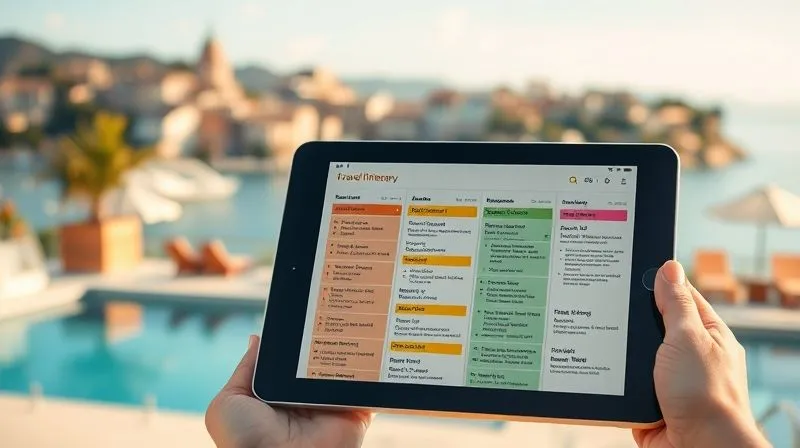
By implementing the 'Anchor Activity' and 'Free Time' approach, they structured their itinerary as follows: Every other day featured a family-wide 'Anchor Activity' like a guided historical tour in the morning (everyone appreciated the expert insights and air-conditioned bus) followed by a shared, relaxed lunch. Afternoons were designated 'Free Time' where grandparents could return to the hotel for a siesta, parents explored local markets, and teens headed to the nearest beach. On alternate days, they planned 'Split Activities' – one day the parents and teens went snorkeling while grandparents visited a local monastery; another day, the teens went on a guided ATV tour while the older generations enjoyed a leisurely cooking class. Evening dinners were a mix: some formal family meals, others casual where different sub-groups dined together based on preference.
This strategic scheduling significantly reduced conflicts. Everyone felt their interests were respected, and the designated 'me time' prevented exhaustion and boredom. The Miller family reported their trip was a resounding success, proving that thoughtful planning can bridge even wide generational gaps.
Budgeting Brilliance: Transparency & Shared Financial Understanding
Money is often the unspoken elephant in the room for multi-generational travel. Differing financial capacities and expectations can quickly lead to resentment if not addressed head-on and transparently.
Open Books, Open Minds: Discussing Costs Upfront
I always advise families to have a clear, frank discussion about finances well before departure. This isn't about making anyone feel uncomfortable, but about ensuring everyone is on the same page and no one feels exploited or short-changed.
- Establish a Total Trip Budget: Determine a realistic overall budget, including flights, accommodation, activities, and food.
- Define Contribution Levels: Decide who pays for what. Will it be an even split? Will one generation cover accommodation while others cover activities? Will the wealthiest contribute more? Be explicit.
- Categorize Activity Costs: When discussing activities, openly state their costs. This allows families to opt-in or out of certain pricier excursions without guilt.
- Set a 'Shared Pot' for Essentials: Consider creating a shared fund for communal expenses like groceries for meals at the rental, shared transportation, or one or two major group activities.
- Individual Spending Money: Encourage everyone to bring their own spending money for personal souvenirs, coffees, or activities they choose to do independently.
According to a Harvard Business Review article on family business dynamics, transparency around financial contributions, even in non-business contexts like family travel, significantly reduces potential for conflict and builds trust. It's about setting clear boundaries and expectations.
Leveraging Local Expertise: Guides, Tours & Childcare
Sometimes, the best way to resolve activity conflicts is to bring in a third party. Local experts, tour operators, and even professional childcare services can be invaluable assets, especially when dealing with diverse age groups.
Outsourcing the Logistics for Smoother Transitions
Don't feel like you have to be the sole orchestrator of every moment. Delegating can enhance everyone's experience:
- Private Guides: For cultural or historical sites, a private guide can tailor the experience to different attention spans and knowledge levels. They can make history engaging for teens and provide in-depth details for adults, often with shorter lines and more flexibility.
- Specialized Tours: Book tours that cater to specific interests. A food tour for the adults, an adventure sports tour for the younger generation, or a wildlife excursion for the whole family can be enriching.
- Organized Day Trips: Let a tour company handle the logistics of transportation, entry fees, and scheduling for a complex day trip. This frees up family members from the stress of planning and navigating.
- Professional Childcare/Kids' Clubs: If younger children are part of the group, utilizing hotel kids' clubs or hiring a local, vetted babysitter can provide adults with much-needed 'grown-up time' and give children a chance to engage in age-appropriate activities.
- Concierge Services: Don't hesitate to use hotel concierges or local travel agents for recommendations and bookings. They often have insider knowledge that can lead to unique experiences.
By outsourcing, you reduce the burden on family organizers and ensure that activities are professionally managed, often leading to a higher quality experience for everyone involved. It’s an investment in peace of mind and enjoyment.

Building Flexibility: The Art of the Spontaneous Detour
While planning is paramount, rigidly sticking to a schedule can be just as detrimental as having no plan at all. Multi-generational travel, by its nature, requires a degree of adaptability.
Embracing the Unexpected: When Plans Change
I've learned that the most successful family trips often have a built-in capacity for spontaneity. Sometimes the best memories are made when you deviate from the original plan.
“The best laid schemes o' Mice an' Men / Gang aft agley.” – Robert Burns. This holds true for travel. Be prepared to pivot.
- The 'Weather Contingency': Always have a Plan B for bad weather. A rainy day can ruin outdoor activities, but a pre-researched indoor alternative (museum, movie, cooking class) can save the day.
- Listen to the Group's Vibe: Pay attention to energy levels and mood. If everyone seems tired and grumpy, pushing through a scheduled activity might do more harm than good. A spontaneous pool session or an unplanned afternoon of quiet relaxation might be exactly what's needed.
- Allow for 'Discovery': Sometimes you stumble upon a charming local festival, a hidden gem restaurant, or an impromptu street performance. Be open to incorporating these unexpected delights, even if it means shifting other plans.
- Delegate 'Flexibility Decisions': Empower different family members or sub-groups to make decisions for certain blocks of time. This distributes the mental load and fosters a sense of ownership.
- Prioritize Well-being: If someone is feeling unwell or genuinely overwhelmed, allow them to opt out of an activity without guilt. Their well-being takes precedence over a perfectly executed itinerary.
Building flexibility into your schedule isn't a sign of poor planning; it's a mark of experienced travel wisdom. It allows for the organic unfolding of a trip, rather than a rigid march through a checklist.
Conflict Resolution: Tools for Peaceful Disagreement
Despite the best planning, conflicts over activities can still arise. When they do, having a pre-agreed framework for resolution can prevent minor disagreements from escalating into major blowouts.
Active Listening & Compromise Techniques
I've coached many families through these moments, and the principles are similar to any effective negotiation:
- Acknowledge & Validate: Start by acknowledging everyone's feelings. "I hear that you're really excited about the hiking trail, and I also understand why others might be hesitant." Validating doesn't mean agreeing, but showing you've heard them.
- Identify the Core Need: Sometimes the stated activity isn't the true desire. Is it adventure, relaxation, cultural immersion, or simply quality time together? Focus on the underlying need.
- Brainstorm Alternatives: Once the core needs are clear, collectively brainstorm alternative activities that might satisfy multiple needs. If one person wants a challenging hike and another wants nature, perhaps a scenic, less strenuous walk with stunning views is a compromise.
- The 'Vote & Veto' System: For less critical decisions, a simple democratic vote can work. For 'Must-Dos' with strong opposition, a limited 'veto' power (e.g., each sub-group gets one veto per trip) can ensure no one feels completely ignored on a critical point.
- Take Turns: For activities that are highly specific to one person or sub-group, agree to take turns. "Today, we'll do Grandpa's requested museum visit, and tomorrow, we'll hit the water park for the kids."
- The 'Divide and Conquer' Approach: When interests are irreconcilable for a particular time slot, accept that splitting up is the best solution. Empower subgroups to pursue their own chosen activities, then reconvene later.
As experts in organizational psychology like those at Forbes Leadership often highlight, effective conflict resolution hinges on empathy, clear communication, and a willingness to find common ground. It's about preserving relationships, not just winning an argument.
Here’s a simple framework for resolving activity clashes:
| Conflict Scenario | Resolution Strategy | Outcome |
|---|---|---|
| One group wants an adventurous hike, another wants a relaxing spa day. | Split activities: Adventurous group hikes in the morning, spa group enjoys their treatments. Reconvene for a shared, relaxed dinner. | Both groups satisfy their core needs without compromise on their preferred activity. |
| Disagreement over a high-cost activity vs. a free one. | Budget transparency + 'Take Turns': Agree to one high-cost 'anchor' activity paid for by a shared pot, then focus on free/low-cost options for other days. Individuals can pay for their own 'extra' high-cost desires. | Financial comfort for all, shared premium experience, individual flexibility. |
| One person is tired and wants to rest, but the group has a scheduled activity. | Flexibility + 'Opt-Out' without guilt: Allow the tired individual to rest. The rest of the group proceeds. Rejoin later for a lower-energy activity or meal. | Respect for individual needs, no resentment, group still enjoys their planned activity. |
Post-Trip Reflection: Learning for Future Adventures
The journey doesn't truly end when you return home. A crucial, yet often overlooked, step in resolving multi-generational travel conflicts is reflecting on the experience. This isn't about dwelling on negatives, but about learning and improving for future trips.
Debriefing & Documenting Successes (and Lessons)
A simple post-trip conversation can provide invaluable insights:
- What Worked Well? Ask everyone to share their favorite moments and activities. Identify patterns in what brought the most joy and harmony. Was it the planned group dinners, the free afternoons, or a specific type of excursion?
- What Could Be Improved? Gently discuss any challenges or moments of friction. Frame it as constructive feedback for the next trip, rather than blame.
- Document Preferences: Keep a running log of what each family member genuinely enjoyed and what they disliked. This becomes a valuable resource for future planning.
- Review Communication: Did the pre-trip discussions cover everything? Were expectations clear? Identify areas where communication could be stronger next time.
- Celebrate the Memories: Focus on the positive. Share photos, tell stories, and reinforce the bonds that were strengthened. This positive reinforcement encourages participation in future trips.
This reflective process turns every trip, even those with minor bumps, into a learning opportunity. It demonstrates a commitment to improving the family travel experience for everyone involved, building anticipation and trust for the next adventure. It's about continuous improvement in the art of family togetherness.

Frequently Asked Questions (FAQ)
Q: What if one family member consistently refuses to compromise on activities? This is a common challenge. My advice is to gently but firmly reiterate the goal of the trip: shared enjoyment. If direct compromise isn't possible, lean heavily on the 'Split Activities' approach. Allow that individual to pursue their specific interest, and the rest of the group can do something else. The key is to ensure their choice doesn't dictate everyone else's experience, nor should they feel guilted for wanting something different. Sometimes, they may even choose to join the group later after realizing the fun they're missing, but the option for independent activity should always be on the table.
Q: How do we handle vastly different budgets without causing awkwardness? Transparency is paramount. In the early communication phase, discuss budget contribution levels openly. One effective method is for the family to agree on a baseline budget for shared expenses and core activities. For any additional, higher-cost activities, those interested can opt-in and cover their own costs. Alternatively, a wealthier family member might offer to cover a specific, more expensive experience for everyone, but this should be offered as a gift, not an expectation. The goal is that no one feels pressured to spend beyond their comfort level.
Q: Is it okay to split up the family for entire days? Absolutely! In my experience, splitting up for part or even full days can be a lifesaver for multi-generational trips. It allows individuals and sub-groups to pursue their passions without compromise, preventing boredom or resentment. The key is to schedule dedicated 'reunion' times, such as dinner, to ensure everyone still feels connected and shares experiences. It's about quality time together, not necessarily quantity, and respecting individual needs often enhances the overall group dynamic.
Q: How far in advance should we start planning these discussions? For multi-generational trips, I recommend starting the initial communication and interest-mapping at least 6-12 months in advance, especially for international travel or during peak seasons. This provides ample time for everyone to provide input, for budgets to be discussed, and for any necessary compromises or adjustments to be made without feeling rushed. Complex logistics, like booking large accommodations or multiple flight connections, also benefit from this extended lead time.
Q: What if younger children get bored during adult-focused activities? This is inevitable! My strategy involves a few tactics: First, keep adult-focused activities for young children relatively short and engaging, or choose ones with interactive elements. Second, always have a 'distraction kit' ready for kids (coloring books, small toys, tablets with headphones). Third, leverage 'split activities' or childcare options so adults can enjoy their interests fully while children are engaged in age-appropriate fun. Finally, remember that some downtime or independent play can be just as valuable for children as structured activities.
Key Takeaways and Final Thoughts
Navigating the beautiful complexities of multi-generational travel requires foresight, empathy, and a strategic approach. It's about creating a tapestry of experiences where every thread, from the youngest to the oldest, contributes to the vibrant whole. Here are the most critical takeaways:
- Communicate Early & Openly: Don't make assumptions. Discuss expectations, desires, and practicalities upfront.
- Map Interests Systematically: Use tools like the 'Wish List' and 'Must-Do' matrix to visualize everyone's preferences.
- Strategize Scheduling: Balance shared 'anchor activities' with ample 'free time' and 'split activities' for individual pursuits.
- Be Transparent About Budget: Openly discuss financial contributions to avoid resentment.
- Leverage External Help: Don't hesitate to use guides, tours, or childcare to enhance experiences and ease logistics.
- Embrace Flexibility: Be prepared to pivot. Some of the best memories are unplanned.
- Develop Conflict Resolution Tools: Have a framework for peaceful disagreement, focusing on active listening and compromise.
- Reflect & Learn: Use post-trip debriefs to improve future adventures.
Multi-generational travel is an incredible opportunity to forge lasting memories and strengthen family bonds. It won't always be perfect, and some compromises will be necessary, but by applying these expert strategies, you can minimize conflicts and maximize the joy. Remember, the goal is not a flawless itinerary, but a meaningful journey where everyone feels valued and connected. Go forth, plan wisely, and create those unforgettable family adventures!
Recommended Reading
- 7 Strategies: How to Address Coral Bleaching & Boost Beach Tourism
- Rescue Ready: 7 Steps to Extract an Injured Caver from a Narrow Passage
- Unlock the Secrets: How to Choose the Best Scenic Glamping Experience
- Eco-Tourism Profits: How to Fund Wildlife Conservation Sustainably?
- 7 Smart Ways to Mitigate Overtourism's Impact on Niche Seaside Escapes





Your email address will not be published. Required fields are marked *