

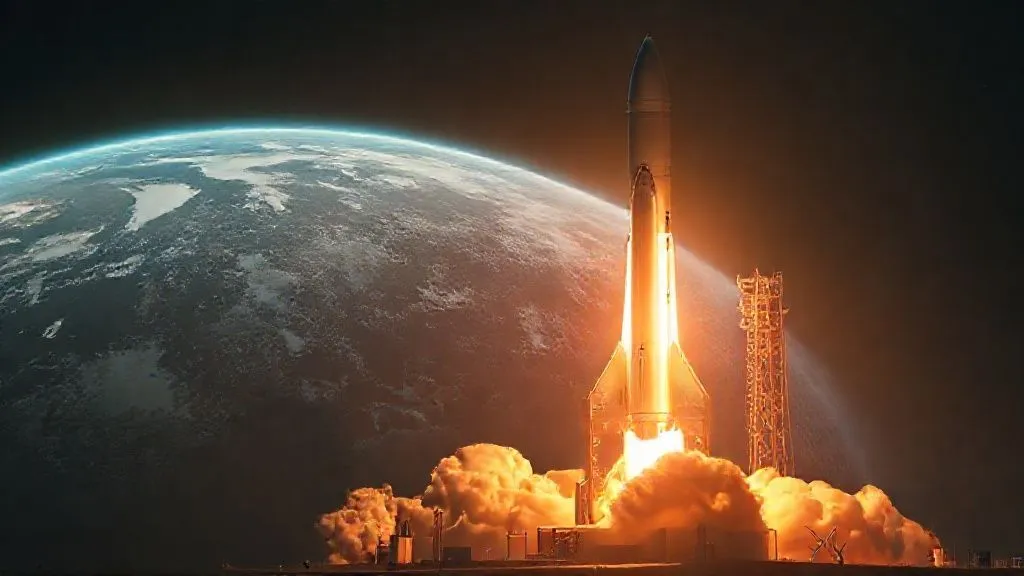
How to secure initial capital for high-cost space tourism startups?
For over two decades in the travel and aerospace sectors, I've had a front-row seat to some of the most ambitious ventures humanity has ever conceived. From the early days of commercial spaceflight concepts to the burgeoning reality of space tourism, I've witnessed incredible innovation. Yet, time and again, I've also observed where even the most brilliant minds and groundbreaking technologies falter: securing that elusive initial capital.
The dream of ferrying tourists beyond Earth's atmosphere isn't just a business; it's a grand vision, fraught with monumental costs, complex regulatory hurdles, and a protracted time-to-market. Unlike traditional startups, a space tourism venture requires astronomical investments in research, development, specialized infrastructure, and rigorous safety protocols long before a single ticket can be sold. This unique financial gravity well often leaves founders feeling adrift, wondering how to bridge the gap between an audacious dream and a bankable reality.
If you're an entrepreneur with your sights set on the orbital frontier, this guide is your mission control. Drawing from my extensive experience, I'll break down the intricate funding landscape, offering actionable frameworks, practical case studies, and expert insights into how to secure initial capital for high-cost space tourism startups. We'll explore everything from savvy venture capital navigation to leveraging strategic partnerships, government grants, and even unconventional funding models. Prepare to equip yourself with the financial strategies needed to launch your vision into orbit.
Understanding the Unique Financial Landscape of Space Tourism
The financial requirements for a space tourism startup are unlike almost any other industry. We're not talking about a new app or a physical product that can be prototyped on a shoestring budget. We're talking about rockets, spacecraft, launch facilities, and the intricate logistical frameworks to support human spaceflight. This isn't just high-cost; it's ultra-high-cost, often demanding nine to ten-figure investments for development and initial operations.
The 'Billion-Dollar Barrier' and Beyond
In my experience, many aspiring space entrepreneurs underestimate the sheer scale of capital required. Developing a safe, reliable, and commercially viable suborbital or orbital vehicle demands billions in R&D. Think of the decades and governmental budgets that went into early space programs. While commercial innovation has dramatically driven down costs, the fundamental physics and engineering challenges remain significant. Investors know this, and they're looking for a clear, credible path through this "billion-dollar barrier." Your financial projections must reflect a deep understanding of these costs, not just optimistic guesswork.
Risk vs. Reward: Investor Psychology
Investors in space tourism aren't just looking for returns; they're often driven by a blend of financial opportunity, technological fascination, and a desire to be part of something truly transformative. However, they are also acutely aware of the inherent risks: technological failure, regulatory shifts, market adoption uncertainty, and the long payback periods. As an expert in this niche, I've observed that the most successful pitches don't shy away from these risks but rather articulate robust mitigation strategies. Showcase your team's unparalleled expertise and your commitment to safety and reliability above all else. This builds critical trust.
Crafting an Irresistible Business Case: More Than Just a Dream
Before you even think about approaching investors, your business case must be rock-solid. It’s not enough to have a revolutionary idea; you need to demonstrate how that idea translates into a sustainable, profitable enterprise. This is where many passionate founders stumble. They focus too much on the 'what' and not enough on the 'how' and 'why now'.
The Power of a De-Risked Vision
A de-risked vision means you've thought through the major challenges and have credible plans to overcome them. This includes your technological roadmap, regulatory compliance strategy, operational plan, and, critically, your financial model. Investors want to see that you're not just selling a dream, but a meticulously planned journey. For instance, have you considered phased development, starting with suborbital flights before moving to orbital, to generate early revenue and demonstrate capabilities?
Market Validation & Competitive Edge
Who are your customers? What price point will they bear? What makes your offering superior or unique compared to existing or emerging competitors? According to a recent report by Northern Sky Research, the space tourism market is projected to grow significantly, but competition is intensifying. You must clearly define your target demographic – ultra-HNWIs, adventure tourists, researchers – and present compelling evidence of demand. Your competitive edge might lie in unique vehicle design, a superior customer experience, exclusive destinations, or even a novel pricing model.
"In the high-stakes world of space tourism, your business plan isn't just a document; it's your flight plan. It must be both visionary and ruthlessly practical, showing not just the destination, but every critical waypoint along the journey."
| Component | Importance |
|---|---|
| Executive Summary | Crucial for first impressions, clearly state problem, solution, team, ask. |
| Company Description | Define mission, vision, legal structure, unique value proposition. |
| Market Analysis | Demonstrate understanding of target market, size, trends, competition. |
| Product/Service | Detail your space tourism offering, technology, safety protocols. |
| Management Team | Highlight expertise, experience, and relevant track record. |
| Financial Projections | Detailed 5-year forecasts, funding needs, use of funds, exit strategy. |
| Funding Request | Specific amount, what it's for, and what milestones it enables. |
Navigating the Venture Capital & Private Equity Galaxy
For high-cost, high-tech ventures like space tourism, Venture Capital (VC) and Private Equity (PE) firms are often the primary targets for initial capital. These investors are accustomed to long development cycles and significant capital outlays, but they demand commensurate returns and a clear path to liquidity. Securing their investment requires a tailored approach that speaks their language.
Identifying the Right Orbital Investors
Not all VCs are created equal. You need to identify firms and partners with a specific interest in aerospace, deep tech, or frontier technologies. Look for those who have invested in similar capital-intensive projects, even if not directly space-related. Research their portfolio companies, their investment thesis, and the specific partners who lead these investments. A personalized approach, demonstrating you've done your homework, goes a long way. For instance, firms like Space Capital or Seraphim Space are explicitly focused on the space economy. You can find more insights into their strategies here.
Structuring Your Pitch Deck for the Stars
Your pitch deck is your spacecraft for conveying your vision. It must be concise, compelling, and address all the critical questions an investor will have. I've reviewed hundreds of decks, and the most effective ones tell a story while also providing hard data.
- Problem & Solution: Clearly articulate the market gap and how your space tourism offering fills it.
- Market Opportunity: Quantify the addressable market and your projected share.
- Product/Technology: Explain your core technology, its competitive advantages, and intellectual property.
- Business Model: How will you make money? Pricing, revenue streams, scalability.
- Team: Showcase your founders' and key personnel's expertise, experience, and advisory board.
- Financials: Present realistic projections, funding needs, and how the capital will achieve milestones.
- Traction & Milestones: Any progress made, partnerships secured, or key achievements.
- The Ask: Be specific about the capital you need and what you'll achieve with it.
- Exit Strategy: How will investors get their return? Acquisition, IPO, etc.
Remember, a great pitch deck is a conversation starter, not a comprehensive report. Be ready to dive deep into any aspect when prompted.
Strategic Partnerships & Corporate Alliances: Shared Journeys
In a capital-intensive industry like space tourism, you don't have to go it alone. Strategic partnerships and corporate alliances can be invaluable, not just for capital but also for expertise, infrastructure, and market access. These collaborations can significantly de-risk your venture and attract further investment.
Leveraging Established Industry Players
Consider partnering with established aerospace companies for manufacturing, launch services, or even technological co-development. For example, a startup focused on orbital hotels might partner with a rocket manufacturer for launch capabilities, or with a hospitality giant for ground operations and customer experience. These partnerships can often come with equity investments or significant in-kind contributions that reduce your immediate capital requirements. They also lend immense credibility to your project, which is a magnet for other investors.
Government Agencies & International Collaborations
Governments and their space agencies are increasingly looking to foster commercial space endeavors. Collaborations with agencies like NASA, ESA, or JAXA can provide access to facilities, research grants, and technical expertise. Beyond direct funding, these partnerships offer invaluable validation and can open doors to further private investment. I've seen startups gain significant traction simply by securing a Memorandum of Understanding (MOU) with a major agency, signaling governmental interest and potential future support.

Unconventional Funding Constellations: Beyond Traditional Routes
While venture capital is a common path, the unique nature of space tourism sometimes calls for more creative and unconventional funding strategies. Expanding your search beyond the typical VC firms can unlock capital from sources that align more closely with the long-term vision and societal impact of space exploration.
High-Net-Worth Individuals (HNWIs) and Family Offices
Many ultra-wealthy individuals and family offices have a keen interest in space, not just for financial returns but for the legacy, innovation, and adventure it represents. These investors often have a longer investment horizon and may be more patient with the development timelines inherent in space tourism. They can also be excellent strategic partners, bringing invaluable networks and business acumen. Identifying and networking with HNWIs who are "space enthusiasts" can be a highly effective, albeit relationship-intensive, approach to secure initial capital for high-cost space tourism startups.
Philanthropic & Impact Investing for Space
While less common for direct commercial ventures, space tourism projects that emphasize scientific research, educational outreach, or sustainable development in space might attract philanthropic organizations or impact investors. Frame your mission not just as a business, but as contributing to humanity's future in space. This requires a nuanced pitch that balances commercial viability with broader societal benefits. Look for foundations or funds specifically dedicated to frontier technologies or scientific exploration.
The Rise of Space-Focused Crowdfunding Platforms
While unlikely to fund a multi-billion-dollar rocket from scratch, equity crowdfunding can be a powerful tool for early-stage capital or for specific project components. Platforms like SeedInvest or Republic sometimes feature deep tech projects. More importantly, a successful crowdfunding campaign can serve as powerful market validation, demonstrating public interest and willingness to invest. This traction can then be leveraged to attract larger institutional investors. It's a way to build a community of early supporters who are emotionally invested in your success.
Government Grants, Subsidies, and Incentives: Public Sector Fuel
Governments worldwide recognize the strategic importance of the space industry, not just for defense and science but also for economic growth and technological leadership. As such, there are numerous grants, subsidies, and incentives available that can provide significant non-dilutive capital for space tourism startups.
Navigating Bureaucracy for Billions
Accessing government funding requires patience and a meticulous approach. Programs like NASA's Small Business Innovation Research (SBIR) and Small Business Technology Transfer (STTR) offer substantial funding for developing innovative technologies. In Europe, the European Space Agency (ESA) provides various programs and grants for commercial space initiatives. It's crucial to align your project with the specific objectives and priorities of these agencies. This often involves detailed proposal writing, demonstrating technical merit, commercial potential, and societal benefit. A good resource for understanding federal funding opportunities in the US is Grants.gov.
International Space Agencies and Programs
Beyond national programs, international collaborations and agencies also offer funding. The United Nations Office for Outer Space Affairs (UNOOSA) promotes international cooperation in space, and while not a direct funder for commercial ventures, their initiatives can lead to partnerships and visibility that attract other forms of capital. Keep an eye on bilateral agreements between nations that might foster joint space ventures. The key here is persistence and a deep understanding of the application process and evaluation criteria.
Case Study: AstroVentures' Ascent: From Seed to Series A
I recall working with a visionary team, let's call them AstroVentures, who aimed to develop a modular orbital habitat for scientific research and eventually, tourism. Their initial capital needs were staggering. They began with a robust seed round from a consortium of angel investors with ties to the aerospace industry, many of whom were HNWIs passionate about space. This early capital allowed them to complete initial design phases and secure key patents.
Their next critical step was leveraging a NASA SBIR grant, which funded the development of a critical life support system prototype. This non-dilutive capital was instrumental. With the prototype validated and a strong IP portfolio, they then approached strategic corporate partners – a major materials science company and a leading robotics firm. These companies invested in exchange for equity and exclusive rights to integrate AstroVentures' technology into their terrestrial applications, effectively providing a powerful bridge to their Series A round.
The Series A, a substantial sum, came from a deep tech-focused VC firm who were impressed by the diversified funding strategy, the validation from NASA, and the strategic corporate backing. AstroVentures demonstrated how combining private capital, government grants, and strategic alliances can create a compelling investment narrative and successfully secure initial capital for high-cost space tourism startups, proving that a multi-pronged approach is often the most effective.
Mitigating Investment Risks & Building Investor Confidence
The space tourism sector inherently carries significant risks, from technological unknowns to regulatory complexities and market acceptance. However, smart entrepreneurs don't ignore these risks; they proactively identify and mitigate them, thereby building immense investor confidence. This is where your expertise, diligence, and foresight truly shine.
Regulatory Compliance & Safety Protocols
Safety is paramount in human spaceflight. Investors need to see an unwavering commitment to regulatory compliance and a robust safety culture. This means having a clear understanding of FAA regulations for commercial space launches, international space law, and any specific safety certifications your vehicle or operations will require. Present a detailed plan for how you will meet and exceed these standards. As marketing guru Seth Godin often says, "Safety is not a feature, it's a prerequisite." Your ability to navigate this complex landscape without compromise will be a huge confidence booster for potential backers.
Robust Financial Modeling & Exit Strategies
Your financial model must be transparent, realistic, and stress-tested. It should clearly articulate revenue streams, operational costs, capital expenditure, and projected profitability. Crucially, investors will want to see a credible exit strategy. How will they get their money back, and with what return? This could be through an acquisition by a larger aerospace or travel conglomerate, a public offering (IPO), or even strategic buyouts. A well-defined exit plan demonstrates your understanding of the investment lifecycle and provides a tangible goal for your partners.
"Transparency about risks and a clear strategy for their mitigation are not weaknesses; they are hallmarks of a mature and trustworthy leadership team in the space industry. Investors value honesty and preparedness above all else."
| Risk Category | Mitigation Strategy |
|---|---|
| Technological | Phased development, robust R&D, redundant systems, expert engineering team, independent reviews. |
| Regulatory & Safety | Dedicated compliance team, early engagement with regulators, exceeding industry safety standards, comprehensive insurance. |
| Market Adoption | Pre-sales/reservations, targeted marketing, customer experience focus, flexible pricing models, market research. |
| Financial | Diversified funding sources, rigorous cost control, accurate forecasting, contingency planning, clear exit strategy. |
| Team & Operational | Experienced leadership, cross-training, strong operational protocols, talent retention programs, robust supply chain. |

Frequently Asked Questions (FAQ)
What's the typical timeline for securing initial capital in space tourism? The timeline can vary significantly, but for high-cost space tourism startups, it's rarely a quick process. From initial seed rounds to securing substantial Series A or B funding, it can easily take 18-36 months, sometimes longer. Building relationships with investors, conducting due diligence, and negotiating terms for such complex ventures requires considerable time and patience.
How important is intellectual property in attracting space tourism investors? Extremely important. In a technology-driven, high-cost sector like space tourism, your intellectual property (IP) – patents, proprietary designs, unique software, trade secrets – is often your most valuable asset. It provides a competitive moat, justifies your valuation, and offers investors a tangible asset. A strong IP portfolio demonstrates innovation and protects your market position, making your venture far more attractive.
Can a space tourism startup really start with crowdfunding? While crowdfunding alone is unlikely to provide the billions needed for full vehicle development, it can be a highly effective tool for early-stage capital (e.g., concept development, feasibility studies, small prototypes) or for specific, smaller components of a larger project. More importantly, a successful crowdfunding campaign demonstrates strong public interest and market validation, which can be a powerful signal to larger institutional investors. Think of it as building a community of early adopters and advocates.
What are the biggest red flags for investors in this sector? From my vantage point, key red flags include an underdeveloped or unrealistic business plan, a lack of clear regulatory compliance strategy, an inexperienced or incomplete leadership team, an overreliance on a single technology without alternatives, and an inability to clearly articulate risk mitigation strategies. Overly optimistic financial projections without a solid basis are also a major deterrent. Investors are looking for realism and preparedness, not just unbounded enthusiasm.
How do I value my space tourism startup at the early stage? Valuing an early-stage space tourism startup is challenging due to the lack of comparable public companies and long development cycles. Common methods include the Berkus Method (assigning value based on key milestones), the Scorecard Method (comparing to similar funded companies), or using a discounted cash flow (DCF) model with highly conservative assumptions. Ultimately, valuation is often a negotiation based on market potential, team expertise, IP, early traction, and the investor's perceived risk. Focus on demonstrating tangible progress and a clear path to future revenue.
Key Takeaways and Final Thoughts
Securing initial capital for high-cost space tourism startups is undeniably one of the most formidable challenges you'll face. It demands not just a groundbreaking vision and engineering prowess, but also a sophisticated understanding of financial markets, investor psychology, and strategic partnerships.
- Build an Impeccable Business Case: Your flight plan must be both audacious and meticulously detailed, demonstrating market demand, a competitive edge, and a clear path to profitability.
- Diversify Your Funding Strategy: Relying on a single source of capital is risky. Explore venture capital, strategic corporate alliances, government grants, HNWIs, and even crowdfunding.
- Prioritize Risk Mitigation & Transparency: Proactively address technological, regulatory, and market risks. Investors value honesty and a robust plan for overcoming challenges.
- Assemble a Stellar Team: Your team's expertise, track record, and passion are often the strongest selling points, signaling capability and commitment.
The journey to commercial space tourism is long and challenging, but the rewards—both financial and for humanity's future—are immeasurable. By meticulously preparing your business case, strategically navigating the funding landscape, and building an unshakeable foundation of trust and expertise, you can secure the capital needed to turn your cosmic dream into a tangible reality. The universe awaits your launch.
Recommended Reading
- Master Solo Business Trips: 7 Ways to Reduce Travel Stress
- 7 Steps: Remote Emergency Evacuation on High-Altitude Treks
- Youth Overseas Volunteering: 5 Ways to Ensure Real Impact, Not Voluntourism
- Master Michelin Dining Globally: 7 Etiquette Rules for Client Success
- Ultimate Guide: Best Luxury Hotel Amenities for Total Relaxation





Your email address will not be published. Required fields are marked *