


Justifying Higher Costs of Sustainable Train Travel to CFO?
For over two decades in the corporate travel and sustainability sectors, I've sat in countless executive meetings where brilliant, forward-thinking initiatives hit a brick wall: the finance department. The conversation often boils down to immediate costs, overlooking the profound, long-term strategic value that truly sustainable choices can bring.
You're not alone if you've faced that skeptical glance when proposing sustainable train travel, particularly when the per-ticket price appears higher than a budget flight. The challenge lies in translating environmental and social benefits into the financial language that resonates with a Chief Financial Officer. Their primary directive is fiduciary responsibility – optimizing spend, managing risk, and driving profitability.
This article isn't just about arguing for trains; it's about equipping you with a comprehensive framework. I'll share actionable strategies, data-driven arguments, and real-world insights to help you build an irrefutable business case, proving that sustainable train travel is not merely an expense, but a strategic investment with tangible returns.
The CFO's Lens: Beyond Immediate Ticket Price
To effectively communicate with a CFO, you must first understand their perspective. Their world revolves around numbers: ROI, EBITDA, cash flow, and risk mitigation. A higher ticket price for a train journey, at first glance, appears as a direct hit to the budget.
However, the immediate ticket price is rarely the total cost of business travel. We need to shift the conversation from a singular 'cost' to a holistic 'investment' that yields multiple returns. This requires a deeper dive into Total Cost of Ownership (TCO) and the often-overlooked benefits that accrue over time.
Expert Insight: "The true cost of corporate travel extends far beyond the ticket price. It encompasses productivity losses, ancillary fees, employee well-being, and increasingly, the financial implications of your environmental footprint."
Quantifying the Hidden ROI: Beyond Carbon Credits
The biggest challenge is monetizing the intangible. How do you put a dollar value on reduced stress or enhanced brand reputation? While it's complex, it's not impossible. We must look at the broader ecosystem of benefits.
Employee Well-being and Productivity
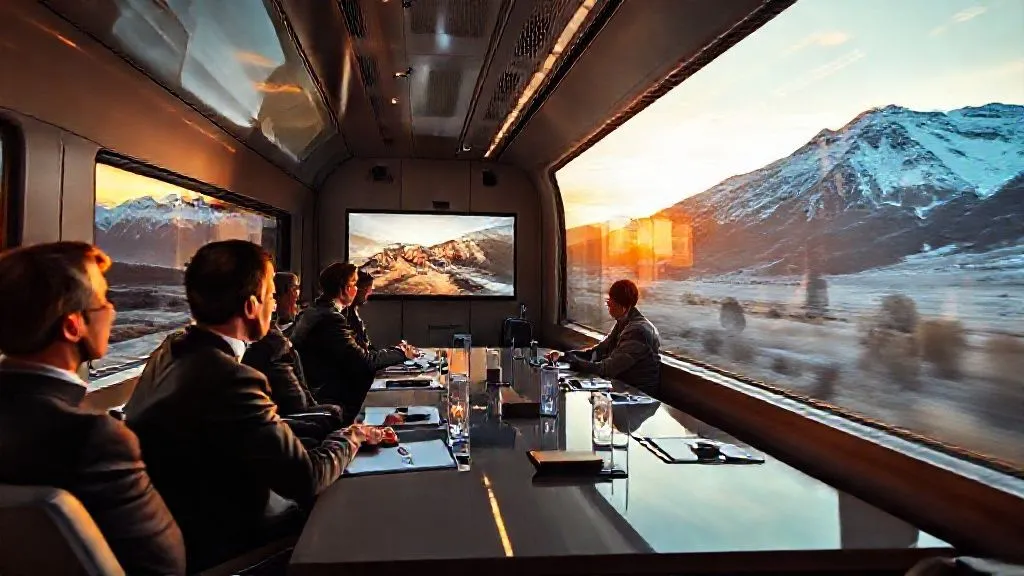
Think about the typical air travel experience: early alarms, airport security queues, cramped seats, and significant idle time. Train travel, especially for inter-city journeys, offers a stark contrast. Employees can often work uninterrupted, enjoy more spacious seating, and arrive closer to city centers, minimizing transfer times.
Studies consistently show that employee well-being directly impacts productivity and retention. A less stressed, more productive employee is a significant asset. According to a Gallup study, organizations with high employee well-being show significantly better business outcomes, including lower absenteeism and higher productivity. By reducing travel-related stress and increasing productive travel time, train travel contributes directly to this.
Brand Reputation and Talent Attraction/Retention
In today's market, corporate sustainability isn't just a buzzword; it's a powerful differentiator. Consumers, investors, and top talent are increasingly scrutinizing companies' ESG (Environmental, Social, and Governance) commitments. Embracing sustainable travel signals a genuine commitment to these values.
A PwC survey revealed that over 80% of consumers prefer companies with strong ESG profiles. For talent acquisition, especially among younger generations, a company's environmental stance can be a deal-breaker. By visibly prioritizing sustainable travel, you enhance your employer brand, attracting and retaining top-tier talent who align with your values.
Risk Mitigation and Regulatory Compliance
The regulatory landscape for carbon emissions is evolving rapidly. Carbon taxes, stricter reporting requirements, and increased scrutiny are becoming the norm. Proactive companies that reduce their carbon footprint now will be better positioned to navigate future regulations and avoid potential financial penalties.
Beyond regulations, there's also reputational risk. Companies perceived as laggards in sustainability face public backlash and investor skepticism. Investing in sustainable travel now is a form of future-proofing your business against these emerging risks.
The Hard Numbers: Building a Robust Business Case
Now, let's get into the specifics of how to quantify these benefits and present them in a way that truly resonates with your CFO. This is where your data-driven arguments become critical.
Comprehensive Cost-Benefit Analysis
You need to present a side-by-side comparison that goes beyond the ticket price. This is about the Total Cost of Ownership (TCO) for a business trip.
- Direct Costs: Include ticket price, but also factor in ancillary airline fees (baggage, seat selection), airport transfers, and potentially higher meal costs at airports. For trains, consider last-mile transport to city-center stations.
- Indirect Costs of Air Travel: Quantify lost productivity during airport wait times, security checks, boarding, and deplaning. Assign an hourly rate to employee time.
- Benefits of Train Travel: Monetize productive work time on the train. Estimate the value of improved employee well-being (e.g., reduced sick days, higher retention based on average cost of employee turnover).
- Carbon Costing: Assign a monetary value to carbon emissions. Use an internal carbon price or a widely accepted social cost of carbon (e.g., from the EPA or similar reputable body). Calculate the emissions savings from train travel versus flying for specific routes and convert that into a dollar value.
- Risk Avoidance: Quantify potential future carbon taxes or fines avoided.
Calculating Carbon Abatement Value
This is a powerful metric. Every tonne of CO2 saved has a value, both environmentally and financially. You can use widely accepted carbon accounting methodologies to calculate the emissions difference between train and air travel for your most frequent routes.
For instance, if a flight from London to Paris emits approximately 100-150 kg CO2e per passenger, while a train journey emits around 10-15 kg CO2e, the saving is substantial. Multiply this saving by an internal carbon price (e.g., $50-100 per tonne of CO2e) to show the direct financial value of your emissions reduction efforts. Resources like the UK Government GHG Conversion Factors or the EPA's Greenhouse Gas Equivalencies Calculator can help provide credible data for your calculations.
Case Study: "GreenPath Logistics' Shift to Rail"
GreenPath Logistics, a mid-sized freight forwarding company with frequent inter-European business travel, faced a dilemma. Their corporate sustainability goals mandated a 25% reduction in Scope 3 emissions (including business travel) by 2025. Initially, their CFO viewed sustainable train travel as an unnecessary luxury, given the slightly higher ticket prices on key routes like Frankfurt-Berlin or Paris-Lyon compared to budget flights.
I worked with their travel manager to conduct a meticulous TCO analysis. We factored in not just ticket prices, but also airport transfers, lounge access costs, lost productivity during airport waits (estimated at 2 hours per trip at an average employee hourly rate of €50), and the carbon cost of flying (using an internal price of €75 per tonne of CO2e). We also surveyed employees, who reported significantly less stress and more productive work time on trains.
The results were compelling. While a train ticket might be 15-20% higher than a flight on certain routes, the TCO for the train journey was actually 5-10% lower due to reduced ancillary costs and increased productivity. Furthermore, the carbon emissions were reduced by 90% on these routes, contributing significantly to their Scope 3 targets. The CFO, presented with hard data on both financial savings and accelerated progress towards ESG goals, approved a phased rollout of train-first policies for all routes under 500 miles. This strategic shift not only saved money in the long run but also bolstered GreenPath's reputation as a leader in sustainable logistics, attracting new eco-conscious clients.
Leveraging ESG Reporting and Investor Relations
Your CFO is not just managing operational costs; they're increasingly responsible for a company's overall financial health, which includes its standing with investors and regulatory bodies regarding ESG performance. Sustainable travel aligns directly with these broader strategic objectives.
Aligning with Corporate Sustainability Goals
Most large companies now have publicly stated sustainability goals. Business travel emissions often represent a significant portion of a company's Scope 3 emissions. By prioritizing train travel, you're not just making a 'nice-to-have' change; you're directly contributing to achieving these critical, often board-mandated, targets.
Highlight how a shift to rail helps the company meet specific KPIs related to carbon reduction, employee well-being, or even diversity and inclusion (as sustainable policies often appeal to a broader talent pool). This moves the discussion from a departmental expense to a strategic enabler of corporate objectives.
Communicating Value to Stakeholders
ESG performance is increasingly a factor in investment decisions. Institutional investors, ethical funds, and even individual shareholders are scrutinizing companies' environmental and social impact. Demonstrating a proactive approach to sustainable business travel can significantly enhance your company's appeal in the capital markets.
Strategic Advice: "Frame sustainable travel not as a 'nice-to-do' but as a 'must-do' for long-term financial resilience and stakeholder value. It's about future-proofing the business."
Your CFO will appreciate arguments that connect current spending to future financial stability and enhanced investor confidence. This is about integrated reporting, where financial and non-financial performance are presented together to show holistic value creation.
Negotiating and Phasing In: A Strategic Approach
Even with a compelling business case, a full, immediate shift might seem daunting. Propose a strategic implementation plan that minimizes perceived risk and allows for data collection.
Pilot Programs and Data Collection
Suggest starting with a pilot program on specific, high-volume routes where train travel offers clear advantages. Collect internal data on employee satisfaction, productivity gains, and actual cost savings (TCO). This real-world data from your own organization will be far more persuasive than external benchmarks.
Identify routes where train travel is genuinely competitive on time and convenience. For example, city-center to city-center routes under 4-5 hours are often ideal candidates for demonstrating the benefits of rail.
Supplier Partnerships and Volume Discounts
Engage directly with major rail operators. Many offer corporate accounts and volume discounts, similar to airlines. Explore these opportunities to reduce the direct cost differential. You might find that a strategic partnership can make train travel surprisingly competitive on price, especially when bundled with other services or loyalty programs.
Also, consider incentivizing employees to choose trains. This could be through internal recognition programs, preferred seating, or even small travel perks for sustainable choices. Such incentives can help drive behavioral change and boost adoption.
Addressing Common CFO Objections Head-On
Be prepared for the common objections and have your data ready to counter them.
- "It's too expensive!" Counter with your TCO analysis, demonstrating the hidden savings from productivity, reduced ancillary costs, and carbon abatement value.
- "It takes too long!" Rebut with door-to-door journey times, emphasizing productive work time on the train versus idle time at airports. Highlight city-center arrivals.
- "It's not flexible enough!" Discuss the frequency of train services on key routes and the potential for last-minute booking flexibility compared to flights, which often have higher last-minute fares.
- "Our employees prefer flying!" Address this with anecdotal evidence from your pilot program, emphasizing improved well-being and productivity. Consider internal campaigns highlighting the benefits.
Frequently Asked Questions (FAQ)
Question? Is train travel *always* more sustainable than flying, even with last-mile transport?
Detailed answer: While train travel is overwhelmingly more sustainable than flying for most comparable journeys, it's crucial to consider the 'last mile' of transport to and from stations. However, because train stations are typically in city centers, the last mile is often shorter and can be covered by public transport, walking, or cycling, further reducing the overall footprint. Flights, conversely, often involve longer, less sustainable transfers to and from out-of-town airports. For very long international journeys, a hybrid approach (e.g., train to an airport for a long-haul flight) might be the most pragmatic and sustainable option.
Question? How can I track the actual ROI of shifting to sustainable train travel?
Detailed answer: To track ROI effectively, you need robust data. Implement systems to track total trip costs (including all ancillaries and productivity estimates), employee satisfaction surveys related to travel mode, and most importantly, carbon emissions savings. Many travel management platforms now offer integrated carbon reporting. Compare these metrics pre- and post-shift to train travel, focusing on the TCO and progress towards your ESG goals. Financial teams can help establish a clear baseline and monitor the financial impact.
Question? My company is small, do these strategies still apply?
Detailed answer: Absolutely. While larger corporations might have more leverage for volume discounts, the fundamental principles of TCO, employee well-being, and brand reputation are universal. Small businesses often have an even greater need to differentiate themselves and attract talent. Starting with just a few key routes or encouraging train travel for certain types of meetings can yield significant benefits and demonstrate your commitment to sustainability without a massive upfront investment. The proportional benefits can be just as impactful.
Question? What if a train journey is significantly longer than a flight? How do I justify the time?
Detailed answer: This is a valid concern. The justification shifts from 'speed' to 'productive time'. If an employee can work effectively, conduct virtual meetings, or prepare presentations on a train, that travel time becomes billable and productive, unlike time spent in airport queues or experiencing flight delays. Highlight the quality of work environment on the train. For very long journeys where the time difference is extreme, train travel may not always be the most practical option, and a balanced approach is key. Focus on routes where the train's 'productive time' advantage offsets the raw journey duration.
Question? How do I handle employee resistance to changing travel habits?
Detailed answer: Change management is crucial. Start with education: clearly communicate the 'why' behind the shift (sustainability goals, employee well-being, TCO benefits). Highlight the advantages for employees themselves (less stress, more productive time, city-center arrivals). Consider incentives, like preferred seating on trains, or even a 'sustainability bonus' for choosing rail. Involve employees in the pilot programs to gather their feedback and make them feel part of the solution. Over time, as positive experiences accumulate, resistance typically diminishes.
Recommended Reading
- Your Essential Guide: How to Plan a Zero-Waste Trip to National Parks
- Unlock Your Potential: How to Train for Extreme Kayaking Expedition Travel
- Unveiling the Truth: How to Avoid Harmful Voluntourism Experiences?
- Food Photography for Travel Bloggers: Top Tips & Tricks Revealed
- Unveiling the Truth: Are Eco Resorts Truly Good for Local Communities?
Key Takeaways and Final Thoughts
Justifying higher costs for sustainable train travel to your CFO isn't about emotional appeals; it's about building a robust, data-driven business case. As a seasoned expert in this field, I've seen firsthand that the initial sticker price often obscures a wealth of hidden benefits and long-term value.
- Think TCO, Not Just Ticket Price: Account for all direct and indirect costs, including productivity, ancillary fees, and transfers.
- Monetize the Intangibles: Put a value on employee well-being, brand reputation, and talent attraction.
- Quantify Carbon Abatement: Translate emissions savings into a financial metric that resonates with finance.
- Align with ESG Goals: Show how sustainable travel directly contributes to corporate sustainability targets and investor appeal.
- Start Small, Gather Data: Pilot programs provide crucial internal evidence to build your case.
The future of corporate travel is undeniably green. By proactively demonstrating the strategic, financial, and reputational advantages of sustainable train travel, you're not just advocating for a better way to travel; you're actively contributing to your company's long-term resilience and success. Empower yourself with these strategies, and you'll transform skepticism into support, driving meaningful change from within.



Your email address will not be published. Required fields are marked *