

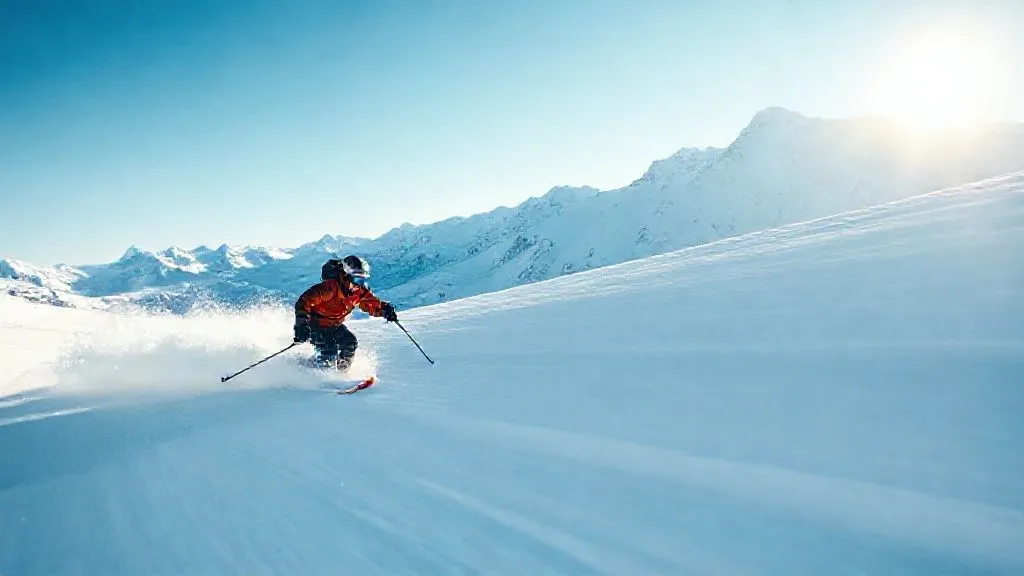
Urgent: How to Guarantee Fresh Powder for a Pro Ski Film Shoot?
For over two decades navigating the intricate world of winter sports media, I've witnessed firsthand the exhilaration of capturing that perfect powder shot – and the crushing disappointment when it slips through your fingers. I remember one high-profile production, a crew of twenty, talent flown in from Europe, millions budgeted, all banking on a single weather window in interior British Columbia. The forecast shifted, the snow materialized 50 miles away, and they were left with a very expensive, very muddy mountain.
The problem, as many of you know, is that a professional ski film shoot isn't just about talent and cameras; it's a high-stakes gamble against Mother Nature. The pressure to deliver 'fresh powder' on cue is immense, with budgets soaring, reputations on the line, and creative visions hanging by a thread. It's not enough to hope for snow; you need a proactive, multi-layered strategy to secure those elusive, pristine conditions.
In this definitive guide, I'm going to pull back the curtain on how to guarantee fresh powder for a pro ski film shoot. We'll delve into cutting-edge meteorological science, explore strategic location scouting, dissect logistical agility, and reveal the vital human connections that truly make the difference. This isn't about luck; it's about mastering a system that transforms chance into certainty.
The Unseen Battle: Mastering Advanced Meteorological Forecasting
The quest for fresh powder begins long before a single piece of camera gear is packed. It starts with an unseen battle waged in the digital realm: mastering advanced meteorological forecasting. Forget your standard weather app; professional ski film shoots demand a level of predictive insight that borders on the clairvoyant.
Beyond the Daily Forecast: Hyper-Local Models
In my experience, relying solely on publicly available forecasts is a rookie mistake that can cost millions. These broad-brush predictions often miss the hyper-local nuances that define true powder. What you need are specialized, high-resolution models that can zoom into specific mountain ranges, valleys, and even individual cirques.
We’re talking about delving into models like the Global Forecast System (GFS), the European Centre for Medium-Range Weather Forecasts (ECMWF), and the North American Mesoscale (NAM) model. But it's not just about accessing them; it's about understanding how to interpret their output in the context of mountain topography. Wind direction, elevation, aspect, and temperature inversions all play critical roles in where snow falls heaviest and stays lightest.
"The mountain doesn't care about your broad-stroke forecast. It cares about micro-climates, wind loading, and elevation bands. True powder forecasting is about understanding these intricate atmospheric dance moves."
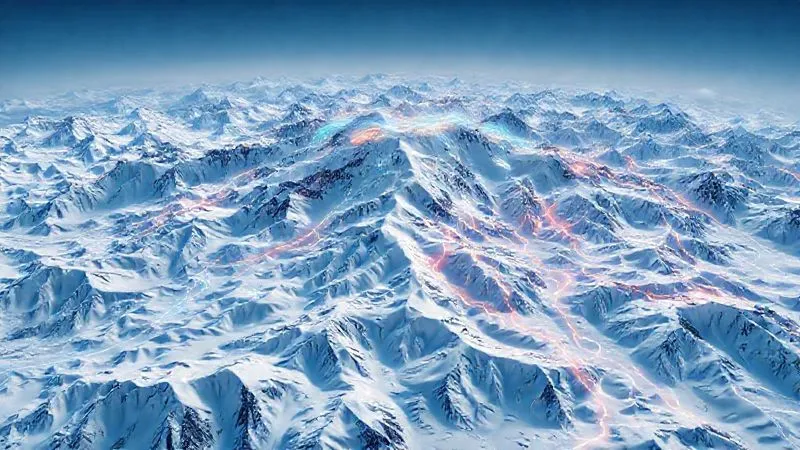
The Art of Weather Window Prediction
Identifying a 'powder cycle' is an art honed over years. These aren't random snowfalls; they are specific atmospheric patterns that repeatedly deliver significant, high-quality snow. Learning to recognize the precursors – large-scale storm tracks, cold air masses interacting with moist air, and specific pressure systems – is paramount.
This involves monitoring both long-range (2-4 week) outlooks for potential storm setups and then drilling down to precise 72-hour windows for execution. You're looking for that sweet spot where a significant accumulation is followed by clearing skies and stable temperatures, preserving the powder until you can get your lenses on it.
Key indicators to watch for include:
- Persistent westerly or northwesterly flow for coastal ranges.
- Deep, cold troughs moving across the continent.
- Atmospheric rivers making landfall (especially Pacific Northwest).
- Temperature drops to below freezing before and during snowfall.
- Low wind speeds during and after snow to prevent scour and slab formation.
For a deeper dive into understanding complex weather patterns, I highly recommend exploring resources from the National Oceanic and Atmospheric Administration (NOAA) at NOAA.gov. Their research papers and data sets are invaluable for serious forecasting.
Strategic Location Scouting: The Powder Hunter's Playbook
Once you have a grasp on the meteorological big picture, the next critical step in how to guarantee fresh powder for a pro ski film shoot is strategic location scouting. This isn't just about finding a pretty mountain; it's about building a robust, flexible portfolio of potential powder havens.
Diversification and Redundancy: Multi-Location Strategy
Never, and I mean never, put all your powder eggs in one basket. Relying on a single location, no matter how renowned, is an invitation for disaster. The most successful film productions I've been involved with always employ a multi-location strategy, having primary, secondary, and even tertiary options across different mountain ranges or climatic zones.
If the forecast for British Columbia looks iffy, is Hokkaido, Japan, showing promise? If the Rockies are locked in a high-pressure system, what about the coastal ranges of Alaska? This requires pre-scouting, pre-permitting, and pre-booking logistics for multiple locations, allowing for rapid deployment when a clear powder window emerges.
Case Study: How 'Arctic Bloom Productions' Saved a Multi-Million Dollar Shoot
Arctic Bloom Productions, a leading adventure film company, faced a critical challenge for their flagship ski film. Two weeks out from their scheduled shoot in interior British Columbia, a key weather system unexpectedly tracked south, threatening to leave their primary location dry. Instead of panicking, their pre-emptive multi-location strategy kicked in. They had already secured basic permits and identified local contacts in Niseko, Japan. Within 48 hours, they pivoted their entire crew, talent, and equipment to Japan, where a massive storm cycle was just beginning. This quick, decisive move, enabled by foresight and redundancy planning, allowed them to capture some of the most iconic powder shots of the season, saving a multi-million dollar investment and delivering a legendary segment.
Micro-Terrain Analysis for Snow Retention
Beyond regional diversification, the true powder hunter understands micro-terrain. This involves identifying specific aspects, elevations, and features that are inherently better at holding and preserving fresh snow. Look for north-facing slopes, which receive less direct sun and thus less melt/freeze cycling. Seek out wind-protected pockets and leeward slopes where snow can accumulate without being scoured away.
High-altitude zones are obvious choices, but also consider treed areas that offer shade and protection from wind. Understanding these nuances can mean the difference between finding wind-blasted ice and pristine, untouched powder within the same mountain range.
| Destination | Average Snowfall | Reliability | Accessibility | Primary Challenge |
|---|---|---|---|---|
| Hokkaido, Japan | 14-18m | Excellent | Moderate | Logistics, Language |
| Revelstoke, BC | 10-15m | High | Good | Crowds, Weather Variability |
| Jackson Hole, WY | 11-12m | Good | Good | Wind, Snowpack Stability |
Logistics & On-the-Ground Agility: Ready for the Call
Forecasting and scouting are crucial, but they're theoretical without the logistical backbone to execute. The ability to guarantee fresh powder for a pro ski film shoot hinges on unparalleled agility and preparedness on the ground. This means being ready to mobilize at a moment's notice.
Rapid Deployment and Pre-Positioning
When that perfect powder window opens, time is your enemy. You need to be able to deploy your team, talent, and specialized equipment with lightning speed. This often means pre-positioning critical gear in various potential locations or having a dedicated logistics manager ready to book charter flights, helicopters, and specialized snowcat transport.
Cultivating strong relationships with local transport providers and guides is invaluable here. They can often provide immediate access to terrain that might otherwise be difficult or time-consuming to secure.
Avalanche Safety & Terrain Management
This point cannot be stressed enough: safety is paramount. Chasing fresh powder often means venturing into complex, uncontrolled, and avalanche-prone terrain. For a professional film shoot, this is non-negotiable and requires a dedicated, certified snow safety team.
This team should include certified avalanche professionals (e.g., ACMG, IFMGA guides) who conduct daily snowpack assessments, manage terrain, and implement rigorous safety protocols. Their expertise ensures that while you're focused on capturing the shot, everyone remains safe. They are your eyes and ears on the snow, providing critical intel on stability and the best, safest lines to ski.
For comprehensive resources on avalanche safety and education, I always direct teams to the American Avalanche Association (avalanche.org). Their guidelines and educational materials are world-class.
Building Your Powder Dream Team: Experts & Equipment
A film crew is only as good as its weakest link, and when it comes to securing fresh powder, your team extends far beyond cinematographers and athletes. You need a specialized roster of experts who live and breathe snow.
The Meteorologist & Hydrologist Duo
I’ve seen productions try to save costs by having a crew member 'check the weather.' This is utterly insufficient. For a high-stakes powder shoot, you need a dedicated, professional meteorologist and potentially a hydrologist. These specialists can interpret complex models, provide micro-forecasts for specific filming zones, and offer daily briefings that go far beyond what any app can deliver.
They can identify subtle shifts in atmospheric pressure, predict precise snowfall totals for specific elevations, and advise on wind effects that will either make or break your powder quality. Their insights allow for proactive decision-making, optimizing your chances of success.
Local Guides & Snow Safety Professionals
As mentioned, snow safety is critical. But local guides bring more than just safety; they bring unparalleled terrain knowledge. They know the hidden stashes, the wind-loaded aspects that will deliver the goods, and the areas that hold cold, unconsolidated snow for days after a storm. Their connections within the local community can also be invaluable for access and logistics.
Key team roles for a powder-guaranteed shoot include:
- Dedicated Lead Meteorologist/Forecaster
- Certified Avalanche Safety Officer(s) / Guides
- Logistics & Operations Manager (highly flexible)
- Local Terrain Expert(s) / Snowcat Operator(s)
- Experienced Stunt/Safety Coordinator (for athletes)
- Camera Operators with deep snow experience
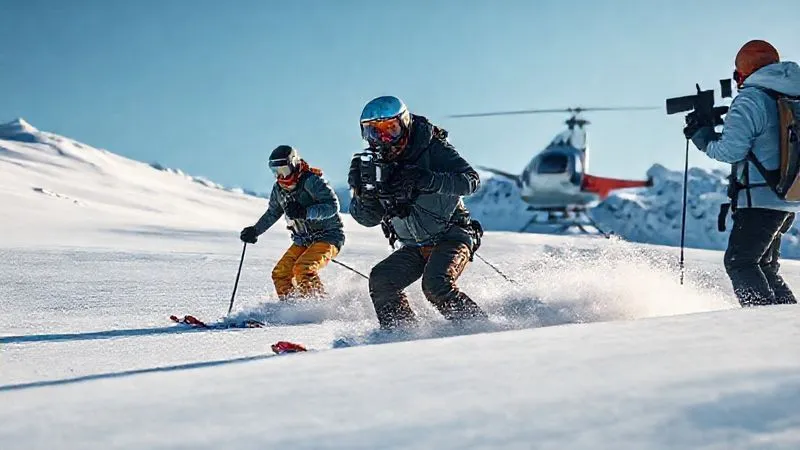
Financial Contingencies: The Cost of Guaranteeing Powder
Let's be blunt: guaranteeing fresh powder for a pro ski film shoot is expensive. It requires a financial commitment that acknowledges the inherent unpredictability of nature. Cutting corners here is a false economy that almost always leads to greater losses.
Budgeting for Flexibility
Your budget needs to reflect the reality of powder chasing. This means allocating significant funds for last-minute changes, including:
- Contingency Travel: Funds for unexpected flights, charters, or ground transport to alternative locations.
- Extended Stays: Budget for crews and talent to stay longer if a weather window is delayed or for multiple attempts.
- Multiple Location Setups: Pre-payments or deposits for permits, accommodation, and local support in several potential regions.
- Expert Fees: The cost of dedicated meteorologists, top-tier guides, and specialized logistics personnel.
- Equipment Redundancy: Having backups or readily accessible replacements for critical gear in remote locations.
Insurance for Weather Delays
Beyond your standard production insurance, you absolutely must investigate specific weather-related contingency insurance policies. These policies can cover losses incurred due to adverse weather conditions, including lack of snow. While they won't guarantee powder, they can mitigate the financial catastrophe of a failed shoot.
"Think of your budget not just as a spending plan, but as a strategic investment in managing risk. The flexibility you build in financially is directly proportional to your ability to adapt and ultimately succeed."
For a comprehensive understanding of production insurance, including weather-related coverage, I recommend consulting guides from industry specialists like Entertainment Partners, available at EP.com.
Leveraging Technology: Beyond Human Observation
While human expertise is irreplaceable, modern technology offers powerful tools to augment our ability to ensure fresh powder for a pro ski film shoot. Integrating these technologies provides an unparalleled edge.
Satellite Imagery and Remote Sensing
Gone are the days of guessing snow depth from afar. Satellite imagery from platforms like NASA's MODIS (Moderate Resolution Imaging Spectroradiometer) or the European Space Agency's Sentinel missions can provide high-resolution data on snow cover extent, depth, and even snow water equivalent. This allows for real-time verification of snow conditions across vast areas, complementing ground-based observations.
These tools are particularly useful for initial scouting and for monitoring snow recovery after a storm, helping to identify untouched zones that might be invisible from the ground.
Snow Monitoring Networks & Webcams
Many mountain regions host extensive networks of automated snow monitoring stations (e.g., SNOTEL in the US, various national weather services). These stations provide real-time data on snow depth, temperature, and precipitation. Coupled with high-definition webcams strategically placed at various elevations and aspects, they offer invaluable 'eyes' on the ground, confirming forecasts and guiding deployment decisions.
| Technology | Pros | Cons |
|---|---|---|
| Satellite Imagery | Vast area coverage, remote access, snow depth/coverage data | Cloud cover limitations, resolution can be coarse for micro-terrain |
| Automated Snow Stations | Real-time, precise ground data, temperature/precipitation | Limited point coverage, data interpretation required |
| High-Def Webcams | Visual confirmation, real-time conditions, accessible | Limited field of view, weather dependent visibility |
Cultivating Relationships: The Human Element of Powder Hunting
In an age of data and technology, it's easy to overlook the most powerful resource at your disposal: people. The human element of cultivating relationships is often the secret sauce in securing those pristine conditions.
Local Communities & Resort Staff
Building trust and rapport with local communities, particularly resort staff, guides, and long-time residents, is invaluable. These individuals possess a deep, intuitive knowledge of their mountains – the secret stashes, the wind patterns, the historical snow cycles. They can offer insights that no algorithm can replicate and can often facilitate access to terrain that would otherwise be off-limits.
A friendly face, a respectful attitude, and a genuine interest in their insights can open doors and provide intelligence that is literally worth its weight in powder.
Industry Peers & Forecasters
Networking within the broader winter sports industry is also crucial. Fellow film producers, photographers, and independent forecasters often share information and collaborate. Being part of this informal network can provide early warnings of developing storm systems, insights into specific locations, and even opportunities for shared resources.
I've personally benefited countless times from a quick call to a trusted colleague in another range, getting real-time ground truth that saved a trip.
Frequently Asked Questions (FAQ)
Q: What's the biggest mistake film crews make when chasing powder? The single biggest mistake is underestimating the complexity and cost of guaranteeing powder, leading to insufficient budget for flexibility and a reliance on optimistic forecasts rather than data-driven, multi-pronged strategies. This often manifests as putting all their eggs in one location basket.
Q: How far in advance should we start planning for a powder shoot? For a high-stakes professional shoot, planning should begin 6-12 months out. This allows for thorough pre-scouting, securing permits for multiple locations, building relationships with local guides and meteorologists, and establishing financial contingencies. The more lead time, the greater your flexibility.
Q: Is it ever worth relying solely on a single, well-known powder destination? No, absolutely not for a professional film shoot where 'guaranteeing' powder is the objective. While some destinations are famous for consistent snowfall, weather patterns are inherently variable. A multi-location strategy provides essential redundancy and significantly de-risks the entire production.
Q: What's the role of climate change in making powder forecasting harder? Climate change introduces increased variability and unpredictability. Warmer temperatures can mean rain at lower elevations or less dense snow. It also shifts historical snowpack patterns, making past data less reliable. This amplifies the need for advanced, real-time forecasting and a highly flexible, adaptive approach to location scouting.
Q: How do you balance creative vision with the limitations of weather? This is a constant challenge. The key is open communication between the creative team, meteorologists, and logistics. Be prepared to adapt your vision to the conditions you find, or to wait patiently for the ideal window. Sometimes, a slightly different shot or location can still deliver an incredible result if the snow is pristine. Flexibility and a strong 'Plan B' (and C) are essential.
Key Takeaways and Final Thoughts
Guaranteeing fresh powder for a pro ski film shoot is an undertaking that demands a blend of scientific rigor, strategic planning, logistical mastery, and deep human connection. It's an investment, not a gamble, in capturing those iconic, breathtaking moments that define winter sports.
To truly ensure success, remember these critical takeaways:
- Master Advanced Forecasting: Go beyond basic weather apps; invest in expert meteorological analysis and hyper-local models.
- Embrace Diversification: Implement a multi-location strategy with primary, secondary, and tertiary options to mitigate risk.
- Prioritize Agility & Safety: Ensure rapid deployment capabilities and never compromise on certified avalanche safety expertise.
- Build a Specialized Team: Surround yourself with dedicated meteorologists, local guides, and experienced snow safety professionals.
- Budget for Contingency: Allocate significant funds for flexibility, last-minute changes, and specialized weather insurance.
- Leverage Technology: Utilize satellite imagery, snow monitoring networks, and webcams for real-time data verification.
- Cultivate Relationships: Build trust with local communities, resort staff, and industry peers for invaluable insights and access.
The pursuit of perfect powder is an exhilarating journey, fraught with challenges but rich with rewards. By adopting this comprehensive, expert-driven approach, you're not just hoping for fresh snow; you're systematically creating the conditions for success. Go forth, plan meticulously, and capture the magic that only untouched powder can provide. The mountains are calling, and with these strategies, you'll be ready.
Recommended Reading
- Market Lesser-Known Historical Cities: 5 Steps for Cultural Trip Success
- How to Maximize Budget Excursion Profits & Eliminate Client Complaints
- 7 Secrets: Plan Scenic Drives to Minimize Crowds & Maximize Views
- Burnout to Breakthrough: 7 Spiritual Paths for Executive Renewal
- Coastal Drive Closed? 7 Expert Ways to Salvage Your Road Trip

Your email address will not be published. Required fields are marked *