


What to do if a child gets lost in crowded foreign family destinations?
For over two decades navigating the intricate world of family travel, I've witnessed the profound joy and unique challenges it brings. But there's one fear that transcends all others for parents: the heart-stopping moment your child is out of sight, especially when you're thousands of miles from home in an unfamiliar, bustling foreign land.
This isn't just about a momentary panic; it's about the unique complexities that arise when language barriers, cultural differences, and the sheer scale of international crowds amplify an already terrifying situation. The standard 'look around' simply isn't enough when you're in a labyrinthine souk in Marrakech or a packed piazza in Rome.
My goal with this guide is to equip you with a definitive, actionable framework – not just a list of tips, but a step-by-step emergency protocol, forged from years of experience and insights, designed to empower you to act decisively and effectively should the unthinkable occur. We'll cover everything from proactive prevention to immediate response and crucial follow-through.
Before You Go: Proactive Prevention & Preparation
The best defense is always a strong offense. In family travel safety, this means meticulous preparation. I've seen countless families benefit from these proactive measures, transforming potential chaos into manageable situations.
The "Meet-Up Spot" & "Code Word" Strategy
Before you even leave for a crowded attraction, establish a clear, easily identifiable meeting point. This could be a specific statue, a prominent fountain, or the entrance of a building. For younger children, a "code word" known only to the family adds an extra layer of security, ensuring they only go with someone who knows it.
- Choose a distinct, unchanging landmark: Point it out clearly to your children upon arrival.
- Practice the routine: Role-play what to do if separated. "If you can't find Mommy or Daddy, go to the big fountain."
- Create a family code word: Teach your child never to go with anyone who doesn't know this word, even if they claim to know you.
Identification & Contact Information
This is non-negotiable. In a foreign country, a child's ability to communicate vital information might be hampered by fear or language barriers. Always ensure they carry your contact details.
- Wearable ID: Consider wristbands (reusable silicon ones are great), temporary tattoos, or even a laminated card tucked into a pocket.
- Essential Information: Include your child's name, your name, your international phone number (with country code), and the name of your accommodation. A short, simple phrase like "Please call my parents" in the local language can also be invaluable.
- Photographic ID: For older children, a photocopy of their passport photo page can be useful, but ensure it's kept securely.
Clothing & Photo Prep
Simple visual cues can make a huge difference in a search.
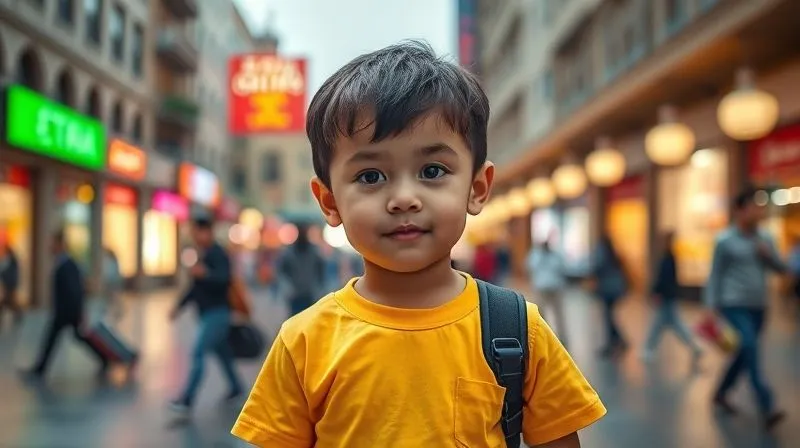
- Bright Clothing: Dress children in easily distinguishable, bright colors. Neon green, vibrant orange, or electric blue stand out in a crowd much more than muted tones.
- Daily Photo: Take a clear, full-body photo of your child each morning before you head out. This provides an accurate, up-to-date visual for authorities, detailing their exact outfit, hairstyle, and any distinguishing features.
Teaching Children Basic Safety Rules
Empower your children with knowledge, tailored to their age and understanding. This isn't about scaring them, but preparing them.
- "Safe Adult" Identification: Teach them to look for uniformed personnel (police, security guards), hotel staff, or even other mothers with children if they get lost.
- "Stay Put" vs. "Go To": For very young children, teach them to "stay put" if they get lost in a specific spot (e.g., near the ice cream vendor). For older children, teach them to go to the pre-designated meet-up spot.
- Stranger Awareness: Reiterate that they should never go with someone they don't know, even if that person offers treats or claims to be a friend of the family.
"Preparation isn't about predicting disaster; it's about building resilience and confidence in your family's ability to navigate unexpected challenges." - Industry Specialist Insight
Immediate Action: The First Critical Minutes
The moment you realize your child is gone, panic is a natural reaction. However, in these initial minutes, swift, decisive action is paramount. Every second counts.
Stay Calm, Act Fast: The 30-Second Rule
I've seen parents freeze, losing precious moments. My '30-second rule' is simple: allow yourself 30 seconds to acknowledge the fear, take a deep breath, and then immediately switch to action mode.
- STOP: Resist the urge to run aimlessly. Stop exactly where you last saw or expected your child.
- LOOK: Scan your immediate surroundings, getting down to a child's eye level if possible. Look under tables, behind displays, or in nearby play areas.
- LISTEN: Call out your child's name loudly and clearly. Listen for a response.
- ALERT: Immediately tell your travel companions or anyone nearby that you've lost your child.
Designated Search Areas & Roles
If you're traveling with another adult, quickly assign roles. This prevents duplicate efforts and covers more ground efficiently.
- Parent 1: Stays at the last known location, calling out the child's name and remaining visible. This is crucial in case the child returns to where they last saw you.
- Parent 2: Expands the search in a logical, outward spiral pattern from the last known location.
- Children: If you have other children, keep them close and explain what's happening calmly. Assign them a safe spot with Parent 1.
"In the initial shock, it's easy to fall into a blame game. Focus on the solution, not the 'who' or 'why.' Unity is your greatest strength." - Industry Specialist Insight
Involve Local Staff (If Applicable)
If you're in an attraction, hotel, restaurant, or shop, immediately alert the staff. They know the layout, have communication systems, and can initiate internal search protocols.
- Description: Provide a clear description of your child, using the photo you took that morning.
- Language Barrier: If you face a language barrier, use translation apps on your phone or ask if a staff member speaks English. A few key phrases like "My child is lost" (e.g., "Mi hijo/hija está perdido/a" in Spanish, "Mon enfant est perdu/e" in French) can be immensely helpful. Lonely Planet offers excellent basic phrase guides.
- Security: Ask them to check security cameras if available and block exits if the location is enclosed.
| Time Elapsed | Action |
|---|---|
| 0-5 Minutes | Immediate visual sweep, call out name, check designated spot, alert immediate family members. |
| 5-15 Minutes | Alert local staff/security, provide child's description, show recent photo, establish search zones. |
| 15+ Minutes | Contact local police, contact embassy/consulate, escalate search efforts. |
Escalating the Search: Engaging Local Authorities
While the initial minutes are about rapid personal search, knowing when and how to involve local police is critical. My advice: don't hesitate. The sooner they are involved, the broader and more official the search becomes.
Reporting to Local Police
Many parents fear involving police in a foreign country, but it's often the most effective next step. Don't wait until hours have passed.
- Locate the Nearest Police: Ask local staff or a trusted local to direct you, or use your phone's GPS to find the nearest police station. In many tourist areas, there are dedicated 'tourist police' who are more equipped to handle international visitors.
- Provide Detailed Information:
- Your child's full name, age, height, weight, hair color, eye color.
- The clothing they were wearing (use that daily photo!).
- The exact last known location and time.
- Any distinguishing marks or medical conditions.
- Your passport information and contact details.
- Request an Incident Report: Even if your child is found quickly, having an official report can be useful for insurance or future travel concerns.
Language Barrier Solutions
The language barrier can be daunting, but there are ways to navigate it.
- Translation Apps: Google Translate or similar apps are indispensable. Use them to convey key information to the police.
- Local Assistance: Ask a hotel concierge, tour guide, or even a friendly local to assist in translation.
- Embassy/Consulate: Your country's embassy or consulate can often provide assistance, including translation services or guidance on local legal procedures. The U.S. Department of State provides resources for emergencies abroad.
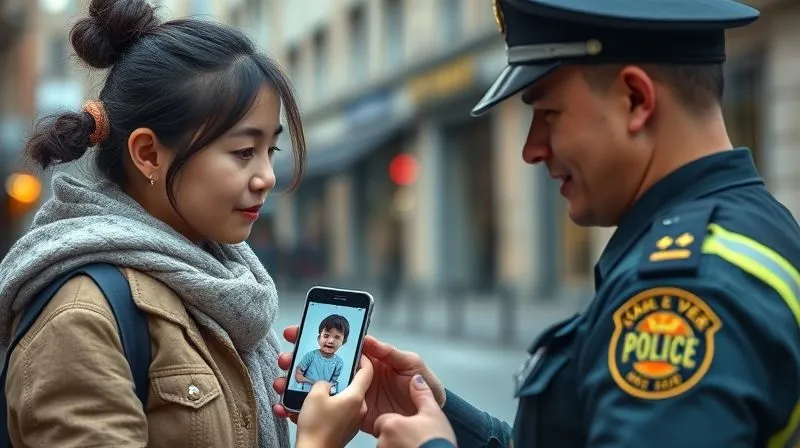
"Never underestimate the power of a clear, recent photograph. It cuts through language barriers and provides an immediate, undeniable visual aid to anyone assisting in the search." - Industry Specialist Insight
The Importance of a Recent Photo
I cannot stress this enough. That daily photo isn't just a quaint travel memory; it's your most powerful tool in a crisis. It eliminates ambiguity and provides an exact image for searchers.
Leveraging Technology and Communication
In our modern world, technology offers powerful tools that can aid in preventing and responding to a lost child situation. While not a substitute for active supervision, these can be crucial layers of safety.
Smartphones & GPS Trackers
Many families already utilize these, often without realizing their full potential for safety.
- Family Tracking Apps: Apps like Apple's 'Find My' or Google's 'Family Link' allow you to see the real-time location of family members' devices. Ensure these are set up and working before you travel.
- Wearable GPS Trackers: For younger children, dedicated GPS trackers (often disguised as watches or clip-ons) can provide location data. Research models that work internationally and have good battery life. PCMag offers reviews of top GPS trackers for kids.
- Smartwatches: Older children might wear smartwatches with cellular capabilities, allowing them to call you if they get separated.
Social Media & Local Alerts
While social media can be a double-edged sword, it can be useful when used cautiously and strategically.
- Local Tourist Groups: Many foreign destinations have local Facebook groups or forums for expats and tourists. A polite, concise post with a photo and last known location could reach a wide audience quickly.
- Official Alerts: Some countries or major attractions have official alert systems or social media channels that can disseminate information.
- Caution: Be wary of sharing too much personal information publicly. Stick to facts needed for the search.
Staying Connected: International Roaming & eSIMs
Your phone is your lifeline. Ensure it's ready for international use.
- International Roaming: Check with your carrier about international roaming plans before you leave.
- eSIMs: Consider purchasing an eSIM for your destination. These provide local data and often calls at a fraction of the cost of roaming, ensuring you can always communicate.
The Emotional Toll & Self-Care During a Crisis
Losing a child, even for a short time, is an emotionally harrowing experience. As an expert, I've seen the immense stress it places on parents. Acknowledging and managing this emotional toll is crucial to maintaining your effectiveness in the search.
Managing Panic and Anxiety
While adrenaline will surge, uncontrolled panic can hinder your ability to think clearly and act efficiently. I always advise a few simple techniques.
- Deep Breathing: Take slow, deep breaths. This simple action can help regulate your nervous system.
- Focus on the Next Step: Break down the overwhelming situation into smaller, actionable steps. "What's the very next thing I need to do?"
- Communicate: Talk to your partner or a trusted friend. Verbalizing your fears can sometimes reduce their intensity.
"Your child needs you to be their rock. While it's okay to feel immense fear, channeling that energy into focused action is your greatest contribution to their safe return." - Industry Specialist Insight
Support Systems: Family, Friends, Embassy
You don't have to carry this burden alone. Lean on your support network.
- Travel Companions: If you're with friends or extended family, delegate tasks. They can help search, make calls, or look after other children.
- Loved Ones at Home: Inform a trusted family member or friend back home. They can assist with research, contacting airlines, or providing emotional support.
- Your Embassy/Consulate: As mentioned, your country's diplomatic mission can offer invaluable assistance, from translation to guidance on local procedures and even emergency travel documents if needed.
Case Study: The Smith Family's Ordeal in Rome
The Smith family, from Seattle, was enjoying a bustling afternoon in Rome's Piazza Navona. Their 6-year-old son, Leo, fascinated by a street performer, wandered a few steps away. In the blink of an eye, he was lost in the dense crowd. Panic immediately set in for Sarah and Mark. However, their pre-trip planning kicked in. Sarah stayed exactly where they last saw Leo, calling his name, while Mark began a quick, systematic search outward. Crucially, Leo was wearing a bright orange t-shirt (as per their daily photo routine), and had a wristband with his parents' international phone number and their hotel name.
After five frantic minutes, Mark, unable to spot Leo, alerted a nearby Carabinieri (Italian police) officer, showing him the morning's photo. Simultaneously, a local vendor, noticing a distressed child looking for his parents, used the phone number on Leo's wristband to call their hotel, which then connected with Sarah. Within 15 minutes, Leo was reunited with his tearful but incredibly relieved parents, thanks to the combination of their immediate, calm action, the police's involvement, and the simple but effective identification measures. The emotional toll was immense, but their preparation significantly shortened the ordeal and prevented a far more traumatic experience.
Post-Reunion: Debriefing and Moving Forward
The moment your child is back in your arms is one of profound relief. But the journey doesn't end there. There are crucial steps to take for both your child's emotional well-being and future prevention.
Reassurance and Comfort
Your child has likely experienced significant fear and distress. Their emotional needs are paramount.
- Physical Comfort: Offer hugs, cuddles, and reassuring words.
- Validate Their Feelings: Acknowledge their fear and confusion. "I know that must have been scary."
- Avoid Blame: Do not scold or blame them. Focus on the positive outcome and reinforce the safety rules gently.
- Process the Event: Talk about what happened in an age-appropriate way. Let them share their experience.
Reviewing the Incident
Once the immediate crisis has passed, take time to calmly review what happened.
- What Worked Well? Identify the preparation steps or immediate actions that proved most effective.
- Areas for Improvement: What could have been done differently? Were there any gaps in your plan?
- Adjust Protocols: Use this experience to refine your family's safety protocols for future travel.
Adjusting Future Travel Plans
This experience, while traumatic, can be a powerful learning opportunity.
- Re-evaluate Destinations: Consider if certain types of crowded environments are too overwhelming for your children's current age or temperament.
- Increased Vigilance: Implement stricter 'hand-holding' rules or use strollers/carriers for younger children in very crowded areas.
- Regular Drills: Periodically review and 'practice' your meet-up spot and code word strategies, even when not traveling.
| Pre-Trip Action | Benefit |
|---|---|
| Establish Meet-Up Spot & Code Word | Reduces panic, provides immediate action plan. |
| Prepare ID Bracelets/Cards | Quick identification, crucial contact info accessible. |
| Daily Photo of Child's Outfit | Accurate description for authorities, saves critical time. |
| Teach 'Safe Adult' Rule | Empowers child to seek help appropriately. |
Frequently Asked Questions (FAQ)
Question: Should I immediately call the police or search myself first?
Answer: In the very first 5 minutes, a rapid, focused personal search (using the 'STOP, LOOK, LISTEN' method) is often the fastest way to locate a child who has just wandered off. However, if your child is not found within 5-10 minutes, or if you are in a very large, complex, or high-risk environment (like a massive airport or train station), you should absolutely involve local staff and police immediately. There's no benefit in delaying official assistance, especially with language barriers.
Question: What if there's a language barrier when reporting to police?
Answer: This is a common concern. First, use a translation app on your phone. Many police forces in tourist areas may have officers who speak English or other common tourist languages. If not, ask hotel staff, a tour guide, or even a helpful local to assist. Having key phrases written down or on your child's ID can also bridge the gap. Your embassy or consulate can also offer translation support in emergency situations.
Question: How can I prepare my very young child (toddler/preschooler) who can't memorize details?
Answer: For very young children, preparation shifts from memorization to physical safeguards and immediate action. Focus on: 1) Physical ID (wristbands with contact info, hotel name). 2) Bright, identifiable clothing and a daily photo. 3) Stroller or carrier use in very crowded areas. 4) Teaching them to 'stay put' and call out for 'Mommy/Daddy' if they realize they're alone. 5) Constant, vigilant supervision and hand-holding. The "meet-up spot" concept can be introduced visually, even if they can't articulate it.
Question: What role does my embassy or consulate play?
Answer: Your country's embassy or consulate is a vital resource. While they cannot conduct the search themselves, they can: 1) Assist with communication and translation with local authorities. 2) Provide guidance on local laws and procedures. 3) Help with emergency travel documents if passports are lost or stolen. 4) Offer general support and resources for citizens in distress abroad. Contact them as soon as police are involved.
Question: Is it safe to use social media to find a lost child?
Answer: Social media can be a powerful tool, but it must be used with caution. Stick to local community groups or official tourist pages rather than broad public posts. Share only essential details: a recent photo, your child's first name, age, and last known location. Avoid sharing your full name, hotel room number, or specific travel itinerary. Always prioritize official channels (police, local authorities) first.
Key Takeaways and Final Thoughts
- Proactive Preparation is Paramount: Implement identification, communication strategies, and teach safety rules *before* you leave.
- Act Immediately and Decisively: The first few minutes are critical. Stay calm, search systematically, and involve local staff.
- Don't Hesitate to Involve Authorities: Local police and your embassy/consulate are crucial resources in a foreign country.
- Leverage Technology: Use tracking apps, international communication, and (cautiously) social media.
- Prioritize Emotional Well-being: For both yourself and your child, managing fear and providing comfort post-reunion is vital.
The thought of a child getting lost in a foreign land is every parent's worst nightmare. Yet, with thorough preparation, a clear emergency plan, and the courage to act swiftly, you can significantly mitigate the risks and increase the chances of a swift and safe reunion. My hope is that you never need this guide, but if you do, you'll be equipped with the knowledge and confidence to navigate one of travel's most challenging scenarios. Travel safely, and cherish every moment with your family.
Recommended Reading
- Surf & Zoom: 7 Global Spots Offering Reliable Remote Work Connectivity
- Navigating the Void: 7 Strategies for Space Tourist Health Risks
- Best Cruise for Toddlers with Food Allergies: Safe Sailing Guide
- Arctic Survival: 7 Pro Strategies Guides Use to Prevent Hypothermia
- 7 Proven Strategies: Profiting Sustainably in Biodiversity Hotspots?




Your email address will not be published. Required fields are marked *