

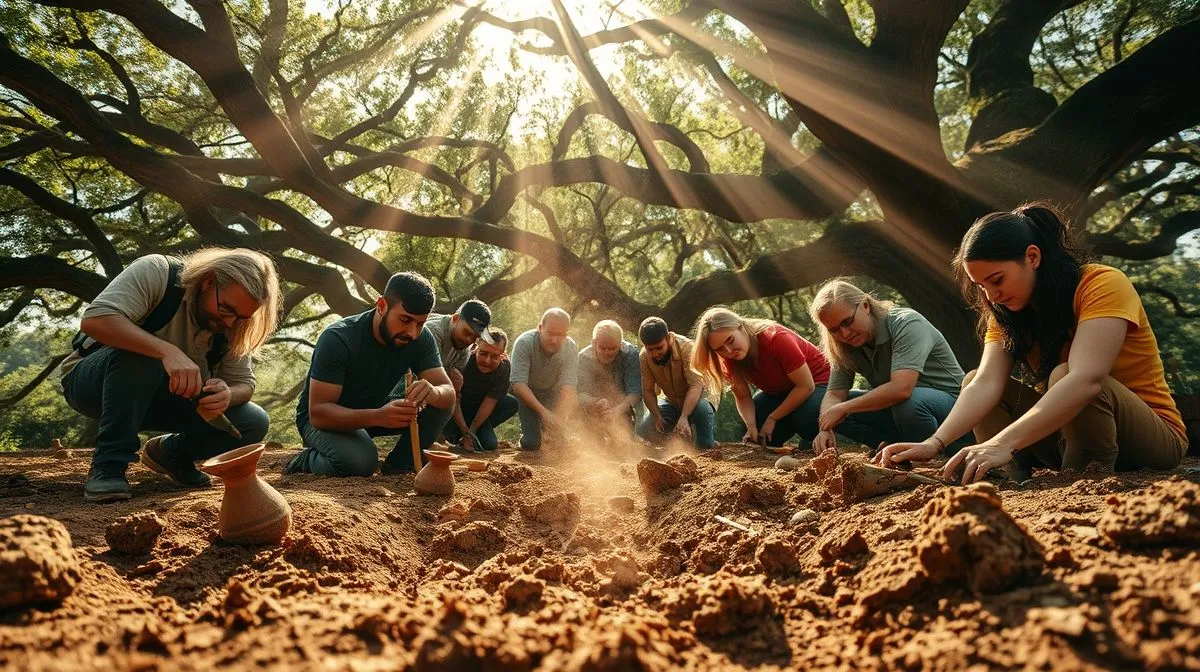
What to Expect on Your First Volunteer Archaeological Dig: An Unforgettable Journey
Imagine standing on a piece of land where, centuries ago, lives unfolded, stories were written, and history was made. You're not just observing; you're about to become an active participant in uncovering those very narratives, one careful scoop of soil at a time. This isn't a museum visit or a history lecture; it's a direct, tactile engagement with the past.
For many, the idea of participating in an archaeological dig conjures images from movies, filled with dramatic discoveries and daring adventures. While the spirit of exploration is certainly there, the reality is often more nuanced, methodical, and profoundly rewarding. Before embarking on such a unique adventure, many wonder: what to expect on a first volunteer archeological dig?
This comprehensive guide will demystify the process, from the initial preparations and daily routines on site to the challenges and incredible rewards of contributing to humanity's collective memory. By the end, you'll have a clear understanding of what awaits you, empowering you to embrace this extraordinary opportunity with confidence and excitement.
The Allure of the Earth: Why Volunteer for Archaeology?
Archaeology is more than just digging; it's the systematic study of human activity through the recovery and analysis of material culture. Volunteering offers a unique gateway into this fascinating discipline, providing hands-on experience that no textbook can replicate. It's about contributing to real scientific research and the preservation of heritage.
More Than Just Digging: The True Purpose
At its core, archaeological fieldwork is about understanding human behavior and societal structures across time. Every artifact, every change in soil color, and every structural remnant tells a piece of a larger story. Volunteers play a crucial role in the meticulous process of excavation, documentation, and initial analysis, directly contributing to new historical insights.
The work is often slow and painstaking, but it's precisely this methodical approach that ensures the integrity of the data. Unlike treasure hunting, archaeology is about context. Knowing where and how an object was found is often more important than the object itself.
The Thrill of Discovery
There's an undeniable thrill that comes with uncovering something that hasn't seen the light of day in hundreds or even thousands of years. It could be a simple pottery shard, a discarded tool, or a fragment of a forgotten building. Each find, no matter how small, is a direct link to the past, offering tangible evidence of human existence.
This sense of connection to history is a powerful motivator for many volunteers. It transforms abstract historical concepts into concrete realities, fostering a deeper appreciation for the human journey. The quiet satisfaction of contributing to a scientific endeavor is a reward in itself.
Connecting with History and Community
Volunteering on an archaeological dig also offers an incredible opportunity to connect with like-minded individuals. You'll work alongside professional archaeologists, students, and fellow volunteers from diverse backgrounds, all united by a common passion. This shared experience often fosters strong bonds and a sense of camaraderie.
Furthermore, you become a custodian of history. Your efforts directly aid in the preservation and interpretation of cultural heritage sites, ensuring that future generations can learn from and appreciate the past. This community aspect extends beyond the dig crew, often involving engagement with local communities near the archaeological site.
Before the Shovel Hits the Soil: Essential Preparations
Preparation is paramount for a successful and enjoyable archaeological volunteer experience. Understanding what's involved before you even pack your bags can significantly enhance your time in the field. It’s not just about physical readiness, but also about mental preparedness and having the right gear.
Choosing the Right Dig: Research and Vetting Programs
Not all archaeological digs are created equal, especially for volunteers. It's crucial to research and vet programs thoroughly. Look for projects run by reputable universities, government agencies, or well-established archaeological organizations. These programs typically adhere to ethical guidelines and provide proper training and supervision.
Consider the project's focus (e.g., prehistoric, Roman, medieval), the location, duration, and any associated costs. Websites like the Archaeological Institute of America (AIA) Fieldwork Opportunities Bulletin or local historical societies often list reputable programs. Don't hesitate to contact program directors with questions about their safety protocols, daily routines, and what a volunteer's typical day looks like.
Physical and Mental Readiness
Archaeological fieldwork is physically demanding. Expect long hours of kneeling, bending, lifting, and repetitive motions, often under varying weather conditions. While you don't need to be an athlete, a reasonable level of fitness and stamina is essential. Regular walks, stretches, and light exercise in the weeks leading up to your dig can be beneficial.
Mentally, be prepared for patience and meticulousness. Archaeology is not always about dramatic finds; it's often about slow, careful work. A positive attitude, adaptability, and a willingness to learn are far more valuable than prior experience. Understanding what to expect on a first volunteer archeological dig helps manage expectations and fosters a resilient mindset.
Gear Up: What to Pack for the Field
Your packing list will vary slightly depending on the climate and specific site, but some essentials are universal:
- Durable Clothing: Long pants and long-sleeved shirts are crucial for sun protection, bug bites, and scratches. Opt for breathable fabrics.
- Sturdy Footwear: Steel-toed boots or strong hiking boots are often required or highly recommended for safety and comfort.
- Sun Protection: Wide-brimmed hat, sunglasses, and high-SPF sunscreen are non-negotiable.
- Gloves: Work gloves protect your hands from blisters, dirt, and sharp objects.
- Water Bottle: Hydration is key. Bring a large, reusable water bottle.
- Small Backpack: For carrying water, snacks, and personal items to the site.
- Personal First-Aid Kit: For minor cuts, blisters, and personal medications.
- Bug Spray: Essential in many outdoor environments.
- Notebook and Pen: For personal observations or notes.
Some programs may provide specialized tools, but it's good to check if you need to bring your own trowel (a WHS or Marshalltown 4-5 inch pointing trowel is standard) or a small brush.
Life on the Dig: Daily Routines and Methodologies
A typical day on an archaeological dig is structured and purposeful, balancing rigorous methodology with the practicalities of outdoor work. While specific routines may vary, certain elements are common across most projects, ensuring consistency and scientific rigor.
The Morning Briefing: Safety and Objectives
Days usually begin early, often with a team breakfast followed by a morning briefing. This is a crucial time where supervisors outline the day's objectives, assign tasks, and review any safety protocols. You'll learn which trench or area you'll be working in, what specific features or layers are being targeted, and any new findings from the previous day.
Safety is always paramount. You'll be reminded of proper tool usage, hydration requirements, and how to report any issues. This initial huddle sets the tone for the day, ensuring everyone is on the same page and aware of their role within the larger project.
Tools of the Trade: Trowels, Brushes, and Buckets
Your primary tools will be a small pointing trowel (often referred to as your 'best friend' on a dig), various brushes (from paintbrushes to whisk brooms), and buckets. The trowel is used for precise excavation, scraping away thin layers of soil to reveal subtle changes in stratigraphy or the outline of features. Brushes are for cleaning exposed surfaces and artifacts, while buckets are used to remove excavated soil.
You'll quickly learn the art of using your trowel, not as a digging tool, but as an extension of your hand, feeling for changes in soil consistency and carefully exposing delicate remains. It's a skill that develops with practice and patience.
Stratigraphy and Context: Understanding the Layers
One of the foundational principles of archaeology is stratigraphy – the study of layered deposits. Just like pages in a book, each layer of soil represents a different period of time, with the oldest layers typically at the bottom and the newest at the top. Understanding these layers, or 'contexts,' is vital for interpreting the site.
You'll be trained to identify subtle changes in soil color, texture, and composition, which indicate different periods of human activity or natural deposition. Maintaining the integrity of these layers during excavation is critical for accurate dating and interpretation of finds.
Documentation is Key: Photography and Field Notes
Archaeology is a destructive science; once a layer is excavated, it's gone forever. This makes meticulous documentation absolutely essential. You'll observe and potentially assist with various documentation methods:
- Field Notes: Detailed written descriptions of contexts, features, and finds, including their spatial relationships.
- Photography: Taking high-quality images of features and artifacts in situ (in their original position) before removal.
- Drawing and Mapping: Creating scaled plans and sections of trenches and features, often using specialized equipment.
- Total Station/GPS: Recording precise coordinates of finds and features for spatial analysis.
Every piece of information, from the smallest pottery shard to the grandest wall, is carefully recorded to reconstruct the site's history in the lab.
Unearthing the Past: Handling Artifacts and Features
The moment of discovery is exhilarating, but it's only the beginning of a careful process. Proper handling and recording of artifacts and features are crucial for preserving their scientific value and ensuring accurate interpretations.
The Delicate Art of Excavation
When an artifact or a feature (like a wall, hearth, or burial) is encountered, the excavation process becomes even more delicate. The goal is to expose the item or feature fully, clean it, and document its exact position and relationship to other elements within the soil matrix before it is removed. This often involves working with small brushes, dental picks, and even bamboo skewers.
Patience is key here. Rushing can damage fragile artifacts or destroy vital contextual information. You'll learn to work slowly and methodically, often under the direct supervision of an experienced archaeologist.
Identifying and Recording Finds
Once an artifact is exposed, it's not simply picked up. Its exact location (depth, grid square, context number) is recorded. Often, a unique 'finds number' is assigned. Photographs are taken, and sometimes a sketch is made. Only after all documentation is complete is the artifact carefully lifted and placed in a labeled bag.
Common finds might include pottery sherds, animal bones, lithics (stone tools), metal fragments, glass, or charcoal. Each type of material requires specific handling and initial processing to prevent damage and contamination.
From Dirt to Lab: Initial Processing of Artifacts
After being carefully bagged and labeled in the field, artifacts typically undergo initial processing at a field lab or designated area. This might involve:
- Washing: Gently cleaning dirt from durable artifacts like pottery and stone, but never metal or bone (which require specialized conservation).
- Sorting: Separating artifacts by material type.
- Cataloging: Assigning permanent catalog numbers and entering data into a database.
- Initial Analysis: Preliminary identification and counting of artifact types.
This post-excavation work is just as vital as the digging itself. As noted by the British Museum's Conservation Department, proper conservation and analysis are critical to unlock the full story an artifact has to tell.
Challenges and Rewards: Navigating the Field Experience
Life on an archaeological dig is an adventure, but like any adventure, it comes with its share of challenges. Embracing these challenges, however, often leads to the most profound personal and intellectual rewards.
Weathering the Elements: Sun, Rain, and Bugs
Archaeological fieldwork is almost entirely outdoors, meaning you are at the mercy of the elements. Scorching sun, sudden downpours, biting insects, and even chilly winds can all be part of the experience. Staying hydrated, dressing in layers, and using appropriate sun and bug protection are crucial for comfort and safety.
A positive attitude and a good sense of humor are invaluable when faced with less-than-ideal conditions. Remember that challenging weather is often part of the authentic field experience.
Physical Demands and Mental Fortitude
As mentioned, the work is physically demanding. You'll be spending long hours in various uncomfortable positions, using muscles you might not typically engage. Fatigue is common, especially in the first few days as your body adjusts. It's important to listen to your body, take breaks when needed, and communicate any discomfort to your supervisors.
Mental fortitude is equally important. The work can be repetitive, and dramatic finds are rare. There will be days when progress feels slow, and the ground seems to yield nothing. Maintaining focus and patience, even when results aren't immediately apparent, is a key aspect of archaeological work.
The Unexpected Joys of Teamwork and Discovery
Despite the challenges, the rewards are immense. The camaraderie among the dig crew is often cited as one of the most fulfilling aspects. You'll share triumphs and frustrations, learn from each other, and forge lasting friendships. The collective effort towards a common goal creates a unique bond.
And then there's the moment of discovery. It might not be a gold artifact, but the quiet thrill of carefully exposing a perfectly preserved pottery vessel, identifying a previously unknown feature, or simply understanding a new aspect of the site's stratigraphy is deeply satisfying. These moments make all the hard work worthwhile, offering a tangible connection to the past and a sense of contributing to something truly meaningful.
Beyond the Dig Site: What Happens Next?
The excavation phase is just one part of the archaeological process. The information and artifacts gathered in the field undergo extensive analysis and interpretation long after the last trowel has been put away. Your contribution extends far beyond the physical act of digging.
Post-Excavation Work: Lab Analysis and Conservation
Once artifacts leave the field, they enter the lab for detailed analysis. This can involve cleaning, cataloging, drawing, photographing, and specialized scientific tests. For example, pottery might be analyzed for temper, form, and decoration to identify its origin and date. Faunal remains (animal bones) can reveal ancient diets and environmental conditions. Botanical remains (seeds, pollen) provide insights into past vegetation and agriculture.
Fragile artifacts may require conservation treatment to stabilize them and prevent further decay. This work is often done by highly specialized conservators who use advanced techniques to preserve the material for future study and display.
Data Interpretation and Reporting
The field notes, photographs, maps, and lab analysis results are all brought together to interpret the site. Archaeologists synthesize this vast amount of data to reconstruct the history of the site, understand the people who lived there, and answer specific research questions. This often involves creating detailed reports, academic papers, and presentations.
Your meticulous documentation in the field directly contributes to the accuracy and depth of these interpretations. Every piece of information collected helps build a more complete picture of the past.
The Legacy of Your Contribution
As a volunteer, your efforts contribute directly to this long-term legacy. The data you help uncover and process becomes part of the archaeological record, informing future research, museum exhibitions, and public understanding of history. Your time on the dig helps to literally unearth stories that might otherwise remain buried and forgotten.
Many archaeological projects also aim to engage the public and local communities, sharing their findings through open days, lectures, and educational programs. Your work helps make history accessible and relevant to a wider audience, fostering a greater appreciation for cultural heritage. For instance, the National Park Service's Archeology Program emphasizes public outreach and preservation.
Common Misconceptions About Archaeological Digs
Popular culture often paints a dramatic and sometimes inaccurate picture of archaeology. Dispelling these myths can help volunteers arrive with realistic expectations and a deeper appreciation for the actual work involved.
It's Not Like Indiana Jones (Mostly)
While the spirit of adventure and discovery is present, archaeological fieldwork is far more methodical and less glamorous than portrayed in movies. There are no booby traps or ancient curses, and dramatic escapes are definitely not part of the job description. The focus is on careful, controlled excavation and precise documentation, not high-octane chases.
Archaeologists are scientists and researchers, not adventurers seeking treasure. The 'treasure' they seek is knowledge and understanding of human history.
The Pace of Discovery
Many expect to unearth significant artifacts every day. The reality is that much of the work involves carefully sifting through soil, identifying subtle changes, and documenting mundane but important contexts. Major finds are rare and often the result of weeks or months of painstaking work.
The pace is often slow and deliberate, designed to ensure no information is lost. The smallest fragment can hold vital clues, and patience is a virtue in this field.
The Importance of Every Detail, No Matter How Small
There's a misconception that only 'pretty' or 'complete' artifacts are important. In archaeology, every fragment, every soil sample, and every subtle feature is significant. A single pottery sherd can tell you about trade networks, dating, and cultural practices. A scatter of charcoal can provide radiocarbon dates and evidence of ancient fires.
Archaeologists are detectives, and every tiny detail is a clue. Volunteers learn to appreciate the scientific value of seemingly insignificant items and how they contribute to the overall picture.
Frequently Asked Questions (FAQ)
Do I need prior experience to volunteer on an archaeological dig? No, most volunteer programs are designed for beginners and provide all necessary training on site. A willingness to learn and a good work ethic are more important than prior experience.
How long do volunteer digs typically last? Volunteer opportunities can range from a single day to several weeks or even months. Shorter programs are great for first-timers, while longer ones offer a more immersive experience.
What kind of physical fitness is required? A reasonable level of fitness is needed, as the work involves bending, kneeling, lifting, and repetitive motions. You should be able to spend extended periods outdoors, often in varying weather conditions.
Will I get to keep any artifacts I find? Absolutely not. All artifacts found during an archaeological dig belong to the project, institution, or the country where they are found. Removing artifacts is illegal and unethical, as it destroys their scientific context and value.
Is it safe to volunteer on an archaeological dig? Reputable archaeological digs prioritize safety. You'll receive briefings on site hazards, proper tool usage, and emergency procedures. Following instructions and being aware of your surroundings are key to a safe experience.
Recommended Reading
- The Ultimate Guide: How to Avoid Hidden Travel Fees & Surcharges?
- Your Essential Guide: How to Plan a Zero-Waste Trip to National Parks
- Unlock Cheap Train Travel: How to Journey Without a Rail Pass!
- Unlock Serenity: The Secret to Finding Quiet Festival Camping Spots
- Villa Concierge: Which Services Are Actually Worth Paying For?
Conclusion
Embarking on a first volunteer archaeological dig is an unparalleled opportunity to connect with history, contribute to scientific research, and gain unique hands-on experience. From the meticulous process of excavation and documentation to the camaraderie forged with fellow enthusiasts, the journey is as rewarding as the discoveries themselves. While it demands patience, physical stamina, and a willingness to embrace the elements, the insights gained and the sense of contribution are profoundly fulfilling. You now have a clearer picture of what to expect on a first volunteer archeological dig, empowering you to approach this adventure with confidence and an open mind. So, prepare to get your hands dirty, open your mind to the whispers of the past, and embark on an unforgettable journey beneath the surface of time.


Your email address will not be published. Required fields are marked *