

Can Wilderness Retreats Truly Fix Remote Team Cohesion Problems?
For over two decades in the adventure travel industry, I've had the privilege of witnessing the profound, transformative power of the wild. I’ve seen individuals push their limits, and groups forge bonds that withstand the harshest elements. But in my consulting work, I've also observed a growing, insidious challenge plaguing modern businesses: the fractured cohesion of remote teams.
The promise of flexibility and global talent pools has been largely fulfilled by remote work. Yet, it often comes at a steep price: a palpable sense of isolation, communication breakdowns that breed mistrust, and a pervasive 'disconnect' that erodes team identity. Companies struggle with low morale, reduced productivity, and alarming turnover rates, all stemming from a lack of true team cohesion.
This isn't merely about organizing an annual company picnic or a virtual happy hour. Those are temporary fixes. Today, I want to share a solution I’ve seen work time and again – a strategic, immersive approach that leverages the raw power of nature. We'll explore how expertly designed wilderness retreats can uniquely address and truly fix remote team cohesion problems, providing a framework for lasting unity and peak performance.
The Unique Disconnect: Why Remote Teams Struggle with Cohesion
Remote work, while offering unparalleled freedom, inadvertently dismantles many of the organic interactions that build strong teams. The casual coffee break, the spontaneous brainstorming session by the water cooler, the shared laughter over an inside joke – these micro-moments are the bedrock of team cohesion. When they vanish, the foundation cracks.
Loss of Spontaneous Interaction
In a traditional office, serendipitous encounters build rapport. Remote setups replace these with scheduled video calls, which are often task-oriented and lack the human touch. This leads to a transactional rather than relational dynamic among team members.
Erosion of Trust and Psychological Safety
Trust is built on vulnerability and shared experiences. When interactions are primarily digital, it's harder to gauge non-verbal cues, understand motivations, and feel truly 'seen.' This can lead to a lack of psychological safety, where team members hesitate to share ideas or admit mistakes for fear of judgment.
The 'Zoom Fatigue' Barrier
Constant video calls are mentally exhausting. This 'Zoom fatigue' reduces attentiveness and empathy, making genuine connection even harder. It transforms communication from a collaborative experience into a draining obligation, further contributing to the challenges in solving remote team cohesion problems.
“The greatest challenge in remote work isn't technology; it's the human element – maintaining connection, trust, and a shared sense of purpose.” – Seasoned Industry Expert (Me)
According to a Harvard Business Review article, the cognitive load of video conferencing significantly impacts our ability to engage deeply, exacerbating feelings of isolation rather than alleviating them.
Why Wilderness? The Unparalleled Advantage of Nature for Team Building
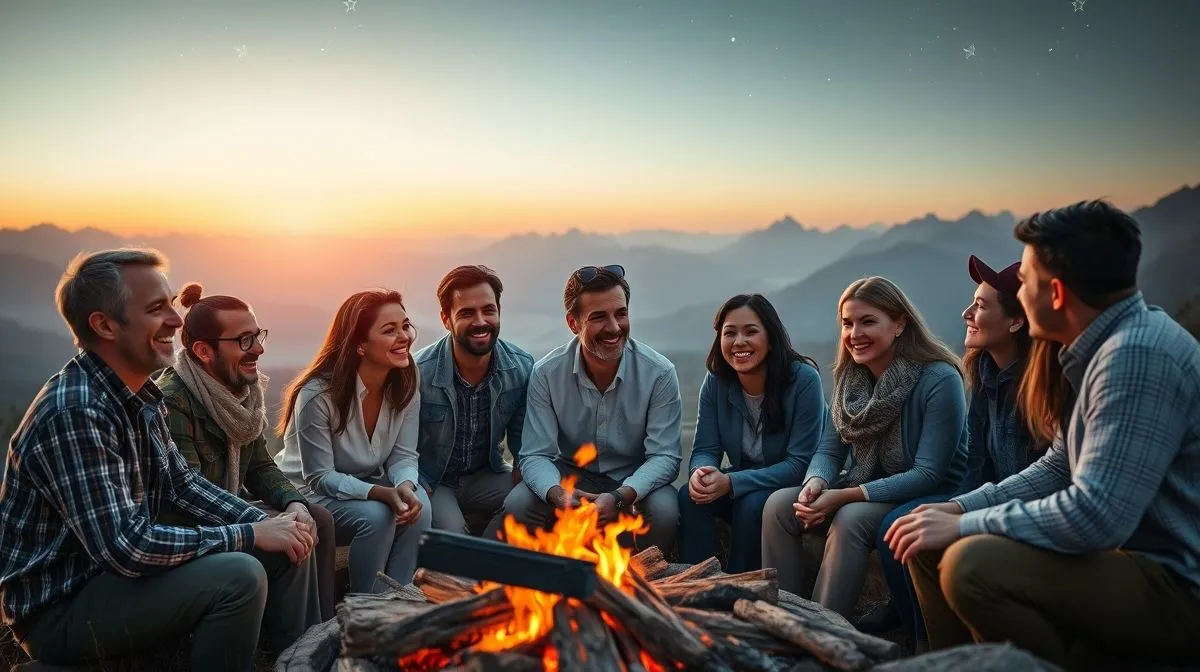
Stepping out of the digital realm and into nature offers a powerful antidote to the remote team disconnect. The wilderness provides a unique environment that strips away distractions, fosters genuine connection, and demands collaborative problem-solving in a way no boardroom ever could.
“Nature does not hurry, yet everything is accomplished.” – Lao Tzu. This wisdom applies perfectly to team building; true cohesion requires patience and a natural environment for growth.
Eliminating Digital Distractions
In the wilderness, smartphones become secondary, if not irrelevant. The constant pings, emails, and notifications that fragment attention disappear. This forced digital detox allows individuals to be fully present, engaging with their surroundings and, crucially, with each other.
Shared Vulnerability and Real-World Challenges
Navigating a trail, setting up camp, or overcoming a natural obstacle together creates shared experiences of vulnerability and triumph. These aren't simulated exercises; they are real challenges that require trust, communication, and mutual reliance. When individuals face and overcome these together, a profound sense of camaraderie and respect develops.
Nature's Cognitive Reset Button
Research in environmental psychology consistently shows that exposure to nature reduces stress, improves focus, and enhances creativity. A refreshed mind is more open to new ideas, better at problem-solving, and more empathetic – all critical components for a highly cohesive team. This natural 'reset' is a powerful tool to truly fix remote team cohesion problems.
Studies, such as those published in the Frontiers in Psychology journal, highlight the restorative effects of natural environments on mental fatigue and cognitive function, creating an optimal state for deep team engagement.
Designing the Transformative Retreat: More Than Just a Hike
A successful wilderness retreat isn't just about packing a bag and heading into the woods. It requires meticulous planning, a clear understanding of your team's needs, and expert facilitation. This is where strategy meets adventure.
Step 1: Define Your 'Why' and Outcomes
Before you even think about location, articulate the specific cohesion problems you aim to solve. Is it communication? Trust? Conflict resolution? Innovation? Knowing your 'why' will guide every subsequent decision.
- Identify Core Challenges: Conduct anonymous surveys or interviews to pinpoint specific areas of disconnect (e.g., lack of cross-functional communication, low morale, trust issues).
- Set Measurable Goals: Define what success looks like. For example, 'increase inter-departmental communication by X%' or 'improve team members' perception of psychological safety by Y points.'
- Communicate Objectives: Clearly articulate these goals to the team beforehand so everyone understands the purpose beyond 'a fun trip.'
Step 2: Choose the Right Wilderness Setting
The 'wilderness' is diverse. Your choice should align with your team's physical capabilities and the desired level of challenge.
- Mountains: Offer physical challenges, breathtaking views, and metaphors for overcoming obstacles. Ideal for pushing boundaries.
- Coastal Regions: Provide opportunities for water-based activities, reflecting adaptability and flow.
- Forests/Lakes: Offer serene environments for reflection, mindfulness, and collaborative problem-solving with less extreme physical demands.
Step 3: Crafting Intentional Activities
Activities should be designed to foster specific team dynamics, not just for entertainment.
- Collaborative Navigation: Teams use maps and compasses to reach a destination, promoting communication and shared leadership.
- Shelter Building/Camp Management: Requires planning, delegation, and resourcefulness under real-world constraints.
- Group Problem-Solving Challenges: Scenarios like 'crossing a river with limited resources' demand creative thinking and trust.
- Facilitated Debriefs: Crucial after each activity. What went well? What didn't? What did we learn about ourselves and each other?
Step 4: Facilitation is Key: The Role of Expert Guides
This is non-negotiable. A skilled facilitator, ideally with a background in both outdoor leadership and organizational development, transforms a series of activities into a profound learning experience. They observe dynamics, prompt reflection, manage conflict, and ensure lessons learned in the wild are transferable back to the remote office. They are vital in making wilderness retreats to fix remote team cohesion problems truly effective.
Step 5: Post-Retreat Integration and Follow-Up
The true ROI lies in how lessons are integrated. Without follow-up, the effects can fade quickly.
- Action Planning Sessions: Immediately after the retreat, help the team translate wilderness learnings into concrete action plans for improving remote work.
- Regular Check-ins: Schedule follow-up meetings to review progress on those action items and celebrate successes.
- Leadership Reinforcement: Leaders must consistently model the behaviors and communication styles fostered during the retreat.
Case Study: Ascent Innovations Forges Cohesion in the Rockies
How Ascent Innovations Reduced Remote Team Churn
Ascent Innovations, a mid-sized software development firm, was facing significant challenges with their fully remote workforce. Despite a talented team, project delays were common, cross-functional communication was strained, and a recent internal survey revealed a startling 30% employee turnover rate over the last year, largely attributed to feelings of isolation and a lack of 'belonging.' Their CEO, Sarah Jenkins, reached out, desperate to find a way to truly fix remote team cohesion problems.
After an initial consultation, I proposed a five-day immersive wilderness retreat in the Colorado Rockies for their 40-person development and marketing teams. The core objective was to rebuild trust, enhance cross-team communication, and re-establish a shared sense of purpose.
The retreat wasn't a vacation. It was structured around a series of progressively challenging collaborative activities: multi-day backcountry navigation, building a communal camp, and solving complex 'survival' scenarios using only limited resources. Crucially, each activity was followed by a professionally facilitated debriefing session. During these debriefs, team members openly discussed their roles, communication strategies, points of failure, and moments of breakthrough. The raw environment stripped away corporate pretenses, allowing genuine personalities to emerge.
One pivotal moment occurred during a simulated 'rescue mission' where the marketing and development teams, usually siloed, had to combine their unique skills to 'locate' and 'extract' a 'lost hiker' (a dummy). The developers initially focused on logical, linear paths, while marketers tried to intuit the 'hiker's' likely emotional state and potential movements. Only when they were forced to truly listen to each other, combining logical analysis with empathetic reasoning, did they succeed. The debrief that followed was intense but transformative, highlighting the power of diverse perspectives.
The results for Ascent Innovations were remarkable. Within six months post-retreat, they observed a 25% increase in cross-departmental project completion rates, evidenced by a significant reduction in inter-team dependencies and delays. More importantly, their employee turnover rate plummeted by 15%, and subsequent internal surveys showed a marked improvement in perceived psychological safety and team trust. Sarah Jenkins reported a palpable shift in team dynamics, with more proactive collaboration and a stronger, unified company culture. This case vividly illustrates the profound capacity of wilderness retreats to fix remote team cohesion problems.
Measuring Success: Beyond Anecdotes, Towards ROI
While the emotional and experiential benefits of a wilderness retreat are undeniable, measuring its tangible impact is crucial for justifying the investment. This isn't just a 'feel-good' exercise; it's a strategic intervention.
Pre- and Post-Retreat Surveys
Implement anonymous surveys that assess key metrics like team trust, communication effectiveness, perceived psychological safety, and overall job satisfaction before and after the retreat. Look for statistically significant improvements in these areas.
Observable Behavioral Changes
Post-retreat, managers should observe and document changes in team behavior. Are team members more proactive in their communication? Are they offering help more frequently? Are cross-functional projects running more smoothly? These qualitative observations provide powerful insights into the retreat's effectiveness.
Impact on Project Delivery & Innovation
Track hard metrics related to team performance. Has project delivery time decreased? Are there fewer reworks? Has the volume or quality of innovative ideas increased? A study by Deloitte on human capital trends often highlights the link between strong team dynamics and organizational performance, underscoring the value of investments in cohesion.
Common Pitfalls and How to Avoid Them
Even the best intentions can go astray. As an expert who has seen many successes and a few missteps, I can tell you that avoiding these common traps is vital to ensuring your wilderness retreats to fix remote team cohesion problems yield the desired results.
Treating it as a Vacation, Not a Strategy
If the retreat is perceived merely as a perk or a holiday, its transformative potential will be lost. Participants won't engage deeply with the objectives, and the lessons learned won't stick. Frame it as an investment in team growth and development from the outset.
Lack of Professional Facilitation
This is arguably the biggest mistake. Without an experienced facilitator, a group of individuals in the wilderness is just a group of individuals in the wilderness. The facilitator is the catalyst, ensuring activities translate into insights and that team dynamics are constructively addressed.
Neglecting Follow-Up
The 'retreat high' can fade quickly. Without a robust post-retreat integration plan and consistent follow-up, the lessons and bonds forged in the wild can dissipate. Treat the retreat as the beginning of a process, not the end.
Ignoring Individual Needs
While the goal is team cohesion, remember that individual comfort and safety are paramount. Ensure that the retreat activities are challenging but accessible, and that any dietary, medical, or physical limitations are accommodated. A negative individual experience can undermine the entire team's cohesion.
As renowned leadership expert Seth Godin often emphasizes, true change requires intention and consistent effort, not just a single event. A wilderness retreat is a powerful catalyst, but its impact is amplified by ongoing commitment.
Frequently Asked Questions (FAQ)
Question: Is a wilderness retreat suitable for all remote teams, regardless of fitness level or outdoor experience? Detailed answer: Absolutely. A common misconception is that wilderness retreats require extreme athleticism or survival skills. While some can be physically demanding, many are tailored to all fitness levels. The 'wilderness' can range from accessible national parks with comfortable lodges to more rugged backcountry. The key is to choose activities and locations that match your team's general comfort level and physical capabilities, ensuring inclusivity. A good facilitator can adapt challenges to suit everyone, focusing on collaboration rather than individual prowess.
Question: How do we measure the ROI of such an investment, beyond anecdotal evidence? Detailed answer: Measuring ROI involves both qualitative and quantitative approaches. Quantitatively, track metrics like employee turnover rates (pre and post), project completion times, communication frequency, and even internal survey scores on trust and psychological safety. Qualitatively, gather feedback from team leaders on observed behavioral changes, improved problem-solving during meetings, and increased cross-functional collaboration. A well-designed retreat should have clear objectives from the start, making measurement more straightforward.
Question: What's the ideal duration for a wilderness cohesion retreat to effectively fix remote team cohesion problems? Detailed answer: In my experience, a minimum of 3 full days (plus travel time) is needed to achieve meaningful transformation. This allows for initial acclimatization, engagement in a variety of activities, and crucial time for facilitated debriefs and reflection. For deeper impact, especially with larger or more fragmented teams, 4-5 days is often ideal. Anything less risks feeling rushed and superficial, while much longer can lead to fatigue.
Question: Can these retreats also address specific conflicts or dysfunctional dynamics within a team? Detailed answer: Yes, they absolutely can, and often do, though this requires an even more skilled and sensitive facilitator. The unique environment of the wilderness, combined with shared challenges, often brings underlying conflicts to the surface in a way that traditional office settings rarely do. A skilled facilitator can then guide the team through these conflicts, providing tools for resolution and fostering empathy. It becomes a crucible for growth, but it's vital that the facilitator is equipped to handle such sensitive situations.
Question: What if team members are hesitant or resistant to outdoor activities or being 'unplugged'? Detailed answer: Hesitancy is normal. It's crucial to communicate the 'why' of the retreat clearly and transparently. Emphasize the benefits for team cohesion and individual well-being, rather than focusing solely on the outdoor aspect. Address concerns proactively, ensuring safety and comfort are priorities. Often, the most resistant individuals are the ones who experience the most profound positive shifts once they engage. Starting with a less extreme wilderness setting can also ease concerns.
Recommended Reading
- The Secret to Stress-Free Gourmet Cruises with Dietary Needs
- 7 Steps: Justify Your Cultural Sabbatical to Your Employer for Growth
- Unveiling the Truth: How Safe Are Private Space Tourism Rocket Launches?
- Unlock Solo Wilderness Safety: Essential Eco-Exploration Tips You Need Now!
- 7 Solo Travel Pathways: Prevent Executive Burnout & Reignite Your Purpose
Key Takeaways and Final Thoughts
The challenges of remote team cohesion are real, complex, and demand more than superficial solutions. As an industry expert, I've seen firsthand how the strategic application of wilderness retreats can provide the unique environment necessary to forge powerful, lasting bonds.
- Intentional Design is Paramount: It’s not just about 'going camping.' Define clear objectives, choose the right setting, and design activities that target specific cohesion issues.
- Facilitation is Non-Negotiable: An expert guide transforms a trip into a truly transformative learning experience, ensuring lessons are absorbed and applied.
- Follow-Up is the Foundation of ROI: The impact of the retreat extends far beyond the duration of the trip; consistent integration and reinforcement are key to long-term success.
- Nature's Unique Power: The wilderness strips away distractions, fosters vulnerability, and provides a powerful cognitive reset, creating fertile ground for genuine connection.
Don't let the distance between your remote team members become a chasm. Embrace the extraordinary power of nature to bridge that gap, build unbreakable trust, and unleash the full potential of your collective talent. Investing in strategic wilderness retreats isn't just an expense; it's an investment in the very soul of your organization, a powerful way to truly fix remote team cohesion problems and build a resilient, high-performing team ready to conquer any challenge.

Your email address will not be published. Required fields are marked *