

How to boost agritourism revenue without disrupting farm operations?
For over two decades in the food travel and agritourism space, I've witnessed countless farm owners grapple with a fundamental dilemma: how to embrace the burgeoning interest in farm experiences and direct-to-consumer sales without compromising the core agricultural work that sustains their livelihood. It's a delicate balance, often feeling like a zero-sum game.
Many passionate farmers, seeing the potential for diversified income, dive into agritourism with enthusiasm, only to find their precious time and resources stretched thin. The very operations they sought to support can become overwhelmed, leading to burnout and, paradoxically, a decrease in overall efficiency.
But what if I told you there are proven, actionable frameworks that allow you to significantly boost agritourism revenue without disrupting farm operations? This isn't about adding more tasks to an already overflowing plate; it's about strategic integration, smart leveraging of existing assets, and designing experiences that complement, rather than conflict with, your agricultural rhythm. Let's delve into how you can achieve this harmonious growth.
1. Strategic Planning: Aligning Agritourism with Farm Rhythms
The foundation of successful, non-disruptive agritourism lies in meticulous planning that respects the inherent cycles of your farm. I've seen too many operations try to force tourism activities into peak harvest times, leading to chaos and frustration. The key is to identify windows of opportunity.
Identifying Off-Peak Opportunities
Every farm has its natural lulls – periods when planting is done, harvest is complete, or certain crops are dormant. These are your prime opportunities for agritourism. Consider activities like winter workshops, spring planting demonstrations, or fall foliage tours that don't directly compete with critical farm tasks.
- Winter: Cozy farm stays, cheese making classes, wreath workshops, seed starting tutorials.
- Spring: Lambing season visits, planting assistance days, garden design workshops.
- Fall: Corn mazes, pumpkin patches, cider pressing, harvest festivals (post-main harvest).
Capacity Assessment and Visitor Flow Management
Before launching any new offering, conduct a thorough capacity assessment. How many visitors can your infrastructure, staff, and land comfortably accommodate without stressing your animals, crops, or family? This isn't just about parking spaces; it's about impact on soil, water, and wildlife.
"The most sustainable agritourism ventures are those that understand their farm's natural limits and design experiences within those boundaries, ensuring both visitor satisfaction and agricultural integrity." - Industry Veteran Insight
Implement clear visitor pathways, designated activity zones, and timed entry systems to manage flow. This prevents visitors from inadvertently interfering with farm work areas or sensitive agricultural processes. As a study by the USDA National Agricultural Library emphasizes, careful planning is crucial for integrating tourism without compromising agricultural production.
| Farm Activity | Peak Season | Agritourism Focus (Non-Disruptive) | Visitor Impact Level |
|---|---|---|---|
| Planting/Sowing | Spring | Educational workshops on soil prep, seed starting, farm animal introductions | Low to Medium |
| Cultivation/Growth | Summer | Self-guided tours, farm-to-table dinners, U-pick berries (designated areas) | Medium |
| Harvest | Late Summer/Fall | Harvest festivals (post-main harvest), pumpkin patches, cider pressing | Medium to High (controlled) |
| Dormancy/Maintenance | Winter | Cozy farm stays, winter workshops, artisan craft classes | Low |
2. Leveraging Existing Assets: Value-Added Products & Experiences
One of the most effective strategies to boost agritourism revenue without disrupting farm operations is to capitalize on what you already produce. This means transforming raw agricultural goods into value-added products and crafting experiences around your existing farm life.
Crafting Unique Farm-to-Table Offerings
Your farm likely produces incredible ingredients. Turn them into gourmet jams, artisanal cheeses, baked goods, or farm-fresh meals. These products can be sold directly to visitors, online, or through local markets. The prep work can often be done during off-peak farm hours or by dedicated staff.
- Farm-based catering: Offer picnic baskets for visitors to enjoy on designated spots.
- Cooking classes: Use your own produce to teach visitors how to make seasonal dishes.
- Subscription boxes: Deliver farm-fresh produce and value-added goods directly to consumers.
Developing Educational Workshops & Demonstrations
People are hungry for knowledge about where their food comes from. Offer workshops on topics like organic gardening, beekeeping, composting, bread baking, or even small-scale animal husbandry. These can be scheduled during off-hours or weekends, utilizing your existing expertise and farm setting.
Case Study: Green Acres Farm's Jam Success
Green Acres Farm, a small berry farm in the Pacific Northwest, struggled to sell all their seasonal produce. Instead of expanding their fields, which would disrupt their existing operations, they invested in a small, licensed kitchen on-site. During the off-season and after daily farm tasks, the owner and a hired part-time assistant would turn surplus berries into gourmet jams and preserves.
They started selling these at their farm stand, then online, and eventually to local specialty stores. The jams became a major draw, increasing their average visitor spend by 40% and providing consistent income outside the short berry season. This strategy leveraged their existing produce and infrastructure without demanding more land or significant changes to their core farming practices.
3. Technology Integration: Streamlining Visitor Management & Sales
In today's digital age, technology is your greatest ally in managing visitor flow and boosting revenue without adding manual labor to your farm operations. I've seen firsthand how a well-implemented tech solution can transform a chaotic visitor experience into a smooth, profitable one.
Online Booking Systems & Ticketing
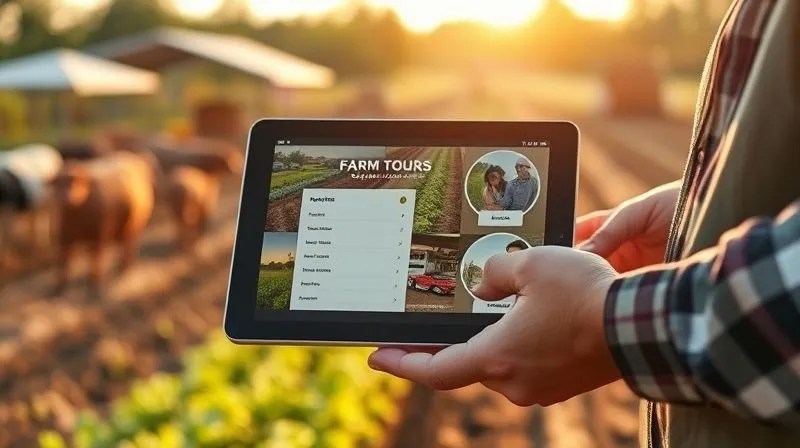
Implement an online booking and ticketing system for all your agritourism activities, from farm tours to workshops. This allows visitors to reserve and pay in advance, giving you predictable visitor numbers and reducing on-site administrative tasks. It also helps manage capacity effectively.
Platforms like FareHarbor or Peek Pro are excellent for this, offering features for scheduling, payment processing, and even waiver signing.
Digital Marketing & Storytelling
Use social media, email newsletters, and a professional website to tell your farm's story. Share stunning photos of your crops, animals, and farm life. Highlight the unique experiences you offer. Digital marketing is largely asynchronous, meaning you can manage it during non-peak farm hours, reaching a wide audience without needing to be physically present.
Focus on authentic content that showcases your farm's values and the passion behind your work. This builds a strong connection with potential visitors, encouraging them to seek out your farm.
4. Partnerships & Collaborations: Expanding Reach, Reducing Burden
You don't have to do it all alone. Collaborating with other local businesses and tourism entities can significantly expand your reach and enhance your agritourism offerings, all while sharing the workload and minimizing disruption to your own farm operations.
Local Tourism Boards & Regional Initiatives
Engage with your local tourism board, chamber of commerce, and regional agricultural associations. They often promote local attractions, and your farm can become a key part of a wider tourism trail. This provides free or low-cost marketing and helps position your farm within a broader visitor experience.
"Collaboration is the new competition. By working with your neighbors, you create a stronger, more diverse offering that benefits everyone involved." - Seth Godin, marketing guru
Collaborating with Local Businesses (Restaurants, B&Bs)
Forge partnerships with nearby restaurants, bed and breakfasts, wineries, or artisan shops. Offer packages that combine a farm visit with a meal at a local eatery or a stay at a charming B&B. This cross-promotion brings new visitors to your farm without you needing to manage accommodation or dining facilities.
- Referral programs: Offer mutual discounts or commissions for referring customers.
- Joint events: Co-host a 'Farm-to-Table Dinner' with a local chef, where the chef handles the cooking and marketing, and you provide the venue and fresh ingredients.
- Product placement: Sell your value-added products in local shops, extending your brand's reach.
5. Optimizing Visitor Experience: Self-Guided & Low-Impact Options
To truly boost agritourism revenue without disrupting farm operations, you must design experiences that are largely self-sufficient or require minimal direct supervision from core farm staff. This empowers visitors while preserving your team's focus on agriculture.
Self-Guided Farm Tours & Audio Guides
Create well-marked pathways with informative signage about your crops, animals, and farming practices. Develop a simple audio guide (accessible via QR code or a dedicated app) that visitors can listen to on their smartphones. This allows them to explore at their own pace, asking questions only when absolutely necessary.
This approach significantly reduces the need for dedicated tour guides and allows your farm staff to focus on their primary duties. It’s also incredibly scalable – the infrastructure is set up once, and it can serve hundreds of visitors.
Designated Picnic Areas & Observation Points
Set up attractive, clearly defined picnic areas and observation points. These can be near scenic spots, animal enclosures, or fields. Provide comfortable seating and perhaps even a small farm stand nearby for impulse purchases. This encourages visitors to linger and spend more time (and potentially money) on your farm without requiring constant interaction.
6. Staffing & Training: Empowering Your Team (and Yourself)
Effective staffing and training are paramount for integrating agritourism seamlessly. It’s not about burdening your existing farmhands with new duties, but rather strategically assigning roles and providing the necessary skills to manage visitor interactions efficiently.
Cross-Training Farm Staff for Agritourism Roles
Identify farm staff who have an aptitude for public interaction and provide them with specific training for agritourism roles. This might involve customer service, basic first aid, or storytelling techniques about the farm. Crucially, these roles should be secondary and scheduled during specific times, not interfering with critical farm tasks.
For example, a farmhand might be designated as a 'visitor liaison' for two hours in the afternoon, after their primary duties are complete. This ensures continuity in both farm work and visitor experience.
Volunteer Programs & Community Engagement
Consider establishing a volunteer program. Many people are eager to learn about farming and contribute to local agriculture. Volunteers can assist with visitor management, guiding tours, or helping with value-added product preparation, freeing up your paid staff for essential farm work.
This also fosters a sense of community and can lead to valuable word-of-mouth marketing. Ensure clear guidelines, training, and supervision for all volunteers to maintain quality and safety standards.
7. Data-Driven Decisions: Measuring Success and Adapting
You can't improve what you don't measure. To truly boost agritourism revenue without disrupting farm operations, you need to track key metrics, analyze visitor feedback, and be prepared to adapt your offerings based on insights. This iterative approach ensures continuous improvement and efficiency.
Collecting Visitor Feedback & Metrics
Implement simple feedback mechanisms: QR codes for online surveys, comment cards, or a dedicated email address. Ask about their experience, what they enjoyed, and what could be improved. Track visitor numbers, average spend per visitor, peak visitation times, and conversion rates for specific activities or products.
Understanding these metrics allows you to identify what's working well and what might be causing bottlenecks or dissatisfaction. According to a report by Deloitte, data-driven decision-making leads to significant improvements in operational efficiency and customer satisfaction across industries.
Iterative Improvement Based on Data
Use the data you collect to make informed adjustments. If a particular tour time is consistently underbooked, consider changing it. If a specific value-added product is flying off the shelves, explore expanding its production. If visitors consistently highlight a particular bottleneck, address it proactively.
This isn't about guesswork; it's about making small, data-backed changes that optimize your agritourism offerings, leading to higher revenue and a smoother integration with your farm's core activities. For instance, analyzing visitor flow data might reveal that a new pathway could alleviate congestion in a sensitive farming area.
| Metric | Goal | Actionable Insight |
|---|---|---|
| Average Visitor Spend | Increase by 15% | Introduce more premium value-added products, bundle experiences |
| Visitor Satisfaction Score (out of 5) | Maintain 4.5+ | Regularly review feedback, address common complaints promptly |
| Online Booking Conversion Rate | Improve by 10% | Optimize website UX, streamline booking process, clear CTAs |
| Farm Staff Time Allocation (Agritourism vs. Farm Ops) | Maintain 20/80 split | Cross-train staff, leverage technology for self-guided options |
| Repeat Visitor Rate | Achieve 25% | Launch loyalty programs, email newsletters with exclusive offers |
Frequently Asked Questions (FAQ)
How do I manage visitor traffic during harvest season without impacting operations? The best approach is proactive planning. Designate specific, non-critical areas for visitors during harvest, or focus on post-harvest activities like festivals or workshops. Utilize online booking to limit daily visitor numbers and implement clear signage and pathways that direct visitors away from active harvest zones. Consider offering 'harvest observation' experiences from a safe, elevated viewpoint rather than direct participation, ensuring safety and minimizing disruption.
What are the most cost-effective marketing strategies for a small farm just starting with agritourism? Start with a strong online presence: a simple, informative website and active social media (Instagram, Facebook) showcasing your farm's authentic story. Leverage local partnerships by collaborating with tourism boards and other local businesses for cross-promotion. Word-of-mouth is powerful; encourage visitors to share their experiences. Participate in local farmers' markets to promote your farm directly and distribute flyers. Focus on high-quality, authentic photography and video.
Can agritourism truly be profitable without significant upfront investment in new infrastructure? Absolutely. Begin by leveraging your existing assets. Start with value-added products made from your current produce, or offer simple self-guided tours using existing pathways and informational signs. Utilize online booking systems to manage visitors without needing a dedicated reception area. Focus on experiences that require minimal new infrastructure, like picnic areas or designated observation spots. Profitability comes from smart, incremental growth and maximizing the value of what you already have.
How do I ensure visitor safety without constant supervision, especially with children present? Safety is paramount. Clearly marked danger zones, robust fencing around animal enclosures, and well-maintained pathways are essential. Implement a clear liability waiver that visitors must sign upon entry or booking. Provide a detailed safety briefing (via signage or audio guide) outlining farm rules, especially regarding interaction with animals or machinery. Consider self-guided tours with emergency contact information readily available. For specific activities, ensure a trained staff member or volunteer is present. Consult with your insurance provider for specific recommendations. For more information on farm safety, refer to resources from organizations like the National Safety Council.
What kind of legal considerations should I be aware of when opening my farm to the public? Key legal considerations include liability insurance (ensure your policy covers agritourism activities), zoning regulations (check if your property is zoned for public access or commercial activities), and health and safety regulations (especially for food preparation, restrooms, and animal interaction). It's also wise to implement clear waiver forms for visitors. Consulting with a local attorney specializing in agricultural law or business law is highly recommended to ensure full compliance and protection. Always prioritize visitor safety and clearly communicate any potential risks.
Key Takeaways and Final Thoughts
Successfully boosting agritourism revenue without disrupting farm operations is not just a dream; it's an achievable reality when approached with strategic planning, creative thinking, and a commitment to leveraging your farm's unique strengths. It demands a shift from simply 'adding' tourism to 'integrating' it thoughtfully.
- Plan with your farm's rhythm: Align agritourism activities with your natural agricultural cycles.
- Maximize existing assets: Turn your produce into value-added products and your knowledge into workshops.
- Embrace technology: Use online systems to streamline bookings and marketing, minimizing manual oversight.
- Collaborate widely: Partner with local businesses and tourism boards to expand your reach and share the load.
- Design for independence: Create self-guided experiences that empower visitors and free up your staff.
- Invest in your team: Train staff and consider volunteers to manage visitor interactions efficiently.
- Measure and adapt: Use data and feedback to continually refine your offerings for optimal revenue and minimal disruption.
By implementing these strategies, you're not just opening your farm to visitors; you're cultivating a sustainable, diversified business model that honors your agricultural heritage while securing a prosperous future. The journey of transforming your farm into a thriving agritourism destination is one of continuous learning and adaptation, but with these insights, you're well-equipped to grow both your crops and your revenue harmoniously. Go forth and cultivate success!
Recommended Reading
- 7 Pillars: Sustainable Returns from Biodiversity Eco-Tourism?
- Treehouse Glamping: Is it Safe for Kids? Ultimate Safety Guide
- 7 Eco-Luxury Glamping Secrets: How to Balance Cost & Planet
- Mastering Self-Rescue: Your Ultimate Guide to Multi-Pitch Ice Climbs
- Space Tourism: How to Ethically Handle the Environmental Impact?





Your email address will not be published. Required fields are marked *