

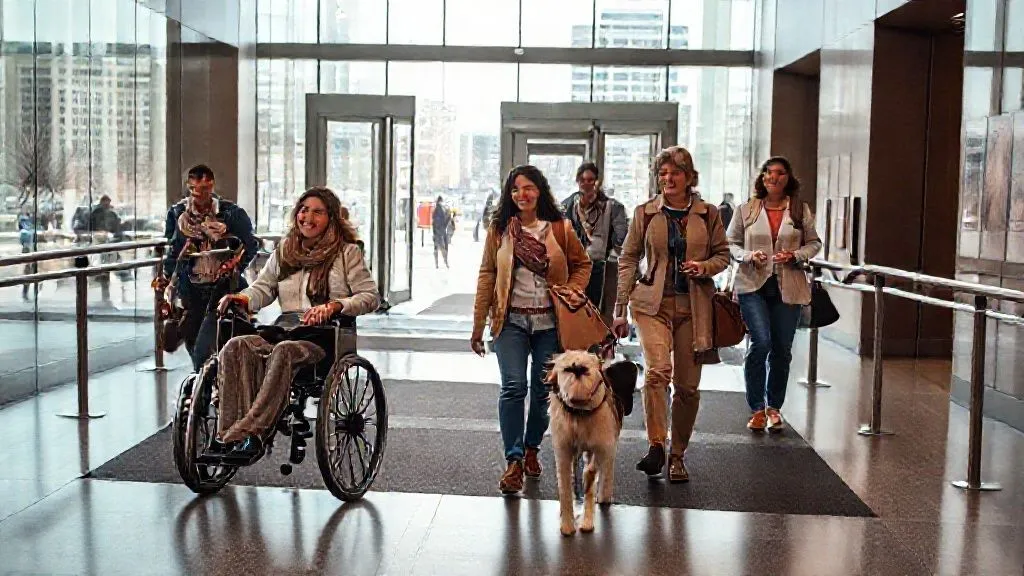
How to quickly assess true accessibility of attractions for clients?
For over 15 years in the accessible travel sector, I've witnessed a recurring and deeply frustrating scenario: a client, brimming with anticipation for their dream vacation, arrives at an attraction only to find its 'accessible' claims fall woefully short. It’s not just a minor inconvenience; it’s a profound disappointment, a logistical nightmare, and a betrayal of trust.
The problem is pervasive. Many attractions, perhaps with good intentions, offer superficial accessibility information. They might boast a ramp at the entrance, but fail to mention the inaccessible restrooms, the uneven cobblestone paths, or the lack of sensory-friendly options. This disconnect between advertised accessibility and lived reality is the pain point we, as travel professionals, must urgently address.
This guide isn't about generic checklists. It's about empowering you with a robust, actionable framework – born from years of hands-on experience and deep dives into the nuances of inclusive travel. You'll learn how to quickly assess true accessibility of attractions for clients, moving beyond surface-level claims to deliver genuinely barrier-free and joyful experiences.
Beyond the Ramp: Deconstructing the Layers of True Accessibility
When we talk about accessibility, too often the mental image defaults to a wheelchair ramp. While vital, this is merely the tip of the iceberg. True accessibility encompasses a vast spectrum of needs, ensuring that everyone, regardless of their physical, sensory, or cognitive abilities, can participate fully.
The Spectrum of Disability: It's More Than Just Mobility
In my work, I've learned that understanding the diverse needs of clients is paramount. Accessibility isn't just about ramps and wide doorways for wheelchair users. It extends to:
- Mobility Impairments: Wheelchairs, scooters, walkers, canes, and those who simply tire easily or struggle with stairs.
- Sensory Impairments: Visual (low vision, blindness), Auditory (deaf, hard of hearing), and Sensory Processing Disorders (sensitivity to light, sound, crowds).
- Cognitive & Neurological Differences: Autism, ADHD, dementia, learning disabilities, and other conditions that affect processing information, navigating complex environments, or handling unexpected changes.
- Invisible Disabilities: Chronic pain, fatigue, mental health conditions, and others that may not be immediately apparent but significantly impact a person's ability to engage.
A truly accessible attraction considers all these facets, offering solutions and accommodations that go far beyond a simple ramp.
Understanding Legal vs. Lived Accessibility
Many countries have legal frameworks, like the Americans with Disabilities Act (ADA) in the U.S., that mandate certain accessibility standards. While these are crucial baselines, they often represent minimum requirements. What's legally compliant isn't always practically usable or genuinely inclusive.
"Legal compliance is the floor, but lived accessibility is the ceiling. Our goal should always be to reach for the ceiling, ensuring real-world usability and comfort for every client."
I've seen countless instances where an attraction technically meets ADA guidelines but utterly fails in providing a dignified or enjoyable experience. For example, a restroom might have grab bars, but the stall is too small for a power chair to maneuver, or the soap dispenser is out of reach. Our assessment must bridge this gap between legal definition and practical, human experience.
The Pre-Assessment Deep Dive: Initial Research & Red Flags
Before you even pick up the phone, a significant portion of your assessment can and should be done remotely. This initial deep dive helps you quickly filter out unsuitable options and focus your efforts where they matter most.
Online Reconnaissance: Website, Reviews, and Social Media
The internet is your first and most powerful tool. Start by meticulously examining the attraction's official website.
- Dedicated Accessibility Pages: Does the site have a clear, easy-to-find section on accessibility? What details does it provide? Look for specifics: ramp slopes, door widths, availability of assistive listening devices, quiet hours, sensory maps, or accessible programming. Vague statements like 'wheelchair accessible' are red flags.
- Virtual Tours & Floor Plans: Many modern attractions offer virtual tours or detailed floor plans. Use these to visually identify potential barriers or accessible routes. Can you spot accessible restrooms? Are pathways wide enough? Are there elevators to all levels?
- User Reviews on Major Platforms: Scrutinize reviews on platforms like Google Maps, TripAdvisor, and Yelp. Use keywords like 'accessible,' 'wheelchair,' 'stroller,' 'sensory,' 'disability,' or 'mobility' in the search bar within the reviews section. Pay close attention to both positive and negative comments regarding accessibility. Often, fellow travelers are the most honest source of practical information.
- Specialized Accessible Travel Forums & Blogs: Dive into communities dedicated to accessible travel. Websites like Wheelchair Travel or forums on Facebook can provide invaluable first-hand accounts and recommendations that official sites often miss.
- Social Media Visuals: Browse the attraction's official social media accounts and geotagged posts from visitors. Look for recent photos or videos. Do they show diverse visitors, including those with disabilities? Does the environment look genuinely navigable?
I once had a client who wanted to visit a historic castle. The website claimed 'wheelchair access.' A quick search of user reviews revealed that 'access' meant a very steep, unpaved path to a single, small accessible viewing platform, with no access to the main castle interior. This immediate red flag saved us considerable client disappointment.

Direct Communication: Crafting the Right Questions
After your initial online scan, direct communication is non-negotiable. Don't rely solely on generic email forms. A phone call, followed by a detailed email to confirm, is often the most effective approach. Here's what to ask:
- Specific Dimensions: "What is the clear width of your narrowest doorway on the main tour route?" "What is the slope of your steepest ramp?" "What are the dimensions of your accessible restroom stalls?"
- Staff Training: "Are your staff trained in disability awareness and assistance? Is there a dedicated accessibility coordinator?"
- Alternative Formats: "Do you offer large-print guides, braille materials, audio descriptions, or sign language interpreters?"
- Sensory Considerations: "Do you have quiet hours or sensory-friendly spaces? What are typical noise levels during peak times?"
- Equipment & Services: "Do you offer manual wheelchairs for loan? Is there a specific drop-off point for accessible vehicles?"
- Emergency Procedures: "How are visitors with mobility impairments evacuated in an emergency?"
Always ask for written confirmation of crucial details. This provides a record for both you and your client. For a comprehensive understanding of legal requirements that can inform your questions, consult resources like the ADA National Network.
The On-Site Verification Checklist: What to Look For (and Beyond)
While remote assessment is powerful, nothing beats an on-site visit or, failing that, a detailed report from a trusted local contact. This section outlines key areas for in-depth examination.
Mobility Access: Entrances, Paths, Restrooms, and Seating
This is where the rubber meets the road for many clients. Pay meticulous attention to practical details:
- Entrance & Exit: Are doors automatic or easily opened? Are thresholds flush? If ramps are present, what is their slope (ideally 1:12 or less)? Are there sturdy handrails on both sides? Is there clear, covered waiting space for accessible transportation?
- Pathways & Circulation: Are pathways wide enough for a wheelchair (minimum 36 inches clear)? What is the surface material – smooth pavement, cobblestones, gravel? Are there inclines or declines? Are there frequent resting spots? Are exhibits or displays at an accessible height?
- Restrooms: This is often a critical point of failure. Look for family restrooms or dedicated accessible stalls. Are they truly spacious enough for a wheelchair to turn around (minimum 60-inch turning radius)? Are grab bars correctly positioned? Is the sink height appropriate? Are soap and towel dispensers within reach?
- Seating: Are there designated spaces for wheelchair users in auditoriums, theaters, or restaurants, with companion seating nearby? Are chairs movable to accommodate various needs?
- Measure Key Areas: Carry a small tape measure. Doorways, ramp widths, and restroom stall dimensions are crucial.
- Test the Slope: If you have a wheelchair or can simulate it, try to navigate ramps and inclines.
- Check for Obstructions: Are fire extinguishers, plants, or display cases blocking accessible routes?
- Look for Contrast: Are changes in floor level or important signage clearly visible with good color contrast?
Sensory & Cognitive Accessibility: Lights, Sounds, Information
These aspects are often overlooked but are vital for a truly inclusive experience.
- Visual Environment: Is lighting consistent, or are there sudden dark/bright transitions? Is glare minimized? Are signs clear, using high contrast and legible fonts (e.g., sans-serif)? Are there tactile maps or braille information available?
- Auditory Environment: What are the general noise levels? Are there designated quiet spaces? Are induction loops available for hearing aid users in performance areas? Are audio guides or descriptions available in multiple languages?
- Cognitive Accessibility: Is information presented in a clear, concise, and easy-to-understand manner? Are visual aids used effectively? Are staff trained to communicate with individuals with cognitive differences? Are there opportunities for sensory breaks or quiet zones for those with neurodiversity?
Staff Training and Service: The Human Element
Even the most perfectly designed accessible facility can fall short if the staff are untrained or unhelpful. This is where the human touch makes all the difference.
- Disability Awareness Training: Are staff genuinely knowledgeable about disability etiquette and how to assist visitors with various needs? Do they know how to communicate effectively with someone who is deaf or has a cognitive impairment?
- Service Animal Policy: Is the policy clear, welcoming, and consistently applied? Are staff trained not to distract service animals?
- Accessibility Contact: Is there a designated point person for accessibility inquiries on-site? This indicates a commitment to resolving issues in real-time.
As Forbes highlights, customer service is an integral component of accessibility. A friendly, knowledgeable, and empathetic staff can often mitigate minor physical barriers, while a poorly trained staff can ruin an otherwise accessible experience.
Leveraging Technology for Faster, Smarter Assessments
In our digital age, technology offers powerful tools to enhance and expedite your accessibility assessments. Don't underestimate their potential.
Virtual Tours & 3D Mapping Tools
Beyond basic photos, many attractions now offer sophisticated virtual experiences. Look for:
- Interactive 3D Maps: These allow you to 'walk' through the attraction, measure distances, identify ramps, elevators, and accessible restrooms. Some even offer different 'views' for various accessibility needs.
- Detailed Virtual Reality (VR) Tours: While not universally available, VR tours can provide an immersive sense of space, allowing you to gauge pathway widths, obstacle placement, and overall navigability more accurately than static images.
Accessibility Audit Apps and Digital Checklists
There are numerous apps and digital platforms designed to help conduct accessibility audits. These can standardize your assessment process, ensuring you don't miss critical details. They often allow for photo uploads, note-taking, and even generate reports. While specific apps come and go, searching your app store for "accessibility audit" or "ADA compliance checklist" will yield current options.
To help you quickly assess true accessibility of attractions for clients, here's a simplified table focusing on common features and their ideal versus red flag scenarios:
| Feature | Ideal | Red Flag |
|---|---|---|
| Entrance Ramp Slope | 1:12 or less | Steeper than 1:12, no handrails, slippery surface |
| Doorway Width | 32 inches clear | Less than 32 inches, heavy, no automatic opener |
| Restroom Stall Size | 60x56 inches min | Too small for wheelchair maneuver, grab bars missing/incorrect |
| Signage Contrast | 70% minimum, large font | Low contrast, small font, confusing symbols |
| Quiet Space Availability | Dedicated, well-marked, sound-dampened | None, or poorly managed/noisy |
| Pathways Surface | Smooth, firm, level | Cobblestones, loose gravel, uneven, cracked |
| Staff Training | Certified disability awareness | Unaware, unhelpful, uninformed about policies |
Case Study: Turning Accessibility Challenges into Client Success
The "Historic Charm" Dilemma: A Real-World Example
I recall a specific instance with a client, Sarah, who used a power wheelchair and dreamed of exploring the historic district of a charming European city. Her primary interest was a renowned ancient cathedral, famed for its stunning architecture and historical significance.
The cathedral's website, like many historic sites, made a vague claim of being "partially accessible." My initial online reconnaissance, however, immediately raised red flags. User reviews mentioned steep, uneven cobblestone streets leading up to the entrance, and photos showed a series of steps to the main entrance, with a small, discreet side ramp that looked incredibly steep and narrow.
Following my framework, I didn't stop there. I contacted the cathedral directly. After several attempts, I connected with their accessibility coordinator. It turned out the main entrance was indeed challenging, but they had a rarely advertised, dedicated accessible entrance at the rear, typically used only by staff, which led to an elevator. Furthermore, they offered a specialized, personalized tour route that bypassed some of the more challenging internal sections, focusing instead on accessible vantage points and a tactile model of the cathedral for Sarah to experience the architecture.
I also discovered that while the immediate area around the cathedral was challenging, the city had a robust accessible taxi service and a specific drop-off point very close to the accessible entrance. The coordinator also confirmed that staff were trained to assist and could provide a portable ramp for a single, small internal step if needed.
By combining thorough online research, persistent direct communication, and a detailed understanding of Sarah's specific needs, we were able to provide her with a comprehensive report. It wasn't just a "yes" or "no" to accessibility, but a detailed plan outlining potential challenges and proactive solutions. Sarah had a fantastic, barrier-free experience, praising the cathedral's staff and our meticulous planning.
"True accessibility isn't just about meeting minimum standards; it's about anticipating needs and proactively creating an inclusive experience that exceeds expectations."
This experience underscored the importance of going beyond the surface. Had I simply relied on the website, I would have advised Sarah against visiting, or worse, she would have arrived to a disappointing and frustrating situation. This is how you quickly assess true accessibility of attractions for clients – with diligence, specific questions, and a client-first mindset.
Building a Trusted Network and Staying Updated
The landscape of accessible travel is constantly evolving. To consistently provide high-value service, you need to be connected and informed.
Collaborating with Local Disability Organizations
Forge relationships with local disability advocacy groups, independent living centers, and specialized travel agencies. These organizations often have a wealth of first-hand knowledge about local attractions, including hidden gems and potential pitfalls. They can provide invaluable insights that no website or brochure can offer. Their perspectives on how to quickly assess true accessibility of attractions for clients are often unparalleled.
Subscribing to Accessible Travel Industry Updates
Stay current with industry news, new technologies, and evolving best practices. Subscribe to newsletters from accessible travel organizations, attend webinars, and follow key influencers in the disability community. Resources like Lonely Planet's Accessible Travel Resources are a great starting point, but delve deeper into specialized publications.
Feedback Loops: Learning from Client Experiences
After a client returns from their trip, always solicit detailed feedback, specifically about accessibility. What worked well? What were the unexpected challenges? This information is gold. It allows you to refine your assessment process, update your internal knowledge base, and provide even better service to future clients. This continuous learning is crucial for maintaining your expertise and authority.

The Ethical Imperative: Why True Accessibility Matters More Than Ever
Beyond the practicalities of client satisfaction and business growth, there's a profound ethical dimension to ensuring true accessibility. The travel industry has a responsibility to be inclusive, reflecting the diversity of the global population.
The accessible tourism market is growing exponentially, representing a significant demographic with disposable income and a strong desire to explore. By neglecting accessibility, attractions and travel professionals aren't just missing a business opportunity; they are perpetuating exclusion.
Our role is not just to book trips, but to advocate for a more inclusive world. When we meticulously assess attractions, we send a clear message: every client's right to travel and experience the world is valid and important. This commitment to inclusivity builds trust, fosters loyalty, and ultimately contributes to a more equitable and welcoming travel landscape for everyone.
Frequently Asked Questions (FAQ)
Q: What if an attraction claims to be accessible but provides no details or only vague information? A: This is a major red flag. Vague claims often mask significant barriers. Your immediate next step should be direct, specific communication (phone call followed by email confirmation). If they still can't provide details, consider it a strong indicator that true accessibility is either limited or not a priority, and explore alternatives.
Q: How do I handle situations where only partial accessibility is available? A: Transparency is key. Fully disclose all known limitations to your client, outlining what is accessible and what isn't. Discuss potential workarounds, alternative experiences, or if the client's needs can be met within the accessible sections. Managing expectations upfront is crucial for client satisfaction.
Q: Are there specific certifications I should look for to quickly assess true accessibility of attractions for clients? A: While certifications like the European Union's 'Access City Award' or specific national accessibility labels exist, they vary widely in scope and rigor. They can be a good starting point, but don't replace your detailed assessment. Always investigate what specific criteria the certification covers and if it aligns with your client's needs.
Q: What's the biggest mistake travel professionals make when assessing accessibility? A: Relying solely on a single source of information, especially an attraction's own website. Without cross-referencing user reviews, engaging in direct, specific communication, and understanding the nuances of different disabilities, you're likely to miss critical barriers. A multi-layered assessment is non-negotiable.
Q: How can I educate my clients on what to expect regarding accessibility? A: Provide them with a detailed, honest assessment, highlighting both strengths and weaknesses. Use clear language, photos, and even videos if available. Empower them by explaining what to expect and what questions they can ask on-site if needed. Setting realistic expectations prevents disappointment and builds trust.
Key Takeaways and Final Thoughts
- Accessibility is Multi-Layered: It extends far beyond physical mobility to include sensory, cognitive, and invisible needs.
- Ditch Superficial Claims: Move past vague website statements to scrutinize details through online reconnaissance and direct, specific questioning.
- Validate On-Site (or Virtually): Utilize checklists, detailed reports, and technological tools to verify claims and uncover hidden barriers.
- The Human Element Matters: Well-trained, empathetic staff can significantly enhance an accessible experience.
- Build Your Network: Collaborate with disability organizations and continuously learn from client feedback to refine your expertise.
Mastering how to quickly assess true accessibility of attractions for clients is not just a skill; it's a commitment to inclusivity, empathy, and delivering truly unforgettable experiences. By adopting this comprehensive framework, you're not just booking a trip; you're opening up the world for your clients, one genuinely accessible attraction at a time. Go forth, assess with confidence, and transform travel for everyone.
Recommended Reading
- Space Tourism for All? The Future of Affordable Space Travel
- Busy Executive? Master Pro Solo Travel Photos in 5 Smart Steps
- The Ultimate Guide to Keeping Teenagers Entertained on Family Cruises
- Guarantee Accessible Tours: 7 Steps to Prevent Inaccessible Stops
- Airport Wheelchair Fails? 7 Critical Steps When Assistance Disappears



Your email address will not be published. Required fields are marked *