


How to Verify Hotel Accessibility Features Before Booking for Clients?
For over two decades in the accessible travel sector, I've witnessed countless travel dreams turn into nightmares simply because hotel accessibility features weren't properly verified. It's a common, heartbreaking scenario: a client arrives expecting a seamless experience, only to find their 'accessible' room is anything but. The grab bars are in the wrong place, the shower isn't roll-in, or the entrance has an unexpected step.
This isn't just an inconvenience; it can be a deeply distressing and potentially dangerous situation for travelers with specific needs. The trust placed in us, as their travel advisors, is immense, and failing to deliver on the promise of accessibility can erode that trust irrevocably, leading to lost business and damaged reputations.
But it doesn't have to be this way. In this comprehensive guide, I'll share my proven, actionable framework for how to verify hotel accessibility features before booking for clients. You'll gain expert insights, practical checklists, and communication strategies that go beyond mere website claims, ensuring your clients enjoy the comfortable, dignified travel experience they deserve.
The Core Challenge: Deciphering "Accessible" in a Vague World
One of the biggest hurdles we face in accessible travel planning is the inconsistent and often vague definition of "accessible." What one hotel considers accessible might be entirely unusable for another client. This ambiguity is frustrating and, frankly, unacceptable.
Many hotels might claim to be "ADA compliant" (in the U.S.) or meet similar local standards, but these are often minimum requirements. They don't always translate to true usability and comfort for every individual. For instance, an ADA-compliant bathroom might have grab bars, but if the toilet height is standard and the roll-under sink is too shallow for a power chair, it falls short for many.
True accessibility isn't just about meeting a checklist; it's about understanding and anticipating the diverse needs of travelers and ensuring their environment empowers their independence, rather than creating new barriers.
My experience has taught me that we cannot rely solely on a hotel's self-declaration. We must become proactive investigators, armed with precise questions and a deep understanding of our clients' individual requirements. This proactive approach is fundamental to how to verify hotel accessibility features before booking for clients effectively.
Step 1: Deep Dive into Digital Information – Websites and OTAs Scrutiny
Your initial verification journey begins online. This is where you gather preliminary data, but remember, it's just the first layer of scrutiny. Don't stop here!
Scrutinizing Hotel Websites
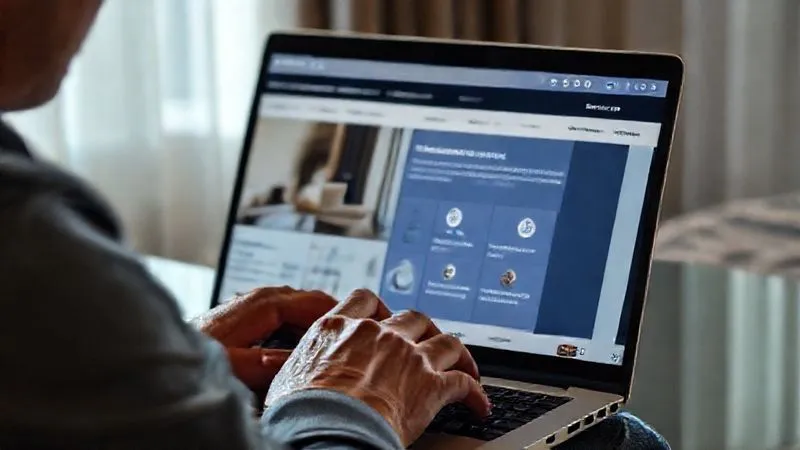
A hotel's official website should be your primary digital source. Look for a dedicated accessibility page, often linked in the footer or under 'Amenities' or 'Services.' A truly committed accessible property will usually highlight its features clearly.
- Dedicated Accessibility Page: Does it exist? Is it detailed, or just a single sentence?
- Specific Room Descriptions: Look for terms like "roll-in shower," "grab bars," "commode height," "door width," "visual alarms," "TDD/TTY compatibility."
- Photos and Virtual Tours: Are there clear, well-lit photos of accessible rooms, bathrooms, and public areas? Can you see details like shower benches, sink clearance, and bed height?
- Public Area Accessibility: Check for information on accessible routes to the lobby, restaurants, pool, and meeting spaces. Are ramps available for stairs?
Navigating Online Travel Agencies (OTAs)
OTAs like Booking.com, Expedia, or Hotels.com can be useful for initial searches and filtering, but they have limitations. Their accessibility filters are often broad and may not capture the granular details you need.
- Filter Usage: Utilize their "wheelchair accessible" or "accessible room" filters as a starting point, but be aware these can be very general.
- User Reviews: Pay close attention to reviews from other travelers who mention accessibility. They often provide real-world insights that official descriptions miss.
- Direct Links: OTAs often link back to the hotel's official website, which is where you should go for more definitive information.
Always cross-reference information found on OTAs with the hotel's official site. Discrepancies should be red flags that warrant further investigation. This careful scrutiny is a non-negotiable part of how to verify hotel accessibility features before booking for clients.
Step 2: The Direct Line – Engaging Hotel Staff Effectively
Once you've exhausted digital resources, direct communication with the hotel is your most powerful tool. This is where you move from general information to client-specific verification.
Preparing Your Questions
Don't call unprepared. Have a detailed list of your client's specific needs ready. The more precise you are, the more accurate the hotel's response will be. Think beyond just "wheelchair accessible."
- Room Type Confirmation: Confirm the exact room category (e.g., King Accessible Roll-in Shower) and ensure it's specifically assigned.
- Bathroom Dimensions & Features: Ask for door width, toilet height, grab bar placement (around toilet and in shower), shower type (roll-in, transfer, tub with bench), sink clearance.
- Bed Height: Crucial for transfers. Ask for the height from the floor to the top of the mattress.
- Entry & Exit Points: Inquire about ramp access, automatic doors, and elevator dimensions for all relevant areas (lobby, restaurant, pool, meeting rooms).
- Emergency Procedures: Understand how the hotel handles emergencies for guests with disabilities (e.g., visual fire alarms, evacuation assistance).
- Equipment Needs: If your client requires a commode chair, shower chair, or oxygen, ask if the hotel provides them or if there's a local rental service they recommend.
- Transportation: Inquire about accessible transportation options to and from the hotel, and local attractions.
Speaking to the Right Person
Avoid simply calling the general reservations line. Often, frontline staff may not have the detailed information you need. Ask to speak with:
- The Front Office Manager: They often have a good overview of the property.
- The Director of Rooms: Responsible for room inventory and features.
- An Accessibility Coordinator: Some larger hotels or chains have a dedicated person for this.
- The Engineering or Maintenance Department: For precise measurements or specific equipment questions.
Always get the name and direct contact information of the person you speak with. Document everything: date, time, who you spoke to, and their exact answers. This meticulous documentation is key to how to verify hotel accessibility features before booking for clients and having recourse if issues arise.
Case Study: The Case of Mrs. Henderson's Shower Chair
I once had a client, Mrs. Henderson, who required a very specific type of shower chair due to a recent surgery. The hotel website stated "accessible rooms with shower chairs available." A quick call to the reservations desk confirmed this. However, something felt off. I called back and specifically asked to speak with the Front Office Manager, providing detailed dimensions and a photo of the chair Mrs. Henderson needed.
The manager, after consulting with housekeeping, informed me that their standard shower chairs were much smaller and wouldn't meet Mrs. Henderson's needs. They offered to arrange a rental from a local medical supply company, which I then coordinated directly. This direct, detailed communication saved Mrs. Henderson from arriving to an unusable bathroom and ensured her comfort and safety. It underscores the vital importance of asking specific questions and speaking to the right personnel.
Step 3: Visual Verification – Photos, Virtual Tours, and User-Generated Content
"Seeing is believing," and this holds especially true for accessible accommodations. Visual aids can reveal details that even the most meticulous verbal descriptions might miss.
Official Gallery vs. Reality
While hotel websites provide professional photos, they can sometimes be misleading. They might show the best accessible room, not necessarily the one your client will receive, or use wide-angle lenses that distort space.
- Look for Multiple Angles: Are there photos showing the bathroom from different perspectives, including inside the shower?
- Zoom In: Scrutinize details like the type of showerhead, the presence of an emergency pull cord, and the height of light switches.
Leveraging Video Tours and 3D Renderings
Some progressive hotels offer video tours or 3D renderings of their accessible rooms. These can be incredibly valuable, offering a sense of spatial awareness that static photos cannot.
- Walk-through Videos: Watch for smooth transitions, clear pathways, and accurate representations of accessible features.
- Interactive Floor Plans: If available, these allow you to measure and visualize clearances more accurately.
The Goldmine of User Reviews and Photos (e.g., TripAdvisor, Google Maps)
Traveler-submitted photos and reviews are often the most honest depiction of a property. Guests are usually quick to point out both positive and negative accessibility experiences.
- Filter by Keywords: Search reviews for terms like "wheelchair," "accessible," "roll-in," "disability," "mobility."
- Examine User Photos: These unfiltered images can reveal the true condition and layout of accessible rooms and facilities, often showing nuances official photos miss.
Remember, user-generated content isn't always perfect, but it provides an invaluable third-party perspective. Combining official visuals with candid guest contributions forms a robust visual verification strategy for how to verify hotel accessibility features before booking for clients.
Step 4: Crafting a Client-Specific Accessibility Checklist
Generic accessibility checks are insufficient. Every client has unique needs. Developing a customized checklist based on their specific requirements is paramount. This isn't just about what the hotel has, but what your client needs.
Beyond the Basics: Tailoring to Individual Needs
Sit down with your client and go through every aspect of their stay, from arrival to departure. Don't assume anything. What might be a minor inconvenience for one person could be a complete barrier for another.
- Mobility Aids: What kind? (manual wheelchair, power chair, scooter, walker). What are its dimensions (width, length, turning radius)?
- Transfer Needs: Does the client transfer independently, or require assistance? What is their preferred transfer height for the bed and toilet?
- Sensory Needs: Visual alarms for hearing impairment? Braille signage for visual impairment? Quiet rooms for sensory sensitivities?
- Medical Equipment: Does the client require a refrigerator for medication, an accessible power outlet for a CPAP machine, or space for a portable oxygen concentrator?
- Assistance Animals: Are service animals permitted? Are there designated relief areas?
- Caregiver Needs: If a caregiver is present, do they need an adjoining room or sufficient space within the accessible room?
According to a recent Open Access study, the accessible travel market is growing significantly, highlighting the increasing demand for truly tailored experiences. This underscores the business imperative of getting these details right.
Here's an example of how a client-specific checklist might look:
| Accessibility Feature | Client Requirement | Hotel Verified Feature | Verification Method |
|---|---|---|---|
| Roll-in Shower | Minimum 36-inch wide entry, grab bars on three sides, hand-held shower nozzle, folding shower bench | Yes, 38-inch entry, all specified grab bars, adjustable shower head, fixed wall-mounted bench | Direct call to Front Office Manager, confirmed by email with photos |
| Bed Height | 18-20 inches from floor to top of mattress for easy transfer | Standard height 25 inches, but can provide bed risers/lower bed frame to 19 inches | Direct call to Housekeeping, followed by email confirmation |
| Door Width (Bathroom) | Minimum 32 inches clear opening for power chair | Yes, 34 inches clear opening | Hotel website floor plan, confirmed by Front Office Manager |
| Pathways to Dining/Pool | No stairs, smooth transitions, minimum 48-inch wide hallways | All public areas accessible via ramps/elevators, hallways 55 inches wide | Hotel virtual tour, direct call to Concierge |
| Visual Fire Alarm | Required in room for hearing impairment | Yes, in all accessible rooms | Hotel accessibility page, confirmed by email |
This detailed approach to developing and using a client-specific checklist is the cornerstone of how to verify hotel accessibility features before booking for clients with precision and confidence.
Step 5: The Power of Reconfirmation – A Critical Pre-Arrival Step
You've done all the hard work, but your job isn't quite finished. A final reconfirmation close to the client's arrival date is a crucial safeguard against last-minute changes or misunderstandings. Hotels are dynamic environments; staff changes, room assignments shift, and renovations can occur.
Why Reconfirm?
- Staff Changes: The person you spoke to initially might no longer be there, or their notes might not have been fully communicated.
- Room Allocation: Even if an accessible room was booked, sometimes errors occur, and guests are mistakenly assigned a non-accessible room, especially during peak seasons.
- Maintenance Issues: An accessible feature could have broken down or be out of service since your initial inquiry.
- Policy Updates: Hotel policies regarding service animals or specific equipment might have changed.
What to Reconfirm?
Around 7-10 days before arrival, send a polite, concise email (and follow up with a call if no response) summarizing your previous verification. Include:
- Client's Name and Reservation Number: Clearly identify the booking.
- Specific Accessible Room Type: Reconfirm the exact room category booked.
- Key Accessibility Features: Briefly reiterate the most critical features your client requires (e.g., "We confirmed a roll-in shower, appropriate bed height for transfers, and grab bars in the bathroom.").
- Confirmation of Special Requests: If you arranged for a specific rental item or a bed adjustment, confirm this is still on schedule.
- Offer to Share Details Again: "Please let me know if you need us to re-send the detailed accessibility checklist for Mr./Ms. [Client's Name]."
Never assume that once confirmed, it stays confirmed. A quick reconfirmation can prevent significant distress and costly last-minute scrambles.
This final step is your last line of defense in how to verify hotel accessibility features before booking for clients, ensuring that all your diligent planning culminates in a smooth, stress-free arrival.
Step 6: What If It's Still Not Enough? Building a Network and Backup Plans
Despite your best efforts, there might be situations where a hotel simply cannot meet all your client's needs, or unexpected issues arise upon arrival. This is where your preparedness and network become invaluable.
Connecting with Accessible Travel Specialists
If you're new to accessible travel or encountering a particularly challenging request, don't hesitate to consult with experts. There are agencies and individual consultants who specialize exclusively in accessible travel. They often have established relationships with truly accessible properties and can offer insights you might miss.
- Accessible Travel Agencies: They have vetted properties and can often negotiate directly with hotels on specific accessibility needs.
- Disability Advocacy Groups: Organizations like the United Spinal Association or local disability resource centers often have travel resources or can connect you with knowledgeable individuals.
Identifying Local Resources and Equipment Rentals
Sometimes, a hotel might be almost perfect but lacks one or two critical items. Knowing local resources can bridge that gap.
- Medical Supply Rentals: Research local companies that rent wheelchairs, scooters, commode chairs, shower chairs, oxygen concentrators, or hospital beds.
- Accessible Transportation Services: Identify local taxi or shuttle services that offer accessible vehicles.
- Personal Care Services: If your client requires in-room assistance, research local agencies that provide personal care attendants.
Having a robust backup plan demonstrates true professionalism and care. It assures your client that you've considered every contingency, further solidifying their trust in your services. This proactive problem-solving is a hallmark of truly mastering how to verify hotel accessibility features before booking for clients.
Here's a comparison of different resources available:
| Resource Type | Pros | Cons | Best Use Case |
|---|---|---|---|
| Hotel Official Website | Direct source, detailed descriptions, official photos | May be biased, 'accessible' can be vague, limited user perspective | Initial information gathering, verifying specific room types |
| Online Travel Agencies (OTAs) | Easy comparison, broad search, user reviews/photos | Filters often too general, accessibility info can be limited/outdated | Broad search, identifying potential hotels, initial price comparison |
| Direct Hotel Communication | Client-specific answers, precise measurements, direct commitment | Requires persistence, staff knowledge varies, time-consuming | Detailed verification of specific needs, reconfirmation |
| User-Generated Content (e.g., TripAdvisor) | Unfiltered, real-world photos/reviews, candid insights | Can be subjective, may not be recent, difficult to filter precisely | Reality check, identifying potential red flags or hidden gems |
| Accessible Travel Specialists | Expert knowledge, pre-vetted properties, advocacy, backup solutions | May involve additional fees, limited network for niche destinations | Complex needs, niche destinations, when self-verification is insufficient |
Frequently Asked Questions (FAQ)
What's the difference between "ADA compliant" and truly accessible? ADA compliance (Americans with Disabilities Act) sets minimum standards for accessibility in the U.S. While important, these are often baseline requirements. Truly accessible goes beyond the minimum, ensuring that a space is not just legally compliant but genuinely usable, comfortable, and empowering for a wide range of disabilities, considering individual needs like specific bed heights, wider clearances, or specific grab bar placements that ADA might not explicitly detail.
How do I handle hotels that provide vague or unhelpful answers to my accessibility questions? Persistence is key. If the first person you speak to is vague, politely ask to speak with a manager (Front Office Manager, Director of Rooms, or a General Manager). Frame your questions clearly and specifically. If they still can't provide the detail you need, consider that a significant red flag. It might indicate a lack of understanding or commitment to accessibility, and it might be safer to seek another property. Document all interactions.
Are there any apps or websites specifically for accessible hotel reviews? Yes, several platforms are emerging. Websites like "Wheelchair Accessible Travel Blog" or "Sage Traveling" offer curated lists and reviews. Apps like "AccessNow" or "AXS Map" allow users to rate and review the accessibility of various venues, including hotels. While not exhaustive, these can be excellent supplemental resources for peer-to-peer insights.
What should I do if the hotel doesn't meet the promised accessibility upon arrival? Firstly, document everything with photos and videos immediately. Speak calmly but firmly with the front desk manager. Refer to your documented communications and confirmations. If a suitable accessible room is not available, request an immediate transfer to a truly accessible, comparable hotel at the original hotel's expense. If they are uncooperative, consider contacting your booking agent, travel insurance, or a disability advocacy organization for support.
How far in advance should I start verifying accessibility for my clients? I recommend starting the verification process as soon as the client expresses interest in a specific destination or property, ideally at least 3-6 months before departure, especially for peak seasons or international travel. This allows ample time for detailed communication with hotels, researching alternatives, and arranging any necessary equipment rentals without last-minute stress.
Key Takeaways and Final Thoughts
Mastering how to verify hotel accessibility features before booking for clients is not just a best practice; it's a moral imperative and a cornerstone of building a trustworthy, reputable travel business. It requires diligence, specific questioning, and a commitment to going beyond surface-level information.
- Be a Proactive Investigator: Don't rely solely on a hotel's self-declaration. Dig deep into websites, photos, and user reviews.
- Communicate Directly and Precisely: Prepare specific questions tailored to your client's needs and speak to the right hotel personnel. Document every conversation.
- Leverage Visuals: Use official photos, virtual tours, and user-generated content to visually confirm features.
- Customize Your Approach: Develop a client-specific checklist that addresses every granular need, not just general accessibility.
- Reconfirm, Reconfirm, Reconfirm: A final check close to arrival can prevent devastating last-minute surprises.
- Build Your Network: Connect with accessible travel specialists and research local resources for backup plans.
By adopting these strategies, you're not just booking a room; you're ensuring a dignified, comfortable, and joyful travel experience for your clients. This commitment to detail and empathy will not only set you apart in the industry but will also contribute to a more inclusive and accessible world for all travelers. Keep learning, keep advocating, and keep making travel dreams a reality.
Recommended Reading
- 7 Steps to Secure Hidden Luxury Beach Resorts for VIP Clients
- Client Bliss: 7 Steps to Guarantee Consistently Clear Water Beaches
- Unearthing Flavors: 7 Steps to Craft Narratives for Obscure Dishes
- 7 Smart Ways to Mitigate Overtourism's Impact on Niche Seaside Escapes
- 5 Strategies: Designing Ethical Tours for Overcrowded Heritage Sites



Your email address will not be published. Required fields are marked *