

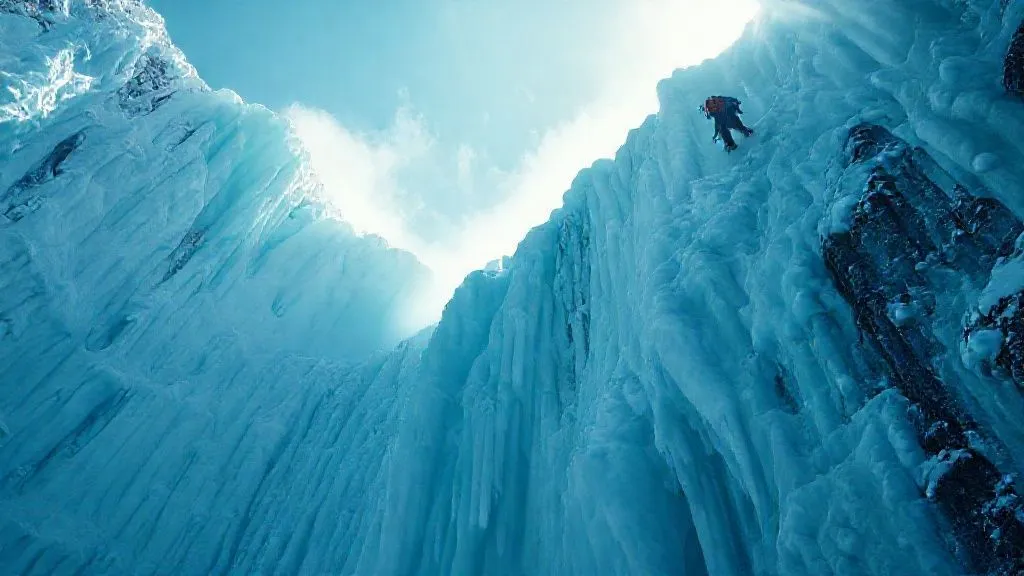
The Vertical World Awaits: Mastering Ice Climbing Safely
For over two decades, I've had the privilege of witnessing the awe-inspiring beauty and formidable challenge that is ice climbing. I’ve seen countless aspiring climbers gaze up at a frozen cascade, their eyes wide with a mix of fear and fervent desire. It’s a sport that calls to a unique spirit, one that seeks the thrill of vertical ascent on a medium as ephemeral as it is solid. However, I’ve also seen the pitfalls – the frustration of inefficient technique, the dangers of inadequate preparation, and the mental blocks that stop a promising climb dead in its tracks.
The problem for many isn't a lack of courage, but a lack of structured, expert guidance. They often jump in without truly understanding the nuances of ice, the precision required for every swing and step, or the critical safety protocols that differentiate a thrilling adventure from a dangerous gamble. This often leads to unnecessary struggles, accelerated fatigue, and, at worst, unsafe situations that can deter them from ever truly experiencing the magic of this vertical world.
In this definitive guide, I will share the distilled wisdom of my years on the ice. We'll explore not just the 'what' but the 'how' and 'why' behind successful ice climbing. You'll gain actionable frameworks, expert insights, and practical strategies on everything from reading the ice and mastering your gear to developing the mental fortitude required to summit frozen giants. My goal is to equip you with the knowledge and confidence to approach ice climbing not just safely, but with a profound sense of mastery and enjoyment.
Understanding the Ice: Your Foundation for Safe Ascent
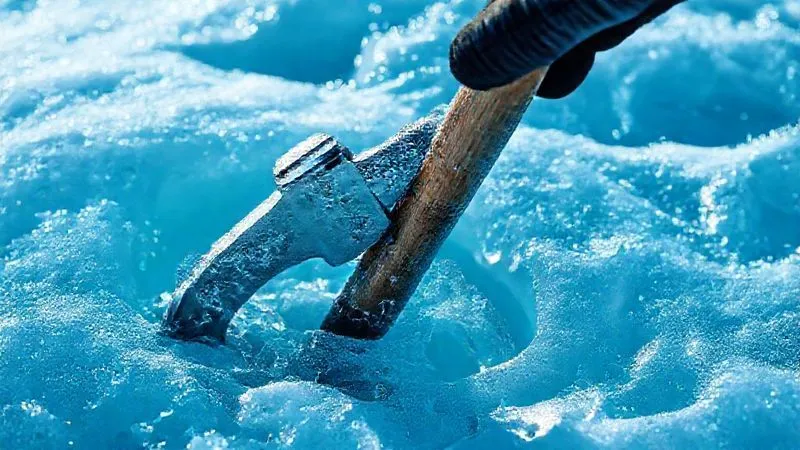
Before you even think about swinging an axe, you must learn to speak the language of ice. It's a living, breathing medium, constantly changing with temperature, sun exposure, and water flow. Failing to understand its nuances is like trying to sail without understanding the tides – a recipe for disaster.
Types of Ice and Their Challenges
Not all ice is created equal. You'll encounter a spectrum of conditions, each demanding a slightly different approach. Cauliflower ice, often formed by repeated freezing and thawing, is brittle and can shatter easily, requiring a delicate touch. Plastic ice, typically found in colder, stable conditions, is more malleable and accepts axe and screw placements with reassuring solidity. Then there's aerated ice, which is full of air pockets, making it weaker and less reliable for protection. Understanding these types is crucial for assessing risk and selecting appropriate techniques.
I've seen climbers struggle unnecessarily because they approached plastic ice with the same tentative swings they'd use on cauliflower, or worse, tried to force placements into aerated sections. Your ability to 'read' the ice will dictate your speed, safety, and efficiency. It's a skill that develops with experience, but it starts with conscious observation.
Reading the Ice: A Climber's Intuition
Developing an intuition for ice involves all your senses. Look for color variations: darker, denser ice is usually stronger. Listen to the sound your axe makes – a dull thud often indicates aerated or brittle ice, while a solid 'thunk' suggests good purchase. Feel the resistance as you place your tools. Is it shattering? Is it accepting the pick smoothly? Pay attention to the texture and formation; smooth, clear ice can be deceptively hard, while fractured or 'dinner-plated' ice can be unstable.
In my early days, I learned this the hard way on a route in the Canadian Rockies. The lower half was perfect plastic ice, but higher up, a subtle shift in color and texture went unnoticed. My swings, once confident, started to feel less secure. It was only when an ice screw spun out partially that I realized the ice had become aerated and much weaker. That experience taught me to slow down, observe, and constantly re-evaluate the medium I was climbing. This constant assessment is a cornerstone of safe ice climbing.
Essential Gear for Ice Climbing: Beyond the Basics
The right gear isn't just about comfort; it's about safety, efficiency, and ultimately, your ability to perform. While there's a dazzling array of equipment, focusing on the core essentials and understanding their function is paramount. Skimping on quality here is a false economy.
The Holy Trinity: Axes, Crampons, and Boots
Your ice axes are your extensions, your hands on the ice. For vertical ice, you'll want technical tools with an aggressive curve and a sharp pick designed for penetration. Your crampons, ideally with vertical front points, are your feet on the ice, providing essential traction. And your ice boots are the foundation, providing rigid support for crampons and crucial insulation. I always advise investing in these three items first, as they are your primary interface with the ice. A good pair of boots that fit well and are compatible with your crampons can make or break a climb.
Protection and Safety Systems
Beyond your personal climbing tools, you'll need a robust safety system. This includes a comfortable harness with ample gear loops, a sturdy helmet to protect against falling ice, and a reliable belay device. For lead climbing, you'll need a rack of ice screws, which are your anchors into the ice. Learning to place these correctly and efficiently is a skill unto itself, directly impacting your safety and that of your climbing partner. Always ensure your gear meets UIAA safety standards, which are the international benchmark for climbing equipment. You can research these standards on the UIAA website.
| Gear Item | Key Feature | Purpose |
|---|---|---|
| Ice Axes | Aggressive picks, ergonomic handles | Primary climbing tool, balance, self-arrest |
| Crampons | Vertical front points, anti-balling plates | Traction on ice, efficient footwork |
| Ice Boots | Insulated, rigid sole, crampon compatible | Warmth, support, power transfer |
| Helmet | Impact resistant, lightweight | Protection from falling ice/rock |
| Harness | Comfortable, gear loops, adjustable | Connecting to rope, carrying gear |
| Ice Screws | Sharp threads, strong hanger | Anchoring in ice, protection points |
Fundamental Techniques: Axe and Crampon Mastery
These are the bedrock skills of ice climbing. Without precise and efficient use of your tools, you'll expend unnecessary energy, get 'pumped' quickly, and risk unsafe placements. It’s a dance of precision and power.
The Art of the Swing: Axe Placement Precision
An effective axe swing isn't about brute force; it's about accuracy, momentum, and finding that 'sweet spot' in the ice. I've seen too many beginners flail, hacking away at the ice, only to achieve shallow, insecure placements. The goal is a deep, solid stick with minimal effort.
- Grip: Hold the axe firmly but not death-grip. Your forearm should be relaxed for the swing.
- Stance: Stand stable, facing the ice, with your feet shoulder-width apart or slightly narrower for balance.
- Wind-up: Bring the axe up smoothly, aiming for a point slightly above your head.
- Swing Path: Arc the axe in a smooth, controlled motion towards your target. Aim for a specific dimple or feature in the ice, not just 'somewhere up there'.
- Impact: Let the weight of the axe do the work. The pick should strike the ice cleanly, penetrating deeply. Avoid chopping motions.
- Test: After placement, give a gentle tug downward and outward to confirm it's secure. It should feel absolutely solid before you weight it.
Practice this motion repeatedly on easier ice or even a log until it becomes fluid and natural. Remember, one good swing is worth five weak ones.
Footwork Finesse: The Dance of the Crampons
Your feet are just as important as your hands. Proper crampon technique conserves energy and provides a stable platform. The goal is to use the front points of your crampons to 'kick' into the ice, creating a secure step.
- Kick: Lift your knee high and kick your foot forward, aiming the two front points of your crampon into the ice.
- Placement Angle: Ensure your ankle is flexed, driving the front points straight in, perpendicular to the ice surface. Avoid placing your foot at an angle, as this reduces bite.
- Weight Transfer: Once the points are securely embedded, gently transfer your weight onto that foot.
- Flat-Footing (on lower angles): On less steep ice, you can use all points of your crampons, keeping your heels low for maximum traction and stability.
- Rest Step: On steeper terrain, learn to 'rest step' by flexing your ankle and letting your calf muscles relax while your front points hold you.
"Ice climbing isn't just about strength; it's a delicate balance of precision, rhythm, and understanding the medium you're climbing."
I've seen climbers with incredible upper body strength fail on routes simply because their footwork was sloppy. Efficient footwork allows your legs, the strongest muscles in your body, to do most of the work, saving your arms for the crucial axe placements.
Building Your Mental Fortitude: Overcoming the Vertical Challenge
Ice climbing is as much a mental game as it is a physical one. The exposure, the cold, the perceived fragility of the ice – all can play tricks on your mind. Developing mental toughness is a non-negotiable skill for progression.
Managing Fear and Maintaining Focus
Fear is a natural response to a dangerous environment, but unchecked, it can paralyze you. I've learned to acknowledge fear, then systematically break down the climb into manageable sections. Focus on the next swing, the next step, the next screw placement. Don't look down; look at the ice directly in front of you. Practice controlled breathing to lower your heart rate and regain composure. As renowned sports psychologist Dr. Mihaly Csikszentmihalyi discusses in his work on 'Flow,' achieving a state of complete absorption in the task at hand is key to peak performance and managing anxiety. You can read more about it in his influential book, Flow: The Psychology of Optimal Experience.
The Power of Visualization
Before every difficult pitch, I take a moment to visualize the climb. I imagine each swing, each kick, each placement. I see myself moving efficiently, gracefully, successfully. This mental rehearsal builds confidence and primes your body for the movements ahead. It's a technique used by elite athletes across all disciplines, and it's incredibly effective in ice climbing where precision and commitment are paramount.
Strategic Movement and Energy Conservation
Ice climbing can be incredibly strenuous. Learning to move strategically and conserve energy is vital for longer routes and sustained performance. It's not about being the fastest, but about being the most efficient.
Rest Positions and Pacing
One of the biggest mistakes beginners make is not resting. Find good stance, place both axes securely, and shake out one arm at a time. The classic 'figure-four' or 'figure-nine' moves, while advanced, are excellent examples of how to get into a secure rest position. Learn to actively rest, letting your muscles recover. Pacing yourself means not rushing. Find a rhythm, a cadence that you can maintain. Push hard on easier sections, but conserve on difficult ones.
Efficient Climbing Strategies
Think three-dimensional. Instead of just pulling straight up, use your crampons to stand up, engaging your powerful leg muscles. Look for natural ledges or features in the ice where you can stand more comfortably. Aim for a 'triangle' of three points of contact (two axes, one foot; or one axe, two feet) at all times, only moving one limb at a time. This keeps you stable and reduces the load on your arms.
Safety Protocols and Risk Mitigation in Ice Climbing
No amount of technique will compensate for a lack of safety awareness. Ice climbing inherently involves risk, but much of that risk can be managed through knowledge, vigilance, and adherence to proven protocols.
Understanding Avalanche Risk and Weather Patterns
Many ice climbs are situated in avalanche terrain. Understanding how to assess snow stability, recognize warning signs, and interpret avalanche forecasts is absolutely critical. Always check the local avalanche forecast before heading out, and carry avalanche safety gear (transceiver, shovel, probe) if there's any snow accumulation. Weather can change rapidly in the mountains, turning a perfect day into a dangerous ordeal. Be aware of temperature fluctuations, wind chill, and approaching storms. A great resource for this is the National Avalanche Center.
Rope Management and Belay Techniques
Proper rope management is foundational. Learn to tie secure knots, set up reliable anchors (using ice screws or natural features), and execute flawless belay techniques. Communication with your partner is key – clear, concise commands prevent misunderstandings. Always double-check your partner's knots and belay setup, and have them check yours. This mutual accountability is the bedrock of climbing safety.
Case Study: A Near Miss on the 'Frozen Tear'
I recall a climb with a client on a popular route called 'The Frozen Tear.' The weather had been stable for days, and the ice looked bulletproof. However, halfway up, my client, Alex, began to feel fatigued. He rushed an ice screw placement, not drilling it in fully. Just as he clipped in, a small, dinner-plated section of ice unexpectedly fractured from above. His anchor held, but the shock of the falling ice and the near-miss left him shaken. We down-climbed safely, but the lesson was stark: even on 'easy' days, complacency is a killer. The incident reinforced the importance of meticulous screw placement, even when tired, and constantly assessing the ice around you, not just beneath your tools. It taught Alex that every single action, no matter how small, contributes to the overall safety chain.
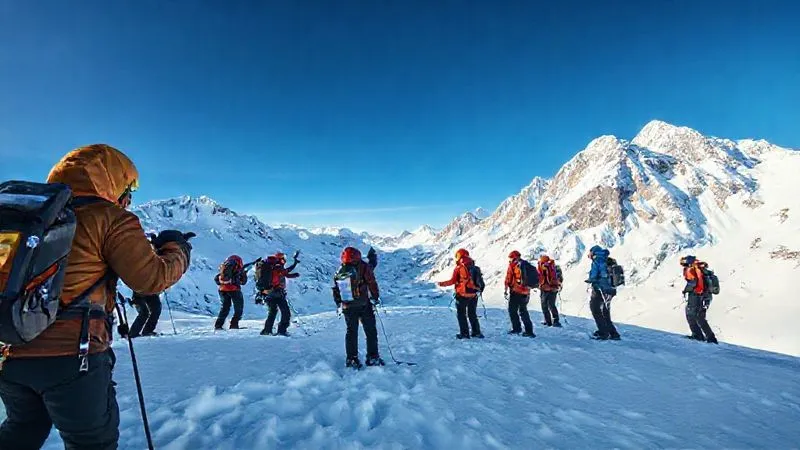
Progression and Training: From Top-Rope to Lead
Once you've mastered the fundamentals, you'll naturally want to progress. This involves dedicated training and a thoughtful approach to increasing challenge.
Indoor Training and Conditioning
While nothing fully replicates ice, specific indoor training can dramatically improve your performance. Focus on grip strength with hangboards and pull-ups. Build core stability with planks and leg raises. Develop endurance with cardio and circuit training. Dry tooling – climbing rock using ice axes and crampons – is an excellent way to practice technique and build specific climbing muscles in a controlled environment. I often recommend my clients spend significant time on dry tooling before attempting their first lead on ice.
Finding Mentors and Guided Trips
The best way to progress in ice climbing is under the guidance of experienced mentors or certified guides. They can provide immediate feedback on your technique, share invaluable local knowledge, and safely introduce you to more challenging terrain. A guided trip is an investment in both your skill development and your safety. Don't try to rush the process; the mountains will always be there.
| Training Focus | Exercise Example | Benefit for Ice Climbing |
|---|---|---|
| Grip Strength | Hangboard, pull-ups | Stronger axe grip, reduced pump |
| Core Stability | Planks, leg raises | Improved balance, efficient body positioning |
| Endurance | Long hikes, cardio | Sustained effort, reduced fatigue on long routes |
| Technique Drills | Dry tooling, mock lead climbing | Muscle memory, confidence in movement |
Frequently Asked Questions (FAQ)
What's the ideal temperature range for ice climbing? The 'ideal' temperature is subjective and depends on the ice formation, but generally, temperatures between -5°C to -15°C (23°F to 5°F) are considered good for plastic, well-formed ice. Warmer temperatures can make ice brittle or slushy, while extremely cold temperatures can make it very hard and prone to shattering. Always observe the ice conditions regardless of the thermometer.
How do I choose the right ice axes for a beginner? For beginners, a pair of all-around technical ice axes with a moderate curve is often recommended. Look for axes that are comfortable to swing and feel balanced in your hand. Avoid overly aggressive, highly curved tools designed for very steep or mixed climbing initially, as they can be harder to manage for a novice. Renting different models or trying a friend's axes can help you find what feels best before committing to a purchase.
Is ice climbing more dangerous than rock climbing? Both sports have inherent risks. Ice climbing introduces unique hazards such as falling ice, collapsing ice features, and the more dynamic nature of the medium itself. Protection (ice screws) can be less reliable than solid rock anchors, and the cold environment adds another layer of challenge. However, with proper training, gear, and risk management, many of these dangers can be mitigated. It's not necessarily 'more' dangerous, but the dangers are different and require specific knowledge.
How long does it take to become proficient in ice climbing? Proficiency is a continuous journey. You can learn the basic top-roping techniques in a few guided days. However, becoming truly proficient, especially in leading multi-pitch ice, can take several seasons of dedicated practice, mentorship, and training. It's a sport where experience, built over time, is your most valuable asset. Focus on mastering each skill level before rushing to the next.
What's the best way to stay warm while ice climbing? Layering is key! Start with a wicking base layer, add insulating mid-layers (fleece, puffy jacket), and finish with a waterproof/breathable shell. Keep your extremities warm with insulated gloves (multiple pairs are essential), warm socks, and a good hat. Hand warmers can be a lifesaver. Staying hydrated and well-fed also contributes significantly to maintaining core body temperature. Avoid cotton, as it loses its insulating properties when wet.
Key Takeaways and Final Thoughts
- Knowledge is Power: Understand the different types of ice and how to 'read' the medium you're climbing.
- Gear Up Smart: Invest in quality, appropriate gear, especially your axes, crampons, and boots.
- Master the Fundamentals: Precision in axe swings and crampon placement is paramount for efficiency and safety.
- Build Mental Fortitude: Learn to manage fear, maintain focus, and use visualization to enhance performance.
- Climb Efficiently: Conserve energy through strategic movement, pacing, and effective rest positions.
- Prioritize Safety: Always be aware of avalanche risk, weather changes, and meticulously manage your ropes and anchors.
- Embrace Progression: Train effectively and seek mentorship to safely advance your skills.
Ice climbing is an extraordinary journey into the vertical world, offering unparalleled views and a profound sense of accomplishment. It demands respect, preparation, and continuous learning. By applying the expert insights and actionable strategies shared here, you are not just learning to climb; you are learning to thrive in one of nature's most challenging and beautiful environments. Step out onto the ice with confidence, precision, and an unyielding commitment to safety, and discover the thrill of truly mastering the frozen vertical world.
Recommended Reading
- 7 Steps: Master Complex Dietary Needs at Michelin Star Restaurants Globally
- 5 Steps to Authentic Cultural Retreats: Ditching Ceremony Tourist Traps
- Ultimate Transcontinental Train Travel Planning Guide: Your Epic Journey Awaits!
- The Ultimate Guide: How to Plan a National Park Trip with Toddlers Successfully
- Executive Burnout? 3 Elite Wellness Resorts for Swift Recovery

Your email address will not be published. Required fields are marked *