

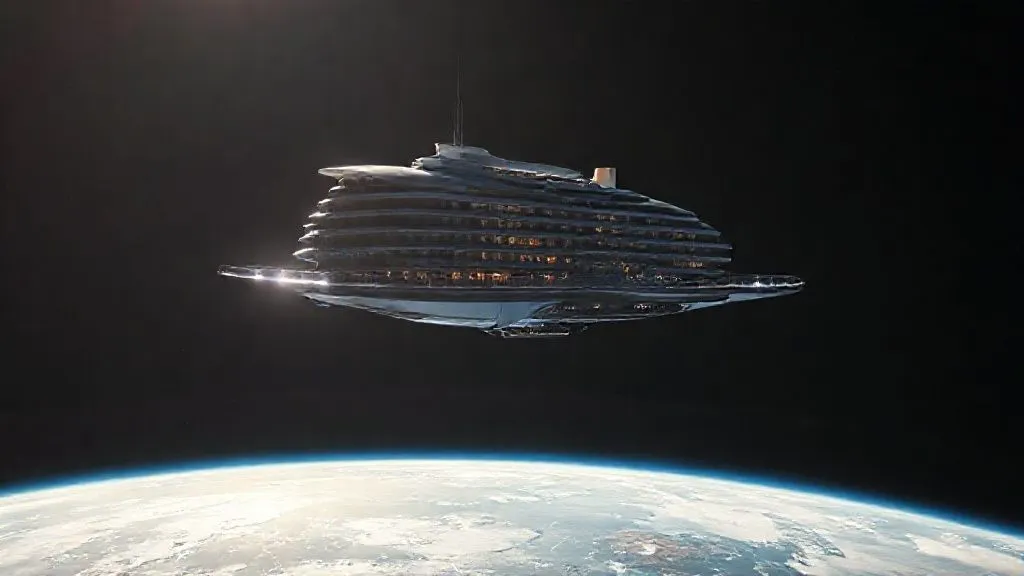
What Unforeseen Legal Risks Exist for Orbital Hotel Operations?
For over two decades, I've had the privilege of witnessing the space industry transition from audacious dreams to tangible, breathtaking realities. From the initial private launches to the burgeoning talks of lunar bases, I've seen countless innovative companies grapple with the immense technical challenges. Yet, in my experience, the true make-or-break hurdle for many of these pioneering ventures often lies not in engineering, but in the intricate, often opaque, legal landscape that governs our ventures beyond Earth.
The allure of orbital hotels is undeniable – a chance for humanity to touch the stars, to experience cosmic adventures firsthand. However, beneath the glamour of zero-G cocktails and panoramic Earth views lies a complex, largely undefined legal battleground. Operators envisioning these celestial resorts face an unparalleled array of legal ambiguities, from jurisdictional disputes that defy terrestrial logic to liability questions that could cripple an enterprise before it even welcomes its first guest.
This article isn't just a theoretical exploration; it’s a veteran's guide to understanding and proactively mitigating the primary unforeseen legal risks that exist for orbital hotel operations. I'll share actionable frameworks, illuminate potential pitfalls with realistic scenarios, and provide expert insights gleaned from years of navigating this unique regulatory frontier. My aim is to equip you with the foresight necessary to build not just a hotel in orbit, but a legally robust and sustainable cosmic legacy.
Jurisdictional Quagmires: Who Governs the Void?
The first, and perhaps most fundamental, challenge for any orbital hotel operator is the question of jurisdiction. On Earth, lines are drawn, laws are codified, and enforcement mechanisms are well-established. In orbit, these certainties dissolve into a nebulous, three-dimensional chess game with ever-shifting rules.
The Ambiguity of National Sovereignty in Orbit
The foundational document of space law, the 1967 Outer Space Treaty (OST), famously declares that outer space is not subject to national appropriation. This is a crucial principle, preventing any nation from claiming the Moon or Mars. However, it doesn't explicitly define jurisdiction over private commercial entities operating within space.
While an orbital hotel might be registered to a particular nation – its 'launching state' – the reach of that nation's laws can be surprisingly limited or contested once the facility is hundreds of kilometers above its borders. What happens if a citizen of one country commits a crime against a citizen of another country within a hotel registered to a third? The legal precedent is scarce, and the enforcement mechanisms are practically non-existent.
Expert Insight: "The 'launching state' principle provides a crucial starting point for jurisdiction, but it's a thin veneer over a deep void. Orbital hotels will necessitate a complex, multi-layered approach to legal governance, far beyond what current treaties envision."
Consider these potential scenarios:
- A contract dispute between a hotel operator (registered in Nation A) and a supplier (based in Nation B) for services rendered on an orbital facility.
- A criminal offense, such as theft or assault, occurring between guests of different nationalities within the hotel.
- Labor disputes involving an international crew working under the laws of multiple nations simultaneously.
Cross-Border Disputes and Enforcement Challenges
Even if a jurisdictional framework could be agreed upon, the practicalities of enforcing legal judgments in space are daunting. Imagine a court in one country issuing an injunction against an orbital hotel registered to another. How would that injunction be served? Who would physically enforce it?
This lack of clear enforcement creates a significant risk, not just for legal compliance but for the perceived stability and security of orbital operations. Investors, guests, and employees all need assurance that there's a reliable system for justice and dispute resolution. Without it, the risk premium skyrockets, and the operational environment becomes inherently volatile.
The international community is slowly beginning to address these gaps, but the pace of legal evolution often lags far behind technological advancement. Operators must therefore build robust internal governance frameworks that anticipate these cross-border challenges, perhaps drawing on principles from maritime law or international aviation, albeit with significant adaptations for the unique environment of space.

Liability in the Vacuum: Accidents, Debris, and Guests
Beyond jurisdiction, the question of liability presents another formidable legal hurdle. In space, the stakes are exponentially higher, and the potential for unforeseen accidents is ever-present. Who is ultimately responsible when things go wrong?
Passenger and Crew Safety: A New Frontier of Duty of Care
On Earth, hotels have well-established duties of care towards their guests. In space, these duties take on entirely new dimensions. The unique physiological and psychological challenges of microgravity, radiation exposure, and prolonged confinement mean that standard terrestrial safety protocols are woefully inadequate.
What if a guest suffers a severe medical emergency that cannot be treated in orbit and evacuation is delayed or impossible? Who bears the liability for long-term health effects from radiation exposure during a solar flare event? These aren't hypothetical questions; they are critical operational realities. Operators must develop comprehensive medical response plans, robust radiation shielding, and rigorous psychological support systems, all backed by clear liability waivers and insurance policies that account for the unprecedented risks.
Expert Insight: "The duty of care for orbital hotels extends far beyond physical safety. It encompasses psychological well-being, long-term health monitoring, and the unprecedented challenges of emergency medical response in an extreme environment. Terrestrial negligence law simply doesn't compute."
According to a recent analysis published in the Harvard Law Review's Forum on Space Law, the current legal frameworks for passenger liability in commercial spaceflight are nascent and heavily reliant on waivers, which may not hold up under all circumstances, especially in cases of gross negligence. Orbital hotels, with their extended stays and diverse guest demographics, will push these waivers to their absolute limit.
Space Debris and Collision Liability
Our orbital environment is increasingly cluttered with space debris – defunct satellites, rocket stages, and fragments from collisions. A micrometeoroid or a piece of orbital junk, even tiny, can cause catastrophic damage at orbital velocities. The Outer Space Treaty addresses liability for damage caused by space objects on Earth or to other space objects, but the specifics for private commercial entities like orbital hotels remain ambiguous.
If an orbital hotel is damaged by debris, who is liable? If the debris originated from a state-owned satellite, the launching state is absolutely liable. But what if it's from another private commercial entity, or untraceable? Furthermore, what if the hotel itself, through an operational error or structural failure, creates debris that damages another space asset? The chain of causation and the assignment of fault become incredibly complex, requiring sophisticated tracking, avoidance maneuvers, and robust insurance coverage.

Mitigating this risk involves not only advanced shielding and collision avoidance systems but also active participation in international efforts to track and mitigate space debris. Companies must demonstrate due diligence in protecting their assets and contributing to the overall safety of the orbital environment, or face potential legal repercussions.
Property Rights and Resource Allocation: Beyond Earthly Laws
The concept of property rights, a cornerstone of terrestrial law, becomes profoundly challenging in the context of orbital operations. While the OST prohibits national appropriation, it offers little guidance on how private entities can claim or utilize resources in space.
Owning a Piece of the Orbital Pie: Real Estate in Space
You can't claim a piece of the Moon, but can you 'own' an orbital hotel? The components, certainly, are owned by the operating company. But what about the 'space' it occupies? Can another entity build an identical hotel directly adjacent, potentially blocking views or interfering with operations? The lack of defined 'space real estate' law creates a significant investment risk.
Without clear legal frameworks for orbital property, disputes over operational zones, communication frequencies, and even aesthetic considerations (like unobstructed views) could easily arise. This necessitates proactive agreements between operators and a deeper engagement with international bodies to establish norms, if not formal laws, for the allocation and protection of orbital 'territory' for commercial ventures.
Expert Insight: "The notion of 'owning' space is anathema to the Outer Space Treaty, but the practical reality of private enterprise demands clear rights over structures and operational zones. We need a framework akin to air traffic control, but for orbital assets – a 'space traffic management' system with legal teeth."
As Seth Godin, the renowned marketing guru, often emphasizes regarding disruptive innovation, establishing your 'category' is paramount. For orbital hotels, part of establishing that category involves defining the legal parameters of its physical existence and operation. This isn't just about ownership of the hardware; it's about the right to operate securely and without undue interference in a specific orbital slot.
Resource Utilization and Environmental Stewardship
Orbital hotels will consume resources: air, water, energy. While these are currently brought from Earth, future ventures might explore in-situ resource utilization (ISRU) – perhaps processing lunar regolith or capturing orbital ice. Who owns these harvested resources? What are the environmental obligations for resource extraction in space, even in orbit?
The concept of 'space environmental law' is still in its infancy. How do we prevent pollution of the orbital environment or future celestial bodies? What are the legal ramifications of waste disposal from an orbital hotel? These questions demand foresight and the development of international standards before the problem becomes unmanageable. Companies that proactively adopt sustainable practices and advocate for clear environmental regulations will not only mitigate future legal risks but also enhance their public image and long-term viability.
Insurance & Financial Risk Mitigation: Calculating the Uncalculable
On Earth, insurance provides a critical safety net for businesses, allowing them to transfer certain risks. In space, the insurance market is nascent, highly specialized, and prohibitively expensive, reflecting the unprecedented and largely unquantified risks involved.
The Sky-High Cost of Orbital Insurance
Orbital hotel operations face a unique challenge: a lack of actuarial data. Without decades of historical accident rates, liability claims, and operational failures, insurers struggle to accurately assess risk and price premiums. This uncertainty translates directly into exorbitant costs, often accounting for a significant portion of a mission's budget.
Moreover, the types of risks are varied and extreme: launch failure, in-orbit collision, radiation exposure, catastrophic system failure, medical emergencies, and even geopolitical interference. Finding comprehensive coverage that addresses all these eventualities, from pre-launch to de-orbit, is a monumental task. As a Deloitte study on the commercial space sector highlighted, the lack of mature insurance models is a major deterrent for new investors.
| Risk Factor | Impact on Insurance | Mitigation Strategy |
|---|---|---|
| Launch Failure | Highest premium, covers vehicle & payload loss. | Robust pre-flight testing, redundant systems, reputable launch provider. |
| In-Orbit Collision (Debris) | Significant premium, covers structural damage & operational loss. | Advanced tracking, active avoidance, robust shielding, international cooperation. |
| Passenger/Crew Liability | Complex & high premium, covers injury, death, long-term health. | Comprehensive medical protocols, waivers, strict safety standards, specialized training. |
| System Failure (Non-Collision) | Moderate premium, covers critical system malfunctions. | Redundant systems, rigorous maintenance, predictive analytics, robust design. |
| Cyber Attack | Emerging premium, covers data breach, operational disruption. | Multi-layered cybersecurity, secure protocols, incident response plan. |
Operators must engage with specialized space insurance brokers early in their planning process, understanding that traditional policies won't suffice. They need to explore bespoke solutions, potentially combining different types of coverage, and be prepared for substantial financial outlay.
Investment Protection and Bankruptcy in Space
If an orbital hotel venture faces financial distress or bankruptcy, the legal complexities are staggering. How are assets located in orbit, perhaps internationally funded, valued and liquidated? Who has priority over claims? The absence of clear international bankruptcy laws for space assets means that investors face heightened risks.
Protecting intellectual property, patents, and proprietary technology developed for orbital hotels also presents unforeseen challenges. Enforcing IP rights across multiple national jurisdictions, with assets physically located in a legal vacuum, requires innovative legal strategies and international agreements. This is not just about protecting your hardware; it's about safeguarding the very ideas that make your orbital hotel possible.
Expert Insight: "Investment in orbital ventures is inherently high-risk, but the legal vacuum around bankruptcy and asset protection in space amplifies that risk exponentially. Clear, internationally recognized frameworks for financial distress are desperately needed to unlock broader investment."
Ethical and Societal Implications: Beyond the Legal Code
While not strictly 'legal' in the traditional sense, the ethical and societal implications of orbital hotels will inevitably give rise to legal and regulatory challenges. Ignoring these 'soft' risks is a grave oversight.
Access, Equity, and the 'Space Elite' Dilemma
Currently, space tourism is prohibitively expensive, accessible only to the ultra-wealthy. As orbital hotels become a reality, this disparity will only become more pronounced. This raises profound ethical questions about access, equity, and the potential creation of a 'space elite' detached from terrestrial concerns. While not directly a legal risk today, public perception and international pressure could lead to future regulations concerning:
- 'Space Taxes': Levies on orbital tourism to fund terrestrial development or space debris clean-up.
- Fair Access Mandates: International pressure to reserve a certain percentage of orbital hotel capacity for scientific research or educational purposes.
- Resource Allocation: Debates over whether orbital resources should be exclusively for commercial profit or for the benefit of all humanity.
Companies that fail to engage proactively with these ethical considerations risk reputational damage, boycotts, and eventually, restrictive legislation. Building a sustainable space future means considering all of humanity, not just the privileged few.
Long-Term Human Habitation and Health Liabilities
Orbital hotels imply extended stays, potentially weeks or even months. The long-term effects of microgravity, radiation, and confinement on human health are still being researched. While astronauts undergo rigorous training and medical screening, hotel guests will likely have varying levels of fitness and pre-existing conditions.
What are the legal liabilities if a guest develops a severe medical condition directly attributable to their stay in orbit, years after returning to Earth? The scientific consensus on long-term effects is still evolving, making it incredibly difficult to establish causation and assign liability. This grey area presents a significant, unforeseen legal risk for orbital hotel operators.
Operators must invest heavily in medical research, robust health monitoring systems, and comprehensive pre-flight medical screenings. They also need to ensure that their legal waivers explicitly address these long-term, evolving health risks, while simultaneously maintaining a high ethical standard of care for their guests.

Navigating the Regulatory Labyrinth: A Proactive Approach
The challenges I've outlined might seem daunting, but they are not insurmountable. The key lies in a proactive, rather than reactive, approach to legal and regulatory strategy.
Actionable Steps for Mitigating Legal Exposure
Based on my years in this field, I've seen companies succeed by implementing these core principles:
- Establish a Dedicated Space Law & Policy Team: Don't treat legal as an afterthought. Integrate space law experts, international relations specialists, and ethicists into your core strategic team from day one.
- Engage with International Bodies & Governments: Proactively participate in discussions at the UN Committee on the Peaceful Uses of Outer Space (COPUOS), national space agencies, and industry consortia. Advocate for clear, predictable regulations that support commercial growth while ensuring safety and sustainability.
- Develop Robust Internal Governance: Create comprehensive internal policies, codes of conduct, and dispute resolution mechanisms that anticipate jurisdictional gaps. Consider using arbitration clauses that specify a neutral international body.
- Invest in Unprecedented Safety & Redundancy: Go above and beyond existing safety standards. Redundant systems, advanced shielding, rigorous crew training, and comprehensive emergency protocols are not just good engineering; they are crucial legal defenses.
- Craft Bulletproof Waivers & Insurance Policies: Work with top legal counsel and specialized insurers to develop waivers that are as comprehensive as possible, explicitly addressing the unique risks of space travel. Understand the limits of these waivers and ensure your insurance covers the remainder.
- Prioritize Transparency & Ethical Conduct: Be transparent about risks with guests and investors. Demonstrate a commitment to ethical practices, environmental stewardship, and equitable access. This builds trust and resilience against future legal and reputational challenges.
Case Study: Solstice Orbital's Proactive Legal Framework
Solstice Orbital, a fictional but realistic pioneer in the orbital hotel sector, faced many of these exact legal uncertainties during its initial planning phases. Rather than waiting for regulations to catch up, they adopted a radical 'legal-first' approach.
Their dedicated team, led by a former international space law diplomat, spent two years conducting extensive risk assessments and developing a proprietary 'Orbital Risk Matrix'. This matrix identified over 50 potential legal and regulatory gaps, categorizing them by severity and likelihood. For each gap, they developed a mitigation strategy, ranging from lobbying efforts at COPUOS to embedding specific arbitration clauses in all their guest and vendor contracts.
For example, to address the ambiguity of criminal jurisdiction, Solstice Orbital implemented a strict internal code of conduct for all guests and crew, requiring adherence to the laws of their registration state (Nation X) and establishing an internal judicial panel for minor infractions, with a clear protocol for handing over major offenses to Nation X's authorities upon return to Earth. This proactive stance, combined with a comprehensive insurance package co-developed with a consortium of international insurers, not only attracted significant investment but also positioned them as a trusted leader in the nascent industry.
| Risk Category | Key Risk Area | Solstice Strategy | Status |
|---|---|---|---|
| Jurisdictional | Criminal Acts in Orbit | Internal Code of Conduct, Nation X Law Adherence, Internal Judicial Panel, Extradition Protocol. | Implemented |
| Liability | Long-term Health Effects | Extensive Pre-flight Screening, On-orbit Health Monitoring, Comprehensive Guest Waivers, Dedicated Research Fund. | Implemented |
| Property Rights | Orbital Slot Interference | Bilateral Agreements with Neighboring Operators, Advocacy for International STM (Space Traffic Management) Standards. | Ongoing Advocacy |
| Financial | Bankruptcy & Asset Liquidation | International Arbitration Clauses, Trust Fund for Orbital Assets, Multi-national Investment Structure. | Implemented |
Future-Proofing Your Orbital Enterprise: Anticipating the Unknown
The space law landscape is not static; it's a dynamic, evolving frontier. The unforeseen legal risks exist for orbital hotel operations today will undoubtedly be joined by new, equally complex challenges tomorrow. True leadership in this sector means anticipating these shifts and building an enterprise that is resilient and adaptable.
International Collaboration and Treaty Evolution
No single nation can unilaterally establish the legal framework for orbital hotels. This demands unprecedented international collaboration. Operators should actively support and engage with initiatives like the Artemis Accords or proposed amendments to the Outer Space Treaty. These efforts, though slow, are critical for establishing the norms and eventually the laws that will govern commercial space activities.
By contributing to these dialogues, companies not only shape their future regulatory environment but also demonstrate a commitment to responsible space development. This builds diplomatic capital and reduces the likelihood of adverse, unforeseen regulations being imposed without industry input.
The Role of Adaptive Legal Frameworks
Given the rapid pace of technological innovation, rigid legal frameworks are destined to become obsolete. What's needed are adaptive, principles-based legal systems that can evolve alongside the industry. This means moving beyond prescriptive rules to establishing overarching principles of safety, sustainability, and responsibility, allowing for flexible implementation as technology and operational models mature.
As an industry, we must advocate for 'living' legal documents that can be periodically updated and refined, much like technical standards in other high-tech sectors. This agility is essential to ensure that the legal framework facilitates, rather than stifles, the incredible potential of orbital hotels and future cosmic adventures.

Frequently Asked Questions (FAQ)
What is the primary international treaty governing orbital hotel operations? The 1967 Outer Space Treaty (OST) is the foundational document. While it sets broad principles like non-appropriation and state responsibility for national activities in space, it predates commercial space tourism and offers limited specific guidance on private orbital hotel operations, especially concerning jurisdiction, liability for private citizens, and property rights for commercial structures.
How does 'launching state' jurisdiction apply to an orbital hotel with international guests and crew? The 'launching state' (the country whose territory a space object is launched from, or which procures the launch, or registers the object) retains jurisdiction and control over its space object and personnel. However, this becomes complex for an orbital hotel with a diverse international population. While the hotel itself is subject to the launching state's laws, the individuals aboard may also be subject to their home nations' laws, creating potential conflicts and jurisdictional ambiguities for criminal acts or civil disputes.
Are existing terrestrial insurance policies sufficient for orbital hotels? Absolutely not. Terrestrial insurance policies are entirely inadequate. Orbital hotels require highly specialized space insurance, which covers unique risks like launch failure, in-orbit operations, third-party liability for debris, and unprecedented passenger/crew liability for health impacts in space. The market is small, premiums are high, and policies are bespoke due to the lack of historical data and the extreme nature of the risks.
Can an orbital hotel claim 'territory' or 'property rights' in space? Under the Outer Space Treaty, no nation can appropriate outer space. While this applies to states, the legal interpretation for private entities 'owning' a specific orbital slot or territory is still developing. An orbital hotel can own its physical structure and equipment, but the right to exclusively occupy a specific orbital position or to prevent interference is not clearly defined by current international law, creating potential disputes over 'space real estate'.
What are the biggest ethical considerations that could translate into future legal risks? Key ethical considerations include the 'space elite' dilemma (equitable access), environmental stewardship (space debris, resource utilization impact), and long-term human health liabilities from extended space exposure. While not immediately legal, public pressure, international advocacy, and evolving scientific understanding could lead to future regulations concerning 'space taxes,' mandatory access provisions, or stringent health monitoring and compensation requirements.
Key Takeaways and Final Thoughts
The dream of orbital hotels is within our grasp, promising a new era of cosmic adventures. However, realizing this dream demands more than just engineering prowess; it requires a profound understanding and proactive mitigation of the complex, often unforeseen, legal risks that exist for orbital hotel operations. As an industry veteran, I cannot stress enough the importance of integrating legal strategy into every facet of your orbital venture from its inception.
- Jurisdiction is a Battlefield: Don't assume terrestrial laws apply. Proactively define your legal operating environment and engage with international bodies.
- Liability is Amplified: The vacuum of space magnifies every risk. Invest in unparalleled safety, robust waivers, and specialized insurance.
- Property is Ambiguous: The concept of ownership in orbit is nascent. Advocate for clear 'space real estate' norms and protect your operational zones.
- Finance is Fragile: High costs and lack of precedent make insurance and investment protection challenging. Seek bespoke solutions and legal expertise.
- Ethics Drive Future Law: Ignoring societal and ethical implications is a recipe for future regulatory headaches. Be a responsible space citizen.
The journey to establishing orbital hotels is a testament to human ingenuity. By confronting these legal challenges head-on, with foresight, collaboration, and a commitment to responsible development, we can ensure that these celestial havens are not just technological marvels, but legally sound, sustainable, and truly transformative destinations for generations to come. The stars await, but a solid legal foundation must pave the way.
Recommended Reading
- Unlock Serenity: The Secret to Finding Quiet Festival Camping Spots
- Minimize Impact: Natural Wonder Tourism - 7 Proven Strategies
- How to Ensure Food Safety on International Cultural Culinary Tours: 7 Expert Tips
- Are Sleeper Trains Safe for Solo Female Travelers? Your Ultimate Guide
- Unlock Cozy Nights: The Ultimate Guide to Ensuring Comfort in Cold Weather Glamping Tents





Your email address will not be published. Required fields are marked *